Monday, December 17, 2007

Dan Fogelberg - RIP - Same Auld Lang Syne

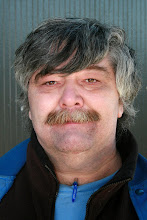
RIP - Daniel Grayling "Dan" Fogelberg (August 13, 1951 -- December 16, 2007)


Singer-Songwriter Dan Fogelberg Dies

NEW YORK (AP) — Dan Fogelberg, the singer and songwriter whose hits "Leader of the Band" and "Same Old Lang Syne" helped define the soft-rock era, died Sunday at his home in Maine after battling prostate cancer. He was 56.

His death was announced Sunday in a statement by Anna Loynes of the Solters & Digney public relations agency, and was also posted on the singer's Web site.

"Dan left us this morning at 6:00 a.m. He fought a brave battle with cancer and died peacefully at home in Maine with his wife Jean at his side," it read. "His strength, dignity and grace in the face of the daunting challenges of this disease were an inspiration to all who knew him."

Fogelberg discovered he had advanced prostate cancer in 2004. In a statement then, he thanked fans for their support: "It is truly overwhelming and humbling to realize how many lives my music has touched so deeply all these years. ... I thank you from the very depths of my heart."

Fogelberg's music was powerful in its simplicity. He didn't rely on the volume of his voice to convey his emotions; instead, they came through in the soft, tender delivery and his poignant lyrics. Songs like "Same Old Lang Syne" — in which a man reminisces after meeting an old girlfriend by chance during the holidays — became classics not only because of his performance, but for the engaging storyline, as well.

Fogelberg's heydey was in the 1970s and early 80s, when he scored several platinum and multiplatinum records fueled by such hits as "The Power of Gold" and "Leader of the Band," a touching tribute he wrote to his father, a bandleader. Fogelberg put out his first album in 1972.

Fogelberg's songs tended to have a weighty tone, reflecting on emotional issues in a serious way. But in an interview with the Milwaukee Journal Sentinel in 1997, he said it did not represent his personality.

"That came from my singles in the early '80s," he reflects. "I think it probably really started on the radio. I'm not a dour person in the least. I'm actually kind of a happy person. Music doesn't really reflect the whole person.

"One of my dearest friends is Jimmy Buffett. From his music, people have this perception that he's up all the time, and, of course, he's not. Jimmy has a serious side, too."

Later in his career, he would write material that focused on the state of the environment, an issue close to his heart. Fogelberg's last album was 2003's "Full Circle," his first album of original material in a decade. A year later he would receive his cancer diagnosis, forcing him to forgo a planned fall tour.

A Flawed Reform - December 17, 2007 - The New York Sun

Read original...

By DIANE RAVITCH
December 17, 2007


The New York City Department of Education has embarked on a perilous new path in its efforts to raise test scores. Just a few weeks ago, the Department released letter grades for the city's schools, from A to F. In recent days, the Department announced the closure of 14 schools that received a D or an F.

Is the grading system accurate and reliable? Did the grading system identify the worst schools? Is the closure of the lowest-performing schools likely to improve public education? Could the Department have taken other actions that might have been more effective than closing schools? The grading system itself is questionable because it awarded high grades to many schools on the state's and federal government's failing lists while stigmatizing some highly regarded schools with grades of D or F. More than half of the nearly 400 schools that the state or federal government has identified as academically weak received an A or a B. At the same time, 99 schools that are in good standing with the state and the federal government received a D or an F from the city.

The city's grading system produced some other odd results. For example, I.S. 289 in Tribeca, the only middle school in the city that was recognized by the U.S. Department of Education for its superior performance, received a D. And P.S. 35 in Staten Island, a school where more than 85% of students regularly pass the state tests, was labeled an F.

The reason for these strange outcomes is that the city gives greater weight to improvement than to performance. High-scoring schools are handicapped by what is known as the "ceiling effect." If their students score consistently well on the state tests, a one-year dip in the scores can get them branded with a D or an F.

When a grading system produces such bizarre results, it lacks face validity. That is, on the face of it, the evaluation system is suspect. Of what value is it to anyone when excellent schools, highly regarded by parents, students, and their community, are officially stigmatized as failures? Conversely, of what value is it to anyone when academically distressed schools win an A or a B?

This dubious evaluation system is now being employed to decide which schools will be shuttered forever. Fourteen schools have been picked out for closure, based on their having received a D or an F. Six of these 14 schools are in good standing with both the state and the federal government.


Will the closing of these 14 schools improve public education in New York City? It is hard to say. No one knows if the replacement schools will be better. What will be different about them? Will they enroll the same pupils? Will they have new principals and a new staff? Will the staff of the closed schools be reassigned elsewhere? Where will the new staff come from? Are there scores of stellar teachers waiting for a new assignment? None of this is clear.

Was there an alternative to closing the 14 schools? When Rudy Crew was chancellor, he created a Chancellor's District, where he clustered the lowest performing schools under his immediate care and redesigned them. These schools had a longer school day, highly-structured reading and math programs, classes in kindergarten through third grade of not more than 20 children and classes in fourth through eighth grades of not more than 25 children, and additional teacher training.

Independent evaluations showed that the Chancellor's District worked; it helped turn around struggling schools. The D.C.-based Council for Great City Schools cited New York City's Chancellor's District as one of the most successful programs in the nation.

New York City currently has nearly 400 schools that have been identified by the State Education Department or the federal government as "in need of improvement," a euphemism for a school in academic trouble. The city Department of Education needs an educational strategy to help these schools, not just a plan to close them.

It is not enough to hand out dire letter grades. Schools should get report cards that evaluate their different strengths and weaknesses.

Nor is it enough to turn out the lights. Schools are not a franchise operation. They are deeply embedded community institutions. They should be improved with additional resources, smaller classes, and additional training for educators. The starting point in reforming schools is to have a valid evaluation system that correctly identifies the schools that need extra help. It may not be easy to transform the schools that are in trouble, but if we want a good public education system, there really is no alternative.

Dr. Ravitch is Research Professor of Education at New York University and a senior fellow at the Hoover Institution and the BrookingsInstitution.

Bird count has highest tally in years -- amNY.com

The Commissioner might want to read Audubon's latest report showing bird totals are down significantly over the last 25-30 years...Geez...!


Read original...

The big city is going to the birds.

Nearly 8,000 were spotted yesterday during the annual Christmas Bird Count in Central Park, the highest number in four years.. That's a good sign for our feathered friends, according to Parks Commissioner Adrian Benepe.

"It means conditions are stable," he said. "Birds are doing better in the city than they did 25 or 30 years ago."

He also noted that increase development in the suburbs has lead to greater bird populations in the five boroughs.

The annual bird count in Central Park dates to 1900, when a group of birders organized an alternative to the traditional Christmas Day "side hunt," in which teams of hunters would go out and compete over who could bring in the most hunt.

The bird count, which drew dozens of people yesterday, has long been popular in New York City, according to Benepe, which typically has more bird watchers than bird shooters.

"Birders are some of the most dedicated park users," he said. "And people here are far less likely to be interested in killing birds."

Glenn Phillips, the executive director of NYC Audubon, said birders experience a "real sense of excitement" with every bird they add to the list.

"When you really stop and look at some of these creatures they are magnificent. Going out birding is full of extraordinary moments."

The count has morphed into nationwide event as 58,000 bird enthusiasts fan out across the country to count wings.

Locally, it was the Common Grackle, a tiny, glossy bird similar to a blackbird which most frequently calls Manhattan home, as more than 1,500 were found. More than 1,400 white-throated sparrows were also spotted. A peregrine falcon, rust blackbird, and long-eared owl were also found flitting about the park.

Scott Weidensaul, naturalist and author of "Of a Feather: A Brief History of American Birding" said Central Park is considered a legendary place among dedicated birders. "It's an oasis of natural vegetation in the middle of an otherwise concrete jungle," he said. "For any bird passing through that needs to stop, there aren't that many options."

Sunday, December 16, 2007

The Des Moines Register - Democratic Endorsement Editorial: Why Clinton

Read Editorial...

Madeline with Hillary

A deep, talented field in the Democratic caucus race offers both good and difficult choices.

No fewer than three candidates would, by their very identity, usher the nation to the doorstep of history. Should the party offer the nation the chance to choose its first woman president? Or its first black president? Or its first Latino president?

Or should the party place its trust in two senators, Joe Biden or Chris Dodd, who have served their nation with distinction for more than 30 years each? Or should it heed John Edwards clarion call to restore opportunity for all Americans?

VIDEO: Editorial page editor Carol Hunter explains the selection


Beyond their personal appeal, the candidates have outlined ambitious policy proposals on health care, education and rural policy. Yet these proposals do little to help separate the field. Their plans are similar, reflecting a growing consensus in the party about how to approach priority issues.


The choice, then, comes down to preparedness: Who is best prepared to confront the enormous challenges the nation faces from ending the Iraq war to shoring up America's middle class to confronting global climate change?

The job requires a president who not only understands the changes needed to move the country forward but also possesses the discipline and skill to navigate the reality of the resistant Washington power structure to get things done.

That candidate is New York Sen. Hillary Rodham Clinton.

From working for children's rights as a young lawyer, to meeting with leaders around the world as first lady, to emerging as an effective legislator in her service as a senator, every stage of her life has prepared her for the presidency.

That readiness to lead sets her apart from a constellation of possible stars in her party, particularly Barack Obama, who also demonstrates the potential to be a fine president. When Obama speaks before a crowd, he can be more inspirational than Clinton. Yet, with his relative inexperience, it's hard to feel as confident he could accomplish the daunting agenda that lies ahead.

Edwards was our pick for the 2004 nomination. But this is a different race, with different candidates. We too seldom saw the positive, optimistic campaign we found appealing in 2004. His harsh anti-corporate rhetoric would make it difficult to work with the business community to forge change.

Unfortunately, for many Americans, perceptions of Clinton, now 60, remain stuck in a 1990s time warp. She's regarded as the one who fumbled health-care reform as a key policy adviser to her husband, President Bill Clinton, or as a driving force in the bitter standoff between the Clinton machine and the "vast right-wing conspiracy."
Her record in the Senate belies those images. Today, she's widely praised for working across the aisle with Sam Brownback, Lindsey Graham and other Republicans.

Determination to succeed and learning from her mistakes have been hallmarks of Clinton's life. She grew up in Park Ridge, Ill., graduated from Wellesley College and earned a law degree from Yale. As first lady in Arkansas, she was both strategist and idealist, borne out by her commitment to children and families. As the nation's first lady, she in essence spent eight years as a diplomat, traveling to more than 80 countries and advocating for human rights.

In the Senate, she has earned a reputation as a workhorse who does not seek the limelight. She honed knowledge of defense on the Senate Armed Services Committee. She has pro-actively served rural and urban New York and worked in the national interest, strengthening the Children's Health Insurance Program.

Clinton is tough. Tested by rough politics and personal trials, she's demonstrated strength, resolve and resilience.

Can she inspire the nation? Clinton is still criticized in some quarters as being too guarded and calculating. (As president, when she makes a mistake, she should just say so.)

Indeed, Obama, her chief rival, inspired our imaginations. But it was Clinton who inspired our confidence. Each time we met, she impressed us with her knowledge and her competence.

The times demand results. We believe as president she'll do what she's always done in her life: Throw herself into the job and work hard. We believe Hillary Rodham Clinton can do great things for our country.

Keith Olbermann on Bill Moyers Journal - December 15th 2007

Keith Olbermann's interview on Bill Moyers Journal Dec. 15, 2007...

Part 2

Part 3

Saturday, December 15, 2007

Firedoglake - Writers Guild of America Widget — Now With Colbert & Daily Show!

Send a letter now..!


Firedoglake - Firedoglake weblog » WGA Widget — Now With Colbert & Daily Show!

Our super WGA tool which sends emails to the network execs and studio chiefs in charge of your favorite shows now includes the Colbert Report and Daily Show. the AMPTP walked away from the negotiating table last Friday but they've done a very good job getting surrogates to fan out and say that the writers are responsible. A compliant media, quite predictably, is lapping it up. Go over and tell 'em to knock it off. Do it for Ted Hitler.

Friday, December 14, 2007

Thanksgiving Day 2007, November 22nd...

My daughter, Madeline...

Mom and Madeline...


My Nephew Carlos...


Carlos and My Niece Jessica...

My Niece Erica and Madeline...

Carlos, Jessica, Erica and Madeline...

Erica...

Madeline and Jessica...

My daughter Kayla, sister Donnalee and Madeline...


Kayla and Madeline...

Melissa and Erica...

Erica and Melissa...

Melissa...


Erica and sister Lisanne...

Melissa and Amanda...


Mom, Kayla and Melissa...

Kayla...

ACT - Queens Youth Board Meeting on Novemer 21st at Queens Borough Hall...


Ridgewood Reservoir Meeting on November 16th...

a few photos from a Save Ridgewood Reservoir Meeting on November 16th...

Charles Monaco, Sam and Anna Franqui

Jill, Gallina, Erin, Heidi and Steve Steiner


Rob Jett, Charles, Heidi and Jill

Ridgewood Reservoir Walk with Councilman Tony Avella on October 28, 2007

All of these photos were taken on October 28th during a Walking Tour of the Ridgewood Reservoir Basin # 2 with City Councilman Tony Avella...

The Ridgewood Reservoir is truly a natural gem amongst the concrete of New York City...


Councilman Tony Avella


Charles Monaco


Heidi Steiner