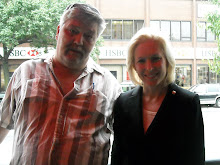
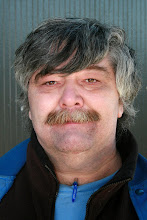
Agenda: National Health Care with Special Guests Rep Anthony Weiner and Martha Livingston, Phd, SUNY Old Westbury
When: September 25th, 2009
Time: 7:45 pm
Where: 60-70 Putnam Street (corner of Stier Place)
Ridgewood, NY
...An eclectic mix of local Politics, Education, Community Affairs, Environment, History, Birding,Jamaica Bay, Ridgewood Reservoir, Forest Park, and other assorted items of interest... Concentrating on the Borough of Queens in New York City...and the neighborhoods of Ozone Park, Howard Beach, Woodhaven, Richmond Hill and South Ozone Park...and Community Boards 5, 6, 9 and 10...
The flames in an apartment below had turned a Queens bedroom into a searing "barbecue" pit. Firefighter Michael Czech, 29, knew he had only seconds to rescue three unconscious victims -- a mother and her two sons.
So before dawn on Jan. 27, he crawled through a shattered window of the Ozone Park apartment and into the brutal heat.
"I patted a bed and felt a child's foot and dove onto the bed. There was no visibility. The smoke was severe enough it would put you right out," he said. "The victims were in a barbecue. The mother and a second boy were halfway off the other side of the bed."
Victoria Montero had called 911 before she and her sons, Carlos, 8, and Dylan, 6, had passed out from the smoke and carbon-monoxide poisoning.
"I picked up the first child on the bed and brought him closer to the window. Then the second child, and finally the mother," said Czech, a seven-year FDNY veteran who has been nominated for a New York Post Liberty Medal in the Bravest category.
As he passed each off to his firefighter buddy, Ed Rissland, who lowered them to paramedics, "we agreed I would stay in the room. We had no idea if somebody was still in there -- we needed to make sure," Czech said.
As Czech thoroughly searched the room, fellow firefighters from his Ladder Co. 142 of Woodhaven and Engine Co. 285 rescued a grandmother trapped on the first floor.
"Everything was one big team," he recalled. "It was a wild night. I was in the right place at the right time. It's not so often everyone makes it out alive."
A Polk Township man defrauded immigrants by falsely representing himself as an attorney who could help them with applications and petitions pending before the U.S. Citizenship and Immigration Service USCIS), according to the Manhattan, N.Y., District Attorney's Office.
Robert Mangieri, 68, who ran Mangieri & Associates at 3001 Broadway in Astoria, N.Y., and 8260 116th St. in Richmond Hill, N.Y., charged one woman $1,300, fraudulently promising to help her stay and work legally in the country, the indictment states. Mangieri was indicted Wednesday, arrested and subsequently released on his own recognizance, said Manhattan District Attorney's Office spokeswoman Alicia Maxey Greene.
Mangieri allegedly committed the crimes between December 2003 and September 2008.
An investigation revealed the following:
A woman sought Mangieri's help in filing appropriate paperwork to remain and work legally in the country. After charging the woman several hundred dollars and assuring her his fee was lower than one she could expect from other attorneys, Mangieri guided her through the filing of several applications with USCIS, including an application for employment authorization.
Mangieri sent USCIS the woman's employment authorization application directly, along with a letter written on paper bearing the letterhead "Hon. Robert P. Mangieri" and signed "the Hon. Robert P. Mangieri." USCIS denied the application.
The woman, who was in the U.S. on a visitor's visa, did not qualify for employment authorization since she did not have an application for a green card pending with USCIS. After her application for employment authorization was denied, Mangieri procured a forged Social Security card with her Tax Identification Number on it.
After USCIS denied several more applications, Mangieri asked the woman for more money, but she doubted him.
To win back her trust, Mangieri showed her what appeared to be a badge, adding to his false image as a retired judge or law enforcement official. He gave her also a business card bearing the name "Robert P. Mangieri" above the words "Juris Doctor" and saying "Mangieri & Associates," providing a P.O. Box and telephone number and bearing an image of the scales of justice.
In total, the woman paid him about $1,300 for services and fees he claimed were required for filing applications with USCIS.
She eventually contacted Emerald Isle Immigration Center in the Bronx, N.Y., which referred her to the Manhattan District Attorney's Immigrant Affairs Program.
Mangieri was found not to be a licensed attorney. The Executive Office for Immigration Review EOIR) confirmed he is not accredited or authorized to represent clients before USCIS or the immigration courts.
USCIS confirmed Mangieri was involved in filing other applications or the representation of other clients before USCIS. Those other applications were denied.
All who sought Mangieri's services are urged to contact the Immigrant Affairs Program hotline at 212) 335-3600.
Mangieri has been indicted on charges of scheming to defraud, grand larceny, criminally possessing a forged instrument and practicing or appearing as an attorney-at-law without being admitted and registered.
If he is convicted or pleads guilty on all charges, he could face up to 12 years in prison.
Mangieri will appear on pre-trial defense motions in court in New York City at a future date. He is being represented by attorney Lori Cohen while Manhattan Assistant District Attorney Om Gillett is prosecuting the case.
Paerdegat Basin Bridge crossing Jamaica Bay in Brooklyn - Photo by Mike Ruby New York Governor David Paterson and New York City Mayor Michael Bloomberg Tuesday announced the city's planned water quality improvement projects that will be covered by the federal economic stimulus funding. Two of the projects will directly address storm-water issues.
The city will receive $2 million to reduce flooding from heavy rains in the boroughs of Staten Island, the Bronx, and Queens by transforming existing roadway drainage into green infrastructure that will both beautify neighborhoods and protect local waterways from untreated storm-water runoff.
To accomplish these objectives, the city will plant trees, build street planters, and landscape rain swales, which will capture and store more water during heavy rains. The Corporation has worked closely with the Mayor's Office and New York City Department of Parks and Recreation to address flooding hot-spots in neighborhoods such as Cambria Heights and Far Rockaway in Queens and Pelham Parkway in the Bronx.
Project construction is expected to begin next January and be completed in January 2012, at which time the property will be maintained by the New York City Department of Parks and Recreation.
The city will receive $20 million to restore 38 acres of wetlands and natural grasslands adjacent to the Paerdegat Basin Combined Sewer Overflow Facility located on the shores of Jamaica Bay in Brooklyn.
With nearly 500,000 residents living in the drainage area of the basin, storm-water runoff has increased five-fold annually since the 1930s. The city will implement an environmentally friendly storm-water management plan by reintroducing local vegetation, restoring the shoreline, and constructing a large catch basin to prevent rainwater runoff and street litter from reaching Jamaica Bay.
When the project is completed, five acres of parkland will become the Ecology Park, which will offer open access to salt marshes and grassland areas with permeable pavement walkways and viewing platforms. The park will include exhibits so that schools and tourists can learn about the coastal habitats in the New York City region.
Project construction is expected to be completed in January 2012 and then the property will be maintained by the New York City Department of Parks and Recreation.
The bulk of the Recovery Act funding will be spent on energy efficiency and equipment upgrades to save money and improve water quality at waste-water treatment facilities in Brooklyn, Queens, Staten Island, and the Bronx.
Calling the funding "important and urgently needed," Governor Paterson said, "These projects will provide a bounty to New York City by saving money through increased energy efficiency, protecting our waterways through improved waste-water treatment, reducing flooding after heavy rains and restoring precious wetlands."
"The city has tremendous infrastructure needs and this funding is an important down payment on protecting and improving our urban waterways," the governor said.
"We have the nation's most sweeping urban environmental agenda, so we leave our children a greener, healthier city, said Mayor Bloomberg.
"The infusion of stimulus dollars for water projects will bolster our aggressive programs and help us improve water quality in our rivers and bays, reduce flooding in areas that have long suffered from storm-water flooding particularly in Southeast Queens, fund open space and open street greening projects and create jobs quickly with projects that will all begin in the next few months," said the mayor.
Both officials thanked President Barack Obama and the New York Congressional Delegation for ensuring that money to help resolve New York's water quality problems was included in the economic stimulus package.
The New York State Environmental Facilities Corporation will administer the city's $220 million grant, working with the U.S. EPA, the New York City Department of Environmental Protection and the New York City Municipal Water Finance Authority.
This is not the first clean water Recovery Act funding New York has received.
In April, U.S. EPA Administrator Lisa Jackson awarded New York State a $432 million clean water grant from the stimulus package.
Since then, Governor Paterson has announced 39 clean water projects totaling more than $560 million that will receive financial assistance from the stimulus program in combination with Environmental Facilities Corporation low-interest Clean Water State Revolving Fund financing.
Crooked ex-Assemblyman Anthony Seminerio was a crime victim yesterday -- not a perpetrator -- when thieves stole all the business equipment from his shuttered Queens office, cops said.
An administrative assistant for the state Assembly uncovered the break-in at 10 a.m., when he showed up at Seminerio's government-owned office on Jamaica Avenue in Richmond Hill to inspect the place.
The assistant, who had gone to the storefront office to get it ready for Seminerio's future replacement, found it ransacked and the back door kicked in.
Police said that a copy machine, a printing machine, an air conditioner, two computer routers and an air purifier had been stolen.
Seminerio, 74, a 15-term Queens Democrat, moved out last month, after he pleaded guilty to a $1 million influence-peddling scheme in June. He faces up to 14 years behind bars.
Seminerio resigned in June after his guilty plea. He took bribes as far back as 1999, including taking $390,000 last year as a "consulting fee" from Jamaica Hospital to do lobbying for them.
U.S. Rep. Anthony Weiner (D-Forest Hills) said the Queens congressional delegation battled to secure stimulus funding that he wanted to be used to keep St. John’s and Mary Immaculate hospitals open, but Gov. David Paterson did not direct the money to Queens’ health care institutions.
“We fought very hard with the stimulus bill to help save those hospitals, and it was not used for that,” Weiner said during an interview with TimesLedger Newspapers staff last Thursday.
Weiner, along with other members of Congress, worked to include the funds meant for the hospitals in the stimulus bill the House passed Jan. 28. The Senate passed its bill Feb. 10, and President Barack Obama signed it into law Feb. 17. St. John’s and Mary Immaculate closed at the end of February.
In less than one year, Queens has lost three hospitals: St. John’s in Elmhurst, Mary Immaculate in Jamaica and Parkway in Forest Hills. While Weiner said he wanted to see Parkway remain open, “clear problems of management” shuttered the hospital that is now suing the state to reopen.
St. John’s and Mary Immaculate had their own set of problems, including Caritas Healthcare, the hospitals’ parent company, being deeply mired in more than $40 million in debt. Still, Weiner said the closures might have been avoided had Paterson used the stimulus money for the hospitals as the congressman had hoped.
Paterson’s office did not return a phone call for comment.
During the interview, the congressman focused on his recent efforts to rally support around his single-payer health care plan that has garnered support among more liberal Democrats but not among many moderate and conservative members of Congress.
Weiner has put forward a plan that would eliminate private insurance, arguing such government-run health care programs as Medicare and Medicaid have been more efficiently run than their private counterparts.
“The opponents of the Obama plan say how can private insurance compete with a public plan?” Weiner said.
“They believe it would squash private insurance companies. They agree a public plan would cost less and be less bureaucratic. They agree with the Weiner plan.”
Obama has proposed that Americans must be insured similar to the way drivers are required to purchase car insurance. Individuals could retain their private health insurance or have the option to join a government-run insurance group, otherwise known as the public option, which the president has said would drive down health care costs and force insurance companies to provide more competitive and affordable prices.
The national debate over health care has proved especially controversial this summer, with some Americans screaming at legislators holding town hall-style meetings throughout the country on the issue. While Weiner has not had the type of run-ins that Obama and some other legislators have had, he has faced upset residents.
“There has been visceral anger, which is generated by a misinformation campaign,” Weiner said.
Despite the outbursts at town hall meetings, the majority of Americans want health care reform, according to a poll conducted by CNN at the end of August.
Weiner told TimesLedger he has not yet decided who he will vote for in the six-way Democratic primary Sept. 15. Weiner, who lives in Forest Hills, paid compliments to all the candidates, including his former staffer Mel Gagarin, Heidi Harrison Chain, Albert Cohen, Michael Cohen, Karen Koslowitz and Lynn Schulman.
While the congressman did not say he has definite plans to run for mayor again in 2013, he did say holding the city’s highest seat is “the only job in politics I’d rather have than the one I have now.”
“Who knows what’s going to happen,” Weiner said of the 2013 race. “Maybe the mayor will be running for a fourth term.”
A Queens man who was shot in the head while trying to defend his dad during a late-night robbery attempt has died.
Police said Gerardo Antoniello, 29, was shot about 10 p.m. Wednesday, as he scuffled with a pair of armed bandits who followed his father home from the family pizzeria Wednesday night.
Antoniello was taken to Jamaica Hospital in critical condition and died about 6:30 a.m. Thursday.
"I don't understand what kind of people would do something like this," said Frank Rossomangno, 31, the victim's best friend.
"Rob them, do what you have to do and leave. Why do you have to kill someone?"
Cops believe the suspects were lying in wait for Romeo Antoniello when he came home Wednesday night after picking up cash from Romeo's Pizzeria in Ozone Park.
Hearing a commotion, his son came out of the house and tried to stop the attack, cops said. "There was a scuffle at the door and the father was hit in the head," a police source said.
"The son comes from inside and tries to help the father. He gets shot in the head."
As the suspects ran off empty-handed -- leaving behind a knapsack and packing tape -- Romeo Antoniello and his wife, Gaetana, placed a frantic call to another son, Carmine, a Queens Task Force cop who called 911.
Scores of officers descended on the family's Ozone Park home.
The dad was roughed up by the suspects but not hurt. His 58-year-old also was not hurt. Neighbors were stunned. "It's a shame," said Steve King, 32, a regular at the pizzeria.
"Nice place, good food, hard-working man. (The father is) there all the time." Another neighbor, Pat, 53, who would not give her last name, called the family "great people." "Down-to-earth, honest, hard-working -- great people to have in the neighborhood," she said.
"I'm in fear for my own life now. If they can push people into their own homes, what's to keep them from coming to where I live?"
After the shooting, police searched the area with dogs and a helicopter in a vain attempt to find the suspects.
The latest school grades released by the city's Education Department are bogus. An astonishing 84% of 1,058 elementary and middle schools received an A (compared with 38% last year and 23% in 2007). Another 13% got a B. Only seven schools rated a D or an F.
Four schools labeled "persistently dangerous" by the state got an A from the city, and three of these deeply troubled schools got a B. Three schools that the city wants to close because of low performance got an A. Every school that got an F last year got an A or B this year.
The problems with the report cards were apparent from the start. When the system was launched in 2007, testing experts warned that it relied too heavily on single-year changes in standardized test scores, which are subject to random error and therefore unreliable. But the Education Department did not listen.
The report card system makes a mockery of accountability. No one can be held accountable when almost everyone gets an A or B. No one can tell which schools are getting better or worse. Nor do parents get enough information to make good choices.
This debacle is caused mainly by the state tests, which have been dumbed down in recent years. Daily News reporters Meredith Kolodner and Rachel Monahan were the first to break the story about the collapse of state standards between 2006 and 2009. Last June, they revealed that the test questions have gotten easier and more predictable. They found that the state asks nearly identical questions year after year, and the excessive focus on test preparation has corrupted the test results.
A few weeks ago, Kolodner reported that city students were able to pass the state tests by guessing. After the article appeared, a city schoolteacher, Diana Senechal, tried an experiment, which she described at gothamschools.org. She took two state tests without reading the questions. She answered the questions at random (checking A, B, C, D) and received enough points to reach Level 2, sufficient for promotion in the city.
Because the state tests have been dumbed down, test scores soared. The number of students at the lowest level - those who are at risk of being held back in their grade - dropped dramatically. In sixth-grade reading, 10.1% (7,019) were at Level 1 in 2006, but by 2009 only 0.2% (146) were. In fifth-grade reading, the proportion of Level 1 students fell from 8.9% in 2006 (6,120) to 1.0% (654) in 2009. In seventh-grade math, the proportion of Level 1 students plummeted from 18.8% (14,231 students) in 2006 to 2.1% (1,457) in 2009.
In almost every grade, the state has lowered the bar, making it easier for students to get a higher score. In 2006, students had to earn around 60% of the points on the state math tests to reach Level 3, which the state defines as proficiency, but by 2009, they needed to earn only 50%. With teachers administering daily practice tests containing questions very nearly the same as those that would appear on the state tests, it became easier for students to become "proficient."
What the report cards do not show is that most school districts in New York City scored in the bottom 5% of the state in science and social studies or that nearly a third of the schools don't have a teacher of the arts. Those subjects don't count.
The school report cards should be revised or scrapped. First, they are based on dumbed-down state tests. Second, the city will hand over $33 million to teachers and principals as a bonus for these phony scores (and more later to high school teachers and principals). Third, the report cards focus only on reading and mathematics, thus neglecting science, history, the arts, literature, civics and geography.
We are reaching a perilous stage where the test scores go up while real education - the kind that is available in the best schools - disappears.
Ravitch is a historian of education at New York University. Her new book, "The Death and Life of the Great American School System," will be published next spring.
Conservative/Democratic Assembly candidate Mike Miller is wracking up endorsements now that a federal court judge has cleared the way for the on-again, off-again, on-again primary day special election to take place in the 38th AD.
The latest Democratic elected officials to announce their support of Miller in his quest for the seat held until June by former Assemblyman Tony Seminerio are Sen. Chuck Schumer and Rep. Anthony Weiner.
The Miller campaign's release includes an attached photo of the candidate with Weiner and the following statement from Schumer:
"Democrat Mike Miller has been a leader and advocate for all our families, and will continue fighting for us in the State Assembly.”
And then there's this from Miller himself:
"I am honored to have the support of the Democratic leaders our community trusts. As the only Democrat in this election, I will not let the residents of the 38th Assembly District down."
"On day one, I’ll be ready to fight for what matters most to our families - strong local schools, affordable health care, a vibrant economy with good-paying jobs, and a quality of life that makes people want to live, work, and raise a family in Queens.”
Notice anything missing? The fact that Miller has been cross-endorsed by the Conservative Party, perhaps?
Primary day tends to bring out committed (read: trending left), hard-core Democrats. So it stands to reason that Miller's Conservative support isn't necessarily something his campaign wants to tout to the kind of voters who might be moved by a Schumer-Weiner endorsement.
Miller is so far only facing the Queens GOP's nominee, Donna Marie Caltabiano, in the Sept. 15 race.
The Democrat who filed an unsuccessful lawsuit to block Gov. David Paterson's declared, rescinded and re-declared special election, Farouk Samaroo, is continuing to challenge the constitutionality of the race, but that seems rather a long shot effort at this point.
As President Obama prepares to address the nation about his vision for health care reform, we should not overlook the last, best truly transformative change to our health care system: Medicare. We have been staring so intently at the lessons of 1993 that we may have forgotten the universal rule of successful lawmaking: "keep it simple."
During the eleven town hall meetings I've held around my district, I've had some direct experience with the anxiety this debate has produced. Much of the fear comes from two groups: those who have Medicare and don't want it changed and those who have never had a government-run reimbursement system like Medicare and are worried about the impact it will have on their quality of care.
In both cases, a calm, reasoned and vigorous defense of the American single-payer plan is just what the doctor ordered.
The truth is that the United States already uses single-payer systems to cover over 47% of all medical bills through Medicare, Medicaid, the Veterans Administration, the Department of Defense and the Bureau of Indian Affairs.
Understanding that these single-payer health programs are already a major part of our overall health care system should help us visualize what an actual public plan would look like. These institutions also provide health care to millions of satisfied customers in every community who would heartily agree that the government can build and run programs that work quite well.
Medicare also provides us with a case study in the hypocrisy of our Republican friends who have built their party on a 44-year record of undermining this popular program. And now their Chairman sees no irony in ripping "government run" healthcare while publishing an op-ed opposing changes to Medicare.
If Medicare has been such a success, why not extend it? Why not have single-payer plans for 55 year olds? Why not have one for young citizens who just left their parents or college coverage?
So far, the answers we hear to these questions have simply not been very convincing.
At one town meeting the President responded that that he was worried about its "destructiveness."
Really? Americans would still go to the same doctor and the same neighborhood hospital. Sure, they would be able to delete the 1-800 number of their insurance company from their cell phones. And doctors would have to get rid of all those file cabinets full of paperwork while their assistants who spend time fighting with insurance companies would be able to actually speak to patients.
But everyone would adjust, I'm sure.
The real reason we haven't seen the Democratic Party embrace the obvious and simpler idea is that it boils down to pure beltway politics.
We've been reluctant to tackle the real inefficiency in the current system, namely, the very presence of the private insurance companies. Too many in Washington would rather stay friends with the insurance and drug companies when real reform probably can't be achieved in a way that makes these powerful institutions happy.
That's not to say we should vilify the industry. When they pocket up to 30% in profits and overhead (compared to 4% for Medicare) or when their executives take multimillion dollar salaries, insurance companies are doing what their shareholders want them to do.
But let's leave it to the Republicans to defend those actions. I, and most Democrats, should not join the chorus that sounds like we care more about insurance companies than taxpayers.
The same is true for Big Pharma. If Wal-Mart can pool its customers to be able to offer the $4 prescriptions, why shouldn't the federal government drive the same hard bargain on behalf of the tax payers so they too get the best prices under Medicare? I pose this exact question at every town hall meeting I attend and if my colleagues and the President did the same on Wednesday night, they would mix good policy with good politics. Instead we have watched a puzzling dance as policymakers have effectively limited the savings we would find in the enormous drug expenditures that are a fixture in our current system. Is it any wonder citizens are confused?
I have no delusions about the muscle needed to overcome resistance from the insurance and pharmaceutical industries. But I believe that for every American we may lose to a slash-and-burn TV ad funded by these businesses, we will gain five among those who are looking for a clear rationale for what we are trying to accomplish and an example for what it may look like.
We also achieve something else: realignment of the political universe. Democrats understand the role of government and are proud of our signature achievement: Medicare. The Republicans care most about big business.
I'll take that fight any day. And I'm hoping that the President will tell us on Wednesday that he is willing to do the same.
Anthony D. Weiner is a Democrat representing New York's 9th Congressional District.
A Queens woman was arrested Tuesday for selling online nearly $12,000 worth of shoes stolen from the Great Neck shoe distributor where she works, according to Nassau County District Attorney Kathleen Rice.
Darsheena Ray, 34, of South Ozone Park, was charged with grand larceny and is scheduled to be arraigned at First District Court in Hempstead. She faces up to seven years in prison, if convicted.
The distributor, Jimlar Corporation, a retailer and wholesaler of Calvin Klein, Coach and other high-end shoe brands, began investigating in February when a customer service colleague of Ray’s received a phone call from a customer wishing to return a pair of shoes, Rice said. The employee was unable to find any record of payment in the company’s computer system when the customer told the employee that she had the warehouse paperwork confirming shipment from Jimlar, according to the district attorney. The customer added that she used the online payment website PayPal to pay for the shoes and that she bought the shoes on eBay.The company does not sell shoes on eBay and they do not take payments through PayPal, Rice said.
Later the same day, another call came in from a customer with a similar story who wanted to return a pair of shoes and again the Jimlar representative was unable to locate any sales records. The two calls prompted the vice president of the corporation to conduct an internal review. The case was later referred to the district attorney.
Investigators have identified 30 instances between November 2008 and February 2009 in which Ray used eBay and PayPal to sell shoes belonging to Jimlar for a total loss of $11,770, Rice said.
A Jimlar spokesperson had no comment.
The stately Jamaica manor of Rufus King, who helped frame the U.S. Constitution and voiced fiery, ahead-of-his-time appeals against slavery, ranks far down the list of the city's favored tourist sites.
His role in shaping the fledgling nation likely fell into obscurity because he never ascended to the presidency - and few historians explored his accomplishments in crucial yet unsung roles as senator and ambassador to Great Britain.
But a researcher who is combing through King's 2,200-title library - among the most extensive in early America - hopes findings about books he read and notes he took may someday vault him into the national spotlight.
"Right now, Rufus King would be considered a second-tier founding father," admitted David Gary, 31, who is exploring King's volumes for his doctoral dissertation. "My research is trying to make him a first-tier."
And yet, only months into his two-year project, Gary has uncovered pamphlets and newspaper clippings that document - for the first time - exactly how King studied to craft his unprecedented argument in 1820 that slavery was illegal.
Gary hopes that painting a fuller picture of King's vision to halt the spread of slavery - four decades before Abraham Lincoln was elected President - will foster greater public appreciation for King's place in history.
"He doesn't have a movie made about him or a documentary," said Kathy Forrestal, the education director at King Manor Museum. "His name isn't on Ken Burns' lips, but we think he should be."
King opposed slavery from the inception of his political career, helping pass the Northwest Ordinance of 1787 that prohibited enslavement in a chunk of territory newly adopted by the Union.
During a Senate debate in 1820 that led to the Missouri Compromise, which admitted Missouri as a slave state and Maine as free, King boldly declared slavery was "contrary to the law of nature."
Beyond the rhetoric, though, little depth has accompanied accounts of King's anti-slavery stances. That's why Gary thinks it's valuable to know, for example, that King read natural-law advocates who asserted everyone is born free.
At the New-York Historical Society, where many of King's books were donated, Gary also discovered King had clipped a newspaper article that slammed Thomas Jefferson, author of the Declaration of Independence, for owning slaves.
"It's a small thing, but it shows King's personal thoughts on the matter that we didn't know before," Gary said, adding he wants to raise King's profile to the level of Jefferson and John Adams.
Skeptics doubted Gary's research would immediately captivate the public and elevate King.
"It's not going to make the network news, but it's something scholars will take seriously," said Jeremy Dibbell of the Massachusetts Historical Society.
But King Manor Museum caretaker Roy Fox figured King, who died in 1827 and is buried blocks from his home at Grace Episcopal Church, will soon get his due.
"I get the feeling we're just getting started," Fox said. "There's a gem in history here to be polished and brought out."
![]() |
| ||||||||||||||||||||||||
FAIR USE NOTICE: This site may contain copyrighted material the use of which has not always been specifically authorized by the copyright owner. I have posted it here in an effort to advance the understanding of environmental, political, human rights, economic, democratic, scientific, social justice and other issues. I believe this constitutes a 'fair use' of any such copyrighted material as provided for in section 107 of the US Copyright Law. In accordance with Title 17 U.S.C. Section 107, the material on this site is distributed without profit to those who have expressed a prior interest in receiving the included information for research and educational purposes. If you wish to use copyrighted material from this site for purposes of your own that go beyond 'fair use', you must obtain permission from the copyright owner. The material in this site is provided for educational and informational purposes only.