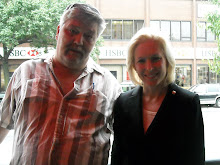
Unfortunately, much of the discourse on immigrant issues is clouded by muddled assumptions and stereotypical perceptions that debilitate and – in some cases – undermine the viability of public policy. These poorly formulated policies increase the probability that unintended consequences will dominate the supposed outcomes. In short, what are required are public policy initiatives that are deeply informed by empirically-based research on immigrant issues.
Saturday, February 5, 2011
Immigrant Entrepreneurship and the City by Arturo Ignacio Sanchez
Unfortunately, much of the discourse on immigrant issues is clouded by muddled assumptions and stereotypical perceptions that debilitate and – in some cases – undermine the viability of public policy. These poorly formulated policies increase the probability that unintended consequences will dominate the supposed outcomes. In short, what are required are public policy initiatives that are deeply informed by empirically-based research on immigrant issues.
Monday, August 9, 2010
Immigrant New York: Are We Up to the Challenges? by Arturo-Ignacio Sanchez - QueensLatino.com
During the current phase of globalization, New York City’s landscapes are being fundamentally transformed by large-scale and diverse streams of international migration, labor market restructuring and the increasing importance of the informal economy, as well as the distinct ways in which the newest New Yorker’s and their second-generation off-spring engage in politics and community building. These closely linked processes will ultimately mold the city’s economic, social, and political future. While economic, social, and political change brings about winners and losers, the outcomes do not have to be a zero-sum game of winner-take-all.
This brings to the front burner two important questions. Will immigrants and their children experience sustainable economic futures or dismal and precarious socio-economic outcomes? And secondly will our newest New Yorkers organize politically around a progressive, bottom-up, and cross-ethnic and inter-class network of neighborhood and city-wide coalitions or collapse into divisive and implosive ethnic chest-pounding and self-serving political opportunism?
These starkly drawn either/or scenarios are merely points of reference.
Reality is far more complex, messy, and subject to wide and diverse outcomes. Neighborhood quality-of-life, the organization of labor markets, and forms of immigrant civic and political participation are marked by important differences in ethnicity, immigration status, class, race, gender, religion, and social structures. Nonetheless, these differences are ultimately reconfigured within the context of New York’s larger political economy.
During the depths of the 1929 depression and up through the mid-1970s, New York City’s regional political economy revolved around a mixed use small-based manufacturing and service economy, a proactive municipal state, a dense public and private unionized base with political voice(s), city-wide institutions that incorporated the children of late 19th and early twentieth century immigrants into the civic/political system, and the emergence of vibrant middle and working class ethnic neighborhoods that were characterized by a strong sense of social solidarity. While this arrangement served most New Yorkers well, it largely failed Puerto Ricans and African Americans. This unsustainable inequality in group-based life chances, in part, triggered the ethno-racial and political movements that swept through the city’s neighborhoods during the 1960s and 1970s.
Today, New Yorkers are once again on the cusp of a historical cross-road. Will our Newest New Yorkers be fully incorporated into the city’s economy and political system in a meaningful and sustained manner, or will they be marginalized based on ethnic and racial markers? The outcomes have much to do with the eventual structure of New York City’s regional economy and political factors.
During the past forty years New York’s economic base was fundamentally restructured around a market driven perspective. The New Deal inspired institutional arrangements, which facilitated economic and political incorporation, were largely unraveled by the sing-song of so-called market efficiency, and an accompanying neoliberal downsizing of municipal functions. In effect, New York’s repositioning as a global city resulted not only in the dismantling of institutional structures supporting livable wages and a wide-array of social services for the most vulnerable, but also accelerated dramatic increases in income polarization, fostered increasing levels of informal labor arrangements, and fast-forwarded gentrification and working class residential and commercial displacement. What we are witnessing is the emergence of what has been called the polarized city. In short, a city framed by growing and unsustainable economic, social, and political inequalities.
For progressives and immigrant activists the key question revolves around a fundamental issue: Whose city is this? Are we destined to have a city structured for a privileged sub-set of high-income groups linked to the global economy, or will New York live up to its history as place that welcomes immigrants? While historically New York is a city of immigrants, nonetheless, today’s newcomers encounter a fundamentally different political economic landscape then the one faced by early twentieth century migrants. The last immigrant wave rode the crest of a revitalized mixed economy and a proactive state, while contemporary immigrants are facing a service-based economy that increasingly relies on low-wage informal labor and a market driven state that subsidizes global economic interests and wreaks havoc on middle and working class livelihoods. New situations call for innovative approaches as we go about reworking the political economic geometry that will eventually drive New York’s future. This task requires crafting new structures and methods for organizing bottom-up political practices that meld with the new realities. In doing so concerned folks will have to develop participatory community-based approaches that build upon the many differences and commonalities that frame the everyday lives of our newest New Yorkers.
This changing landscape places progressives and neighborhood activists in the difficult but necessary position of grappling with these reconfigured realities.
The new realities are associated with the global collapsing of time and space that molds immigrants sense of place and community, the crafting of immigrant transnational social and political identities, novel and hybrid forms of political activity, and the emergence of the informal working arrangements as an integral element of the contemporary economy. Yet, in order to grasp and understand these emerging circumstances, individuals of goodwill will have to leave behind the old ways of looking at things. A new language and new ways of thinking are called for. The language and politics of industrialization must give way to new modalities in addressing the challenges associated with an increasingly globalized and market driven environment that churns out few winners and far too many losers.
Are immigrant activists and progressives up to the challenge? In short, will they engage in progressive bottom-up political practices that lead to the construction of a just and sustainable city, or will they drop the proverbial public policy ball? Historical outcomes are not predetermined, they are constructed through visionary political activity and sweat and tears.
During the coming months, I will be writing a series of observations that draw upon my background as a neighborhood activist and as an academic attempting to understand our city of diverse immigrants. In brief, I will open a conversation that brings to the table a range of insights that flow from community activists and academics attempting to navigate and grapple with the changing immigrant demographics and New York’s long-term economic and political future. My aim is to contribute to the working out of a sustainable and socially just future for all New Yorkers. And in launching this conversation, I hope a creative space will emerge where we might begin to think and act collaboratively upon what a just city might mean for all New Yorkers.
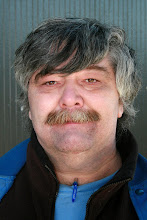
Arturo Ignacio Sanchez is a Colombian immigrant, a long-standing member of Community Board 3, Queens, and has a joint faculty appointment with the Cornell University Department of City and Regional Planning and The Latino Studies Program.
Monday, June 21, 2010
Oiled Birds in the Gulf of Mexico - June 2010 - Cornell Lab of Ornithology
Images of oiled birds from the Gulf Coast taken by Cornell Lab teams in June 2010. Birds were oiled as the result of the BP oil leak. Species seen include American White Pelican, Brown Pelican, Snowy Egret, Sanderling, terns and gulls.
Monday, May 24, 2010
House Sparrows Make Nest in Upper West Side Crosswalk Signal By Chuck Bennett and Michael Blaustein- NYPOST.com
Update: The NYC DOT will not be removing the House Sparrow nest from the crosswalk signal on the Upper West Side of Manhattan. It was determined that the sparrows were not negatively effecting the function of the signal.
Read original...
Maybe it should say "Squawk"/"Don't Squawk."
A family of house sparrows is living inside a crosswalk signal on a tony Upper West Side street -- coming and going through a golf ball-size hole in the side.
"It's really cool and cute," chirped Genevieve Fallon, 26, of the East Side. "I feel birds are always sneaking into different parts of the city, almost like nature's reclaiming it."
But don't be fooled by this heartwarming scene of a mama bird feeding her chicks a feast of masticated bugs -- these birds are as tough as the city they live in.
When it comes to finding a nest, house sparrows are notoriously aggressive.
"They are fierce nest competitors," said Karen Purcell, an urban-birds specialist with the Cornell Lab of Ornithology. "They are able to evict other birds, even native species. They are survivors."
“Purcell speculated that the cozy, steel-encased and rat-proof casing provided a perfect nesting location for the sparrows because they thrive near humans.”
The nest may have previously inhabited by a bluebird, tree swallow or titmouse before the house sparrows took over.
"They are pretty ruthless, and that's why a lot of people don't like them," Purcell said.
And like New Yorkers, these sparrows enjoy socializing at watering holes -- or, in their case, puddles.
Unlike New Yorkers, however, they don't hold onto to their bargain-priced apartments for long.
As soon as the chicks have grown enough -- which can happen in two weeks -- the whole family will move out.
Nicole Garcia, a spokeswoman for the city Department of Transportation, said the agency would remove the nest if workers found it.
"We will inspect any location and remove anything obstructing a signal," she said.
But Bill Juckett, a tourist from Kentucky, said, "I think it's wonderful. It's not interfering with anything, so I think it's great.
"I can't see the problem. Maybe the city should put holes in all the signs."
Friday, May 14, 2010
News Release: All About Birds: Best Lifestyle Website in 2010
The All About Birds website (www.AllAboutBirds.org) helps people identify and learn about nearly 600 species of North American birds. The site features photos, sounds, and video of birds, bird-identification tutorials, bird-feeding tips, gear reviews, and an online magazine about birds and bird watching.
"The All About Birds website helps satisfy people’s curiosity about birds—and invites them to explore more about their diversity, beauty, and fascinating behavior,” said Cornell Lab communications director Miyoko Chu. “We know that bird watchers are enthusiastic about our site, but we were so thrilled that it appealed to the Webby judges too, who considered sites on every topic from food to fashion.”
The site owes much of its visual richness to hundreds of images taken by amateur photographers across the country who contributed to the site’s Birdshare group. The site's sounds and video come from the Cornell Lab's Macaulay Library, the world's largest archive of wildlife sounds.
The Webbys are presented by the International Academy of Digital Arts and Sciences, a 650-person judging academy whose members include Martha Stewart, David Bowie, Arianna Huffington, and Twitter's Biz Stone. This year’s competition received nearly 10,000 entries from more than 60 countries and all 50 states.
"The Webby Awards honors the very best of the Internet," said David-Michel Davies, executive director of the Webby Awards. "The Cornell Lab's achievement is a testament to the skill, ingenuity, and vision of its creators.
For a full list of Webby Awards winners, visit http://www.webbyawards.com/
Thursday, May 6, 2010
Bird Watchers Mobilized to Monitor Impact of Gulf Leak
High-tech eBird website tracks numbers in real-time
As oil continues to gush into the ocean from the Deepwater Horizon well, Gulf Coast bird watchers are now taking action by surveying beaches and marshes for birds. By entering their counts at www.ebird.org, they are helping scientists track hundreds of species that could be affected as the oil spreads toward land.
“No one knows what the impact on birds will be, but bird watchers have a key role in helping us to find out,” said Chris Wood, co-leader of eBird, a joint project of the Cornell Lab of Ornithology and National Audubon Society. “We’re asking birders to survey the coastline for Brown Pelicans, Roseate Spoonbills, American Oystercatchers, and other birds to help us understand the spill’s impacts—and guide the region’s clean-up and recovery efforts.”
Anyone can view maps showing where each species is and how many are being reported up to the hour by visiting www.ebird.org. The new eBird Gulf Coast Oil Spill Bird Tracker on the site enables people to gain quick access to interactive maps showing the latest bird reports.
Launched in 2002, eBird gathers data on all North American bird species, amassing more than 1.5 million bird observations per month, Wood said. Scientists analyze these data with landscape information such as climate, human population, and habitat to see how birds are affected by environmental changes, not just during disasters, but all the time.
“It’s inspiring to see how bird watchers use their passion to help the birds,” said eBird co-leader Brian Sullivan. “They’re out there watching birds for fun, but at the same time they’re providing scientific data needed to understand the consequences of environmental damage and to aid recovery efforts.”
Audubon will use the data as part of its on-the-scene recovery response, including volunteer recruitment and coordination, and to help in its ongoing habitat restoration initiative across the Gulf region. “This area is vital to the well-being of birds, other wildlife, and human communities too,” says Tom Bancroft, chief scientist for Audubon. “The eBird effort will give birders across the area a way to help bring it back.”
Sunday, April 25, 2010
Winners of WeLoveBirds.org Photo Contest Winners
Find more photos like this on WeLoveBirds.org
This dreamy portrait of a preening Great Egret, by Donna Teubert, is one of the 10 winners. Visit the website for more information about the contest, and to see a slideshow of the winners on the home page.
Congratulations to Donna and the rest of the winners! As noted over at We Love Birds, the voting was very close. That’s a reflection of the overall quality of photos as well as the remarkable ability that so many kinds of birds have to inspire us to say “Wow.” That said, there are a few familiar faces in the Winners Circle, including a few Great Blue Herons, a couple of bluebirds, the hard-to-ignore Northern Cardinal, and a lovely Wood Duck caught in a stream of reflections. Head over and see for yourself! And thanks for sharing the planet with us.
(Image: Great Egret by Donna Teubert/We Love Birds photo contest winner)
Saturday, April 17, 2010
Ivory-Billed Woodpecker Search Ends by Jorge Ribas : Discovery News
The active search for the long-lost bird of science and myth -- the ivory-billed woodpecker -- is officially ending. At least it is for the Cornell Lab of Ornithology.
“The preliminary conclusion we’ve come up with at this point is that it’s unlikely that there are recoverable populations of ivory-billed woodpeckers in those places that have received significant search efforts over the past five years,” Ron Rohrbaugh, director of the Lab’s Ivory-billed Woodpecker Research Project, told Discovery News.
The exhaustive, five-year search took biologists and volunteers throughout the historic range of the bird. With one team stationed in Arkansas, another, smaller team traveled from North Carolina to Florida to Texas.
In 2007 I headed into Arkansas’ Black Swamp to follow the team as they trudged through the muck to find evidence -- any evidence -- that Ivory-billed Woodpeckers still exist. Striking deep into an almost alien landscape with black tupelo and bald cypress trees reaching high overhead. All we found on my visit were mud-colored cottonmouths, giant bullfrogs and the tantalizingly similar (at least to my untrained eyes) pileated woodpeckers.
But no ivory-bill.
“I think we’d say that (the searches) are suspended until any new information would come about that would provide impetus for starting up systematic searching again,” he said.
That first impetus was seven solid sightings and a video shot by David Luneau. It spurred Cornell to launch the extensive search and to publish an article in 2005 in the journal Science that concluded that the bird was still alive. But since then, nothing conclusive has emerged.
“We’ve been unable to acquire definitive evidence for the persistence of ivory-bills in Arkansas or any of those other states,” Rohrbaugh said. “We continue to get occasional bits of information that are substantive, and we can follow up. But nothing has led to anything definitive just yet.”
Cornell’s decision in 2005 to declare the bird re-discovered caused excitement and uproar in the birding community. Rohrbaugh acknowledged the controversy, but said it’s all part of the scientific process.
“Obviously some other scientists have looked at that same information and come to different conclusions,” he said. “And you know, that’s how science works; that’s OK.”
Still, he stands by their original hypothesis.
“When we apply the scientific method and our own video analysis to that information, the interpretation is that that bird is an ivory-billed woodpecker,” he said.
And despite the results, Rohrbaugh said he believes all the time, money and effort were worth it.
“We had what I perceive to be strong evidence of an ivory-billed woodpecker at least for a short period of time in Arkansas,” he noted. “One path is to say, ‘OK, the bird was there. We're not going to do anything about.’ ... That seems insane. You have one of the most critically endangered birds on the planet; why wouldn’t you follow up? And the other path is to mount a significant standardized search of the area, which is what we did.”
So the question remains: Is the ivory-bill still out there?
“I do think it’s possible,” he said. “We haven’t searched every place. It would be impossible to put together teams to search all of the ivory-billed woodpecker’s historic range. We’ve done the best we could.”
No doubt individual sightings will continue, and Rohrbaugh cautions against declaring the bird officially extinct.
“We have to be sure that the bird is really gone before we give up. As soon as one decides that a species is extinct, there are a lot of consequences,” he said. “That bird can lose protection under the Endangered Species Act, its habitat can be lost, and there’s a change of attitude among scientists and the public to submit new observations because they might be scoffed at.”
So instead of heading back into the swamp, Cornell will sift through all the data they’ve collected over the years. Rohrbaugh said a book on their findings will be published next year.
Saturday, April 25, 2009
Teen in Critical Condition Following Queens Fire - wpix.com
An 18-year-old woman is listed in critical condition after she was injured in a house fire Friday. The blaze was reported at 11:15 a.m at 106-10 101st Avenue in the Ozone Park section of Queens. The woman's family was able to get out of the house, but the young woman was trapped inside, officials say.
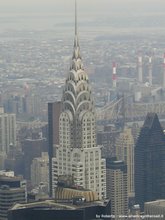
Firefighters who responded to the late-morning blaze, managed to pull the teen to safety. Authorities say the victim sustained second- and third-degree burns over much of her body, and is being treated at the burn unit in Cornell Medical Center. Doctors say they expect her to survive.
Police are still investigating the cause of the blaze.
Friday, March 27, 2009
One-Third of U.S. Bird Species Endangered, Survey Finds by Cornelia Dean - NYTimes.com
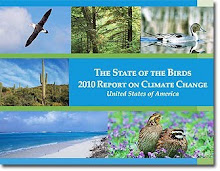
Habitat destruction, pollution and other problems have left nearly a third of the nation’s 800 bird species endangered, threatened or in serious decline, according to a study issued on Thursday.
Described as the most comprehensive survey of American bird life, the report, "The U.S. State of the Birds," analyzed changes in the bird population over the last 40 years. “This report should be a call to action,” Interior Secretary Ken Salazar said at a news conference in Washington.
Citing surveys by government agencies, conservation organizations and citizen volunteers, the report said that the population of grassland birds had declined by 40 percent and birds in arid lands by 30 percent. It estimated that 39 percent of bird species that depend on American coastal waters were in decline.
Many forest birds are threatened by urban sprawl, logging, wildfires and “a barrage of exotic forest pests and disease,” the study said.
In Hawaii, the home of more than a third of American bird species, the situation is particularly grim, the report said. Most of that state’s bird species are in danger.
Climate change will make things worse, and work is urgently needed to prevent “a global tragedy” of bird loss, the report added.
But there was also an upbeat side to the news conference. The study found that herons, egrets, ducks and other birds that benefit from wetlands conservation were rebounding. Findings like this “show us that conservation can really work,” Mr. Salazar said.
Other speakers agreed. The report’s gloomy assessment makes it “a key document,” said John Hoskins of the United States North American Bird Conservation Initiative, an umbrella group for public and private efforts. But its data also show that “when agencies, organizations and individual citizens work together to conserve precious resources, some really good things happen,” Mr. Hoskins said.
The report draws on data collected by the federal Fish and Wildlife Service and the United States Geological Survey, organizations like the American Bird Conservancy and the Cornell Lab of Ornithology, and volunteer participants in the Christmas Bird Count of the National Audubon Society.
John Fitzpatrick, the director of the Cornell laboratory, which also oversees citizen bird-counting, said that a wealth of data gathered in such volunteer efforts had helped scientists make major strides in assessing the health of bird populations and in drawing more general conclusions about the environment.
Beyond taking part in counting efforts, the report urged ordinary citizens to assist conservation by drinking shade-grown coffee (coffee-growing in the shade helps preserve the winter habitat of species like warblers), donating unused binoculars for distribution to biologists in the tropics, reducing pesticide use, landscaping with native plants and keeping pet cats indoors.
“Education is urgently needed to make the public aware of the toll of pet cats,” Darin Schroeder of the American Bird Conservancy said at the news conference.
Thursday, March 19, 2009
Partnership Releases First State of the Birds Report...
Secretary Salazar Releases Study Showing Widespread Declines in Bird Populations, Highlights Role of Partnerships in Conservation
Secretary of the Interior Ken Salazar today released the first ever comprehensive report on bird populations in the United States, showing that nearly a third of the nation’s 800 bird species are endangered, threatened or in significant decline due to habitat loss, invasive species, and other threats.
At the same time, the report highlights examples, including many species of waterfowl, where habitat restoration and conservation have reversed previous declines, offering hope that it is not too late to take action to save declining populations.
“Just as they were when Rachel Carson published Silent Spring nearly 50 years ago, birds today are a bellwether of the health of land, water and ecosystems,” Salazar said. “From shorebirds in New England to warblers in Michigan to songbirds in Hawaii, we are seeing disturbing downward population trends that should set off environmental alarm bells. We must work together now to ensure we never hear the deafening silence in our forests, fields and backyards that Rachel Carson warned us about.”
The report, The U.S. State of the Birds, synthesizes data from three long-running bird censuses conducted by thousands of citizen scientists and professional biologists.
In particular, it calls attention to the crisis in Hawaii, where more birds are in danger of extinction than anywhere else in the United States. In addition, the report indicates a 40 percent decline in grassland birds over the past 40 years, a 30 percent decline in birds of arid lands, and high concern for many coastal shorebirds. Furthermore, 39 percent of species dependent on U.S. oceans have declined.
However, the report also reveals convincing evidence that birds can respond quickly and positively to conservation action. The data show dramatic increases in many wetland birds such as pelicans, herons, egrets, osprey, and ducks, a testament to numerous cooperative conservation partnerships that have resulted in protection, enhancement and management of more than 30 million wetland acres.
“These results emphasize that investment in wetlands conservation has paid huge dividends,” said Kenneth Rosenberg, director of Conservation Science at the Cornell Lab of Ornithology. “Now we need to invest similarly in other neglected habitats where birds are undergoing the steepest declines.”
“Habitats such as those in Hawaii are on the verge of losing entire suites of unique bird species,” said Dr. David Pashley, American Bird Conservancy’s Vice President for Conservation Programs. “In addition to habitat loss, birds also face many other man-made threats such as pesticides, predation by cats, and collisions with windows, towers and buildings. By solving these challenges we can preserve a growing economic engine – the popular pastime of birdwatching that involves millions of Americans – and improve our quality of life.”
“While some bird species are holding their own, many once common species are declining sharply in population. Habitat availability and quality is the key to healthy, thriving bird populations,” said Dave Mehlman of The Nature Conservancy.
Surveys conducted by the U.S. Fish and Wildlife Service and U.S. Geological Survey, including the annual Breeding Bird Survey, combined with data gathered through volunteer citizen science program such as the National Audubon Society’s Christmas Bird Count, show once abundant birds such as the northern bobwhite and marbled murrelet are declining significantly. The possibility of extinction also remains a cold reality for many endangered birds.
“Citizen science plays a critical role in monitoring and understanding the threats to these birds and their habitats, and only citizen involvement can help address them,” said National Audubon Society’s Bird Conservation Director, Greg Butcher. “Conservation action can only make a real difference when concerned people support the kind of vital habitat restoration and protection measures this report explores.”
Birds are beautiful, as well as economically important and a priceless part of America's natural heritage. Birds are also highly sensitive to environmental pollution and climate change, making them critical indicators of the health of the environment on which we all depend.
The United States is home to a tremendous diversity of native birds, with more than 800 species inhabiting terrestrial, coastal, and ocean habitats, including Hawaii. Among these species, 67 are Federally-listed as endangered or threatened. In addition, more than 184 species are designated as species of conservation concern due to a small distribution, high-level of threats, or declining populations.
The U.S. Fish and Wildlife Service coordinated creation of the new report as part of the U.S. North American Bird Conservation Initiative, which includes partners from American Bird Conservancy, the Association of Fish and Wildlife Agencies, Cornell Lab of Ornithology, Klamath Bird Observatory, National Audubon Society, The Nature Conservancy and the U.S. Geological Survey.
The report is available at www.stateofthebirds.org.
Contact: Pat Leonard, Cornell Lab of Ornithology, 607-254-2137, pel27@cornell.edu
Tuesday, January 27, 2009
New Environmental Study: Over Half of New York State’s Birds Have Seen Dramatic Population Changes Since 1980...

For Immediate Release
For interviews contact:
Kevin J. McGowan at kjm2@cornell.edu
Kimberley Corwin at kjcorwin@gw.dec.state.ny.us
For additional information contact:
Jonathan Hall at jlh98@cornell.edu
Ithaca, NY (1/07/2009) -- A new atlas on the birds of New York reveals that during the past two decades over half of New York State’s bird populations have seen dramatic changes in their distributions, with 70 species experiencing significant increases, 58 species experiencing serious declines, and 125 species maintaining relative stability. Among the birds showing the largest increases in New York State are Canada Goose, Wild Turkey, Red-bellied Woodpecker, Carolina Wren, Peregrine Falcon, Osprey, Cooper’s Hawk, Bald Eagle, Common Raven, Turkey Vulture, and Merlin. Those showing the largest decreases are Henslow’s Sparrow, Red-headed Woodpecker, Brown Thrasher, Common Nighthawk, Purple Martin, and Canada Warbler. Resident woodland birds showed the greatest increases as a group, and grassland birds showed the greatest declines.
These new findings, published this month by Cornell University Press in The Second Atlas of Breeding Birds in New York State, are the result of over 140,000 hours in the field by nearly 1,200 volunteers across New York State. The atlas, edited by two prominent figures in the field, ornithologist Kevin J. McGowan of the Cornell Lab of Ornithology, and wildlife biologist Kimberley Corwin of the New York State Department of Environmental Conservation (NYSDEC), was initiated by the New York State Ornithological Association and implemented by the NYSDEC, which provided the funding, management personnel, oversight, direction, and data capture and management. The majority of the funding came from the state tax check-off program, “Return a Gift to Wildlife.”
“This new atlas was truly an incredible team effort by the citizens of New York,” said Kevin J. McGowan. “From those who funded it with small donations via their tax returns to the impressive volunteers who collected the data, the atlas is an inspired monument to the dedication and love New Yorkers have for their wildlife.”
Added Kimberley Corwin, “And what’s more, New Yorkers have considerably helped bird populations by planting trees and shrubs that provide food and cover, supporting conservation organizations, and participating in cutting-edge programs such as the Landowner Incentive Program, which we think is outstanding.”
The Second Atlas of Breeding Birds in New York State will be an invaluable resource for the DEC and other state agencies involved in land management and conservation, as well as counties and towns who make management decisions on smaller scales. Data will also be used at the national level by federal agencies, non-governmental agencies such as the NY Natural Heritage Program and Audubon, as well as universities across the country.
Sunday, January 25, 2009
12th Annual Great Backyard Bird Count Coming Up Feb. 13-16!
(212) 979-3197 - dwillis@audubon.org
For Immediate Release
Count for Fun, Count for the Future
February 13-16, 2009
New York, NY and Ithaca, NY-Bird and nature fans throughout North America are invited to join tens of thousands of bird watchers for the 12th annual Great Backyard Bird Count (GBBC), February 13-16, 2009.
A joint project of the Cornell Lab of Ornithology and the National Audubon Society, this free event is an opportunity for families, students, and people of all ages to discover the wonders of nature in backyards, schoolyards, and local parks, and, at the same time, make an important contribution to conservation.
“Anyone who can identify even a few species can contribute to the body of knowledge that is used to inform conservation efforts to protect birds and biodiversity,” said Audubon Education Vice-President, Judy Braus.
Volunteers take part by counting birds for at least 15 minutes on one or more days of the event and reporting their sightings online at www.birdcount.org. The data help researchers understand bird population trends across the continent, information that is critical for effective conservation. In 2008, participants submitted more than 85,000 checklists, a new record.
“The GBBC has become a vital link in the arsenal of continent wide bird-monitoring projects,” said Cornell Lab of Ornithology director John Fitzpatrick. “With more than a decade of data now in hand, the GBBC has documented striking changes in late-winter bird distributions.”
Participants submit thousands of digital images for the GBBC photo contest each year. Last year’s winners have been chosen and are now posted on the web site. Participants are also invited to upload their bird videos to YouTube tagged “GBBC.” Some of them will also be featured on the GBBC web site. All participants will be entered in a drawing to win dozens of birding items, including stuffed birds, clocks, books, feeders, and more.
Businesses, schools, nature clubs, Scout troops, and other community organizations interested in the GBBC can contact the Cornell Lab of Ornithology at (800) 843-2473 (outside the U.S., call (607) 254-2473), or Audubon at citizenscience@audubon.org or (215) 355-9588, Ext 16.
The Great Backyard Bird Count is made possible, in part, by support from Wild Birds Unlimited.
The Cornell Lab of Ornithology is a nonprofit membership institution interpreting and conserving the earth’s biological diversity through research, education, and citizen science focused on birds. www.birds.cornell.edu
Cornell Lab of Ornithology: Birds in Art/Art in Birds Challenge
Ithaca, NY--People of all ages are invited to go outside and look for Birds in Art/Art in Birds for a contest sponsored by the Celebrate Urban Birds project at the Cornell Lab of Ornithology. Celebrate Urban Birds is a free, year-round citizen-science project focused on birds in neighborhood settings.For the Birds in Art/Art in Birds challenge you can take photos, do some painting, write a story, create a sculpture. What do you see in a bird that is beautiful, stirring, or inspirational? It could be a broken-down nest in winter, a song recording, video of a bird perching on your window, something that makes you stop, look twice, laugh, cry.
Prizes include bird sound recordings, books, gift certificates, "green" products, and more. We’ll send the first 50 entrants a copy of our "Doves and Pigeons" poster by Julie Zickefoose. Selected images will be posted on the Celebrate Urban Birds website.
How to enter:
1. Email your photo, art, or video entry to urbanbirds@cornell.edu. Links are acceptable for videos.
2. Write "Art in Birds/Birds in Art contest" in the subject line.
3. Include your name and mailing address
4. Tell us why you submitted your entry to the Art in Birds/Birds in Art contest.
Deadline for entries is February 28, 2009
Visit the Celebrate Urban Birds web site for more information.
Wednesday, June 25, 2008
Bill Would Clear Way for NYRA Bankruptcy by Tom Precious - bloodhorse.com
A deal has been struck in New York that could smooth the way for the New York Racing Association to emerge from its Chapter 11 bankruptcy protection.The bill is fairly minor in nature, enacting a series of mostly technical amendments to a law approved earlier this year giving NYRA a 25-year extension to run Aqueduct, Belmont, and Saratoga racetracks. But NYRA officials have said they could not resolve its bankruptcy proceeding without it.
The legislation, expected to get final approval June 25 at the state Capitol, clarifies the computation of NYRA’s franchise fee payments, more clearly outlines the state’s ownership of the three racetracks and provides $11 million from the state to pay off NYRA’s local property tax levies. It also authorizes the state comptroller to perform audits of NYRA and lays out the responsibilities for a new state board that will oversee NYRA’s finances.
The legislation was agreed to after Senate Republicans dropped provisions to raise breeding development payments and to create a community advisory board from communities around Belmont and to provide towns near the track with revenue sharing funding.
The bill comes as NYRA’s scheduled June 30 hearing before a federal bankruptcy judge in Manhattan is being pushed off into July. NYRA and aides to Gov. David Paterson are still putting the final touches on an agreement to present to the judge.
Also getting final approval June 25 is a measure to create an equine steroid testing bill at Cornell University’s veterinary lab. The lab, coming at a time when the industry is under mounting pressure to ban steroids, would be paid for by funds from horsemen’s accounts.
Another racing bill approved will raise fines for violating an array of racing regulations by individuals and tracks from $5,000 per incident to $20,000.
Monday, May 12, 2008
Some Cyber Fun for the Birding Enthusiasts by Herb Wilson - Kennebec Journal
It has been a while since I wrote about resources for birders and ornithologists on the Internet. Today's column will cover several innovations in cyberbirding. The Cornell Laboratory of Ornithology figures prominently in all of these resources.
The CLO has long been a depository for sound and video recordings of birds and other animals. Now that these files can be saved in digital format, they are easily shared with researchers and interested people.
The Macaulay Library of Natural Sounds at the CLO boasts the largest collection of sound recordings of animals in the world. Some of these sound recordings have associated video. The entire collection of recordings is being digitized. More than 65,000 sound clips and 18,000 video recording are available as streaming files for free.
The sound files can be played using the free application RealPlayer. Better yet, a free tool called RavenViewer can be downloaded. This tool works within QuickTime.
RavenViewer not only allows you to play the sound recordings but to visualize the recordings in real time. A wave form of the sound scrolls across the screen showing the loud and soft portions of the file. Even more useful is the spectrogram that shows the frequencies of each part of the sound.
The sound and video recordings provide a great opportunity for learning. I searched for American Robin and found that 431 recordings are in the Macaulay Library, and nearly all have been uploaded for users to hear.
The focus of the on-line recordings is on North American species, mainly birds, although many recordings made outside of North America are available. To visit the Macaulay Library, go to: www.animalbehaviorarchive.org.
eBIRD: The CLO is maintaining a nationwide digital system for sharing birding observations. After a field trip, contributors simply visit eBird at ebird.org/ and enter the numbers of individuals of each species of bird they saw on a field trip along with the location.
These records become part of a database that can be searched by anyone. Imagine you will be on a trip to Cleveland in April and want to know what birds you might be able to see. A quick search of the eBird database will give you tons of records of birds that other birds have seen in that area in the spring.
eBird keeps track of all the records you have added to the database and will keeps a lifelist for you. You can enter data taken from trips years ago. All of those records are valuable.
The eBird software knows when you have made an unusual sighting and will prompt you to make sure that other possible identifications have been eliminated. Rare bird sightings are tagged as such and can be sent to birders who like to keep abreast of local rarities.
The easiest way to keep track of these rarities is to use the eBird gadget (ebird.org/content/ebird/news/Google_Gadget.html). This is a tool that you load to a personalized iGoogle page (go to www.google.com/ig to set up the page). The eBird gadget will search the state of your choice for recent rarities.
In looking at the eBird gadget list in my iGoogle page, I see that recent rarities in Maine are Eastern Screech Owl, Orange-crowned Warbler and Black-headed Gull. Directions and a map for the location of each sighting are provided.
BIRDS OF NORTH AMERICA: This project was born nearly 20 years when the Academy of Natural Sciences in Philadelphia devised a way to assess the cumulative knowledge of all North American breeding birds. A specialist was found to write an account for each of the more than 700 species covered.
Each account is in a standard format with the same organization throughout (e.g., Distribution, Distinguishing Characteristics, Migration, Habitat, Sounds). One of the most valuable aspects of each account is the extensive bibliography on each species at the end of the account.
The 720 volumes were initially issued in paper. The accounts are now in digital format as well. One advantage of the digital accounts is that they can be easily updated as new information arises. A second advantage is that users do not need 12 feet of shelf space to house the collection.
The digital version of Birds of North America is administered now through the CLO (bna.birds.cornell.edu/bna). A yearly subscription is only $40.
The CLO has recently made an abbreviated form of each account available for free. This resource is called All About Birds. It can be found at: www.birds.cornell.edu/AllAboutBirds/BirdGuide/ on the Web. You can find links on that page to basic identification skills, bird gear and attracting birds to your backyard.
Herb Wilson teaches ornithology and other biology courses at Colby College. He welcomes reader comments and questions at whwilson@colby.edu. Previous columns and other information on Maine birding can be found at his blog:
www.mainebirds.blogspot.comMonday, May 5, 2008
Big Day 2008 is May 10! — What is the World Series of Birding? - Press Release Cornell Lab of Ornithology
Contact:
Pat Leonard
pel27@cornell.edu
Cornell Lab of Ornithology
(607) 254-2137
For immediate release: May 5, 2008
Cornell Lab of Ornithology team will compete for its 25th year
Ithaca, NY-The World Series of Birding, sponsored by New Jersey Audubon, returns this Saturday, May 10, marking the silver anniversary of the event. A team from the Cornell Lab of Ornithology has been in the thick of the action every one of those years.
The goal of this so-called “Big Day” is to gather pledges for each species of bird teams can identify by sight or sound during the midnight-to-midnight dash across the state. Team Sapsucker is the returning champ, having won the World Series the past two years in a row. Last year the team tallied 230 species (a team record, one short of the event record), and brought in about $185,000 in pledges. The team has raised more than $2.1 million for bird conservation since 1985. The Lab will again field a Cornell student team, the Redheads (named for the Cornell “Big Red”). Last year’s first-ever student team placed second in the “limited geographic area” division with 174 species, a great first outing. The Sapsuckers bird the entire state of New Jersey while the Redheads compete in Cape May County.
Lab director, John Fitzpatrick, and information science director, Steve Kelling, have retired from Team Sapsucker after 12 and 14 years, respectively. Other top-notch birders are stepping into the fray. Captain Ken Rosenberg, head of Conservation Science at the Lab, is the veteran, returning for his 24th Big Day.
“We’re psyched, as always,” says Rosenberg, “There are some unknowns this time around, since we’ll have some new team members and we’ll be in everyone’s cross-hairs after winning the event for the past two years. But we have the best birders in North America and we’re determined to hold onto the championship!”
Donors pledge any amount of money for each species identified by the teams on the Big Day. Funds will be used in a variety of conservation programs at the Lab, including studies of night flight migration calls, Neotropical bird conservation, and the expansion of the eBird online checklist program into Latin Americathe winter home for so many of our North American species. Ten percent of funds raised is set aside for students, interns, and aspiring professional scientists. Every cent goes to these causes because expenses for both teams are underwritten by long-time sponsor, Swarovski Optik.
To find out more about the Big Day or to make a pledge, visit www.birds.cornell.edu/wsb or call (800) 843-BIRD. You can also enter your guess as to how many species will be identified by each team and what time the last species will be identified. Then you’ll be entered for a chance to win a pair of Swarovski binoculars. Check back on May 10 for updates on how the teams are doing!#
WHAT: The World Series of Birding is a 24-hour birding competition that benefits conservation. Birders traverse the state of New Jersey, identifying as many species as possible by sight and sound. Supporters pledge money to their favorite teams for each species found. The event raises more than $500,000 for bird conservation annually. Birders can paricipate as individuals or on a team, and prizes are awarded for different categories, such as for best competing team, youth team, and photography team.
Read more...
Friday, May 2, 2008
Press Release: Cornell Lab of Ornithology - Migration Celebration Spotlights Bird Habitat
Contact:
Pat Leonard
Cornell Lab of Ornithology
(607) 254-2137
pel27@cornell.edu
Cornell Lab of Ornithology hosts activities for families and bird watchers
Ithaca, NY-The Ithaca area’s second annual Migration Celebration is coming up Saturday, May 17, 10:00 A.M.–3:00 P.M. at the Cornell Lab of Ornithology. This is just one of many events taking place across the western hemisphere as part of International Migratory Bird Day which celebrates the spectacular long-distance journeys of migratory birds. This year’s theme is “Tundra to Tropics: Connecting Birds, Habitats, and People.” The goal is to raise awareness about the various kinds of habitat birds need, how these natural landscapes are disappearing, and what we can do to create bird-friendly spaces. Admission is free.
Visitors will learn how far-flung places are linked through bird migration from the tropics in South America, to North American grasslands and coastal areas, to Boreal forests and Arctic tundra, to our own backyards and urban green spaces. Information will be available on creating habitat for birds: the best plants to use, where to place feeders and water, and how to ensure that the birds that visit your yard are safe.
Activities include guided bird walks, nest-monitoring, live birds from the Cornell Raptor Program, bird-banding demonstrations, hands-on activities for children, and multimedia presentations, including a new video production following the incredible migration of the Hudsonian Godwit between South America and the boreal forests of Alaska and the Yukon.
Volunteers are needed to assist with some of these activities. Two orientation meetings for volunteers will be held at the Lab: Thursday, May 8, 7:00-8:00 P.M. and Saturday, May 10, 11:00 A.M.-Noon. If you would like to help, contact Anne Rosenberg at baj3@cornell.edu or call 254-2109.
International Migratory Bird Day was created in 1993 by the Cornell Lab of Ornithology and the Smithsonian Migratory Bird Center. The Lab of Ornithology is located at 159 Sapsucker Woods Road in Ithaca. For more information about the Migration Celebration visit www.birds.cornell.edu/birdday or call (800) 843-BIRD.
Thursday, April 24, 2008
NestWatch - Press Release - New Project Spotlights Life in the Nest
Contact:
Pat Leonard
(607) 254-2137
pel27@cornell.edu
New Project Spotlights Life in the Nest
NestWatch project takes off, seeks participants
“NestWatch introduces birding and simple methods of scientific inquiry to families, children, retired adultspeople of all ages and skills,” says project leader Tina Phillips. “It’s easy and fun. It helps people reconnect with nature in their own yard, nearby park, or nature preserve.”
Peter Marra from the Smithsonian Migratory Bird Center at the National Zoo says, “Each and every observation is important because it helps scientists measure the impact of such things as climate change and habitat destruction. Without citizens across the country collecting this information for us it would be almost impossible to track these large-scale destructive processes.”
The always-popular NestCams companion site has been revamped and is now up and running. Live cameras show the nesting activities of Barn Owls, Wood Ducks, and Northern Flickers in Texas and California. More cameras will be going online across the country in the weeks ahead at www.nestcams.org.
All NestWatch materials and instructions are available online at www.nestwatch.org, including directions on how to find nests and how to monitor them without disturbing the birds.
“One of the most exciting things about NestWatch,” says Phillips, “is that we’ll be able to take in data from as far back as 1900!” Anyone who’s been keeping nest records on their own will now have a way to put that important information to use. With all this information from NestWatchers, scientists will be able to track changes in reproductive timing and fledging success which may be linked to climate change.
For more information and to sign up, please visit www.nestwatch.org.
Friday, March 28, 2008
Bird Watchers Urgently Needed to Track Rusty Blackbirds - Cornell Lab of Ornithology
Bird Watchers Urgently Needed to Track Rusty Blackbirds
Click on image to enlarge - Hi-Res photo 300dpi image - Photo credit: Martjan Lammertink/Cornell Lab of OrnithologyContact: Pat Leonard - (607) 254-2137
Cornell Lab of Ornithology
For immediate release: pel27@cornell.edu
March 27, 2008
Bird Watchers Urgently Needed to Track Rusty Blackbirds - Citizen Scientists Use eBird to Monitor Alarming Drop in Numbers
Populations of Rusty Blackbirds are crashing. Their numbers have plummeted as much as 88-98% over the last few decades, according to data gathered from 1966 to 2006 by the North American Breeding Bird Survey and Christmas Bird Count. Bird watchers across North America are being asked to help scientists track migrating Rusty Blackbirds, April 1-7. They can enter their tallies online at eBird, a bird checklist project developed by the Cornell Lab of Ornithology and Audubon: www.eBird.org.
A century ago, the Rusty Blackbird was an incredibly abundant bird. Accounts from the period detail spectacular spring migrations between the species’ wintering grounds in the bottomland forests of the southeastern United States and its breeding grounds in the forested wetlands of North America’s vast boreal forest. Ornithological reports from New England and southern Canada describe waves of tens to hundreds of thousands of Rusty Blackbirds blackening the earth and clouding the sky in the spring. In many communities, the migration of Rusty Blackbirds was likened to the year’s first chorus of tree frogsa sign that spring had finally arrived.
These reports stand in stark contrast to the situation today. Rusty Blackbird populations have suffered one of most staggering population declines of any bird in North America. A better understanding of the Rusty Blackbird’s habitat requirements is key to conserving its remaining populations. Spring migration is an especially critical time. Rusty Blackbirds congregate in large flocks which may be particularly vulnerable to habitat losses, blackbird control programs, or other disturbances. Unfortunately, very little is known about the natural history requirements of the Rusty Blackbird during its northward migration.
Scientists at Audubon and the Cornell Lab of Ornithology are appealing to bird watchers to help fill this information gap by looking for Rusty Blackbirds migrating north April 1-7. The data collected and reported through eBird will help identify important migration stopover locations and habitats for conservation. It will help researchers examine whether
long-term changes to key migration habitats are responsible for the species’ decline. If you are interested in participating, please collect the following information, then visit www.ebird.org (see link below) to send your observations, taking note of:
Date, time, and location of the observations
Rusty Blackbird flock size, including an estimate of number of males vs. females.
General behavior: flying, feeding, loafing (day), roosting (dawn, dusk, night).
Habitat: agricultural field, scrub-shrub wetland, forested wetland,shores of rivers or creeks, shores of lakes or ponds.
Comments: Please include “Rusty Blackbird Survey” in the comments section so scientists can determine whether you were specifically looking for Rusty Blackbirds during your birding expedition.
Rusty Blackbirds are uncommon blackbirds typically found in wooded swamps and damp forests. At this time of year, their feathers are mostly blackish with females having some rusty edges to the wings and body. Both sexes have “staring” pale eyes. They can sometimes be confused with other species such as the Common Grackle and the Brewer’s Blackbird. However the grackle is larger and both these look-alikes have longer tails and thicker bills than the Rusty Blackbird. The Brewer’s is also found primarily in open fields rather than wooded areas. The female Red-winged Blackbird bears some resemblance to the Rusty Blackbird but has streaking on its underparts. Read more on identifying Rusty Blackbirds at:
EBird - Rusty Blackbird Survey
The eBird project was launched in 2002 by the Cornell Lab of Ornithology and the National Audubon Society. It currently receives up to 50,000 bird checklists per month, providing raw data for maps and charts that reveal trends in bird populations and distribution across North America, Mexico, and the Caribbeanone of the largest databases
of bird observations in the world.
#
Media Note: If you need a high-resolution image of the Rusty Blackbird, please email Pat Leonard at pel27@cornell.edu
More information about Rusty Blackbirds:
Audubon Watch List: Link
Smithsonian Migratory Bird Center: Link