Showing posts with label nys board of regent. Show all posts

Tuesday, March 15, 2011

Assemblywoman Audrey Pheffer Congratulates Regent Kathleen M. Cashin


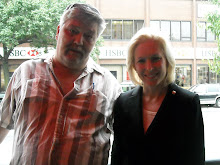
(Pictured l-r: Regent Kathleen M. Cashin and Assemblywoman Pheffer)

Assemblywoman Audrey I. Pheffer (D-Queens) was pleased to congratulate Regent Kathleen M. Cashin on her recent election to the Board of Regents. Regent Cashin has served the students of New York City for over 40 years prior to her election. Regent Cashin was the regional superintendent for Region 5 which included Community School District #27. She will serve as a Regent for the 2nd Judicial District.

Friday, February 11, 2011

Most New York Graduates Are Ill Prepared, Data Show by Sharon Otterman - NYTimes.com

Read original...


Monday, November 22, 2010

Bloomberg/Klein Failure in NYC Matters to the Country by John C. Fager - The Huffington Post

Read original...


New York City Mayor Bloomberg's removal of Chancellor Joel Klein and attempt -- opposition is growing -- to replace him with Cathie Black, the former CEO of Hearst Magazines, raises so many important K-12 education issues for the country. First and foremost it shows that Klein is a tarnished symbol of what is really Bloomberg's failing high stakes standardized test driven education agenda. New Yorkers have learned during the past four months that the "amazing" progress touted by the mayor is a myth and that the mayor and the chancellor knew this for the past three years.
But it isn't only Klein and Bloomberg who want to keep the myth alive it is also important for President Obama and Secretary of Education Duncan. That's because the Obama Administration's education agenda, including the Race to the Top, is very similar to Bloomberg and Klein's free market, business oriented approach. And it too is also losing public support.
Duncan seized the resignation as an opportunity to write an op-ed in the Daily News of NY that was an over the top salute to Klein and to subliminally bolster his own agenda. But reaction from parents, teachers, and numerous public officials, who often defer to the mayor, has been critical of Klein and Bloomberg and the mayor's selection of Black.
The selection process revealed a great deal about the shortcomings of mayoral control of schools, especially as it was designed by Bloomberg, and how the mayor abuses his almost total control of the school system. First, there was almost no selection process and what little there was went on behind closed doors. This mayor believes in autocratic control and has no tolerance for any democratic checks and balances. He also believes, as he stated in his autobiography, Bloomberg on Bloomberg, "I too think I can do everything better than anyone else... I've admitted there's a slim chance that ideas coming from others could be valuable as well."
The second major problem is with Black who the mayor picked without even consulting Klein. Black may be an exceptionally capable corporate CEO and member of the IBM and Coca-Cola boards but there is almost nothing in her background that suggests any interest in public service much less public education. She went to parochial schools, she sent her children to private boarding schools, and she is a socially prominent resident of the Upper East Side. Her only contact with public education was her participation in principal-for-a-day and since July she has been a member of a charter school board but has yet to attend a meeting.
The mayor is comfortable with her corporate and social background but he could hardly have found someone with less knowledge and experience in public education. But maybe that's the point; she doesn't even know what she doesn't know. Black is likely to become the de facto COO of the system and take orders from the mayor, the real CEO of the schools; she'll work with and rely on the staff already in place thus continuing the mayor's agenda even though it is losing credibility.
And why would Black, at age 66, want such a thankless job for which she's unqualified? Even though she is still temporarily connected to Hearst Magazines as chairwoman she was basically kicked upstairs this summer to help in the transition of a new president and CEO. No doubt feeling down about no longer being a CEO, she told the New York Post gossip columnist, Cindy Adams, after receiving Bloomberg's job offer, "The opportunity made me feel fantastic. It's a great thing when, at a certain stage in life, you can be able to deal up... not down."
If -- the if grows bigger every day as reporters chase Black around town as though she was Sharron Angle of Nevada -- she is given a waiver for her lack of experience and credentials by the state commissioner of education she will inherit a school system from Klein that suffered a major setback this July when the standardized test score bubble blew up. All the talk for the past three years about progress in grades three through eight came to be seen as empty rhetoric. Gone are the halcyon days of May 2009 when Bloomberg was informing President Obama at the White Office and then afterward the press, "The results are there. We are going in the right direction and I tried to impress on the President that if the rest of the country wants to actually improve the performance of their school system, this, I think, is a blueprint for exactly what you can do."
But we learned this summer, because of actions taken by the new state commissioner of education, David Steiner, who didn't want the test score bubble to blow up on his watch, that we aren't going in the right direction. He contracted with a Harvard professor, Daniel Koretz, who is an expert on testing to evaluate the state exams for grades three through eight. A year later, after receiving a scathing report from Koretz, the state stopped administering tests that had been made easy.
This summer the test score bubble burst when dramatic declines in test scores were announced. And then the New York Times in October finally weighed in with a highly critical news analysis that found that warning signs, that the scores were inflated and that the progress was mostly illusory, had been ignored by state and city officials for three years. The head of the state school board, Merryl Tisch, told the Times, "We came in here saying we have to stop lying to our kids... We have to be able to know what they do and do not know."
So much for progress in grades three through eight, this leaves the mayor and the chancellor talking about rising high school graduation rates as a key indicator of their successful reform and management of the school system. But as a high school teacher I see so many problems with the Regents exams -- it's another test score bubble -- that are required for graduation. On both social studies exams enough answers are given in so-called document based questions that one student, whose test I corrected, failed both essays and the multiple choice questions but got 12 of the 13 document based short answer questions correct and passed the exam.
Also, there has always been a built in conflict of interest with teachers correcting the tests of the students at their high schools. There understandably was a tendency to give your own students the benefit of the doubt but now with high stakes testing, where schools can be closed based on Regents exam scores, there's greater pressure to pass students.
And what does the state do to monitor the scoring of the Regents exams? Surprisingly little. According to a 2009 audit by the state comptroller, "Oversight of Scoring Practices on Regents Examinations," the state education department (SED) has identified "significant inaccuracies by local school districts... (that) tended to inflate the academic performance of students and schools." The audit went on to say, "Despite the seriousness of the review team findings... there was little evidence that SED took action."
And there's the local diploma, as opposed to the Regents diploma, that is conferred even if a student receives a score of 55 percent on two Regents exams. Current plans call for the local diploma to be phased out and the passing score to be raised to the more common 65 percent on all five exams. The problem is that 33 percent of black graduates, 31 percent of Hispanic graduates, 50 percent of students with special needs, and 48 percent of English Language Learners who graduated in New York State in 2008 did so with a local diploma. If the local diploma is phased out graduation rates will fall off of a cliff especially in New York City.
The mayor has not only made ineffective and damaging changes to the schools but he has also thrown money at the problem. During his two terms spending has skyrocketed from $14 billion to $22 billion and the schools are still making, at best, the meager progress that they were before he instituted many changes that turned out not to be reforms. New Yorkers should demand that Mayor Bloomberg start a new search for a school leader with a vision and a plan that can truly guarantee every child a 21st century education. And the rest of the country should resist New York City's expensive and demoralizing model of school change that the Obama administration is pressuring Congress to adopt.
John Fager is a teacher, parent, columnist, & ed advisor to Council President - click here for bio...

Thursday, November 11, 2010

Sign Petition: Deny a Waiver to Cathleen Black; She is Unqualified to Become NYC Chancellor!


Mayor Bloomberg has appointed Cathleen Black as the new NYC Schools Chancellor to succeed Joel Klein.  Ms. Black is a corporate executive and magazine publisher who has no education experience, did not attend public school herself, and sent her children to private boarding schools in Connecticut.  Her background does not qualify her to lead a school system of 1.1 million public school students.
NY state law requires that candidates for school superintendency who do not meet minimal requirements must receive a waiver from Education Commissioner David Steiner. This waiver is to be issued only to persons “whose exceptional training and experiences are the substantial equivalent of such requirements and qualify such persons for the duties of a superintendent of schools.”  Ms. Black has no “exceptional” training or experiences that would qualify her for this position.
NYC has had nine long years of a chancellor who was not an educator.  NYC public school students have suffered enough with crowded classrooms, inflated test scores, and parents shut out of the system.  Our children can only be saved if we have an educator as Chancellor, and who understands what a quality education really means. The waiver must be denied.
Take action now by signing our petition, and your letter will be sent immediately to Commissioner Steiner, the Board of Regents, and the entire NY State Legislature. Please also follow up with a call to the Commissioner’s office at (518) 474-5844. 
Thank you for supporting our kids.
NYC Kids PAC


 PETITION TEXT

Denial of Waiver for Cathleen Black as NYC Chancellor

Dear Commissioner Steiner:
We respectfully urge you to withhold any waiver that would allow Cathleen Black to become Chancellor of the NYC public schools. Ms. Black is simply not qualified to become the leader of the nation’s largest school system.

We have had nine, long years with a chancellor who had little or no educational experience, and our schools have suffered as a result, with growing class sizes, worsening overcrowding, test prep replacing a full and varied curriculum, rampant credit recovery, and no narrowing of the achievement gap.

We need an educator who understands what teaching and learning are all about, who will listen to parents, and who will recognize the meaning of a quality education.

Yours respectfully,
[Your name]

Tuesday, August 24, 2010

Assemblywoman Catherine Nolan on New York Winning Race to the Top Funding

“As a parent of a public school student, I know how much this money is needed,” said Assemblywoman Catherine Nolan. “As Chairwoman of the Assembly Education Committee, I know Race To the Top money will go a long way in helping New York renew and renovate our education system. Assembly members worked hard to come up with key legislation that would meet the test. With the leadership of Assembly Speaker Sheldon Silver and the guidance of State Board of Regents Chancellor Merryl Tisch, we worked together successfully to pass this complex legislation that allow us this win this money.”

Saturday, June 19, 2010

State's Elementary and Middle School Social Studies Exams Are on the Chopping Block by Yoav Gonen - NYPOST.com

Read original...


Regents Eye Axing Test

New York's social-studies tests may soon be history.

The annual history and civics exams given to public-school students in grades 5 and 8 are set to fall victim next week to state Education Department's budget cuts, The Post has learned.

The Board of Regents will likely vote to eliminate the tests -- given to more than 440,000 kids a year in New York -- as part of a plan to eliminate an $11.5 million deficit for the coming school year.

"Obviously, we are concerned," said city Department of Education spokesman David Cantor.

The social-studies tests were first administered statewide in 2001 as part of a Board of Regents effort to raise standards.

But unlike the annual English, math and science exams given to students in grades 3 to 8, the social-studies tests aren't mandated by the federal government's accountability system.

Judging by the measure up for approval Tuesday, eliminating the tests in the lower grades would spare some of the high-school Regents exams that had been on the chopping block several months ago -- including two in social studies.

The decision to spare some of the high-school exams stems from a meeting of state and union officials earlier this year, a memo written by Deputy Education Commissioner John King Jr. says.

"While there was no consensus of opinion among stakeholders, one message we heard fairly consistently was to try to avoid making cuts in assessments that would impact high-school graduation," he wrote. "To the extent practicable, the proposals included in this item respond to that request."

However, if Albany doesn't pony up an additional $7 million in next year's budget for the state's testing program, then a second series of cuts might eliminate all foreign-language Regents exams besides French and Spanish.

The secondary proposal also calls for eliminating the option for kids to take one of the Regents exams in January rather than June or August.

Sunday, June 6, 2010

NY Passes Students Who Get Wrong Answers on Tests by Carl Campanile and Susan Edelman- NYPOST.com

Read original...

When does 2 + 2 = 5?

When you're taking the state math test.

Despite promises that the exams -- which determine whether students advance to the next grade -- would not be dumbed down this year, students got "partial credit" for wrong answers after failing to correctly add, subtract, multiply and divide. Some got credit for no answer at all.

"They were giving credit for blatantly wrong things," said an outraged Brooklyn teacher who was among those hired to score the fourth-grade test.

State education officials had vowed to "strengthen" and "increase the rigor" of both the questions and the scoring when about 1.2 million kids in grades 3 to 8 -- including 450,000 in New York City -- took English exams in April and math exams last month.


CLOSE ENOUGH: New York City fourth-graders were able to get partial credit for blank or incorrect answers on state math tests. A concerned teacher blew the whistle on the practice.

But scoring guides obtained by The Post reveal that kids get half-credit or more for showing fragments of work related to the problem -- even if they screw up the calculations or leave the answer blank.

Examples in the fourth-grade scoring guide include:

* A kid who answers that a 2-foot-long skateboard is 48 inches long gets half-credit for adding 24 and 24 instead of the correct 12 plus 12.

* A miscalculation that 28 divided by 14 equals 4 instead of 2 is "partially correct" if the student uses the right method to verify the wrong answer.

* Setting up a division problem to find one-fifth of $400, but not solving the problem -- and leaving the answer blank -- gets half-credit. (See Photo Above)

* A kid who subtracts 57 cents from three quarters for the right change and comes up with 15 cents instead of 18 cents still gets half-credit.

* A student who figures the numbers of books in 35 boxes of 10 gets half-credit despite messed-up multiplication that yields the wrong answer, 150 instead of 350.

These questions ask students to show their work. The scoring guidelines, called "holistic rubrics," require that points be given if a kid's attempt at an answer reflects a "partial understanding" of the math concept, "addresses some element of the task correctly," or uses the "appropriate process" to arrive at a wrong solution. Despite flubbing the answer, students can get 1 point on a 2-point problem and 1 or 2 points on a 3-pointer.

The Brooklyn teacher said she and peers who had trained to score the tests were stunned at some instructions.

"Everybody in the room was upset," she said.

The teacher had scored tests with some "controversial questions" for several years, but "this time it was more outrageous," she said. "You feel like you're being forced to cheat."

Scorers joked about giving points to kids who wrote their names, brought a pencil or shared gum.

However, score inflation is not funny, the whistleblower said.

"The kids who really need the help are just being shuffled along to the next grade without the basic skills to have true success. They are given a hollow success -- that's the crime of it. The state DOE is doing a disservice to its children."

Some testing experts are also troubled.

Ray Domanico, a former head of data analysis for city schools, said kids deserve a little credit for partial knowledge but agreed the scoring system "raises some questions about whether it's too generous."

State Education Department spokesman Tom Dunn defended the scoring.

"All teachers who score exams receive clear training and rubrics that detail scoring criteria for every question on the tests," he said. "Students who show work and demonstrate a partial understanding of the mathematical concepts or procedures embodied in the question receive partial credit."

But a few extra points can let a failing kid squeak by.

A year ago, Chancellor Joel Klein boasted that the city was making "dramatic progress" when 82 percent of city students passed the state math test and 69 percent passed in English, up sharply from 2002. And fewer kids have been left back in recent years.

What officials didn't reveal was that the number of points needed to pass proficiency levels has, in most cases, steadily dropped.

The state Board of Regents, which oversees the tests, has postponed the release of results until late July, but let the city Department of Education set its own "promotional cut scores" to decide which kids may be held back. The DOE will release those scores in the next two weeks, a spokesman said.

Friday, June 12, 2009

NYC Test Scores Raise Serious Questions About Testing by Gabe Pressman | NBC New York

Read original...

Mayor Michael Bloomberg and Schools Chancellor Joel Klein hail the big gains on state math tests this year in the city's public schools.

But Merryl Tisch, the chancellor of the state's Board of Regents, warns there is strong reason for caution in analyzing these results.

"Just because scores have gone up dramatically does not mean that our youngsters are ready to go to college," she told the New York Times.

While she complimented Bloomberg and Klein for moving the school system in the right direction, Ms. Tisch told me that "the time has come to raise the bar in the testing process. It's time to start a conversation about testing.

"When we look at the graduation statistics, we find that many students are not prepared to enter college. Seventy-four percent are in need of remediation when they reach college."

In plain language, Ms. Tisch thinks the tests are too easy. She believes young people are graduating without basic skills. She's not saying that we're cooking the books. But she is raising a serious question: are the tests really telling us how well the educational system is doing?

I talked to a veteran teacher and administrator at a Queens school. She didn't want her name used but she had a lot to say about the tests that our young people are taking. "The tests are too predictable. And teachers, including myself, are training kids to pass the tests.

"This math test has been most predictable. We know what's going to be on it from examining past tests. We practice constantly and the ultimate result is the kids are likely to score well but not necessarily know more than they did last time they were tested."

The Mayor and Chancellor Klein insist that the achievement gap between city students and those in other parts of the state is closing. Also, they say, the gap between students of different races is closing.

"This is a big victory for the city," Klein said. "And we should bask in it."

But the leader of the state's entire educational system, Ms. Tisch, insists otherwise.

"No one should interpret (the recent test-score results) as an enormous victory," she said. "We're moving in the right direction but just because scores have gone up dramatically does not mean that our youngsters are ready to go to college."

She has a point. When three-fourths of those who reach college need remedial work to qualify for courses, it's clear there's something rong here. We can understand Tisch's concern.

And we can also understand why the seasoned teacher who talked to us says, "We're teaching to test and the results are predictable, but not necessarily beneficial to the students.

It angers me that there is so much emphasis on tests and so little on the well-rounded education that can only come in the classroom from the relationship between teacher and students."

There is a danger in this election year that the statistics can be used for political purposes. Let's hope, for the sake of the kids, that this won't happen.

Tuesday, February 17, 2009

Brooklyn Bishop Nicholas DiMarzio Donates to Politician Whose Ma Will Rule on Saving Diocese Schools by Brendan Brosh - NY Daily News

Read original...

Brooklyn's Catholic bishop made a rare political donation last month to a City Council candidate whose mother has power over a plan to save several parochial schools, the Daily News has learned.

Bishop Nicholas DiMarzio, whose diocese also includes Queens, personally contributed $250 to Queens candidate Geraldine M. Chapey on Jan. 7, city campaign finance records show.

The donation came a month before DiMarzio and Mayor Bloomberg announced the city plans to convert some struggling Catholic schools in Brooklyn and Queens into charter schools.

Chapey's mother is a member of the state Board of Regents, which has the power to approve charter schools.

"I guess religion has a place in politics now," said Glenn DiResto, a retired NYPD lieutenant who is running against Chapey in a special election for the Council seat vacated by new state Sen. Joseph Addabbo.

"It creates a suspicion of impropriety. This is politics as usual," DiResto said.

Another candidate, Lew Simon, called the contribution a "conflict of interest."

"I've never seen the church speak out on a candidate before," Simon said.

DiMarzio - who heads a diocese of nearly 1-1/2 million Catholics - said there was no quid pro quo with the politically connected family.

"You can't make the connection," said DiMarzio, who said he has known Chapey for the past five years. "It doesn't exist."

The donation is actually worth $772, because it qualifies for a $522 match with taxpayer money under Campaign Finance Board rules.

It appears to be the 64-year-old bishop's first donation to any city, state or federal candidate, a search of campaign finance records shows. DiMarzio said he had donated to "very few" candidates "back in New Jersey" but couldn't remember their names.

A search of New Jersey campaign finance and lobbying records did not reveal any donations from DiMarzio.

Chapey's mother, Geraldine D. Chapey, who has sat on the Board of Regents since 1998, did not return a call for comment.

The plan to convert four Brooklyn and Queens Catholic schools into charter schools is still fluid, but the diocese plans to establish a nonprofit to oversee them. They could no longer offer religious education.

The proposal faces a number of legislative hurdles, and the state would need to pass a law for the plan to go through.

Council candidate Chapey - who seeks to represent portions of the Rockaways, Howard Beach and Ozone Park - said she hadmade no agreement with the bishop.

"The bishop is a citizen, and he's participating in the democratic process," said Chapey, a local Democratic district leader. "There was no discussion about charter schools. Absolutely and totally not. N.O. No discussion. That would be evil."

DiMarzio stressed that his donation was made as a private citizen. He said he doesn't expect Chapey to vote along church lines if she's elected.

"She's not the regent," DiMarzio said. "Her mother is. She is a very good parishioner of the diocese.

Monday, May 12, 2008

City Comptroller Honored At Annual Teachers' Union Gala - NY1: Education

Read original...

Watch video report...

Thousands of current and retired teachers, as well as elected officials (and parents), packed the Hilton Saturday for the city teachers' union annual gala.

One city official got the group's highest award, while others became the target of potshots for how they're running the city's schools.

This year, the United Federation of Teachers gave its highest award to City Comptroller Bill Thompson, former Board of Education president and mayoral aspirant.

Union president Randi Weingarten says Thompson is an ally in checking the mayor's near total school control.

"He is sometimes the only watchdog we have," she said.

Thompson immediately laid out his agenda, starting with big audits of no-bid education contracts he says need some going over.

"These contracts reflect questionable fiscal management with impacts that ripple through the education system," said Thompson.

Weingarten, the victor in a nasty legislative fight that stopped the mayor from tying teacher tenure to student test scores, blasted what she calls Mayor Michael Bloomberg's go-at-it-alone approach.

Her criticism came while the mayor's school chiefs, Chancellor Joel Klein and Deputy Mayor Dennis Walcott, sat within feet of the podium.

"I don't know why, but for whatever reason, the Bloomberg-Klein administration has shut the community out," said Weingarten.

Walcott and Klein deflected Weingarten's criticism, calling it public posturing. They say behind the scenes they work very closely with the teachers union.

"It's both public posturing, but it's also capturing the belief of some of the people out there," said Walcott. "They don't just want input; they want to be decision makers, but frankly decision rests with the mayor and chancellor."

Klein said student achievement and teacher salaries are way up, with top pay over $100,000 a year.

"We have a disagreement about tenure," said Klein. "It's a real disagreement. She pushed back. It's part of mayoral accountability. People can push back."

Important decision makers are listening. A member of the Board of Regents, the state's high court on education, said this about Weingarten's speech.

"It's a wake up call for the city," said Betty Rosa, a member of the Board of Regents, about Weingarten's speech. "To realize we need collaboration, we need community, and complete comprehensive input is an eye-opener."

An important indication of where other Albany decision makers might be, with the state law on mayoral school control up for renewal next year.

- Michael Meenan