Read original...
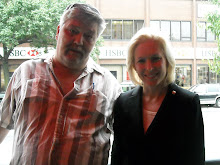
Stephanie Thayer (l.) is director of the Open Space Alliance for North Brooklyn - and Parks Department's chief of North Brooklyn Parks. Keh for News
The city is setting up increasingly cozy relationships with nonprofit parks boosters - even paying some of their staffers a second salary out of the public till, a Daily News review found.
Critics say the entwined arrangements with conservancies - nonprofits that support individual parks - mean that a handful of well-connected parks are ending up with more attention and money than the rest.
"
New York is creating a two-tier system," said
Geoffrey Croft of
New York City Park Advocates, a frequent critic of the Parks Department.
"The nightmare is that all these deals are going on behind closed doors and that people are taking city dollars away from other parks," Croft said.
The situation is unusual. Although it is not uncommon for the city and nonprofits to hire from the same pool of advocates and experts, it is extremely rare for people to work for both at the same time.
No other agency has as many employees who have been cleared to work for nonprofits while simultaneously collecting a city salary, according to the
Conflicts of Interest Board.
The News found seven top-salary city employees working on nonprofits that support specific parks, including four who got money from both:
Parks paid
Aimee Boden $114,000 in 2008 to run
Randalls Island, the same year the
Randalls Island Sports Foundation paid her $80,000, records show. Boden did not return a call seeking comment.
In 2008, the Prospect Park Alliance in Brooklyn paid Tupper Thomas $40,000, and the city paid her $122,000 as "assistant commissioner for strategic partnerships," records show. An Alliance spokesman said Thomas was away and unable to comment.
That same year, the city paid John Herrold $94,099 to run Riverside Park, while the Riverside Park Fund Inc. paid him $33,000, records show.
In 2009, Robin Dublin, administrator of the Greenbelt on Staten Island, made $87,000 from the city and $9,600 from the Greenbelt Conservancy, records show.
Parks and Recreation Commissioner Adrian Benepe acknowledged that over the past few years he has expanded the practice, saying it makes sense to hire people already familiar with specific
Parks paid Aimee Boden $114,000 in 2008 to run Randalls Island, the same year the Randalls Island Sports Foundation paid her $80,000, records show. Boden did not return a call seeking comment.
In 2008, the Prospect Park Alliance in Brooklyn paid Tupper Thomas $40,000, and the city paid her $122,000 as "assistant commissioner for strategic partnerships," records show. An Alliance spokesman said Thomas was away and unable to comment.
That same year, the city paid John Herrold $94,099 to run Riverside Park, while the Riverside Park Fund Inc. paid him $33,000, records show.
In 2009, Robin Dublin, administrator of the Greenbelt on Staten Island, made $87,000 from the city and $9,600 from the Greenbelt Conservancy, records show.
Parks and Recreation Commissioner Adrian Benepe acknowledged that over the past few years he has expanded the practice, saying it makes sense to hire people already familiar with specific parks.
"You want somebody who knows how to work the streets and has been an advocate," Benepe said.
Other arrangements are not quite so overt.
The city paid Eloise Hirsh $97,893 in 2009 to run Fresh Kills Park and cleared her to serve as executive director for Freshkills Park Inc., but it is not clear from records whether the nonprofit paid her. The group did not return calls.
Estelle Cooper got $101,507 as assistant commissioner of Queens parks in 2009, while she also ran Unisphere, a nonprofit that supports Flushing Meadows Corona Park. Unisphere did not list a salary for her and did not return calls.
In 2008, Stephanie Thayer became director of the Open Space Alliance for North Brooklyn - and the Parks Department's director of North Brooklyn Parks.
Records show Thayer got $86,528 from the city. She said her work for the nonprofit is voluntary.
"I'm still fighting the good fight," she said. "I'm just doing it in a different way."
Figuring out which hat Thayer is wearing has created frustration among some park advocates.
Laura Hofmann, a member of Open Space's steering committee, said Thayer spurned her when she tried to find out how many trees would be planted in a new park.
"She basically told me you have to trust the Parks Department and you have no business asking for this kind of information," Hofmann said.
New York has more than 1,700 city parks - but only 58 registered conservancies, which support specific parks by recruiting volunteers, creating programming and funding upkeep with a mixture of public and private cash.
Half of them - 24 - are in Manhattan and most are connected with parks in affluent neighborhoods.
The tight relationship between conservancies and the city emerges in e-mails obtained by The News under the Freedom of Information Law.
Take the case of the SeaGlass Carousel in Battery Park, a 23-acre greenspace at the tip of Manhattan. Battery Conservancy President Warrie Price aggressively sought public funding for the ride in 2007.
"Millions of sea creatures diving with joy!" Price exclaimed in a June 2007 e-mail to Benepe, whom she addressed as "dear Commander of the Polar Star."
"You lead the charge at City Hall and made the successful case," she gushed. "I send you my most fond and deep thanks."
Three months later, $4.8 million in city capital money was budgeted for the SeaGlass Carousel.
That has increased to more than $5 million, with the rest of the $12 million budget coming from federal, state and private funds. Benepe said the city's cost was a "relatively minor amount" compared with the what the department spends improving parks.
"Even if you don't live across from Battery Park," he said, "lots of people benefit from it."
Parks paid Aimee Boden $114,000 in 2008 to run Randalls Island, the same year the Randalls Island Sports Foundation paid her $80,000, records show. Boden did not return a call seeking comment.
In 2008, the Prospect Park Alliance in Brooklyn paid Tupper Thomas $40,000, and the city paid her $122,000 as "assistant commissioner for strategic partnerships," records show. An Alliance spokesman said Thomas was away and unable to comment.
That same year, the city paid John Herrold $94,099 to run Riverside Park, while the Riverside Park Fund Inc. paid him $33,000, records show.
In 2009, Robin Dublin, administrator of the Greenbelt on Staten Island, made $87,000 from the city and $9,600 from the Greenbelt Conservancy, records show.
Parks and Recreation Commissioner Adrian Benepe acknowledged that over the past few years he has expanded the practice, saying it makes sense to hire people already familiar with specific parks.
"You want somebody who knows how to work the streets and has been an advocate," Benepe said.
Other arrangements are not quite so overt.
The city paid Eloise Hirsh $97,893 in 2009 to run Fresh Kills Park and cleared her to serve as executive director for Freshkills Park Inc., but it is not clear from records whether the nonprofit paid her. The group did not return calls.
Estelle Cooper got $101,507 as assistant commissioner of Queens parks in 2009, while she also ran Unisphere, a nonprofit that supports Flushing Meadows Corona Park. Unisphere did not list a salary for her and did not return calls.
In 2008, Stephanie Thayer became director of the Open Space Alliance for North Brooklyn - and the Parks Department's director of North Brooklyn Parks.
Records show Thayer got $86,528 from the city. She said her work for the nonprofit is voluntary.
"I'm still fighting the good fight," she said. "I'm just doing it in a different way."
Figuring out which hat Thayer is wearing has created frustration among some park advocates.
Laura Hofmann, a member of Open Space's steering committee, said Thayer spurned her when she tried to find out how many trees would be planted in a new park.
"She basically told me you have to trust the Parks Department and you have no business asking for this kind of information," Hofmann said.
New York has more than 1,700 city parks - but only 58 registered conservancies, which support specific parks by recruiting volunteers, creating programming and funding upkeep with a mixture of public and private cash.
Half of them - 24 - are in Manhattan and most are connected with parks in affluent neighborhoods.
The tight relationship between conservancies and the city emerges in e-mails obtained by The News under the Freedom of Information Law.
Take the case of the SeaGlass Carousel in Battery Park, a 23-acre greenspace at the tip of Manhattan. Battery Conservancy President Warrie Price aggressively sought public funding for the ride in 2007.
"Millions of sea creatures diving with joy!" Price exclaimed in a June 2007 e-mail to Benepe, whom she addressed as "dear Commander of the Polar Star."
"You lead the charge at City Hall and made the successful case," she gushed. "I send you my most fond and deep thanks."
Three months later, $4.8 million in city capital money was budgeted for the SeaGlass Carousel.
That has increased to more than $5 million, with the rest of the $12 million budget coming from federal, state and private funds. Benepe said the city's cost was a "relatively minor amount" compared with the what the department spends improving parks.
"Even if you don't live across from Battery Park," he said, "lots of people benefit from it."
Parks paid Aimee Boden $114,000 in 2008 to run Randalls Island, the same year the Randalls Island Sports Foundation paid her $80,000, records show. Boden did not return a call seeking comment.
In 2008, the Prospect Park Alliance in Brooklyn paid Tupper Thomas $40,000, and the city paid her $122,000 as "assistant commissioner for strategic partnerships," records show. An Alliance spokesman said Thomas was away and unable to comment.
That same year, the city paid John Herrold $94,099 to run Riverside Park, while the Riverside Park Fund Inc. paid him $33,000, records show.
In 2009, Robin Dublin, administrator of the Greenbelt on Staten Island, made $87,000 from the city and $9,600 from the Greenbelt Conservancy, records show.
Parks and Recreation Commissioner Adrian Benepe acknowledged that over the past few years he has expanded the practice, saying it makes sense to hire people already familiar with specific parks.
In 2008, the Prospect Park Alliance in Brooklyn paid Tupper Thomas $40,000, and the city paid her $122,000 as "assistant commissioner for strategic partnerships," records show. An Alliance spokesman said Thomas was away and unable to comment.
That same year, the city paid John Herrold $94,099 to run Riverside Park, while the Riverside Park Fund Inc. paid him $33,000, records show.
In 2009, Robin Dublin, administrator of the Greenbelt on Staten Island, made $87,000 from the city and $9,600 from the Greenbelt Conservancy, records show.
Parks and Recreation Commissioner Adrian Benepe acknowledged that over the past few years he has expanded the practice, saying it makes sense to hire people already familiar with specific parks.
"You want somebody who knows how to work the streets and has been an advocate," Benepe sai
P

In 2008, the
Prospect Park Alliance in
Brooklyn paid
Tupper Thomas $40,000, and the city paid her $122,000 as "assistant commissioner for strategic partnerships," records show. An Alliance spokesman said Thomas was away and unable to comment.
That same year, the city paid
John Herrold $94,099 to run Riverside Park, while the
Riverside Park Fund Inc. paid him $33,000, records show.In 2009, Robin
Dublin, administrator of the Greenbelt on
Staten Island, made $87,000 from the city and $9,600 from the Greenbelt Conservancy, records show.
Parks and Recreation Commissioner Adrian Benepe acknowledged that over the past few years he has expanded the practice, saying it makes sense to hire people already familiar with specific parks.
"You want somebody who knows how to work the streets and has been an advocate," Benepe said.
Other arrangements are not quite so overt.
The city paid
Eloise Hirsh $97,893 in 2009 to run
Fresh Kills Park and cleared her to serve as executive director for
Freshkills Park Inc., but it is not clear from records whether the nonprofit paid her. The group did not return calls.
 Estelle Cooper
 got $101,507 as assistant commissioner of Queens parks in 2009, while she also ran Unisphere, a nonprofit that supports
Flushing Meadows Corona Park. Unisphere did not list a salary for her and did not return calls.
In 2008,
Stephanie Thayer became director of the Open Space Alliance for North Brooklyn - and the Parks Department's director of North Brooklyn Parks.
Records show Thayer got $86,528 from the city. She said her work for the nonprofit is voluntary.
"I'm still fighting the good fight," she said. "I'm just doing it in a different way."
Figuring out which hat Thayer is wearing has created frustration among some park advocates.
Laura Hofmann, a member of Open Space's steering committee, said Thayer spurned her when she tried to find out how many trees would be planted in a new park.
"She basically told me you have to trust the Parks Department and you have no business asking for this kind of information," Hofmann said.
New York has more than 1,700 city parks - but only 58 registered conservancies, which support specific parks by recruiting volunteers, creating programming and funding upkeep with a mixture of public and private cash.
Half of them - 24 - are in
Manhattan and most are connected with parks in affluent neighborhoods.
The tight relationship between conservancies and the city emerges in e-mails obtained by The News under the Freedom of Information Law.
Take the case of the SeaGlass Carousel in
Battery Park, a 23-acre greenspace at the tip of Manhattan. Battery Conservancy President Warrie Price aggressively sought public funding for the ride in 2007.
"Millions of sea creatures diving with joy!" Price exclaimed in a June 2007 e-mail to Benepe, whom she addressed as "dear Commander of the Polar Star."
"You lead the charge at City Hall and made the successful case," she gushed. "I send you my most fond and deep thanks."
Three months later, $4.8 million in city capital money was budgeted for the SeaGlass Carousel.
That has increased to more than $5 million, with the rest of the $12 million budget coming from federal, state and private funds. Benepe said the city's cost was a "relatively minor amount" compared with the what the department spends improving parks.
"Even if you don't live across from Battery Park," he said, "lots of people benefit from it."
Parks paid Aimee Boden $114,000 in 2008 to run Randalls Island, the same year the Randalls Island Sports Foundation paid her $80,000, records show. Boden did not return a call seeking comment.
In 2008, the Prospect Park Alliance in Brooklyn paid Tupper Thomas $40,000, and the city paid her $122,000 as "assistant commissioner for strategic partnerships," records show. An Alliance spokesman said Thomas was away and unable to comment.
That same year, the city paid John Herrold $94,099 to run Riverside Park, while the Riverside Park Fund Inc. paid him $33,000, records show.
In 2009, Robin Dublin, administrator of the Greenbelt on Staten Island, made $87,000 from the city and $9,600 from the Greenbelt Conservancy, records show.
Parks and Recreation Commissioner Adrian Benepe acknowledged that over the past few years he has expanded the practice, saying it makes sense to hire people already familiar with specific parks.
Parks paid Aimee Boden $114,000 in 2008 to run Randalls Island, the same year the Randalls Island Sports Foundation paid her $80,000, records show. Boden did not return a call seeking comment.
In 2008, the Prospect Park Alliance in Brooklyn paid Tupper Thomas $40,000, and the city paid her $122,000 as "assistant commissioner for strategic partnerships," records show. An Alliance spokesman said Thomas was away and unable to comment.
That same year, the city paid John Herrold $94,099 to run Riverside Park, while the Riverside Park Fund Inc. paid him $33,000, records show.
In 2009, Robin Dublin, administrator of the Greenbelt on Staten Island, made $87,000 from the city and $9,600 from the Greenbelt Conservancy, records show.
Parks and Recreation Commissioner Adrian Benepe acknowledged that over the past few years he has expanded the practice, saying it makes sense to hire people already familiar with specific parks.
"You want somebody who knows how to work the streets and has been an advocate," Benepe said.
Other arrangements are not quite so overt.
The city paid Eloise Hirsh $97,893 in 2009 to run Fresh Kills Park and cleared her to serve as executive director for Freshkills Park Inc., but it is not clear from records whether the nonprofit paid her. The group did not return calls.
Estelle Cooper got $101,507 as assistant commissioner of Queens parks in 2009, while she also ran Unisphere, a nonprofit that supports Flushing Meadows Corona Park. Unisphere did not list a salary for her and did not return calls.
In 2008, Stephanie Thayer became director of the Open Space Alliance for North Brooklyn - and the Parks Department's director of North Brooklyn Parks.
Records show Thayer got $86,528 from the city. She said her work for the nonprofit is voluntary.
"I'm still fighting the good fight," she said. "I'm just doing it in a different way."
Figuring out which hat Thayer is wearing has created frustration among some park advocates.
Laura Hofmann, a member of Open Space's steering committee, said Thayer spurned her when she tried to find out how many trees would be planted in a new park.
"She basically told me you have to trust the Parks Department and you have no business asking for this kind of information," Hofmann said.
New York has more than 1,700 city parks - but only 58 registered conservancies, which support specific parks by recruiting volunteers, creating programming and funding upkeep with a mixture of public and private cash.
Half of them - 24 - are in Manhattan and most are connected with parks in affluent neighborhoods.
The tight relationship between conservancies and the city emerges in e-mails obtained by The News under the Freedom of Information Law.
Take the case of the SeaGlass Carousel in Battery Park, a 23-acre greenspace at the tip of Manhattan. Battery Conservancy President Warrie Price aggressively sought public funding for the ride in 2007.
"Millions of sea creatures diving with joy!" Price exclaimed in a June 2007 e-mail to Benepe, whom she addressed as "dear Commander of the Polar Star."
"You lead the charge at City Hall and made the successful case," she gushed. "I send you my most fond and deep thanks."
Three months later, $4.8 million in city capital money was budgeted for the SeaGlass Carousel.
That has increased to more than $5 million, with the rest of the $12 million budget coming from federal, state and private funds. Benepe said the city's cost was a "relatively minor amount" compared with the what the department spends improving parks.
"Even if you don't live across from Battery Park," he said, "lots of people benefit from it."
Parks paid Aimee Boden $114,000 in 2008 to run Randalls Island, the same year the Randalls Island Sports Foundation paid her $80,000, records show. Boden did not return a call seeking comment.
In 2008, the Prospect Park Alliance in Brooklyn paid Tupper Thomas $40,000, and the city paid her $122,000 as "assistant commissioner for strategic partnerships," records show. An Alliance spokesman said Thomas was away and unable to comment.
That same year, the city paid John Herrold $94,099 to run Riverside Park, while the Riverside Park Fund Inc. paid him $33,000, records show.
In 2009, Robin Dublin, administrator of the Greenbelt on Staten Island, made $87,000 from the city and $9,600 from the Greenbelt Conservancy, records show.
Parks and Recreation Commissioner Adrian Benepe acknowledged that over the past few years he has expanded the practice, saying it makes sense to hire people already familiar with specific parks.
"You want somebody who knows how to work the streets and has been an advocate," Benepe said.
Other arrangements are not quite so overt.
The city paid Eloise Hirsh $97,893 in 2009 to run Fresh Kills Park and cleared her to serve as executive director for Freshkills Park Inc., but it is not clear from records whether the nonprofit paid her. The group did not return calls.
Estelle Cooper got $101,507 as assistant commissioner of Queens parks in 2009, while she also ran Unisphere, a nonprofit that supports Flushing Meadows Corona Park. Unisphere did not list a salary for her and did not return calls.
In 2008, Stephanie Thayer became director of the Open Space Alliance for North Brooklyn - and the Parks Department's director of North Brooklyn Parks.
Records show Thayer got $86,528 from the city. She said her work for the nonprofit is voluntary.
"I'm still fighting the good fight," she said. "I'm just doing it in a different way."
Figuring out which hat Thayer is wearing has created frustration among some park advocates.
Laura Hofmann, a member of Open Space's steering committee, said Thayer spurned her when she tried to find out how many trees would be planted in a new park.
"She basically told me you have to trust the Parks Department and you have no business asking for this kind of information," Hofmann said.
New York has more than 1,700 city parks - but only 58 registered conservancies, which support specific parks by recruiting volunteers, creating programming and funding upkeep with a mixture of public and private cash.
Half of them - 24 - are in Manhattan and most are connected with parks in affluent neighborhoods.
The tight relationship between conservancies and the city emerges in e-mails obtained by The News under the Freedom of Information Law.
Take the case of the SeaGlass Carousel in Battery Park, a 23-acre greenspace at the tip of Manhattan. Battery Conservancy President Warrie Price aggressively sought public funding for the ride in 2007.
"Millions of sea creatures diving with joy!" Price exclaimed in a June 2007 e-mail to Benepe, whom she addressed as "dear Commander of the Polar Star."
"You lead the charge at City Hall and made the successful case," she gushed. "I send you my most fond and deep thanks."
Three months later, $4.8 million in city capital money was budgeted for the SeaGlass Carousel.
That has increased to more than $5 million, with the rest of the $12 million budget coming from federal, state and private funds. Benepe said the city's cost was a "relatively minor amount" compared with the what the department spends improving parks.
"Even if you don't live across from Battery Park," he said, "lots of people benefit from it."
Parks paid Aimee Boden $114,000 in 2008 to run Randalls Island, the same year the Randalls Island Sports Foundation paid her $80,000, records show. Boden did not return a call seeking comment.
In 2008, the Prospect Park Alliance in Brooklyn paid Tupper Thomas $40,000, and the city paid her $122,000 as "assistant commissioner for strategic partnerships," records show. An Alliance spokesman said Thomas was away and unable to comment.
That same year, the city paid John Herrold $94,099 to run Riverside Park, while the Riverside Park Fund Inc. paid him $33,000, records show.
In 2009, Robin Dublin, administrator of the Greenbelt on Staten Island, made $87,000 from the city and $9,600 from the Greenbelt Conservancy, records show.
Parks and Recreation Commissioner Adrian Benepe acknowledged that over the past few years he has expanded the practice, saying it makes sense to hire people already familiar with specific parks.
"You want somebody who knows how to work the streets and has been an advocate," Benepe said.
Other arrangements are not quite so overt.
The city paid Eloise Hirsh $97,893 in 2009 to run Fresh Kills Park and cleared her to serve as executive director for Freshkills Park Inc., but it is not clear from records whether the nonprofit paid her. The group did not return calls.
Estelle Cooper got $101,507 as assistant commissioner of Queens parks in 2009, while she also ran Unisphere, a nonprofit that supports Flushing Meadows Corona Park. Unisphere did not list a salary for her and did not return calls.
In 2008, Stephanie Thayer became director of the Open Space Alliance for North Brooklyn - and the Parks Department's director of North Brooklyn Parks.
Records show Thayer got $86,528 from the city. She said her work for the nonprofit is voluntary.
"I'm still fighting the good fight," she said. "I'm just doing it in a different way."
Figuring out which hat Thayer is wearing has created frustration among some park advocates.
Laura Hofmann, a member of Open Space's steering committee, said Thayer spurned her when she tried to find out how many trees would be planted in a new park.
"She basically told me you have to trust the Parks Department and you have no business asking for this kind of information," Hofmann said.
New York has more than 1,700 city parks - but only 58 registered conservancies, which support specific parks by recruiting volunteers, creating programming and funding upkeep with a mixture of public and private cash.
Half of them - 24 - are in Manhattan and most are connected with parks in affluent neighborhoods.
The tight relationship between conservancies and the city emerges in e-mails obtained by The News under the Freedom of Information Law.
Take the case of the SeaGlass Carousel in Battery Park, a 23-acre greenspace at the tip of Manhattan. Battery Conservancy President Warrie Price aggressively sought public funding for the ride in 2007.
"Millions of sea creatures diving with joy!" Price exclaimed in a June 2007 e-mail to Benepe, whom she addressed as "dear Commander of the Polar Star."
"You lead the charge at City Hall and made the successful case," she gushed. "I send you my most fond and deep thanks."
Three months later, $4.8 million in city capital money was budgeted for the SeaGlass Carousel.
That has increased to more than $5 million, with the rest of the $12 million budget coming from federal, state and private funds. Benepe said the city's cost was a "relatively minor amount" compared with the what the department spends improving parks.
"Even if you don't live across from Battery Park," he said, "lots of people benefit from it."