Showing posts with label senator jeff klein. Show all posts

Tuesday, December 21, 2010

Jeff Klein Out, Mike Gianaris In as State Senate Democrats' Top Political Strategist by Celeste Katz - NY Daily News

Read original...


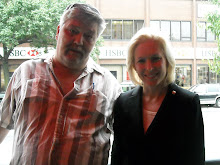
Queens Sen. Mike Gianaris (left) will replace Jeff Klein (right) as the new head of the Democratic Senate Campaign Committee.

Jeff Klein is out as the state Senate Democrats' top political strategist after a bruising election cycle that left the party facing a possible Republican majority.
Democrats are making Queens Sen. Mike Gianaris the new head of the Democratic Senate Campaign Committee instead, the Daily News has learned.
"Mike Gianaris is a dynamic fund-raiser and effective leader who will work with our members to win more Democratic seats," said Senate Democratic Conference Leader John Sampson.
"With his energy and expertise, Senate Democrats are gearing up for a successful election cycle."
Sampson called Klein "instrumental in key victories this year."
But as Sampson applauds Klein, whose district spans parts of the Bronx and Westchester, there is more going on behind the scenes - as usual.
Insiders readily admit Klein had it tough this cycle, what with anti-incumbent sentiment sweeping the nation and the state. It's also not uncommon for leadership of the DSCC to change hands between election seasons.
One top Democrat specifically says Klein could've better managed the Dems' resources.
Klein signed off on too much money to back Democratic hopefuls like Susan Savage and Joanne Yepsen in races where polling suggested near-certain defeat, the insider griped.
"We spent a million on those two races, and they both got killed," the source said. Klein could not be reached.
That money, insiders say, could've gone instead to put boots on the ground in races like that of Long Island's Craig Johnson, whose next court date in his struggle to keep Republican Jack Martins out of his seat is today.
Gianaris steered clear of talking about the rumblings that the replacement of Klein, who's still deputy leader of the conference, had to do with any designs he might have had on Sampson's leadership post.
He also insisted there was "no merit" to any suggestion that Sampson, who's made a few not-too-laudatory headlines of his own, might fear being toppled.
"We have a lot of work to do," said Gianaris, who moved up from the Assembly to the Queens Senate seat vacated by George Onorato.
"The Democrats around the country had a difficult year last year," Gianaris said.
"The state Senate came out of it in a lot better shape than some of the other Democratic institutions in New York and around the country," he said in praise of Klein.
And he has a vow: "Even if we end up in the minority, we will not be in the minority for very long."
Through the special elections that tend to crop up each year, Gianaris said: "I have a prediction Democrats will be in the majority before the end of 2011."

Wednesday, December 1, 2010

Senator John Sampson Elected Leader by Liz Benjamin - Capital Tonight

Update: I received the following statement from a member of Senator-elect David Carlucci's staff:
"David Carlucci has not  "said flat out he would not be voting for Sampson" .That quote is inaccurate at best and misleading at worst. Senator Elect Carlucci is looking forward to having a voice in the vote on who becomes the next conference leader in January when he is officially sworn in as Senator.  David has yet to publicly support, or not support anyone. Thank you very much for clarifying his position."


Read original...


Senate Democrats have just emerged from a closed-door conference committee meeting where they consolidated their leadership, electing John Sampson as their leader for 2011 despite the fact that the question of who will control the chamber going forward remains unanswered.


UPDATE: Here’s Sampson’s statement:
“Today, it was my honor to win the support of our members as Leader of the Senate Democratic Conference for the upcoming legislative session.”
“It is with deep humility and profound purpose that I accept this responsibility to work with our members, and colleagues across the aisle to move our state forward and get the people’s business done.
“Whether it is addressing the state budget, property tax relief, government consolidation, or other issues of importance, New York faces extraordinarily difficult times. We need to put people back to work, grow our economy, and ease the burden on families and businesses.
“As we embark on the New Year, I look forward with renewed hope in the potential for our state to achieve the greatness New York has reached in its past and the greatness New York deserves for its future.”
Following the coup in June of 2009, Democrats had divided their leadership and titles among a handful of members. Malcolm Smith was President Pro Tem, Pedro Espada Jr. was majority leader, John Sampson was conference leader, Jeff Klein as deputy majority leader, and Dave Valesky was vice president pro tempore.
But, for all intents and purposes Sampson was the leader of the conference with Klein serving as his No. 2.
Over the past few weeks, we have asked several incoming Democratic senators – all of whom ran on reform platforms – if they would be supporting Sampson for leader, and some wouldn’t commit 100 percent to backing him.
In the wake of the IG’s scathing AEG report, at least one newcomer – Senator-elect David Carlucci – said flat out that he wouldn’t be voting for Sampson. A number of insiders suggested Sampson should have considered stepping aside – at least temporarily – to reduce the strength of the AEG bomb the GOP used against the Democrats during the fall campaigns, but he refused.

Thursday, June 24, 2010

“Access to Justice in Lending Act” Passes Both Houses of Legislature...


When Signed By Governor, Legislation Will Level the Legal Playing Field for Homeowners Facing Foreclosure by Allowing Successful Borrowers to Recover Attorneys Fees Against Banks


Assemblyman Rory Lancman (D-Queens) and Senate Deputy Majority Leader Jeff Klein (D-Bronx) announce passage of the “Access to Justice in Lending Act” (A.1239/S.2614) by both houses of the legislature. Virtually all mortgage agreements require borrowers to pay attorneys fees to lenders who foreclose on their mortgage, but borrowers don’t have the same contractual right. As a result, few homeowners are able to retain attorneys in foreclosure proceedings – most default or try to represent themselves -- even though many homeowners have valid defenses to foreclosure and could save their homes with adequate legal representation. To add insult to injury, these homeowners then have the banks’ attorneys fees tacked on to the overall amount they owe the bank, pushing desperate homeowners further into debt. This bill creates a reciprocal right to attorneys fees for borrowers who successful defend against foreclosure where the mortgage agreement gives such a right to lenders, and is modeled on an existing provision of the law which give tenants the same reciprocal rights to attorneys fees in residential leases.

“We cannot let people with valid defenses to foreclosure lose their homes merely for lack of legal representation, particularly when the mortgage agreement written by the bank tilts the legal playing field in the bank’s favor,” said Assemblyman Lancman (D-Queens). “If homeowners had the money to pay for a lawyer to represent them in foreclosure, they probably wouldn’t be in foreclosure in the first place. This legislation will allow lawyers to take on meritorious foreclosure cases with the fair and reasonable expectation that they will be compensated if they succeed.”

"We know that many of the families that we see being foreclosed upon today entered into their mortgages due to predatory lending. These are the very people who should have the best defenses to foreclosure, but lose their homes simply because they could not secure counsel to defend them. Today, we have put homeowners on even playing ground with the lenders that are foreclosing on them, and given them a fighting chance to stay in their homes," said State Senator and Deputy Majority Leader Jeffrey D. Klein (D-Bronx/Westchester).

Wednesday, March 17, 2010

Tuesday, October 27, 2009

BEWARE: This Halloween there may be a Sex Offender Answering the Door...


As Children Hit the Streets for Trick or Treating, Concerned Lawmakers Unveil TOP TEN list of zip codes with Highest Number of Level 2 & 3 Sex Offenders Living in Queens County

Announce New Law that will Allow Parents to receive Instant E-mail Alerts when a Sex Offender moves into their Zip Code

Days before Halloween, Senator Jeff Klein (D-Bronx/Westchester), Senator Joseph Addabbo (D-15th District, Queens), Assemblyman Rory Lancman (D-25th District, Queens), Assemblywoman Catherine Nolan (D-37th District) and Councilwoman Elizabeth Crowley (D-30th District, Queens) released new data showing where the most amount of sex offenders are living in Queens County. They also announced details of a new law that will create a statewide e-mail notification system of registered sex offenders.

I am thrilled Governor Paterson saw the need for this type of system and signed the legislation. New Yorkers deserve to have the convenience and peace of mind that these email alerts will bring so that we can continue to protect our children from the kind of unsavory individuals who are, in many cases, our neighbors,” said Senator Klein.

Currently, there are 11,428 level 2-3 sex offenders on New York State's Sex Offender Registry, which classifies offenders according to their risk of re-offending: low-risk (Level 1), moderate risk (Level 2) and high-risk (Level 3). Members of the public can access this database at local police stations or via a toll-free telephone number. Level 2 and Level 3 offenders are also listed on an internet subdirectory at the DCJS website.

Senator Klein and Assemblyman Lancman sponsored the bill, signed into law by Governor Paterson last month that will create a statewide e-mail notification system of sex offenders.

"Parents can now learn in real-time when a sex offender moves into their neighborhood, and armed with this information, they can take steps necessary to protect their children," said Assemblyman Lancman. "Ultimately, this is why we develop new technology such as emergency alert systems -- to keep our families safe."

More often than not, sex offenders become repeat offenders,” said Council Member Elizabeth S. Crowley (D-Queens). “With the recent egregious crimes against youth from California to Florida to here in New York, we need to take further steps to prevent sex offenders from striking again. That is why I support this law to inform neighbors of nearby registered sex offenders so they take the necessary precautions to keep their families safe.”

As of 2009, there are 1,132 known sex offenders residing in Queens County. The top ten zip codes are as follows: 11691 (63 registered sex offenders), 11434 (61 registered sex offenders), 11412 (55 registered sex offenders), 11385 (54 registered sex offenders), 11368 (42 registered sex offenders), 11413 (40 registered sex offenders), 11435 (39 registered sex offenders), 11433 (36 registered sex offenders), 11372 (35 registered sex offenders), 11420 (33 registered sex offenders).

Thanks to the statewide emergency communication system, NY Alert, which is managed by the Department of Homeland Security, it will now be easy for New Yorkers to register for instant e-mail notifications that will allow them to keep tabs on a specific geographic area, such as where they live or where their children attend school.

I support this law because as a parent of three young children their safety and well being is of the utmost importance to me. I want my children to grow up in a safe neighborhood, where they can walk home from school and go out and play with their friends knowing that they will be safe. This law allows me to know when a registered sex offender moves into my neighborhood and alerts my children as to what dangers may be nearby and what they should do should someone that they don’t know approaches them. Currently, as a parent of children in the public school I am notified by my children’s school. However, my neighbors who may not have children in the public school system also deserve to be notified so that they can protect themselves,” said Jo Ann Berger with the Beacon Parents Forum.

"Community notification via email offers parents vital information which they can use to protect their children from becoming victims of these predators, many of whom are repeat offenders. Using the statewide emergency communication system, NY Alert, it will be easy for New Yorkers to register for instant e-mail notifications. They won't have to spend time scanning NY State's Sex Offender Registry, available to the public at local police stations, or calling a toll-free number, or viewing an Internet subdirectory at the Department of Criminal Justice Services Web site. Over 11,420 level 2 & 3 sex offenders (moderate- & high-risk for re-offending) are now on the registry. Email updates will allow parents and school officials to keep tabs on their own neighborhoods or where children attend school," said Senator Addabbo.

I applaud Senator Jeff Klein and Assemblyman Rory Lancman on their leadership on this issue. Parents and community members need to be able to stay informed as to who is living in the area surrounding schools, this legislation will go a long way in making sure that parents and community members are kept informed,” said Assemblywoman Nolan.

According to DCJS, as of 2009, New York City is home to more than fifty-five hundred registered sex offenders. The largest population is found in Kings County, at about 1,786. The Bronx is the second highest with approximately 1,426, followed by Queens at 1,132 and New York County with approximately 1,100. Staten Island is home to more than 243 registered sex offenders.

Wednesday, June 10, 2009

Klein's Loss Is Aborn's Gain by Elizabeth Benjamin - The Daily Politics - NY Daily News

Read original...

Senator Jeff Klein with Alexis Grenell

Deputy Senate Majority Leader Jeff Klein is poised to lose his powerhouse communications director Alexis Grenell, who is informing friends and colleagues today of her imminent departure to take a job with Manhattan DA Richard Aborn's campaign.

Having been on the receiving end of many early-morning Grenell calls and press releases, I can say with some authority that the 26-year-old spin mistress is indeed a force of nature and is responsible for much of the considerable press her Westchester/Bronx boss has received over the past two-and-a-half years.

Some choice Grenell quotes from that election:

"It's no secret that the mayor is supporting Senate Republicans. The mayor is also no stranger to self-interests." (In response to Mayor Bloomberg's endorsement of Maltese).

"People are going to be voting with one hand on the lever and one on their back pocket." (In reference to pocket-book issues driving the race).

"It's sort of ludicrous. It's wrong to obscure the facts about your own voting record and distort your opponent's." (On a Maltese flyer that attacked Addabbo's City Council record on taxes).

Yup. It's going to be a fun summer.

Already on board at Team Aborn: BerlinRosen's Blake Zeff (formerly a spokesman for Hillary Clinton), Mike Rabinowitz (formerly with the HTC), Howard Milstein (managing partner of Milstein properties), Jacqui Samuels (formerly a SDCC fundraiser).

Grenell's last day on the Senate payroll will be tomorrow. Her farewell e-mail appears after the jump.

Dear Friends & Colleagues,

I'm writing to inform you that tomorrow will be my last day as the Director of Communications for the Deputy Majority Leader of the NYS Senate, Jeff Klein. These last two and a half years have been a wonderful experience and I feel lucky to have worked with you all.

Senator Klein is a champion for the people of New York and it has been an honor to work for him. From tackling the subprime mortgage crisis and designing a successful foreclosure prevention program, to fighting to keep families safe from violent sex offenders-Senator Klein is a true leader and a great public servant. I will always be grateful to him for investing his confidence in me in our work together. I leave the Senate, and my Senator, with affection and gratitude.

As of Monday, June 8th I will be the Press Secretary for the Richard Aborn for Manhattan DA Campaign, joining BerlinRosen’s Blake Zeff in helping Richard get his message out. I am very excited to join this tremendous campaign.

My contact information remains the same: XXXX.

Please direct all Klein related inquiries to Adam Haight: XXXX.

If I can ever be of any help to anyone, call me. Rest assured, I will be in touch!

Sincerely,

Alexis Grenell

Tuesday, March 17, 2009

Pass the Neighborhood Preservation Act Now - Op/Ed by Albert Baldeo - Queens Chronicle

Read original...

The fallout of those crippling subprime mortgages offered by unscrupulous real estate brokers and predatory lenders has severely impacted our communities, as vacant, deteriorating properties precipitate increased fire hazards, facilitate criminal activity and depress our property values.

A recent study conducted by the Center for Responsible Lending estimated that a residential mortgage foreclosure lowers the price of other nearby single-family homes by 0.9 percent and the downward pressure on housing prices persists to houses that are sold up to two years after the foreclosure, and directly corresponds to an increase in neighborhood violent crime by approximately 6.7 percent. Homeowners living near foreclosed properties will see their property values decrease by $5,000 on average per each foreclosed home.New York City property values are likely to decline by 20-25 percent within 18 months.

The Neighborhood Preservation Act, which passed the state Senate, but is pending passage through the Assembly before it can become law, will protect neighborhood safety and mitigate the ills wrought by abandoned homes. Queens accounts for 8.8 percent of the state’s foreclosure filings this year and 34.2 percent of filings for New York City alone. Foreclosure rates in Queens, the most affected county in the state, jumped 91 percent in the first quarter of this year. As a result, the median home price in Queens dropped over $100,000 from Feb. 2007 to Feb. 2008, from $390,000 to $283,665.

This legislation will create a standard of safety and habitability for bank owned homes which are foreclosed and vacant, and empower municipalities to use their discretion in how they choose to secure and clean up these unsightly residential properties. They will be reimbursed for their work, whether by issuing violations or through legal action, or by billing the errant bank.

If this law is passed, banks can be made accountable for such conditions as inadequate security (for example, failure to provide locks and secure the premises), substantial accumulation of garbage, severe infestation of insects and rodents, graffiti and sewage leaks and spills. Hitherto, there has been a shameful lack of responsibility on the part of the banks that have destroyed the American Dream of home ownership, resulting in a decrease in our quality of life. Foreclosed properties have degenerated into havens for frequent delinquent behavior by trespassers, gangs and other criminals.

In May, 2008, the chief architect of this law, state Senator Jeff Klein, released a report which found that in New York State alone, there are 3,552,642 homes which have experienced devaluation in 2007 due to subprime foreclosures. Bleak, indeed! This act will be a much needed safety valve as we rebuild and preserve our communities, and we should all call our Assembly representatives to make it a reality.

Albert Baldeo is a community advocate and former state Senate candidate for the 15th State Senate district.

Thursday, February 26, 2009

NYS Senate Passes Neighborhood Preservation Act Protects Property Values and Neighborhood Safety from Fallout of Foreclosure Crisis

Today Senator Jeff Klein’s bill, the Neighborhood Preservation Act, passed the NYS Senate with 47 members voting for the bill and 11 members voting against it. The legislation creates a standard of safety and habitability for bank owned homes which are foreclosed and vacant. Klein’s legislation will allow municipalities to use their discretion in how they chose to clean up these unsightly residential properties and how they choose to get reimbursed for their work whether by issuing violations or through legal action, or by simply billing the bank.

Currently, in New York State, municipalities use real property law (RPL) 235-b to craft administration codes by which to enforce the standard of safety and habitability. Real property law (RPL) 235-b establishes a standard of habitability for occupied properties between tenants and landlords. Currently, no such standard for bank owned (REO) properties exists. This standard of habitability has been considered to be breached in the State of New York if such conditions such as inadequate security (failure to provide locks and secure the premises), substantial accumulation of garbage, severe infestation of insects/rodents, and sewage leaks and spills are in evidence. Klein’s bill will provide parallel support to any codes and laws created by an individual municipality with reference to a bank owned vacant property.

“As the foreclosure crisis spreads, we’re seeing a ripple effect as property values plummet and surrounding neighborhoods experience an increase in quality of life issues like graffiti and crime. One foreclosure can devastate an entire community and threaten the safety and well-being of innocent families We need to curtail this crisis and end the shameful lack of responsibility on the part of the banks that has permeated the American Dream of home-ownership We cannot allow our communities to become a casualties of the foreclosure crisis," said Klein.

The legislation was originally introduced in May 2008 when the fall-out of the sub-prime mortgage crisis hit home in the Throggs Neck section of the Bronx in the 34th senate district, where the ripple effect of a single foreclosure rocked a pristine and exemplary community of responsible citizens. The basement of a foreclosed property had degenerated into the site of frequent delinquent behavior by gangs of local teenagers, tormenting an otherwise quiet and family oriented neighborhood.

Unable to find any bank or agency to take responsibility for the property, the desperate community called Klein’s office for help.

In response, Klein looked up the deed of the property via the ACRIS system (the on-line records of the New York City Register) and found that it was owned by HSBC Bank as a trustee, which had sold the servicing rights to Ocwen Loan Servicing to manage the sale of the property. After countless calls, Ocwen informed Klein that eviction notices would be issued at the end of the month but that the Realtor currently responsible for the property was Northeast Assets Realty Inc. Despite repeated opposition, and an extraordinary amount of red tape to determine the party responsible for the house, Klein was finally able to arrange to have the property boarded up the next day.

“The devastation of home foreclosure effects everyone, not just the family facing the loss of their home, but the entire community. Empowering a municipality to force banks to take responsibility for foreclosed property protects property values and preserves the character of our neighborhoods ,” said Senate Majority Leader Malcolm A. Smith.

Billions of dollars continue to be drained from the tax base, and New York neighborhoods are feeling the effects of the foreclosure crisis firsthand as homes fall into disrepair, attract trespassers and illegal activity. As of October 2008, there were 23,093 houses in the foreclosure process in NYC, with 9,297 in Queens, 7,816 in Brooklyn, 2,682 in the Bronx, 2,296 in Staten Island and 1,002 in Manhattan. Queens accounts for 8.8% of the state's foreclosure filings this year and 34.2% of filing for New York City.

In addition, according to PropertyShark, foreclosure rates in Queens (the most afflicted county in the state) jumped 91% in the first quarter of this year. As a result, the median home price in Queens plummeted over $100,000 from Feb 2007 to Feb 2008, from $390,000 to $283,665.

According to the Center for Responsible Lending , bank owned properties not only drag down property values, but directly correspond to an increase in neighborhood violent crime by approximately 6.7%. Homeowners living near foreclosed properties will see their property values decrease by $5,000 on average per each foreclosed home. Whereas foreclosure rates for the entire city jumped 60% in the third quarter of 2008, New York City property values overall are likely to decline by 20-25% in the next 12 to 18 months.

In May, 2008 Klein released a report which found that in New York State alone, there are 3,552,642 homes which have experienced devaluation in 2007 due to sub-prime foreclosures. The resulting combined monetary decrease in home values/tax base in New York State is $36.841 billion dollars. As of October, 2008 there were a total of 1,954 bank owned properties in NYC, with 1,209 in Queens, 313 in Brooklyn, 160 in the Bronx, and 17 in Manhattan. Kings County (Brooklyn) ranks 3rd in the first in the United States but 1st in the NY Metro region with 740,141 neighboring homes devalued at a total cost to the tax base of $12.743 billion. Queens County is a close contender at 5th place (411,929/$9,254 billion), followed by Bronx County at 7th (398,746/$4.903 billion), New York County at 10th (398,746/$3.845 billion), and finally Richmond County at 33rd (141,174/$1.086 billion). Klein’s report also surveyed Nassau and Westchester county. In Nassau county there were 911 REO owned properties with 271,875 neighboring homes devalued due to foreclosure. There a was a combined $1.935 billion dollar decrease in home values/tax base from the foreclosure effect. In Westchester County there were a total of 209 REO owned properties with 176,387 neighboring homes devalued due to foreclosure. There was a combined $1.3 billion dollar decrease in home values/tax base from the foreclosure effect.

“It is sad that many of the same lending institutions that gladly took taxpayer money to buy new drapes and take lavish trips to Las Vegas have to have their arms twisted to be a good neighbor,” Senator Craig M. Johnson, (D-Port Washington), said. “I commend Senator Klein for authoring this common-sense legislation and for leading the fight to hold these lending institutions accountable, and to preserve the quality and character of our neighborhoods,” said Senator Craig M. Johnson (D-Port Washington)

"I want to applaud Senator Klein for leading the fight to get such common sense legislation passed," said Senator Krueger. "When a house is foreclosed upon, for whatever reason, it is incumbent upon the bank or the financial institution to take responsibility for being a good neighbor and keeping the home in good repair. Otherwise, the entire community suffers,” added Senator Liz Krueger (D-Manhattan).

"A foreclosed property that falls into disrepair can have devastating ripple effects for the surrounding community," said State Senator Eric Schneiderman (D-Manhattan/Bronx). "I am confident that this bill, by holding the banks accountable for maintaining their properties, will go a long way to protect the quality of life for the residents of impacted neighborhoods throughout the state,” added Senator Eric Schneiderman (D-Manhattan).

“When a home is foreclosed on, banks take ownership but they don't take responsibility, and it takes a toll on the community,” added Klein.

More Dems Want 'Fair Share' by Elizabeth Benjamin - The Daily Politics - NY Daily News

Read original...

As the Senate Democrats prepare to conference the question of tax reform at 6 p.m. this evening, the so-called Fair Share bill being pushed by the WFP and its labor allies is gaining steam in both houses of the Legislature.

In the Senate, two more Democrats - Tom Duane and Martin Dilan - have signed on as co-sponsors of the bill, bringing the total number of supporters to 20, according to the WFP's Bill Lipton.

An alternative to the millionaire's tax that is being championed by Senate Deputy Majority Leader Jeff Klein has yet to be introduced, but the concept has been endorsed by Columbia University Prof. Michael Woodford.

Senate Majority Leader Malcolm Smith has made clear he thinks taxing the rich is "the last thing we should be doing," but also left the door open earlier this week to doing so if it's the route his conference wants to take.

In the Assembly, a same-as bill is being carried by Assemblyman Darryl Towns, chairman of the 48-member Black, Puerto Rican, Hispanic, and Asian Legislative Caucus.

Towns introduced the bill earlier this week and has garnered the support of 30 of his colleagues.

"It's critically important that we solve the budget crisis through real shared sacrifice," Towns said in a statement relayed to me by a labor supporter of the bill. "Fair Share Tax Reform will make New York's tax code more equitable and will also raise revenue necessary to protect essential services."


Gov. David Paterson, who has been sending mixed signals on the millionaire's tax, recently signaled he's open to overhauling the tax structure.

Wednesday, February 25, 2009

More for the Middle Class...Sen Jeff Klein...

Senator Jeff Klein Calls for Middle Class Tax Cuts and Increases on Higher Income Earners

RWDSU Supports Klein Tax Proposal

In the midst of legislative negotiations to fill the $14 billion dollar NYS budget gap, Deputy Majority Leader, Senator Jeff Klein released a progressive tax proposal which would provide middle class tax cuts to stimulate the economy while generating $1 billion dollars in revenue for the state.

Klein's proposal doubles the standard deduction for every type of tax filer and provides a tax cut in the form of a debit card to ensure spending (the standard deduction is a dollar amount reduced from one's total taxable income, thereby reducing their tax liability). Currently, a single person with an adjusted gross income of $60,000 can deduct $7,500 from their income, resulting in taxes on $52,500 of the filer's income rather than $60,000. Under the Senator's plan, the standard deduction would increase to $15,000 for a single person, resulting in taxes on $45,000 of the filer's income rather than $60,000.

"This is an opportunity to reform an antiquated tax system and start a conversation about creating a system which is more fair and equitable. We need to provide real relief and recovery for middle income New Yorkers who need it the most, while at the same time seeking solutions to generate revenue," said Klein

Klein's proposal also increases taxes on individuals making more than 250K/year with rates increasing from 6.85 to 8.97 percent for millionaires and 10.3 percent for income above $3 million.

Whether single married or retired, households making less than 250K would receive tax cuts ranging from $466 to $1,165 in the form of a debit card. Individuals will be able to use the debit card as they would a gift card- solely for spending, thereby stimulating the economy. The cards will have an expiration date in 2009, as determined by the Dept. of Taxation and Finance, with unspent money reverting back to the state.

An example of the current NYS Personal Income Tax rate structure is as follows: an individual earning just over $20,000 a year would pay the same marginal tax rate (6.85%) on their last dollar earned as a millionaire would (6.85%). A married couple filing jointly earning just over $40,000 a year would be taxed at the same marginal rate (6.85 percent) on their last dollar earned as a couple making $10 million.

The state income tax was once much more progressive, with very wealthy New Yorkers paying a much greater proportion of their income in taxes than middle-class taxpayers.

In 1972, New York State had a PIT with 14 different brackets ranging from 2 percent to 15 percent. Since then, changes to the income tax have gradually made the personal income tax flatter, ultimately resulting in today's narrow rate range of 4-6.85 percent. This movement toward a regressive income tax has benefited wealthy New Yorkers.

"This is the beginning of the conversation about a short-term solution and long-term recovery. In the short-term we've got to jump start this economy, but the key to long-term stability is creating a tax code that is fair for all New Yorkers."

Thursday, February 19, 2009

State Senator Klein, Mayor Bloomberg and Health Commissioner Frieden Announce New Resturant Inspection Program

Public Posting of Sanitary Grades Gives Customers More Information Up Front

Klein and Bloomberg unfurl new initiative to implement a letter grading system whereby diners may easily access the results of an establishment's latest health inspection.


Mayor Michael R. Bloomberg and Deputy Senate Majority Leader Jeff Klein announced on Saturday, January 31st, that New York City is updating its restaurant inspection system to improve sanitary conditions and give consumers more information. Under the new model, the Health Department will increase inspections for less sanitary restaurants and require all establishments to conspicuously post letter grades – a measure championed by Senator Klein to keep the public better informed about inspection results. The new system will be phased in over the next two years. This approach will concentrate city resources on the restaurants that pose the greatest risk to public health and place no additional burden on establishments that maintain sanitary conditions. Dr. Thomas R. Frieden, New York City Health Commissioner, and State Assemblyman Steve Cymbrowitz joined Mayor Bloomberg and Senator Klein at the New York Marriott at the Brooklyn Bridge for today's announcement.


"We know New York City's restaurants are the best in the world and we want them to also be the cleanest," said Mayor Bloomberg. "This new system will encourage the less sanitary restaurants to clean up – and won't punish the good guys. As sanitation improves, so will business. The more residents and tourists can trust the food they buy in New York City restaurants, the more likely they are to patronize them."


"Today's announcement is a great step forward toward improving the overall public health of all New York City residents," said Senator Jeff Klein (D-Bronx/Westchester). "As someone who has spent years advocating for a more consumer friendly system, I am thrilled that New York City diners will finally have easy access to the latest inspection results of their favorite restaurants. Having a letter grade posted for all diners to see will provide a real incentive for restaurants with a 'C' hanging in the doorway to clean up their act."


Senator Klein will again introduce legislation in the 2009 Legislative Session to require local departments of health state-wide to implement a letter grading system. "Whether New Yorkers are dining out for a routine meal or to celebrate a special occasion, their only reservations should be to book a table. I applaud the Mayor and the Health Department's outstanding efforts to improve the well being of all New Yorkers," said Senator Klein.


Food-related illness is a source of growing public concern in New York City. Complaints about food-borne illness have increased in recent years, and rodent infestations are a common problem in restaurants. The Health Department reports signs of rodents in 25 percent of the establishments inspected. Food poisoning causes missed work and school, emergency room visits, hospitalizations, and even deaths. In fact, based on national estimates, more than 11,000 New Yorkers are treated in emergency departments each year for restaurant-related food related illnesses, and thousands of people are hospitalized as a result. The cost of these hospitalizations and emergency room visits is more than $130 million annually.


"By requiring restaurants to publicly post grades, the new food safety initiative will help consumers make more informed choices about where to eat, while increasing restaurant operators' motivation to stay clean," said Dr. Frieden. "New York City will have safer restaurants and fewer cases of food poisoning."


Senator Klein has been releasing regular reports, Enough to Make you Sick, on the sanitary conditions of supermarkets and New York City restaurants since 2000. Senator Klein's 2008 report studied a subset of New York City's 20,000 restaurants with the 100 worst inspection reports, with violation point scores ranging from 69 to 600 – far exceeding the 28 points that prompt re-inspection. Of the bottom 100 restaurants, 87 percent had at least one category of pest cited in their most recent inspection.


Research from other jurisdictions suggests that public posting of inspection findings has the following outcomes:


Business improves at restaurants with higher grades. When sanitation grades are conspicuously posted at food service establishments, customers use the information to seek out establishments with higher grades. Among Los Angeles restaurants, improvements in grades are associated with increased sales.


Restaurants improve their sanitary standards. When Los Angeles County started posting grades in 1987, only 40 percent of its food service establishments received "A" grades. By 2006, 83percent were meeting that standard.


Fewer people get sick. Although the association is not proven, Los Angeles has recorded a 20 percent decline in hospitalizations for food-borne illnesses since it started posting sanitary grades in food service establishments.


The new model will also bring New York City closer to the FDA recommended schedule of at least three full inspections every year for full service restaurants. At present, most New York City restaurants receive only one.

Thursday, January 22, 2009

Addabbo Backs Plan for Blackjack, Craps and Roulette at Aqueduct Race Track by Howard Koplowitz - YourNabe.com

Read original...

Delaware North may be adding to the planned video lottery terminals for Aqueduct Race Track, shown here, after a state senator is proposing to allow craps, blackjack and roulette at the track. Rendering courtesy of Delaware North

The video lottery terminals planned for Aqueduct may be joined at the Ozone Park track by their game of chance cousins — electronic blackjack, craps and roulette — if one state senator’s proposal is enacted.

State Sen. Jeff Klein (D-Bronx) is suggesting that the other casino games should be installed at Aqueduct and other state racetracks where VLTs — devices similar to slot machines — are approved in an effort to boost revenue for education amid the state’s fiscal woes.

His colleague, state Sen. Joseph Addabbo (D-Howard Beach), whose district covers Aqueduct, is endorsing the idea.

“We probably wouldn’t be talking about this if it wasn’t for bad fiscal times,” Addabbo said in a telephone interview Friday. “If we have the opportunity to help to an extent the education part of the budget ... then we should explore some of these alternatives.”


*
Klein said the plan, which he introduced in the state Senate last week, would boost education revenue by $150 billion if it goes through.

He noted that Gov. David Paterson’s budget proposal slashes education funding by $698 million — or more than 3 percent — from last year’s budget.

“In these dire fiscal times we need smart solutions that not only maintain essential services, but keep our schools strong,” he said in a statement. “It is essential that our children get the quality education they deserve, which can be accomplished through growing lottery revenue.”

The senator said the state takes a $3.3 billion hit on revenues by New York residents gambling in Atlantic City, noting that nearly a quarter of Atlantic City visitors came from New York in 2007.

The bill has support from Gordon Medenica, director of the state Lottery, Leonie Haimson of the education advocacy group Class Size Matters and Kim Sweet of Advocates for Children.

Installation of 4,500 VLTs at Aqueduct and the construction of other amenities will be underway once the state signs off on a memorandum of understanding with Delaware North, the Buffalo-based company that was awarded the VLT contract.

Delaware North could not be reached for comment on the proposal.

Thursday, December 4, 2008

Jeff Klein Assumes Role in New Dem-led Senate by Patrick Rocchio - YourNabe.com

Read original...

With the Democrats taking control the state senate for the first time in more than 40 years, one local legislator is riding the party’s tidal wave of success right to a new leadership role on the Senate floor.

Photo (l-r): Senator-elect Joe Addabbo, NYS Attorney General Andrew Cuomo, NYC Comptroller Bill Thompson, Manhattan Borough President Scott Stringer, City Councilman Bill DeBlasio, Senator Jeff Klein and Senator-elect Dan Squadron

Senator Jeff Klein, a life-long resident of the Bronx who got his start in the state assembly in 1995, and became a member of the senate in 2005, filling the seat of former Senator Guy Velella, now will assume the new role of deputy majority leader, controlling much of the timing associated with votes on the senate floor, when the legislature reconvenes next year.

Klein will now be able to bring more member items back home to the district, and by being a member of the majority-party will have substantial say in how the district lines of the 34th New York State Senate district are redrawn during redistricting that takes place every ten years, next in 2010.

However, at the present time, in a sit down interview with the Senator, Klein said that his main focus would be the current fiscal crisis and finding ways to get money into the hands of working families and taxpayers across the district.

“The economy is the first, second, and third priority; this is the worst financial crisis that any of us have seen, except those who were alive during the great depression of course,” Klein said. “I think that we in the senate can streamline government during this period, and create mechanisms for better economic forecasting. At a time when people are tightening their belts, we need put more of their tax dollars back into their pockets.”

Klein said that he and his colleges are looking at ways to increase sources of revenue without hurting middle class taxpayers.

Senator Jeff Klein (Nov 1st) at the Ridgewood Democratic Club - (In background (l-r) Councilwoman-elect Elizabeth Crowley, Assemblywoman Cathy Nolan and District Leader Tom Bornemann.)

“We do not want to repeat a fiscal repeat of New York City’s crisis in the 1970s where basic, essential services were cut and people did not want to live in the city any more,” Klein said. “Many accounting mechanisms were put in place that allow for greater transparency and accountability because of that crisis, which will make it easier for the present.”

Klein said that the Republican majority in the state senate, as well as the Republican presidency of the George W. Bush, had much to do with the increase in spending that makes it more difficult to deal with the present crisis, and lead to a drastic increase in the amount of money that the state is short. Despite the adversity, Klein remains committed to helping the middle class.

“Middle class tax cuts in this kind of economic environment make sense,” Klein said. “We are not talking about having working people spend extravagantly. Making sure that families can afford to send to send their kids to private school if they choose, or making sure that their children have extra clothes and shoes, as well as paying for gas so their parents can get to work is what this kind of middle class relief means.”

Klein will better be able to get this done because he will control the floor of the senate and be able to find better ways to get the bills he proposes signed into law.

“I have gone through all of the bills that I proposed in the senate over the past four years, looking at which ones I will reintroduce,” Klein said. “I will have more than a soap box, I will have the ability to get my legislation signed into law."

Monday, November 10, 2008

Smith Introduces the New Majority By Nickname and Hints at Gay Marriage Agenda by Edward-Isaac Dovere City Hall News

Read original...

The real Senator Smith, his conscience, his partner, the trinity, the man he kisses and the chemist who helped get them there...

Malcolm Smith began his time as majority leader not by announcing appointments, but by revealing the nicknames he has for some of his members and the private traditions he shares with others.

In a smaller room above the ballroom where he had just been announced as the new State Senate majority leader by Gov. David Paterson, Smith stood with eight other Democratic senators—including Jeff Klein, Eric Schneiderman and Liz Krueger, all of whom have been on people’s lips as potential rivals for leader in recent weeks—for a quiet address to close supporters and staff. Mobbed as he entered the room, he received dozens of congratulations and blessings, including one from Assembly Member Dov Hikind who put his hands on Smith’s cheeks and said “God be with you.”

Following a cheer of “Malcolm, Malcolm” initiated by Klein and Diane Savino, Smith began by thanking and introducing his wife, Michelle, who got the first nickname of the night.

“Everyone kind of knows, this is Senator Smith right here,” his hands rubbing her shoulders.

But there were more people to thank, and more creative nicknames to dole out. Doug Forand, the chief strategist for the Democratic Senate Campaign Committee, Smith singled out as “the chemist,” explaining, “those of you who know science know he who is the chemist is usually one who engineers all that happens in the future.”

Far from a potential political antagonist, Smith introduced Klein as “my partner.” John Sampson, meanwhile, Smith called “my conscience.”

“He seems to call me at 4 in the morning, at 6 in the morning, at 12 at night at one in the morning,” Smith said, adding “he was the secretary to the minority—I’m not making any announcements on appointments, but he’s now going to be something to the majority.”

Thomas Duane, whom Smith called both “a young man” and “my dear friend,” was “someone who I love and I always kiss him,” Smith said, before reaching back and doing just that as he embraced Duane.

(To those looking to read the tea leaves for the agenda from Smith’s speech, this might be the clearest sign: Duane, who is the Senate’s only openly gay member, carries the bill which would legalize gay marriage in New York. Smith shied away from making a clear statement just a week ago about what he would do on gay marriage if the Democrats took the majority, but many expect that legalization will be a major priority.)

Schneiderman’s nickname came as part of a group: together, along with Paterson and himself, Schneiderman was part of “the trinity,” Smith said.

Each senator present got some mention, though the others were somewhat less pithy. Daniel Squadron got special attention from Smith for his efforts to train campaign workers who went out to other campaigns following Squadron’s primary win in September which he said was a measure of “how strong this conference will be.” Savino and Ruth Hassell Thompson were introduced as future chairs, though to what committee remained unnamed, and Krueger, got special mention from Smith as someone who “will debate you until you can no longer think.”

Though giving special attention to several interest groups and unions, including NARAL, the Working Families Party, 32 BJ and RWDSU, Smith avoided laying out a specific agenda, though he did say that he expected Democratic strategist Hank Sheinkopf to continue to help with messaging as they pursued their goals.

“We are going to put New York back to work, we are going to make sure that our property tax in this state is one you can afford to live with,” he said. “We are going to make sure that the rules of the Senate are changed so that all of you have input to what we do, so that our committees can function like real committees like Congress does.”

Later, he said that more would be clear after the meeting Democrats will hold Wednesday afternoon in Albany to discuss the plans for their new majority.

“We have been planning for a transition at least six months back, and what we do tomorrow is we will talk tomorrow to trim the budget as the governor asked us to do and talk to the members on how we look to reorganize and we’ll come out with a schedule of things to do,” he said.

He said that as of Tuesday night, no decisions had been made about assignments to committee chairs.

Friday, October 10, 2008

Addabbo Lays Out 3 Point Healthcare Plan at Ozone Park Pharmacy...

Doctors Council SEIU Endorses Addabbo for Senate


Dr. Frank Proscia, Executive Director of Doctors Council SEIU, Joe Addabbo and John Rossi of Rossi Pharmacy, Ozone Park

Gathered at Rossi Pharmacy (84 01 101 Ave, Ozone Park) with the Vice President of the Doctors Council SEIU, Councilman Joe Addabbo laid out his 3 Point Healthcare Plan to address the rising cost of healthcare. Having also earned the endorsement of the New York State Nurses Association, Addabbo has made healthcare a central platform of his campaign.

“Healthcare is one of the primary concerns of the 21st century as the cost of coverage escalates and insurance companies continue to encroach upon the clinic. We need to put health care back into the hands of the doctors and nurses who think first about the patient, and second about the bottom line. But we also need to take steps to improve existing programs and expand our options. In these tough economic times, working families need real solutions to their basic concerns. We must to more and I have a plan,” said Councilman Addabbo.

“Doctors Council SEIU is the largest union of attending physicians and dentists in the country, representing over 3,000 doctors from the public and private sectors in the New York City area. Joe Addabbo has been a strong advocate for the rights of workers. And the proposals he’s making today demonstrate his commitment to providing all New Yorkers with the best possible healthcare. We have worked with Councilman Addabbo in the past and look forward to working with him as a member of the State Senate. Now more than ever, we need elected officials who believe that access to healthcare is a priority,” added Dr. Frank Proscia, Executive Director of Doctors Council SEIU.

With that in mind Addabbo explained his 3 point plan:

1) Convert Life Insurance to Long Term Care Coverage

Addabbo supports a proposal which would allow New Yorkers to convert the anticipated value of their whole life insurance policies into immediate, but discounted, cash to pay for the long term care they require either at the end of their lives or in the event of a disabling health crisis.

This measure would reduce state Medicaid expenditures by providing more liquid assets that New Yorkers can use to pay for their nursing home and home health care needs.

2) Expand the Income Threshold for EPIC (Elderly Pharmaceutical Insurance Coverage)

EPIC is a New York State program that helps seniors pay for their prescription drugs. More than a of a quarter million EPIC enrollees are saving an average of 90 % of the cost of their medicines. Most enrollees have Medicare Part D or other drug coverage, and use EPIC to lower their drug costs even more by helping them pay the deductibles and co-payments required by their other drug plan. EPIC also helps members pay for Medicare Part D premiums.

Currently, the eligibility requirements for EPIC are capped at 35K for an individual and 75K for a couple. Addabbo supports existing legislation (S2257) to expand the income threshold to 50K for an individual and 75K for a couple.

If coverage were expanded, an additional 35,172 seniors in Queens County would be eligible for EPIC.

All of these approximately 35,000 newly eligible seniors would be protected from the gap in Medicare Part D coverage which totals $1,650, the Medicare Part D “blackout” period between $2,400 and $4,050 in prescription expenses.

However, historical trends in EPIC enrollment show that, at the high end of income eligibility, only a small percentage, 10%, of eligible seniors enroll in EPIC. This is primarily due to the availability of alternative coverage and high deductibles at the upper end of EPIC coverage.

Using the historical EPIC participation rate of 10% of those eligible, approximately 3,500 of the 35,000 newly eligible would enroll in EPIC.

However, if only 3,500 Queens seniors were to enroll, they could still see aggregate savings of $5.8 million due to EPIC coverage of the Medicare Part D gap.

The measure would also obviously result in considerable Medicaid savings as well.

3) Single Source Drug Coverage

Addabbo expressed the need for better coverage for all New Yorkers, but emphasized the negative effects of the three-tier drug pricing system on minority communities. According to the NYC Dept. of Health Southwest Queens has one of the highest percents of uninsured adults among the 42 neighborhoods in NYC (23%), and foreign-born residents in this community are less likely to have health insurance than those born in the U.S. Similarly, in Southwest Queens, 23% of residents do not have a regular doctor, which means greater reliance on emergency rooms, and less emphasis on preventative care.

A May report released by Senator Jeff Klein (D-Bronx/Westchester) revealed that New York’s biggest HMOs are denying or restricting access to single source drugs with no generic equivalent. Drugs like Lipitor, Plavix, Lexapro, and Advair treat common conditions such as high cholesterol, cardiovascular disease, diabetes, depression, and asthma.

Lipitor, for example, is the most commonly prescribed prescription drug to reduce cholesterol and prevent heart disease. It is also a single-source drug with no generic equivalent. While there are other medications (called “statins”) that reduce cholesterol, it is believed that Lipitor’s unique active ingredient makes it especially effective for certain patients, particularly those with acute coronary syndrome or those that have already had a heart attack

In many cases, minority communities are disproportionately impacted by the practice. According to the Center for Disease Control and Prevention’s Summary Health Statistics for U.S. Adults: 2006, 31.6% of non-Hispanic blacks, age 18 and over suffer from heart disease as compared to only 22.4 %of non-Hispanic whites. The American Hearth Association lists diseases of the heart and stroke as the No. 1 killer of Latino/Hispanic Americans. They claim the lives of 28.6 percent of the more than 122,000 Hispanics or Latinos who die each year, with cancer follows, at19.7 percent. On average, Hispanic Women develop pre-hypertension indicators such as obesity ten years earlier than White women, at a rate of 32% contrasted to the incidence in White women at 17%.

Similarly, there is repeated evidence of the connection between poverty and poor health such as obesity, a high sugar diet which can lead to diabetes and heart disease, exposure to pollution and other toxins which contribute to respiratory ailments and asthma, as well as depression.

Insurance companies use formularies to categorize drugs. Formularies are typically comprised of three tiers with Tier 1 consisting of generic medications, Tier 2 consisting of proprietary (brand name) medications, and Tier 3 including proprietary drugs for which no generic exists as well as other more expensive medications.

Patients pay the least for Tier 1 drugs, while paying more for Tier 2 drugs, and even more for Tier 3 drugs which are typically called non-preferred. For some employee and individual benefit plans, Tier 3 drugs may not be covered. Other restrictions include: Medical Exception; whereby a patient and doctor request a medical exception, which must then be granted by the insurance company; Prior Authorization/Pre-Certification of the drug by the insurance company, Quantity Limitations, and Step Therapy (Step Protocol): prerequisite medications (one or more) prior to approval of the physician-prescribed drug.

Of the major HMOs operating in New York, 14 place restrictions on medications that are disproportionately required by African-American and Hispanic-American New Yorkers.

Of the largest Insurers, Oxford had the most restrictions on drug coverage, placing restrictions on 13 of the 19 single source drugs needed to treat conditions from which African Americans and Hispanic Americans disproportionately suffer, and 18 restrictions overall.

Aetna and Health Net are tied at second place with a total of 17 restrictions each on 10 and 13 drugs respectively. Finally, Independent Health Association restricts access to 12 drugs for a total of 16 restrictions overall.

Oxford and Independent had the most drugs listed under the expensive third tier, 9 and 4 drugs respectively.

GHI, Aetna, and Excellus listed the largest requirement of step therapy, while Independent required prior authorization most frequently.

Health Net had the highest incidence of quantity restrictions, placing limits on 13 medications, followed by Aetna (10) and Oxford (9).

Of the drugs surveyed Lipitor and Singulair are the most restricted. Lipitor was restricted by 8 of the 15 companies, with a total of 19 restrictions. Singulair, a preventative medication for asthma, has 14 restrictions by 11 companies that limit access.

For the 9 medications for mental health-related conditions, 12 companies had restrictions in place. There was a total of 14 restrictions placed on Lexapro by 10 different companies. Abilify and Cymbalta were restricted by 8 HMOs totaling 10 and 11 restrictions each.

Addabbo supports existing legislation, which would require that all medically necessary prescription medications approved by the FDA be covered by the insurance company.