Friday, November 30, 2007

Press release: Governor Announces $25.3 Million in Environmental Protection Fund Grants for Projects Across New York State...

STATE OF NEW YORK
EXECUTIVE CHAMBER
ELIOT SPITZER, GOVERNORFOR IMMEDIATE RELEASE:
November 29, 2007

CONTACT: Christine Anderson
canderson@chamber.state.ny.us
212.681.4640
518.474.8418
GOVERNOR ANNOUNCES $25.3 MILLION IN ENVIRONMENTAL PROTECTION FUND GRANTS FOR PROJECTS ACROSS NEW YORK
Governor Eliot Spitzer today announced $25.3 million in Environmental Protection Fund (EPF) grants awarded to local communities and organizations across New York State to assist with waterfront revitalization projects, historic preservation efforts, expanding open space, and increasing access to public lands.

The EPF, created in 1993, is primarily funded through the real estate transfer tax and provides a dedicated source of funding for a variety of environmental projects and programs administered by the Office of Parks, Recreation and Historic Preservation, the Department of Environmental Conservation, and the Department of Agriculture and Markets.

"This vital funding helps make cultural and recreational opportunities available to all New Yorkers and countless visitors, and contributes to the economic revitalization of our state," said Governor Spitzer. "Funding for local communities and organizations to undertake these important environmental projects will preserve and protect our valuable natural resources and promote New York’s rich historic and cultural tradition."

Senator Carl Marcellino, Chair of the Senate Environmental Conservation Committee said: "The Environmental Protection Fund is the engine which drives a myriad of programs which improve the air, water, and quality of life for all New Yorkers. Whether it is protecting open space, or revitalizing waterfronts, the EPF gets it done. These projects are examples of our commitment to protecting our ecosystems while maintaining the quality of life we have all come to expect in New York State."

Senator Mary Lou Rath, Chair of the Senate Tourism, Recreation and Sports Development Committee said: "I am pleased to see that the NYS Departments of Parks and Agriculture and Markets will be providing $25.3 Million to the Environmental Protection Fund in order to provide and expand open space and public lands. It is wonderful that so many of Western New York’s treasures, such as Graycliff and the Roycroft Campus, will be able to benefit from this funding, creating more opportunities for tourists and state residents to enjoy them."
Assemblyman Bob Sweeney, Chair of the Assembly Environmental Conservation Committee said: "Perhaps the most important accomplishment of the 2007 Legislative Session was the enactment of legislation to increase the EPF to $300 million. The additional funding for the EPF will fuel substantial increases in EPF programs such as municipal parks, waterfront revitalization, municipal recycling, open space land acquisition, farmland protection, as well as wastewater treatment projects, invasive species management and Ocean and Great Lakes initiatives."
Assemblyman Steven Englebright, chair of the Assembly Tourism Committee said: "The natural and cultural landscapes of New York are endowed with powerful beauty and character. These funds will help to maintain, enhance, protect and preserve the natural, cultural and historic resources that define communities across our great state."

Carol Ash, Commissioner of Parks, Recreation and Historic Preservation, said: "The EPF provides valuable resources for local communities across the state to enhance parkland, protect historic resources and expand open space available to the public. The grants enhance the character of local communities and provide long term benefits to the environment."

Pete Grannis, Commissioner of Environmental Conservation, said: "For years, the Environmental Protection Fund has provided critical aid for important tasks such as protecting open space, closing landfills and funding recycling programs. Its success is one of the state's best story lines of the last 14 years."

Patrick Hooker, Commissioner of Agriculture and Markets, said: "New York is a beautiful place to live. We have a scenic and productive landscape, an abundance of natural resources and a history rich in culture and folklore. The EPF has been instrumental in preserving this rich heritage, and these grants will help continue the legacy throughout New York State."

The EPF’s parks program provides for 50 percent matching funds in several program areas including parks development, open space acquisition, historic preservation and the State’s Heritage Area system. Funds may be awarded to indoor and outdoor projects and must reflect priorities established in the New York State Comprehensive Outdoor Recreation Plan.

New York City's Share of the Pie

NEW YORK CITY REGION

Region Total $3,909,575

City of New York Dept of Parks & Recreation (Bronx)
$500,000

The City of New York Department of Parks and Recreation will renovate the Crotona Park Nature Center at Crotona Park in the Morrisania section of the Bronx. The Nature Center provides educational programs to schools, after school programs and functions as a museum and information center for the park. Upgrades to the facility include lighting, ventilation and construction of additional space that will allow the nature center to increase its capacity to attract and accommodate more visitors.

City of New York Dept of Parks & Recreation (Bronx)
$500,000

The City of New York Department of Parks and Recreation and the Bronx River Alliance have developed plans for the Bronx River Greenway, a linear system of parks along the Bronx River that will provide access to open space and recreation. This project will include construction of an environmentally-friendly River House at Starlight Park, which is part of the greenway, with facilities for boat storage, launching, environmental educational classrooms, multi-purpose space for community events and a comfort station.

East Midwood Jewish Center (Kings)
$409,575

The East Midwood Jewish Center, one of the last remaining American multi-use synagogue/community centers architecturally unchanged from the 1920s, will restore features of the sanctuary including stained glass windows, stained glass dome and skylight.

Prospect Park Alliance (Kings)
$500,000

The Prospect Park Alliance restores, develops and operates Prospect Park in partnership with the City of New York. The Prospect Park Alliance will undertake the Southeast Lake Edge Restoration project at Prospect Park to restore eroded shoreline, rebuild the Lake's edges, remove invasive plants, secure the shoreline with plantings and clear the Lake's drainage.

Sons of the Revolution of the State of New York (New York)
$400,000

The Sons of the Revolution of the State of New York will undertake a rehabilitation project at the Fraunces Tavern Museum complex, which contains one of the oldest buildings in Manhattan and is the site where George Washington gave a farewell speech to his officers in 1783.

SS Columbia Project (New York)
$400,000

The SS Columbia Project is dedicated to restoring, operating and interpreting the SS Columbia, the oldest surviving excursion steamer in the United States (built in 1902). The project includes ensuring the vessel's preservation by restoring bulkheads, staircases and exterior features.

St. Bartholomew's Church (New York)
$200,000

This project involves the restoration of the dome and support structure at St. Bartholomew's Church, constructed in 1918.

Greater Jamaica Development Corporation (Queens)
$500,000

The Greater Jamaica Development Corporation will undertake a project to revitalize the Prospect Cemetery, which contains approximately 3,000 gravestones and markers and is the oldest family burial site in Queens. The Greater Jamaica Development Corporation has partnered with the City of New York Department of Parks and Recreation, the New York Landmarks Conservancy and the Prospect Cemetery Association on the final stages of the multi-phased revitalization initiative.

City of New York Dept of Parks & Recreation (Queens)
$500,000

The City of New York Department of Parks and Recreation will restore the Lanett Playground in Far Rockaway, the only playground in the West Lawrence section of the community. The project includes the addition of an ADA accessible comfort station, water play feature, playground equipment for toddlers, improved lighting, fencing and a basketball court.

Read entire state-wide listing...

Monday, November 26, 2007

City Dept of Parks Plans for Pal's Oval Fields Reconstruction with Synthetic Turf in Ozone Park...

(click pic to enlarge)
Here's another example of the City's greening of our neighborhoods by replacing natural grass fields with carcinogenic laced synthetic fields...

These fields reach temperatures of over 150 degrees on a summer day...they contain pellets made from used rubber tires and contain cancer-causing substances according to scientists...

Is this really what we want our kids to be playing on..?

That is the few kids who aren't inside the house playing some inane video game...

Queens Courier Online - Historical Society Gala by Nick Brown...

Read original...


COURIER SUN/PHOTO BY NICK BROWN
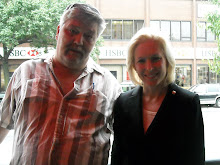
Richmond Hill Historical Society President Nancy Cataldi (left) poses with State Senator Serphin Maltese at the Historical Society’s Masked Gala. Cataldi was the guest of honor at the event for her decade of work to maintain and promote the history of Richmond Hill.


For one night, Russo’s on the Bay became the site of a Victorian ball.

The Richmond Hill Historical Society held its 10th Annual Dinner Dance at the famous catering hall on Cross Bay Boulevard in Howard Beach. This year’s theme: a masked gala.

Sporting feathered masks and formal, flowing dresses, women in attendance seemed to enjoy the chance to dress up.

“My daughter left this mask when she moved out,” said Historical Society Board Member Rita Werner of her green, peacock mask. “It’s old, but very nice.”

Andrea Crawford, Chair of Community Board 9, wore a black mask and veil, and completed the theme by wearing a black dress. She said she found the mask at Ricky’s Emporium on Jamaica Avenue “and loved it.”

Crawford added that the turnout for the gala - 113 people, according to Historical Society President Nancy Cataldi - was “fabulous.”

“An event like this brings in people from all over,” said Crawford.

With some exceptions, men in attendance chose to forego the mask, but didn’t hesitate to offer solid excuses for their decisions.

“I had to walk up the stairs and didn’t want to fall on my face,” said Simcha Waisman, President of the Richmond Hill Block Association.

Senator Serphin Maltese quipped that his wife told him he “looked so good I didn’t need a mask.”

Attendees kept busy at the raffle table, salivating over a plethora of prizes, including an autographed Paul Lo Duca baseball, facials, massages, pedicures, and a $40 gift certificate to Once Upon a Time Antiques.

Cataldi was the honoree for the event, and no one in attendance argued against the impact she has had on the Richmond Hill community.

“It’s good to know we have someone who cares about our history,” said Waisman. His Block Association, he said, works closely with the Historical Society on certain issues. “She’s well-known, and she’s a go-getter.”

In ten years with the Historical Society, Cataldi has spearheaded an ongoing campaign to get parts of Richmond Hill declared historical landmarks. She is currently attempting to preserve the Republican Club building on Lefferts Boulevard between Jamaica and Hillside Avenues, a landmark which, she says, has not been well-maintained.

“Any group believing in saving tradition is important, and especially Nancy, who’s a real sparkplug,” said Maltese. “Richmond Hill is unique with its many old homes and buildings, and Nancy is an absolute necessity.”

Cataldi received proclamations from Maltese and Councilmember Dennis Gallagher. Historical Society Vice President Diane Freel presented Cataldi with a glass plate engraved with a picture of her Victorian home.

“It was very touching,” Cataldi said. “Really wonderful. It’s always nice to be honored for something like this. I’ve worked really hard and it’s nice to see that it’s appreciated.”

The evening culminated with hours of “very lively” dancing, said Werner. The event lasted until around midnight.

“The whole evening was just as wonderful as Nancy hoped it would be,” Werner said.

Sunday, November 25, 2007

Courier-Life Publications - Floyd Bennett Makeover - Ryan Center to Get $4.8M Facelift, on Uncle Sam's Tab...

Read original...


An historic passenger terminal will be transformed into a multi-million visitor center, a federal lawmaker announced last week.

Rep. Anthony Weiner recently allocated $4.8 million to restore and refurbish Floyd Bennett Field’s Ryan Center into a “world class” facility for Gateway National Park’s Jamaica Bay Unit.

“We want the building to be as majestic as its history,” Weiner said.

The Ryan Center once served as the passenger terminal to New York City’s first municipal airport.

Built in 1931, it is the original building behind which famed aviator Howard Hughes took off and landed after completing a round-the-world record flight in 1938.

Floyd Bennett’s airfield was later used as an aerial hub for fighter planes during World War II and is currently home to a marine reserve unit, Weiner said.

“This funding will continue to fuel an ongoing renaissance at Gateway that will allow even more New Yorkers to enjoy the outdoors without leaving the Big Apple,” he added.

Listed on the National Register of Historic Places, the former passenger terminal will include meeting spaces, exhibits of the unique history of Floyd Bennett Field and offer complete visitor information for the attractions and facilities inside the park.

The restoration of the center will also turn the building’s vintage control tower, which was originally built by the Navy on the eve of World War II, into a unique panoramic view deck, with views out into Jamaica Bay and towards the New York City skyline.

The funding for the center comes by way of the 2008 Defense Appropriations Bill.

Weiner said the center will act as the entry point for the national park’s wealth of attractions, including bird watching, biking, golfing, boating, a multi-use sports and a recreation facility.

Since 1998, Weiner has allocated over $70 million worth of renovations at Gateway, work he said protects and improves the park’s wetlands, wildlife refuge, nature trails, historic sites, playgrounds, and recreation areas.

Gateway National Recreation Area encompasses some 19,000 acres, more acreage than all of New York City’s parks combined. Last year, the park was visited by 4.1 million people, making it the fourth most visited national park in the nation, Weiner noted.

The park can use all the attention it receives.

According to a May report by the National Parks Conservation Association, Gateway was in the poorest condition of any national park surveyed.

Despite some “inspiring elements such as Sandy Hook, Jamaica Bay’s Wildlife Refuge, and the remnant maritime forest at Fort Tilden, the park’s surrounding waters are still polluted, visitor services are limited, and the loss of native species is widespread,” the report stated.


Saturday, November 24, 2007

As Old Reservoir Becomes a Park, a Camper Gets an Eviction Notice - New York Times


Read original...

After reading the previous article...Here's what Commissioner Benepe had to say back in July, 2004 when the Reservoir was turned over from DEP to the Parks Dept (below in blue)... I believe the entire Reservoir should be maintained and set aside as a natural area and a nature interpretation program be instituted for educating the youth of Brooklyn and Queens in environmental matters, not unlike the Alley Park facility...

The city's parks commissioner, Adrian Benepe, called the handover of parkland ''one of the largest acquisitions of urban parkland in recent memory.''

''Today is Christmas in July,'' he said. He said that the property would remain ''an informal nature sanctuary'' for now, and that department officials would evaluate it and seek community comment and was likely to consider possible uses like ball fields, recreational areas and bike and jogging paths.

''Probably some of it should remain in its natural state,'' he said.


Mornings are usually quiet, bucolic times for Luis Rodriguez, 31, who lives in a small tent in Basin No. 1 of the Ridgewood Reservoir on the Brooklyn-Queens border.

For 45 years, most of the reservoir has been dry and it is usually a quiet place, enjoyed primarily by joggers and cyclists on the paved pathway encircling three overgrown basins.

But yesterday morning, the old reservoir was buzzing with city workers preparing the grounds for a ceremony to announce that the 50 acres of overgrown land, one of the last wildernesses of New York City, was to become a city park.

For three years, through blistering summers and frozen winters, Mr. Rodriguez said, he has camped under the tall trees, in a $175 tent bought at Macy's and pitched on the forest floor, the bottom of a reservoir reclaimed by nature during the decades that most of it has sat idle.

''It's totally different living here,'' he said, standing in front of his tent, which he has fortified with tree limbs and a heavy tarp. ''You're in the city, but you're far away from it.''

If Mr. Rodriguez is a modern-day Thoreau, it seems that he will soon lose his Walden. The land was handed over to the Parks and Recreation Department by the city's Department of Environmental Protection, which maintains and oversees the city's water supply.

City officials said yesterday that anyone living on reservoir property was there illegally. A Parks Department spokeswoman said that the area would remain closed until the department determined new uses for the property and completed renovations.

While city officials could not confirm all the details of Mr. Rodriguez's story, they said they had no reason to believe it was not true.

Mr. Rodriguez was napping yesterday on reservoir property, on a piece of cardboard near the chain-link fence that encompasses the property.

Awoken by a reporter, he agreed to give a tour of his forest domain, including his tent and several former encampments that include an abandoned reservoir gatehouse and a cave running under a section of the jogging path.

He lowered himself by rope down the steep stony slope into the woodsy basin and showed his backpack full of clothing, his bottles of water around his encampment and a large overturned milk crate for keeping his belongings off the ground.

There were King Cobra malt liquor cans strewn about the encampment and nearby there was another shelter shaped like an oversize coffin, crudely fashioned from corrugated metal and plastic sheathing.

''That's where my friend Colombia lived,'' Mr. Rodriguez said. ''He lives in Prospect Park now, in Brooklyn.''

By 1 p.m., he followed a reporter over to a news conference presided over by Mayor Michael R. Bloomberg, who called the handover the largest single acquisition of parkland in Queens since 1981, and one that would add 50 acres to the 140 acres of Highland Park, which is adjacent to the reservoir.

The city's parks commissioner, Adrian Benepe, called the handover of parkland ''one of the largest acquisitions of urban parkland in recent memory.''

''Today is Christmas in July,'' he said. He said that the property would remain ''an informal nature sanctuary'' for now, and that department officials would evaluate it and seek community comment and was likely to consider possible uses like ball fields, recreational areas and bike and jogging paths.

''Probably some of it should remain in its natural state,'' he said.

Mr. Rodriguez watched as Mr. Benepe was handed a large paper scroll with ''Ridgewood Reservoir'' printed on it.

''I guess this means I'm evicted,'' he said.

Indeed, by the end of the day, work crews had patched his hole in the fence and removed his rope down to the reservoir. Mr. Rodriguez was nowhere to be found.

He said earlier in the day that rising rent and a growing discomfort around people drove him to the woods, where the only living things were usually small, four-legged and pestering him for food scraps.

''I'm nervous around people,'' he said. ''At first, I tried living up at Bear Mountain, but there were too many park rangers.''

Mr. Rodriguez said that he learned outdoor survival skills as a teenager while spending several months camping in the wild, under a program in West Virginia for wayward youth.

But much of his existence relied upon his proximity to civilization. He bought his food at the deli and cooked it on a campfire. He did his laundry at his parents' place in Crown Heights, Brooklyn, and told them he lived in a small rental apartment, to avoid embarrassment.

Mr. Rodriguez, who said he used to receive welfare benefits and food stamps, said that he now relied on donations from family members and from park regulars. In warm weather, he rummaged for food and drinks left by people picnicking in Highland Park. But he kept his encounters with daily civilization to a minimum.

Mr. Rodriguez was dressed in clean clothes, a practice he said helped keep city employees from suspecting he lived on the property.

''I don't want to look all sloppy so they know I'm living here,'' he said, looking down at his Shaq basketball sneakers. ''It's hard to keep new sneakers white though.''

At the news conference, Mr. Bloomberg called the handover of the reservoir an example of a long successful formula in New York City of creating parkland out of decommissioned city reservoir sites, which has been done in Central Park and in Bryant Park.

In a phone interview yesterday, Christopher O. Ward, commissioner of the city's Department of Environmental Protection, called the property transfer ''another demonstration of the great transfers from D.E.P. to Parks, taking former water supply areas and creating public recreation space for New Yorkers.''

Basin 1, where Mr. Rodriguez lived, is the most overgrown of the three basins that make up the reservoir, which was built by the City of Brooklyn and first opened in 1858. The basins are roughly 40 feet deep with steep sloping sides and have a wide variety of animal and plant life.

For years, it was Brooklyn's main source of water drawing from reservoirs along the south shore of Long Island and Queens. In 1917, it was connected to the upstate Catskills-Delaware system. After two basins were decommissioned, Basin 3 remained in use, mostly to store water used to drain local fire hydrants in the summertime, until finally being decommissioned in 1990.

Mr. Rodriguez said he considered his living arrangements among the best in the city. He walked up to a plateau near the reservoir commanding breathtaking views of Brooklyn, Queens and the Manhattan skyline.

''I sleep here when it's nice out,'' he said. ''People are surprised when I tell them where I live, but I tell them: 'I don't want your pity or remorse. I want you to admire me.' Not everyone can do this, or wants to.''

Amid the Willows and Chickadees, Bird-Watchers Spot a Red Flag by Emily Brady - New York Times


Read original...

ONE recent morning, a 52-year-old computer technician and amateur naturalist named Rob Jett tucked a pair of binoculars and “The Sibley Field Guide to Birds of Eastern North America” into his bag and headed out of his Park Slope apartment for the F train.

His destination was the Ridgewood Reservoir, a 50-acre site on the Brooklyn-Queens border that once supplied Brooklyn with water. Two of its three water basins were drained in 1989, however, and now a dense forest has taken root there, providing a sanctuary for birds and a treat for bird-watchers.

“Look! It’s a red-tailed hawk,” Mr. Jett exclaimed upon arrival, pointing to a bird that hovered like a kite in the sky.

But the reservoir, which is nestled within Highland Park, is also one of eight areas designated for conversion to parkland under Mayor Bloomberg’s plan to have a park within 10 minutes of every New York residence by 2030.

Mr. Jett does not approve. He is part of a group of more than 50 birders and others who object to the parts of the city plan under which two of the water basins will be preserved but the third, and largest, will be transformed into an “active recreation center,” as the plan puts it. Instead, they want to preserve all the reservoir’s natural habitats and to develop a nature educational facility.

In the opinion of Mr. Jett, the plan seems “counterintuitive” for a city that also intends to plant a million trees over the next decade.

“It’s like this parcel is sitting here pleading, ‘Do something with me,’ and I don’t think that means ball fields,” he said before being distracted by a black-capped chickadee.

For his part, the parks commissioner, Adrian Benepe, said that although the city has allocated $50 million to improve Highland Park and incorporate the Ridgewood Reservoir into it, construction and design plans are not final. “The bulldozers aren’t warming up,” he said.

But Mr. Benepe did say that “some small portion” of the Ridgewood Reservoir area, probably about 30 percent, will be used for recreation. “Any time you build a park, especially in an area that is overgrown, you have to remove some trees,” he said.

Mr. Benepe also emphasized what he described as his “moral obligation” to provide New Yorkers with space for recreation, especially children who suffer from a lack of exercise, and the need to balance the needs of a community.

“People care very deeply about parks,” Mr. Benepe said. “And there are many opinions about what they should look like.”

Friday, November 23, 2007

Queens Chronicle - Met Foodmarket Reopens by Joseph Wendelken...

Read Original...

Smiles abounded last Friday at the grand reopening of a Met Foodmarkets store at 102-02 101 Ave. in Woodhaven. The store was damaged in a fire last June and had to close.
Welcoming store manager Joe Doleh, center, back to the neighborhood are Democratic District Leader Frank Gulluscio, left, and Councilman Joseph Addabbo Jr.

—Joseph Wendelken

JFK Inaugural Address - In Tribute to the 44th Anniversary of his Death..

In honor of a life too short...

I was in Miss Ruggiero's 1st grade class at PS97Q in Woodhaven, NY when I heard the sad news...


Part 2...


South Queens Democratic Club - Meeting November 28th...

Click to enlarge...

Traditional ribbon cutting ceremony at the 2007 Queens Saint Patricks Day with Mayor Bloomberg, Senator Chuck Schumer and Deputy Grand Marshall's State Senator Malcolm Smith and Assemblyperson Audrey Pheffer


Alice's Restaurant (1969) - Trailer - Happy Thanksgiving...!

Happy Thanksgiving...


Listen with Real Player to the mp3

Wednesday, November 21, 2007

NY Post - Veteran Queens Pol is in the Hot Seat by Tom Liddy...

VETERAN QUEENS POL IS IN THE HOT SEAT

November 17, 2007 -- Danielle Brinz, a 25- year-old teacher from Howard Beach, says she is much likelier to vote for a candidate who supports gay marriage than for one who doesn't.

"I think you should allow people to live how they want to live," Brinz said.

She is represented by Sen. Serphin Maltese, a Republican who not only opposes gay marriage but is also the prime sponsor of a "defense of marriage" bill to keep gay marriage illegal.

Preparing to serve his 20th year, Maltese represents a district that is 2.5-to-1 Democrat over Republican. After a surprisingly close victory against a little-known candidate last year, Maltese is seen as vulnerable by Senate Democrats looking to recapture the house's majority, and gay marriage could play a role in his re-election contest.

NY Daily News - Despite Pay Increase, City Teachers Quitting in Record Numbers, Union Says by Erin Einhorn...

Read original...

Monday, November 19th 2007, 4:00 AM

City teachers are quitting in record numbers, according to data their union released Sunday.

Teacher pay has increased by more than 30% since 2001, giving 83,000 city teachers salaries closer to their suburban peers. Still, the union says the number of certified teachers who left classrooms jumped 81% in the same period - to 4,606 in 2006, up from 2,544 in 2001.

This does not include teachers eligible for retirement.

"People are saying, 'I give up,'" teachers union President Randi Weingarten said.

She couldn't say whether these teachers quit the profession or moved to another district. But she blamed the exodus on large class sizes, poor teacher support and an administration at the Education Department that "doesn't listen to good teachers."

Deputy Schools Chancellor Chris Cerf rejected Weingarten's numbers, saying "at first glance, they appear to be erroneous."

He called her decision to release the data on a Sunday - when it would be difficult for the city to verify it - "a stunt."

Cerf could not provide numbers for the years covered in the UFT analysis. He said more recent data shows resignations were down 1% in 2007 from 2006, with retirements down 3%.

The union's release appeared timed as a response to Chancellor Joel Klein's announcement last week that he was arming the city with $1 million for lawyers to help boot ineffective tenured teachers.

Tuesday, November 20, 2007

ABC News: Prints Tie Widow's Kin to Dentist Slaying

Read original...

Police investigating the shooting death of an orthodontist at a Queens playground have arrested a relative of the victim's ex-wife.

Police Commissioner Raymond Kelly said Tuesday that Mikhail Malayev was arrested in Chamblee, Ga. and that his fingerprints matched those found on a homemade silencer used in the killing. An extradition hearing was scheduled Tuesday in Georgia, Kelly added.

The 50-year-old suspect was related to the ex-wife through her sister's husband, police said.

Dr. Daniel Malakov, 34, died Oct. 28 while taking his 5-year-old daughter to see his ex-wife. The couple had been embroiled in a bitter custody dispute.

As the child went to greet her mother, a gunman approached and fired three rounds into Malakov's chest.

On Nov. 5, Malakov's ex-wife testified in Queens Family Court that he had abused her; a divorce lawyer who represented the shooting victim said it wasn't true.

Investigators had found records of the suspect's fingerprints from a 1994 arrest for farebeating, Kelly said.

Sunday, November 18, 2007

Queens Chronicle - Richmond Hill: A Story In Architecture by Joseph Wendelken

Queens Chronicle - Richmond Hill: A Story In Architecture


Click to read Queens Chronicle Article "Preservationists Mark 10 Yrs In Richmond Hill" by Noah Zuss - Not available at Queens Chronicle website...

Long before its stately Queen Anne Victorian homes turned heads, or its slew of landmarks commanded awe, or its streets became some of the world’s most diverse, the area now known as Richmond Hill boasted a rich history.

The Rockaway American Indian tribe prospered there and both American colonists and British soldiers shed blood on its fields during a pivotal battle in the Revolutionary War.

But the vision of two men—Albon Platt Man and Edward Richmond—paved the way for the Richmond Hill we know today.

The two learned of plans to lay new railroad track between Williamsburg, Brooklyn and Jamaica in the late 1860s. They purchased hundreds of acres of farmland with plans to build a modern, planned community.

While there is still debate over whether the community was named for Edward Richmond, the men succeeded in their plan. Within a few years of their purchases, 250 acres of land were prepared for housing. A restaurant, hotel, saloon, post office, schoolhouse and grocery store sprang up around the community’s train station.

“Richmond Hill, with its neat churches, gardens and summer cottages, presents a pastoral picture,” the Long Island Democrat declared in 1886.

A village developed near the intersection of Myrtle Avenue, Jamaica Avenue and Lefferts Boulevard and the community experienced two building booms: one in the early 1890s and the second between 1901 and 1906.

Brothers Henry and William Haugaard designed most of the area’s Victorian homes that went up one after another. Many included wrap-around porches, libraries, formal gardens and ornate woodwork.

“That was the style of the time,” said Nancy Cataldi, president of the Richmond Hill Historical Society. “It was the newest trend for suburban homes. They were like little mansions.”

By 1910, when a fourth train station came to the community, many started spreading out into nearby areas such as Kew Gardens. By then, many of Richmond Hill’s lasting landmarks had already been built, such as Richmond Hill High School, the Richmond Hill Republican Club and the Church of the Resurrection. RKO Keith’s movie theater and Jahn’s Ice Cream Parlor followed.

Through the 1920s and 1930s, they were, along with other businesses and municipalities, patronized largely by the German, Italian and Irish families.

The community’s notable residents included the comedians the Marx brothers, New York Yankees shortstop Phil Rizzuto, author Jack Kerouac and musician Morton Gould.

Presidents Theodore Roosevelt and Ronald Reagan visited the Republican club, located near the intersection of Hillside Avenue and Lefferts Boulevard. In 2003, the historical society worked to have the city landmark the 99-year-old Colonial Revival-style structure, which Henry Haugaard designed.

Similar efforts have been made throughout the community to preserve priceless pieces of architecture. In 1996, Richmond Hill received the Queens Historical Society’s Queensmark Award, which led to the landmarking of 10 homes, the Church of the Resurrection and the Richmond Hill Library, located on Hillside Avenue.

Many Queens historians continue trying to preserve parts of the community for its younger residents, many of them Guyanese, West Indian and Hispanic.

“Once these things are torn down, there will never be anything built like them again,” Cataldi said. “Everything in these houses was done by artisans. Now houses are built by construction workers.”

Thursday, November 15, 2007

BushwickBK.com » Blog Archive » City Plans to Bulldoze Ridgewood Reservoir

BushwickBK.com » Blog Archive » City Plans to Bulldoze Ridgewood Reservoir

The Ridgewood Reservoir was a main water source for Brooklyn in the 1800s, built by entrepreneurs to keep the then-City’s booming population from dying of thirst. After consolidation with New York City, Brooklyn’s water system was mostly relegated to a back up for Brooklyn in emergencies. After 1989, it was abandoned to nature. A forest grew where it stood, providing a home for various migratory bird species. Now the City, sensing something wonderful has been created without its direction, wants to bulldoze it all in a fit of spite. Well, no, but I’m sure it has something to do with keeping someone’s cousin Vinnie in business. I mean, what good are City jobs without the ability to rake in the contracts for your relatives?

Parks Commissioner Adrian Benepe says what’s the big deal? It’s just some weeds that grew in a puddle:

“These are really accidental landscapes that have grown up out of lack of maintenance and lack of use.”

Read entire post...