THE VANISHING CITY—The Documentary
Read original...
...An eclectic mix of local Politics, Education, Community Affairs, Environment, History, Birding,Jamaica Bay, Ridgewood Reservoir, Forest Park, and other assorted items of interest... Concentrating on the Borough of Queens in New York City...and the neighborhoods of Ozone Park, Howard Beach, Woodhaven, Richmond Hill and South Ozone Park...and Community Boards 5, 6, 9 and 10...
|
![]() |
| Click on image to enlarge... |
Just what we need in this era of Bloomberg's over-development of our communities, a borough historian who doesn't feel the need for landmarking of Queens historical buildings...geez..!
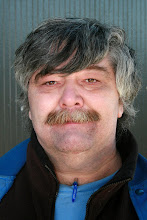
Pledging to connect with the public instead of library shelves, Jack Eichenbaum said he will offer scavenger hunts to help students learn the under appreciated legacy of their neighborhoods.
It's among several novel methods Eichenbaum vows to embrace in the prestigious post he assumed last week - at a crucial time when overdevelopment threatens Queens history.
"Books are a way of hiding from people," said Eichenbaum, 67, of Flushing. "I love being outdoors. I love the direct communication with people face to face."
Eichenbaum said he will also undertake digital research to determine, for example, how much of Queens' green space has been paved over in recent years.
Borough President Helen Marshall told the Daily News that she has already lined up a project for Eichenbaum: starting a one-room Queens history museum at Borough Hall in Kew Gardens.
Marshall said the display could feature items from the eclectic collection of the Queens topographical unit, such as a 1686 Bible and teeth from a famous Woodhaven racehorse named Dexter.
Marshall also hailed Eichenbaum's passion for leading walking tours past significant sites. "When people see that history and get into it, they don't want it to be destroyed," she said.
Eichenbaum stressed he will embrace an "educator" role rather than becoming an advocate who leads landmarking rallies to save "just every old building."
Pressed on whether he would seek landmark status to protect historic sites, Eichenbaum replied, "I don't see myself championing those types of causes."
Instead, he said, he will refer preservationists who seek advice on landmarking causes to other experts or museums.
He even dismissed some calls for historic preservation as residents fearing change.
Eichenbaum also bemoaned the "frozen-in-time" approach to the city's historic districts, which protect select blocks from major alterations or demolitions.
"A lot of the historic districts are just so fussy: 'You can't change this, you can't change the colors,'" he said.
Eichenbaum added that he is planning an October meeting of the borough's historical societies to foster interaction and cooperation around Queens.
Tom Smith of the city Department of City Planning goes over the Residential Streetscape Preservation text amendment with Community Board 10. Photo by Howard KoplowitzAuthorities say an emergency dispatcher’s keystroke error sent fire trucks toward the wrong address during a blaze that killed three people in Queens.
Authorities say an emergency dispatcher’s keystroke error sent fire trucks toward the wrong address during a blaze that killed three people in Queens.
The mistake was quickly corrected while the trucks were en-route on Saturday. It’s not clear whether it was a factor in the deaths.A spokesman for Mayor Michael Bloomberg acknowledged the dispatch error, but said other issues were more significant.
Jason Post said the basement windows were barred and the floors were illegally subdivided. He said the building also lacked working smoke detectors.
Some firefighters cited the incident as a sign that the city’s new dispatching system is not working. City officials defended the system, which was put in place over union objections.Fred Michael Rikon of the law firm Goldstein, Goldstein, Rikon and Gottlieb, a nationally renowned expert in eminent domain law, to represent them during the upcoming eminent domain battle with the City of New York.
Michael Rikon has been practicing law in New York since being admitted to the State Bar in 1969. Before forming the firm of Goldstein, Goldstein & Rikon in 1994, Mr. Rikon had a successful private practice, founded in 1980, specializing in condemnation law, real estate and litigation in the Court of Claims. From 1973 to 1980, Mr. Rikon served as a law clerk to the Honorable Albert A. Blinder of the New York State Court of Claims. Mr. Rikon began his law career as an Assistant Corporation Counsel for the City of New York, a position he held from 1969 to 1973, where he was a senior trial attorney in the Condemnation Division.
Mr. Rikon also contributes to professional journals in subjects related to the practice of condemnation law. In 1973 and 1974, Mr. Rikon was a special consultant to the New York State Commission on Eminent Domain and assisted in drafting New York's Eminent Domain Procedure Law.
Goldstein, Goldstein, Rikon & Gottlieb, P.C. is a law firm which limits its practice to condemnation law.
“With Mr. Rikon at the helm, we feel confident about our future. He is familiar with the continued neglect the city has forced upon the Willets Point businesses and residents. He is also familiar with the city’s unfair and illegal rush to use eminent domain.”
On June 3, 2009, the City of New York announced that it would begin condemnation proceedings against the remaining property owners at Willets Point, despite the fact that only 2 acquisition deals have been made since the November 13, 2008 City Council vote that approved the Willets Point redevelopment project. The City Council made it clear that eminent domain was only to be used as a last resort.
Earlier this year, the City’s Economic Development Corporation made phone calls to many of the businesses and told them that negotiations were on hold until next year. Then earlier this month, these same property owners were notified that they would soon receive letters announcing a public hearing about the use of eminent domain – a signal that the City plans to use eminent domain to take the rest of the properties.
“The City promised that eminent domain would only be used to take property from ‘1 or 2 hold outs’ – which is a far cry from the 59 landowners, or 80% of those who are left ,” said Jake Bono, Spokesperson for Willets Point United.
“Thankfully, we have Mr. Rikon, who will vigorously represent us on all matters until we achieve victory. This will protect future generations from being subject to abusive New York City eminent domain practices.”
For up to date information about the Willets Point fight, please visit their blog: http://www.willetspoint.org.
You may also follow them on Twitter: WilletsPtUnited
Tom Smith, with the Department of City Planning, presented a proposal to downzone parts of three neighborhoods on Thursday to the Juniper Park Civic Association. (photo by Ben Hogwood) Photo: NY Times by Richard Perry
Vacated tenants of a 19th-century mansion in College Point pleaded with city officials Tuesday to landmark the stately building - a step they said would prevent its demolition and perhaps expedite their return home.
Choking back tears, two frustrated renters from the Schleicher House at 13th Ave. and 123rd St. urged the Landmarks Preservation Commission to designate the 2-1/2-story brick building - built in 1857 on a unique circular plot - a historic site.
"I hope you can save it," said Rita Douglas, 51. "I just want to go back home."
Douglas had lived in the mansion from March 2008 until July, when its seven tenant families were forced to vacate.
Ousted resident Kalvis Macs, 38, begged the city to "do a lot for the community" by landmarking the Italianate and Second Empire-style structure, which was converted to a hotel in the 1890s and apartments in 1923.
Tenants allege that landlord Eva Rohan was so intent on selling the mansion to a demolition-minded developer that she neglected wiring snafus - leading the city to declare conditions "perilous" and vacate tenants.
Rohan, who didn't return calls seeking comment Tuesday, has previously denied any demolition plans and slammed the tenants for not paying electric bills.
Preservationists predicted the commission will landmark the mansion - partly because local City Councilman Tony Avella (D-Bayside) supports the designation and can guide it through the Council.
The 11-member commission is expected to vote on the designation in coming months.
Meanwhile, the commission unanimously approved a historic district of 36 rowhouses in Bedford-Stuyvesant, Brooklyn - the ninth non-Manhattan district created under Chairman Robert Tierney.
That is a record for districts outside of Manhattan created under one chairman.
Since Tierney took over in 2003, the commission has approved five districts in Brooklyn, two in Queens - in Douglaston Hill and Sunnyside Gardens - and one each in the Bronx and on Staten Island.
A commission spokeswoman pointed to Tierney's record as proof the agency does not unfairly favor sites in Manhattan, as critics often suggest.
Over-development has radically altered the traditional appearance and character of our neighborhoods. Illegal construction, non-compliance with zoning rules, and poor quality construction-this scourge is compounded with our failure to landmark historic buildings.
The results are increased population density, overloading community resources, congestion, pollution, parking and mass transit service problems. Schools are overcrowded and public utilities and services are overburdened, including sewer systems and garbage removal. The beauty of our tranquil neighborhoods is being destroyed. This epidemic has reached such proportions that there are few issues that cry out for governmental action more than over-development in Queens.
The issues are encapsulated in this larger question: “How can we enforce and promulgate laws relating to zoning infractions, illegal conversions, McMansions, lack of land marking of historic districts, concreting over lawns, out-of-character structures, permanent fencing, tear-downs and self-certification by engineers and architects?”
Abuse after abuse, eye sore after eye sore, buildings of this nature crop up block after block, like a cancer destroying our communities. Some have been completed, and others have been absolutely abandoned, presenting additional security and sanitation problems of their own.
Down zoning, the solution to the problem, curbs over-development and stops out-of-character development in Queens' residential neighborhoods. Changes in zoning regulations will align new construction with the character of the borough's neighborhoods and will ensure that communities can gracefully accommodate new development.
City Planning, in consultation with the Queens Borough President's Zoning Task Force, is supposedly conducting neighborhood zoning studies throughout the borough of Queens with the goal of preventing further over-development in each neighborhood. But why, after four years, we are still waiting for City action? Do we have to wait until the monstrosities completely overwhelm our neighborhoods? Why has it been stalled by the Department of City Planning over the last several years?
We must get the rezoning process moving again, as real estate investors continue to break ground on large-scale construction projects, putting up condominiums and four and five-story buildings with increasing frequency.
Clearly, City Planning and the Department of Buildings have dropped the ball. The City needs to complete the Down zoning Phase II process, and add personnel who are better trained, properly inspect violation complaints and respond quickly and efficiently.
Historic landmarks must also be preserved. The City must carry out the mandate of its residents. Enough is enough!
Nancy Cataldi, an outspoken preservationist who launched unrelenting efforts to save Richmond Hill's quaint downtown and Victorian homes, died last week at her home in Queens. She was 55.
The cause was a brain aneurysm and hemorrhage, said her half-brother, Michael.
Through nearly a decade as president of the Richmond Hill Historical Society, Cataldi fought to maintain the charm of a neighborhood that was founded in 1867 and boasts elegant houses and churches.
In 2002, she capped a successful campaign to landmark the classical Richmond Hill Republican Club on Lefferts Blvd., which was built in 1908 and hosted Theodore Roosevelt, Richard Nixon and Ronald Reagan.
"If it had not been designated [a city landmark], it's an absolute that it would have been demolished," said Ivan Mrakovcic, who preceded Cataldi as the historical society's president.
Cataldi also led an ongoing push to turn Richmond Hill into a historic district, which would bar major renovations without city approval. Preservationists fear the movement may suffer without Cataldi in charge.
"No one wants to say, 'I can do a better job,' because no one could," said Carl Ballenas, a historian at the historical society.
Cataldi also ran events celebrating the history of Maple Grove Cemetery in Kew Gardens, and curated the recently opened Italian-American Museum in Little Italy.
A photographer by trade, she worked for the New York Rangers hockey club in the 1980s and freelanced for major newspapers and magazines in recent years. She also volunteered for a Queens-based no-kill animal shelter, Bobbi and the Strays.
In August, Cataldi admitted she was devastated by changes to Richmond Hill - like the removal of marquee lettering from a 1929 RKO Keith's movie theater on Hillside Ave.
She also disturbed by the closing of a neighboring ice cream parlor named Jahn's and the destruction of a 1887 funeral home on Lefferts Blvd. where the society had housed its archives. "Everything historical down there is gone, almost," Cataldi lamented.
Her funeral is set for 10 a.m. tomorrow at Holy Child Jesus Church on 86th Ave. in Richmond Hill.
Area along Rockaway Blvd and Guy Lombardo around JFK Airport where the city plans cut down the trees and relocate some sites in Willets Point. District Manager of Community Board 13 Lawrence McClean, and Queens Chamber Alliance Barbara Brown rally with the community to stop the movement.
For many people who live in southeast Queens, the 13-acre parcel of trees and vacant land at the intersection of Guy R. Brewer Blvd. and Rockaway Blvd. is a vital buffer between their homes and Kennedy Airport.
City officials, however, see the site as the solution to an urgent problem.
It has been selected as the place to relocate more than 3,000 cars from the College Point impound lot so it can be cleared for a new, state-of-the-art police academy.
"We would rather not move 30 acres of cars," NYPD Inspector Thomas Pellegrino told borough officials last month. "But we are expected to break ground in mid-2009."
Community Board 13 was so unhappy with the plan to move the impound lot into their backyard that it unanimously voted down the proposal in September.
But Queens Borough President Helen Marshall told the Daily News that she has brokered a deal with the city to make the car pound a better neighbor. She intends to give the plan her seal of approval tomorrow.
"They went back to the drawing board and came back with concessions," Marshall said. "I'm very encouraged."
Under the new plan, cars will be stacked two-high instead three in the parts of the facility closest to Rockaway Blvd. to make it less visible.
The number of cars to be housed at the lot has been scaled down to 3,200 from 3,400. In addition, the NYPD promised to limit the types of vehicles brought into the new pound. And the exterior of the pound will be landscaped.
"With the trees and everything there, you won't really see it," said Marshall. "There will be no crushing of vehicles at the site."
As a sweetener, the city agreed to set aside 22 acres of land close to the pound, near Thurston Basin, as a park. Local residents have lobbied for years to get a park on the site.
"The community is happier now that there have been some concessions, but they aren't thrilled," said Richard Hellenbrecht, chairman of Community Board 13. "This had served as a buffer to the airport. It's a green area and it's going away."
There are about 700 trees at the site but only about 100 are considered "significant," city officials told Hellenbrecht. He said all greenery there is important.
"As far as I am concerned any tree with leaves on it cleans the air," he said.
Marshall said she secured a promise from the city to replace any trees uprooted to build the pound.
"Evidently, they were going to level the whole place," she said.
The move would have run counter to Mayor Bloomberg's sweeping PlaNYC 2030 initiative to plant 1 million trees by 2017.
City officials said they searched for other locations in the borough, ranging from the Aqueduct Racetrack parking lot to the Ridgewood Reservoir and near the Kosciuszko Bridge.
None of those worked out, leaving them with the site by the airport border, officials said.
Brooklyn was off limits, officials said, because it already houses three auto pounds.
Barbara Brown, a Community Board 13 member opposed to the plan, said the area is already saturated with traffic and industrial-type businesses.
"The air quality is not good in that part of Queens," she said. "They keep recommending things that pollute the air. That's an issue."
Foreclosures, water bills, building violations, education, public safety, flooding and raccoons were among the issues discussed at a nearly two-hour town hall meeting in Woodhaven on Monday night.
The topic of education was discussed at length toward the end of the meeting. David Quintana of Ozone Park asked Thompson for his opinion on mayoral control of the city’s schools, to which the comptroller — who is a likely contender in the 2009 mayoral race — responded with a smile.
COMMUNITY INVOLVEMENT: Andrea Crawford is serving her second term as chairperson of Community Board 9, which covers the neighborhoods of Kew Gardens, Richmond Hill, Woodhaven and Ozone Park One of the board’s top priorities is to fight for land use issues. “I’m not anti-development,” Crawford said. “I’m pro rational use of existing building stock before we just tear down and haphazardly put up structures that just don’t fit and serve the neighborhood.”To the Editor:
Re “Questions of Taste in Queens” (news article, July 5):
So much for Mayor Michael R. Bloomberg’s much-ballyhooed efforts to preserve lower-density neighborhoods in the boroughs outside Manhattan.
Queens’s residential neighborhoods are still caught up in a building boom whose major accomplishment seems to be tearing down older homes and replacing them with the behemoths described in your article.
While the new houses may be legal, paving over every square inch of open space and walling in the product to create a fortress is not.
Residents of these neighborhoods have been fighting for a minor change in a zoning resolution that would save these graceful older neighborhoods — but the Department of City Planning has been too busy accommodating developers whose plans are closer to the mayor’s vision of an ever-growing city than the aspirations of longtime homeowners in Queens.
Patricia Dolan
President
Kew Gardens Hills Civic Association
Flushing, Queens, NY
July 6, 2008
Related blog posting - Splitting Hairs In Forest Hills -
Must-Read on Bukharian McMansions

![]() |
| ||||||||||||||||||||||||
FAIR USE NOTICE: This site may contain copyrighted material the use of which has not always been specifically authorized by the copyright owner. I have posted it here in an effort to advance the understanding of environmental, political, human rights, economic, democratic, scientific, social justice and other issues. I believe this constitutes a 'fair use' of any such copyrighted material as provided for in section 107 of the US Copyright Law. In accordance with Title 17 U.S.C. Section 107, the material on this site is distributed without profit to those who have expressed a prior interest in receiving the included information for research and educational purposes. If you wish to use copyrighted material from this site for purposes of your own that go beyond 'fair use', you must obtain permission from the copyright owner. The material in this site is provided for educational and informational purposes only.