IN an astronomy village, a hush falls at night as the sky turns dark and the stars appear. Roofs roll back and telescopes aim for the heavens. All the neighbors are stargazing, and nobody turns on the lights.

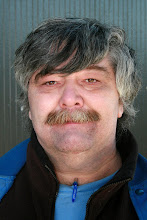
Mr. Turner sets up Arizona Sky’s communal telescope.

An observatory is being built with two domes.

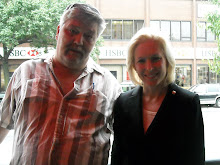
Gene Turner looked for the darkest region on the map to build Arizona Sky Village.

At Arizona Sky Village, the astronomers are largely amateur but the commitment is decidedly formidable. Roy Morrow, above, heads to his outside observatory.

Jack Newton stands in the shutter of his observatory dome.
Amateur astronomers, frustrated by the artificial light that obscures the stars over most urban and suburban backyards, have learned to chase the darkness to remote areas — not only for star parties and brief trips but to build second homes where they can indulge their hobby at length. And if the house can be in a community of like-minded aficionados of dark skies, so much the better.
Bill Williams, 55, a pathologist in Boca Raton, Fla., and his wife, Sandy, are building a second home and two observatories on a lot they bought among a cluster of astronomy lovers near Chiefland, Fla. “This is a gathering of people who haven’t lost their sense of wonder,” he said. “We are here for the beauty.”
The community at Chiefland was, its residents believe, the first astronomy village. It began spontaneously in the 1980s when an amateur astronomer, Billy Dodd (who died this year), retired from his job as a baker and traveled with his wife, Alice, through Florida, looking for skies that offered the clearest views of the stars. They found what they were looking for three hours north of Tampa Bay, in a little-populated area near the Gulf of Mexico. They bought 40 acres six miles south of Chiefland, a town of about 2,000 people, and Mr. Dodd built himself an observatory and trained his telescope and cameras on the stars.
As years passed, he wanted some company, so he subdivided his property and sold it to other amateur astronomers, creating Chiefland Astronomy Village, an unincorporated enclave where property owners agree to observe dark-sky rules. Chiefland’s fame grew when one buyer, Tom Clark, purchased five acres and turned three of them into a communal field for star-gazing, a place where amateurs could — and still can — arrive in R.V.’s and campers and pull out their telescopes.
At times up to 300 people gather in Mr. Clark’s front yard for star parties, including some weeklong events. Rules of the observing field include “No white lights anywhere dusk to dawn.” This means lights inside houses and R.V.’s, car headlights and even interior car and trunk lights are not allowed. There is also quiet time every night and every morning until noon because many of the astronomers stay up observing until dawn.
As the star parties grew, more and more amateur astronomers sought property in Chiefland, buying in Mr. Dodd’s original subdivision of 12 lots and nearby. There are now “about 20 astroresidents of the village,” Dr. Williams said.
The members watch the stars and photograph them. Dr. Williams explained that technological developments in the 1990’s made digital imaging of the sky practical for amateurs. Now, rather than look through a telescope, many stargazers use cameras that transfer the images onto computer screens. The house that Dr. Williams is building at Chiefland is a simple 1,834-square-foot structure with three bedrooms and two baths. What’s less ordinary are the observatories. “I need one roll-off-roof design for working with multiple telescopes at once,” he said, “and a separate dome observatory for imaging purposes with a larger scope. The dome helps protect the imaging telescope from wind and dew.” That observatory, he added, will be usable at long distance, via a computer connection, from his home in Boca Raton.
Another Chiefland homeowner, Tom Crowley, 66, whose primary home is in Atlanta, had been going to star parties at Chiefland for about four years when he got a call telling him that a house there was for sale. He bought it sight unseen. Lots in and around the astronomy village are rarely listed outside of the group’s Internet chat room, he said, and “places tend to sell in about half an hour.”
Charlie Warren, who is buying 10 acres in Chiefland, explained: “Property value depends on whether the land is subdivided or not. As well, the cost of houses and observatories fluctuate dramatically. Some people make observatories out of Costco sheds with rollback roofs, while others sink up to about $75,000 into them. And for the big telescopes, such as a Dobsonian with a 32-inch mirror, those cost around $150,000. So they may be worth more than the house and observatory.”
Chiefland’s proximity to the gulf makes for good viewing, but most people associate dark skies with the West. In remote areas there, cloudless weather and large open spaces without artificial light create clear views of tens of thousands of stars on a typical night.
Jack Newton, 64, a former resident of Chiefland, had that in mind when he and a fellow stargazer, Gene Turner, superimposed a NASA dark-skies map over a road map of Arizona in 2002 and drove toward the darkest region they saw. Mr. Newton, a retiree who in the summer operates an astronomy-themed bed-and-breakfast in Osoyoos, British Columbia, and Mr. Turner, a developer, were looking for a place to start an astronomy community. They found themselves in the southeast corner of Arizona, in Cochise County, about a mile outside Portal, a town of about 100 people.
They secured 450 acres in front of Cave Creek Canyon in the foothills of the Chiricahua Mountains and founded Arizona Sky Village, a development with dark-sky covenants that will eventually have 85 lots. Reservations were first taken in 2003 at $25,000 for a four-acre lot (the lots now start at $50,000). Mr. Newton started by making phone calls to acquaintances and, over one weekend, sold reservations for 33 lots. Thirteen houses have been built so far.
Mr. Newton had the idea for the sky village after his wife, Alice, fell in love with Arizona while they were visiting Tucson. “I thought to myself, an opportunity like this doesn’t happen very often in life,” Mr. Newton said. “This is the place where all the big telescopes are, and my wife wants to be here.” New Mexico and many places in Arizona have passed dark-sky laws requiring that a lot of outdoor lights — from street lights to advertising — be shielded so that light rays are reflected downward, or that they be shut off by a certain hour.
Joe Morris, 65, a doctor who lives in Maryland, was thinking of those laws when he bought at Arizona Sky Village. “It’s guaranteed good skies,” he said. Dr. Morris took up astronomy in earnest in the 1980s at his home near the Chesapeake Bay. He bought a telescope and built an observatory, but light from Baltimore and Washington encroached on his view. In the sky village, he wired up a robotic observatory that will allow him to watch the Arizona sky remotely on his home computer in Maryland.
Another second-home owner in Arizona Sky Village, Jim Lamm, 55, has his primary residence in Charlotte, N.C., and is similarly wired to his Arizona observatory. But he likes to get there in person as often as possible, partly for the sense of community among the amateur astronomers. “Everyone who owns a house or property there knows one another,” he said. “We’ve become good friends and can call each other at any time.”
Most of the people who presently have houses at Arizona Sky Village bought them prefabricated and had them shipped and then assembled on their lots. Irene Kitzman, 56, a psychiatrist based in New Hamden, Conn., and her husband, Bob Kitzman, make the trip about every third month. Their 1,600-square-foot home came in four pieces from California. Mr. Kitzman, like many of the other spouses, doesn’t share the star-gazing passion. “I’ll wake him up if I see something really special,” Mrs. Kitzman said. “But he really loves the hiking nearby. And it’s a premier birding place.”
Also planned at the village are 11 houses with fractional ownership. These units will have high-speed Internet access, remote robotic wide-field telescope links and 14-inch computerized telescopes. Preconstruction prices range from $6,500 to $8,500 per annual week. There will also be a communal observatory at the village and, starting this autumn, a weeklong annual star party.
ANOTHER new astronomy subdivision, Deerlick Astronomy Village, has just been developed 120 miles east of Atlanta. Chris Hetlage, 46, one of the cofounders and an amateur astrophotographer from Atlanta, looked for the darkest place in Georgia and found it — and a warm welcome — in Taliaferro County. “They didn’t want a lot of growth,” Mr. Hetlage said. “And we are low profile, so it was a good match.”
The owners have sold 14 of the 26 available lots of one and a half to two acres, starting at $30,000, and developed a large observing area where nonresidents can purchase yearly memberships for $35. Part of the field was sold to the Atlanta Astronomy Club, which holds its big event, the Peach State Star Gaze, annually at Deerlick.
Dan Ford, 52, who lives in Marietta, Ga., is, like most Deerlick owners, more interested in stargazing than in a luxurious vacation house. “Right now, I’m going with a mobile home out there,” he said. “My major priority is the observatory, which I built first.”
Also like so many others, he is drawn, too, by the sense of a shared passion. “Some people are into the visual observing; others, like myself are into photographing,” he said. “I’ll go up the road, look through large telescopes. And they can come down and look at my images on the computer screen.”
“It’s just not as much fun,” he added, “sitting out in the dark by yourself.”