Showing posts with label wnyc. Show all posts

Saturday, May 7, 2011

The Brennan Center for Justice at NYU School of Law - Symposium Re: Accountability After Citizens United - April 29th

The Brennan Center for Justice held a day-long symposium on Accountability After Citizens United at the Greene Space at WNYC in New York City on April 29th. The symposium explored the current debate between shareholders and corporate managers over corporate political spending, new strategies to promote accountability through regulatory pressure points, and the constitutional tensions between the rights of associations and the rights of individuals.


Opening remarks by Brennan Center Executive Director Michael Waldman and keynote address by Hon. Cynthia L. Bauerly, Chair of the Federal Election Commission.


Panel 1: Can Shareholders Save Democracy?

Moderated by Ciara Torres-Spelliscy, with panelists William T. Allen, John Coates, Robert Jackson, Jennifer Taub.


Lunchtime remarks by Charlie Kolb, Committee on Economic Development. Introduction by Wendy Weiser, Director of the Brennan Center's Democracy Program.


Panel 2: Regulatory Pressure Points: New Strategies for Accountability

Moderated by Mimi Marziani, with panelists Ellen Aprill, Marc Elias, Bruce Freed, Holly Schadler.


Panel 3: The First Amendment Rights of Associations and Individuals

Moderated by Mark Ladov, with panelists Frances Hill, Dale Ho, Glenn Magpantay, Daniel Ortiz, Tobias Wolff.


Closing remarks by Sanford Lewis, Strategic Counsel on Corporate Accountability.


Tuesday, April 5, 2011

Small Plane Lands On Queens Beach - Story by By WNYC Newsroom


A single-engine plane landed in the waters off Rockaway near JFK Airport Monday night — but all three aboard are safe.


NYPD emergency crews pulled the pilot and two passengers out of the plane, which went down in the surf near Beach 56th St. around 7 p.m. Monday. It was not clear what caused the plane to go down.


The plane took off from Farmingdale, Long Island, and was headed west, according to police. The destination was not known but officials said it was not believed to be headed to the airport.


The cause is under investigation.


With the Associated Press

Tuesday, March 22, 2011

Wednesday, March 9, 2011

Gillibrand's Fight: The War on Women - WNYC

Read original...


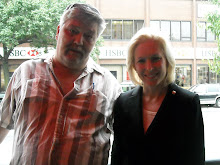
Today on the Brian Lehrer Show,Senator Kirsten Gillibrand (D-NY) talked about the new White House report on the status of women and the potential impacts of the House Republicans' budget cuts.
New York's junior Sen. Kristen Gillibrand (D-NY) has criticized the Republican-proposed budget cuts as a masquerade for ideology that is unfair to women. She's called it a "misjudgment" of what the American people want.
She pointed to cuts to nonprofits that deal with health care for women as an example. These aren't just jabs at reproductive care, they're jabs at overall health care, she said.
I feel like it's much more of an all-out assault on women that is not just about reproductive rights. Apparently they don't believe that women's health care should be funded. Companies and organizations and not-for-profits like Planned Parenthood, that's their job. They outreach to at-risk women and deliver a full range of health care services to them, including mammograms and pre-cancer screenings and including prenatal care, so when the pregnant women needs help to make sure that the child she bears is healthy, they don't even want to fund that.
Sen. Gillibrand highlighted data in the White House's report on womenon the stubborn wage gap between women and men. The report found that women are more likely to be heads of households in single parent families than men and these women have the lowest family earnings among all family types.
So the statistics and studies show that when women earn less, it affects children. It's the number one indicator of how much that child will have opportunities for education or health care or to really reach their potential so it really hurts children when women earn less than their male counterparts for the very same work...For every dollar a man earns, a woman earns 78 cents on that dollar.
Sen. Gillibrand's big concern is women that aren't entering advancing fields, like math and science. Another finding in the White House report showed that even though women earn more bachelors degrees overall, they earn less than half of the degrees in math, physical science, engineering and computer science, and those numbers are on the decline.
There aren't enough women in the higher levels of most professions, including politics, Gillibrand said.
We have so few women who are running for office. We still only have 17 women in the United States Senate...those are terrible indicators. Women have to be involved because if they don't participate, decisions are going to be made about every aspect of their lives and they might not like what those decisions are.

Monday, February 28, 2011

Eric Rotbard's Electric Car - wnycradio


Think about it: a car you plug in at night, the same way you charge a cell phone. For decades, this has been the drawing-board dream of engineers and environmentalists. Now, electric cars are starting to actually appear on the roads...and this guy has one.

Thursday, February 3, 2011

Hearing on Bloomberg's 911 Fix Raises More Questions - WNYC

Read original...

The City Council scrutinized one facet of the Bloomberg Administration's 911 rehab Tuesday, a week after residents filed at least two wrongful death suits alleging loved ones died during the December blizzard in part because of a dysfunctional 911 system and extensive delays in EMS response time.
The hearing, which included three Council Committees, all with jurisdiction, was billed as an update on the Administration's controversial Unified Call Taking System instituted back in 2009.
Lieutenant James McGowan, with the Uniformed Fire Officers, told the council panel that the system -- in which NYPD 911 operators handle the call intake on FDNY assignments then pass on essential information via computer under the new protocol -- regularly generated the wrong addresses and incomplete job sheets.
"I get at least 11 of these a day," said McGowan, referring to the forms the FDNY had to create to keep track of the defective referrals generated by UTC.

The Bloomberg Administration's point-man on the $2 billion 911 rehab project, Skip Funk, was not present at the meeting. So it was just the uniforms on the line of fire with NYPD 911 point-man Deputy Chief Charles Dowd doing his best to keep his testimony confined to the narrow topic the Council had originally scheduled.

Deputy Chief Dowd defended the shift to Unified Call Taking as efficient. But he went around and around with Fire Committee Chair Elizabeth Crowley over whether the UTC was actually adding time to fire responses. He conceded his 911 operators might take as up to two minutes assembling the facts before relaying the call to the FDNY. He said he had no numbers on what the average time his 911 operators were taking.

The Bloomberg Administration starts the official response time clock only after the FDNY gets the call -- excluding the 911 intake time, which the unions argue has gotten longer under UTC. Uniformed Firefighters President Stephen Cassidy called that "Enron accounting."

Response times have become highly politicized. The city has known since September 11, 2001, that its emergency call system's Achilles heel was handling massive call volumes. And as recently as the December 26, 2011, blizzard, callers got busy signals and long waits.

NYPD Deputy Chief Charles Dowd told City Council members the new software the City is testing also has problems and is vulnerable to high volume.

"I can tell you, based on some of the testing we have seen, that the software is, is failing when we do high volume tests against it," he said.

For Councilwoman Gail Brewer that disclosure was only the latest in disappointments having to do with the project.

"The software is a problem, the contracts are a problem and delays obviously means money," Brewer said. "At least for three or four years we have been dealing with the same issues. It's like Silly Putty. We can never quite get out finger on it."

Earlier this year, City Comptroller John Liu blew the time-out whistle on one 911 related contract. He wrote a letter to Mayor Bloomberg and invoked the CityTime payroll contract scandal when referencing his concerns about phases of the 911 overhaul. Liu said parts of the $2 billion 911 fix are prone to poor project management, blown deadlines and cost overruns, with one phase ballooning from $380 million to $666 million dollars.

The Bloomberg Administration said it's spent only $650 million dollars so far. A spokesman insists the new system will be a vast improvement when complete.

The Council pledges another full blow oversight hearing on the whole project.

Tuesday, January 18, 2011

MLK 2011: Sharpton Updates the Struggle, Bloomberg Gets Booed - WNYC

Read original...


In his annual tribute to Dr. Martin Luther King, the Rev. Al Sharpton and his parade of guests urged the crowd to fight the modern battle against inequality. And in at least once instance, that meant, for some, booing the person at the podium.

"We must deal with the issues of today," said Sharpton, who flew into the event after spending the morning in Washington DC. He equated the need to update the civil rights struggle today with the 1965 television sitcom F-Troop, which, according to Sharpton drew its humor from the fact that the post-Civil War soldiers "were fighting a war that had already been fought."

"The problem with many of us today is we want to fight the civil rights battle of 50 years ago," said Sharpton. "And not deal with the civil rights battle of today."


As the crowd applauded and occasionally yelled out encouragement, Sharpton said, "We won the battle of segregation. We can sleep in any hotel, we can buy coffee anywhere. The new problem is we can't afford it."

He went on to say, "We won the battle against mob violence in the south. Now our children are acting like mobs in the north." After pausing for some applause, he added, "We won the battle of being able to go to any school. We just don't get equal education and equal results."

After praising Dr. King's achievements in the 1960s, Sharpton told the crowd, "We've got to deal with gun control. We've got to deal with taking this thug, gangster mentality out of our community."

The crowd was boisterous, and welcoming of the elected officials who made their way to the stage during the nearly 6-hour event, including Senators Schumer and Gillibrand, Representatives Anthony Weiner, Jerry Nadler and Charlie Rangle, former Mayor Dinkins, union leader Mike Fishman of 32BJ, Manhattan District Attorney Cy Vance, and Community Board 1 President Julie Menin. Governor Cuomo was unable to attend because he was recuperating from a recent dental procedure. Sharpton said the governor will visit the group at another date.

Mayor Bloomberg was also there, and Sharpton reminded the audience, he's attended the event every year he's been in office. As Sharpton introduced the mayor, he was greeted with a round of applause that was quickly joined by booing, mostly from the rear of the room. Mr. Bloomberg, who spoke rather than yelled into the microphone, was initially drowned out by the reception.

Bloomberg's popularity has plummeted sharply after the city's botched snow removal efforts during the post-Christmas blizzard that left many buses, trains and even ambulances stuck for hours. But nobody needed to remind the crowd of that. There were other, more pressing matters.

By the time Bloomberg was introduced, a few speakers had, perhaps, stoked the crowd's ire at the administration.

City Councilman Ydanis Rodriguez of Upper Manhattan had blamed the current city administration for not building enough affordable housing, and for the low graduation rates at community colleges.

"Why did Mayor Bloomberg say that affordable housing was his priority," Rodriguez asked, citing the mayor's promise to renovate 100,000 units plus build an additional 60,000.

"In my district, in Washington Heights, only one big building has been built in the mayor's administration," said Rodgriguez. (The building, he said, was located at 204 Street.) "Only one building has been built. And that is a reality citywide," he said.

Then, Rodriquez, chairman of the council's Higher Education Committee, blasted the mayor on graduation rates.

"Drop out at community colleges, where about 90 percent of the students are black and Latino, only 28 percent graduated after six years," said Rodriguez, to the gasps and groans of the audience. Rodriguez reminded the crowd that Bloomberg had called community colleges one of his "priorities," and said, "the money's not there."

Rodriguez ended his speech predicting the city would not invest the same amount of money in poorer communities as they do in wealthier ones. He then added, "Yes, we have two New Yorks. The New York of the rich and the New York of the poor," echoing a slogan used by Fernando Ferrer, the Democrat who ran against Bloomberg in 2005 (and who enjoyed a visibility-stimulating endorsement from Rev. Sharpton).

More crowd-riling came from Rev. David Hampton of Bethany Baptist Church in Brooklyn, the same place where Sharpton started out years ago. Hampton spoke about the economic disparity between African Americans, who endured slavery and discrimination at work, to whites, who facing no such obstacles, were able to hand down their accumulated finances generation after generation.

"There's a difference between rich, and wealthy," said Hampton. "Oprah is rich. John D. Rockefeller is wealthy."

Then, Hampton invoked Bloomberg's new (and controversially approved) schools chancellor, Cathie Black. He reminded the crowd that she recently said school overcrowding could be solved by using "birth control." (The comment was made in jest and she has since apologized.)

The crowd grumbled at Hampton's telling of the incident, and one woman in the crowd could be heard saying "stupid!" in response. Then, Hampton said, "How about birth control for those who sit in positions of privilege?" The crowd applauded.

For his part, Sharpton's introduction of Bloomberg was earnest.

After noting they differ on some issues, he told the crowd, "We have unapologetically agreed and fought [together] on the things we do agree."

"He has been criticized for working with me. I have been criticized for working for him," said Sharpton, rattling off their efforts on education, juvenile justice and gun control. He noted that Bloomberg showed up at the event each year, "whether we were fighting or not and showed his respect for the community that Dr. King would fight for and fight from."

As he spoke, Bloomberg did manage to draw a quick laugh from the crowd, saying in a movie of their lives, the actor who would depict Sharpton would be Denzel Washington. "And the obvious choice to play me would be Brad PItt," said the mayor, who added a self-deprecating roll of the eyes.

The mayor praised King's resilience in the face of threats and violence, noting that King was treated in Harlem hospital for a stab wound. Later, he drew applause for saying he would "step up" efforts to crack down on gun violence, which, he said, was disproportionately affecting young African American males.

Brief applause came when the mayor spoke about "stopping the practice of sending hundreds of our youngsters from our city every year to state-run juvenile facilities upstate." Youthful offenders incarcerated there are "cut off for months, even years from their families, their schools and churches, which could be positive influences on them."

But when the mayor tried highlighting his accomplishments with city schools, the crowd's ire returned.

"I know everybody complains. Everybody says 'the test is easier,' this that and the other thing. Make no mistake about it," said Bloomberg. "President Obama and his secretary, Arne Duncan, think New York City is the national model for what you do with the school system."

Immediately, the crowd pushed back.

"No, they don't" said one woman in the crowd. Others hissed. Others hissed and murmurs grew louder and Bloomberg promised to make further progress on education.

"Thank you and God bless," Bloombeg concluded. The response was, again, a mixture of applauds and boos.

Wednesday, December 29, 2010

One Blizzard, Two Markedly Different Approaches in NJ and NYC By Bob Hennelly - WNYC

Read original...

On Tuesday, Mayor Bloomberg was careful not to overpromise. With dozens of ambulances and hundreds of buses still stranded, he was trying to manage expectations. Outer borough council members said constituents had not yet seen a snow plow.

"I don’t know that you ever get everything plowed because there always are streets, there are streets not even on the map... but I think you can expect another 24 hours before we’ll get to everyone, and even then I'm not so sure," he said.

That was quite a contrast to the mayor's stoic detachment a day earlier, when he didn't seem to fully grasp just how dysfunctional things had become for most New Yorkers. "The world has not come to an end," he said. "The city is going fine. Broadway shows were full last night. There are lots of tourists here enjoying themselves."

Mayor Bloomberg kept the city open for business on Monday and held the NYPD's graduation ceremony for more than 1,100 police cadets and their families at Madison Square Garden.

Meanwhile, west of the Hudson in New Jersey, Acting New Jersey Governor Steve Sweeney had declared a statewide snow emergency the night before (New Jersey Governor Chris Christie was out of state.) That declaration marshalled all of the state's resources including the National Guard. He bought himself time by granting the state workforce a two-hour delayed opening.

"The State of Emergency gives us the ability to get a lot of vehicles off the road where we can get our roads cleaned up as fast as possible and this evening there are going to be some really high winds so we are going to have blizzard conditions this evening so it is best for people to get off the road," Sweeney told WNYC Sunday night.

The next moning, Sweeney closed state government except for the state's essential emergency personnel.

That Bloomberg decision to keep the city's massive workforce on the hook for the day really irked Councilman Peter Vallone, chairman of the Council's Public Safety Committee. He said the Bloomberg administration made a critical error when it decided not to close city agencies.

"It was absolutely a mistake," says Vallone. "There were people stranded on trains, people stranded on roads, people falling on the pavement. Nobody but essential personnel should have been coming in."

Vallone said he closed his office Monday, but he said his Facebook page blew up with hundreds of complaints from constituents about the lack of snow plows.

"There was just a storm last December which was almost as bad as this one and we saw snow plows all day and all night," Valone said on Tuesday. "For the last 24 hours, we have seen no snowplows. We are finally beginning to see snow plows on the side streets of Queens. But we have been left on our own and it has been a very dangerous situation."

City Council Speaker Christine Quinn says she is convening emergency oversight hearings because this response was such a degradation from similar snow emergencies. Quinn said she is not clear why the Bloomberg administration did not declare a snow emergency as was done in New Jersey. She says Mayor Bloomberg's response that it would have caused more chaos left her perplexed.

“Well, that makes me ask, why do we have snow emergency rules that don’t work in a snow emergency!" Quinn said. "Maybe we in fact need to look at the way we define snow emergency and the rules we put in place around snow emergencies and bring them up to date.”

Earlier in the week the city's Office of Emergency Management Commissioner Joe Bruno said only the governor could make such a declaration. But Dennis Michalski, with the state's Division of Homeland Security and Emergency Services, says any local mayor has that power.

Firefighters' union president Steve Cassidy says many companies could not reach fires due to snowed-in streets or because they were covering for ambulances stuck in the snow. "Response times were affected dramatically and at one point, half of the engine companies were unavailable to respond to fires or other emergencies because they were assigned to medical emergencies."

On Monday, the city's 311 phone line had 250,000 calls. One major problem was that out of the close to 50,000 911 calls the NYPD received, only 10,000, or one in five, were actual emergencies.
Floating in the background is the question of whether cutting of 400 Sanitation Department slots was part of what slowed the response. Back in October, Stephen Goldsmith, the new Deputy Mayor for Operations, who replaced experienced city hand Ed Skyker, may have gotten off on the wrong foot with the Department of Sanitation middle management when he hailed his plan to demote 100 sanitation supervisors.

The Daily News Adam Lisberg and Lisa Colangelo reported in October that as a result, the busted supervisors got their pay cut $5,000 and the remaining supervisors got almost double the workload.

Tuesday, December 28, 2010

Helping the Wild Birds of New York City - WNYC Radio - Video


New York City is a stopover on an ancient migratory path for birds called the Atlantic flyway. During the spring and fall migration, birds are often injured flying into plate glass windows, or become disoriented and exhausted by the bright lights at night. But unlike L.A., Chicago and Philadelphia, New York doesn't have a wildlife rehabilitation center. Instead, injured wildlife is cared for by an underground network of wildlife rehabilitators like Rita McMahon.

Tuesday, October 26, 2010

Queens High Schools Still Crowded by Beth Fertig - WNYC

Read original...


Queens is always growing and it seems its schools are, too. The United Federation of Teachers says several high schools in the city's second most populous borough seem more crowded than usual this fall.
James Vasquez, the UFT's representative for Queens high schools, says principals are working hard to keep classes from getting too large by reprogramming schedules and adding more teachers. But he says Bayside, Benjamin Cardozo and the new Metropolitan High School are all still crammed with students.
"You have situations in which not only the hallways are crowded but the days are extended," he says. "Because kids are staying later or coming in earlier than they may have before."

The Department of Education confirms that Metropolitan High School, which opened in September, currently has 411 students -- 61 more than the target. Benjamin Cardozo in Flushing has about 40 more kids than expected.
Vasquez attributes the problem to poor planning and says the city should send more students to under-utilized schools. But a Department of Education spokesman says it's too early to make any determinations on class size or enrollment because they're still fluctuating daily. The state gathers final enrollment data on October 31.
Crowded schools don't always correspond with overcrowded classrooms, and vice-versa. Many schools in Queens and throughout the city still have class sizes that are above the contractual limit of 34 in high school subjects and 50 for gym. Vasquez says the Queens High School of Teaching was especially hard hit with dozens of classes above the limit. In early September, the union estimated that 1900 high school classes in Queens were above contractual limits. But that number has since been cut down by more than half. As in previous years, the city resolves many of the disputes just before or during arbitration hearings.
Meanwhile, the union says the situation at Francis Lewis High School - which has more than 4000 students - seems under control. The city and the union went to arbitration hearings over the past few years because of overcrowding. Though it's still packed, the union says no classes are beyond their contractual limits.

Comment by Arthur Goldsten


If the union says Francis Lewis is "under control" that's only because they haven't bothered to consult with anyone who actually works there. Lewis is open 14 periods a day, six sessions, and has classes in trailers with chronically failing heat and AC and half-classrooms that are absolutely unfit for teaching and learning. Our students run around outside in the cold and the dark, and eat lunch at 9 AM.
During peak times, you can barely make it down the hall. 61 more than the target? At Lewis we've been thousands above the target, and for years.
Hardly a "Mission Accomplished" moment by me.
Arthur Goldstein, UFT Chapter Leader
Francis Lewis High School

Thursday, September 16, 2010

City Smoking Ban May Extend to Parks and Beaches - WNYC

Another Nanny-state law - Now Mayor Bloomberg wants to stop cigarette smoking outdoors, too...I think it's absurd...!

Read original...


It's been a slow, steady and — by most accounts — effective campaign to get smokers in New York to take their habit outside. More than seven years ago the city became a national leader in efforts to curb indoor smoking when it enacted a ban on smoking in bars and restaurants. Now, Mayor Michael Bloomberg and members of the City Council want to go even further by banning some outdoor smoking as well.
A bill to be introduced in the council tomorrow would prohibit smoking in all 1,700 city parks, 14 miles of city beaches, public marinas and even pedestrian plazas, like the one in Times Square.
City Council Speaker Christine Quinn says not all of Times Square would be off limits to smokers. People would still be able to smoke on sidewalks.
"But you can't sit in one of those little tables, right next to me, in another little table, and smoke and therefore I have to ingest your second-hand smoke," Quinn says. "That you can't do."
Once the bill is introduced, public hearings would be held on the proposed new law. According to the Bloomberg administration, Chicago and Los Angeles already ban smoking at parks and beaches. Bloomberg, who has made banning smoking a major policy issue, says being three feet from a smoker is hazardous to your health, whether indoors or outdoors. The bill is supposed to protect against second-hand smoke.
"In passing it, we think it would help ensure that when New Yorkers and visitors to our city go to the parks and beaches for fresh air, there will actually be fresh air for them to breathe, and also that our parks and beaches won't be littered, as they are now, all too often," Bloomberg says.
According to the city, cigarette butts account for 75 percent of litter on city beaches and can take more than 18 months to decompose.

The smokers' rights group Citizens Freedom Alliance questions the science behind second-hand smoke dangers and says the ban would be taking away the rights and freedoms of New Yorkers.

City Council members defend the measure and say it's not meant to be punitive or generate revenue. Public workers with the authority to write summonses would enforce the law, but city lawmakers believe regular citizens could help too.
So far public reaction is mixed, with some people suggesting there should be a smoking section in parks and beaches, instead of an all out ban.
Junior Thomas, who was smoking in Riverside Park, says he hates that he smokes, but he'd rather quit on his own than have it forced on him. He called the ban "trotting on people's civil liberties."
Merle Chitan, who was also at the park, welcomes the ban. She's a nanny who suffers from smoke allergies. "You want to enjoy yourself when you're sitting in the park and the smoke is coming in your face, so I think it's a great idea what they want to do. "
Councilwoman Gail Brewer, who represents the Upper West Side of Manhattan, will introduce the bill Thursday. It's unclear which council members support the legislation.

Francisco Moya Bids Monserrate Adios by Catalina Jaramillo - WNYC

Read original...


Francisco Moya won over voters in the 39th State Assembly district.
Catalina Jaramillo

Hiram Monserrate, the infamous former member of the New York State Senate who was recently convicted of domestic assault and kicked out office, lost his bid for election in the State Assembly to newcomer Francisco Moya.
At 11:20 on Tuesday night, Moya, an Ecuadorian-American, gave a victory speech in the race to represent the 39th Assembly district in Queens.
“He hasn’t called me yet,” he said referring to Monserrate. “But the battle is won. We will bring dignity and integrity back.”
Monserrate didn’t answer his phone, but Ramón Ramírez from his campaign conceded on his behalf. “Hiram lost,” he said.
With 100% of precincts reporting, Moya had 66.66% of the votes and Monserrate 33.34%.

Catalina Jaramillo is a reporter for El Diario/La Prensa and Feet in Two Worlds. Read more of her coverage of the Moya/Monserrate race here.

Friday, September 10, 2010

Brooklyn May Revive the Streetcar - WNYC

Read original...

The Bloomberg administration is finally ready to begin a study of whether it makes sense to bring streetcars back to Red Hook.


The Department of Transportation announced it has hired a consultant, the URS Corporation, for the $300,000, five month study. It will determine whether streetcars are needed, which routes would be best and who would pay for the service. Department of Transportation Secretary Janette Sadik-Kahn says the agency is using a federal grant to fund the study.
Congresswoman Nydia Velazquez, who represents Red Hook, secured the money five years ago. Bloomberg made the study part of his platform for re-election last year, as a means of bringing more transportation to waterfront neighborhoods.
The city had originally planned to undertake the study last fall.
A spokesman hasn't responded to a request to explain the delay.

Saturday, July 24, 2010

Life In The Bike Lane: Getting Around The City By Bike - WNYC

Read original...


Bicycling is the fastest-growing way to get around in New York City. The number of people commuting by bike grew by 35 percent between 2007 and 2008 and many of them travel on the city's 420 miles of bike lanes. Still, the city is a crowded, smoggy, busy place and only 1 percent of New Yorkers bike to work.

WNYC talked to a small slice of the 1 percent to get a glimpse of what life is like in the bike lane.