Tuesday, January 29, 2008

NY Daily News - Addabbo's Council Seat up for Grabs by Nicholas Hirshorn

Addabbo's council seat up for grabs

With Councilman Joseph Addabbo poised to try for higher office, the race for his seat is shaping up as a generational showdown between a grad student and a grandpa.

Fresh-faced Republican Eric Ulrich, 22, and elder Democrat Frank Gulluscio, 60, won't face each other until February 2009 if the Democrat Addabbo dethrones state Sen. Serphin Maltese (R-Glendale) - or until November 2009 if Addabbo loses.

But the civic-minded men are already exchanging potshots over who should represent Howard Beach, the Rockaways and other parts of southern Queens in the Council.

"A 60-year-old man like Frank against a guy like me who can knock on more doors [to get votes]? That's a no-brainer," fired Ulrich, who studies at St. John's University and became a Republican district leader in September.

Gulluscio shot back with his résumé: an English teacher in the 1970s, franchisee of two Brooklyn roller-skating rinks in the 1980s, nearly a decade as Democratic district leader and two years as Community Board 6 district manager.

"I've been 22. I know how 22-year-olds act and walk and talk," Gulluscio said of his rival. "We need somebody in that job who's competent. . . . We need someone from Day One who's not going to ask where the bathroom is."

Ulrich has raised $18,565 for his run over the past two years, with donations from several civic leaders and the wife of former Councilman Thomas Ognibene, according to city Campaign Finance Board records.

Gulluscio has garnered a comparatively slim $4,575, records show, but he stressed he hasn't truly started fund-raising.

"Look at me in July, which is the next filing [for campaign contributions]," he said.

But the candidates agree on some things: Both are proposing ferry service and cleaner, safer beaches in the Rockaways.

Losing 2006 Assembly candidate Stuart Mirsky, now vice president of the Rockaways Republican Club, figured Ulrich's dynamism would help him put up a formidable fight against Gulluscio.


Eric Ulrich (R)
Name
Frank Gulluscio (D)
22
Age
60
B.A., St. Francis College (2007); M.A., St. John's University (Expected 2009)
Education
B.A., SUNY (1968)
Engaged for four months
Family
Married for 35 years, grandfather of two
District leader for five months
Experience
District leader for nearly a decade
George W. Bush (2004)
First presidential candidate voted for
Eugene McCarthy
(1968)
"Shawshank Redemption" (1994)
Favorite movie
"Patch Adams"
(1998)
Frank Sinatra's "New York, New York" (1979)
Favorite pop song
John Lennon's "Imagine"


"You don't have an incumbent in place," Mirsky said. "It makes things a lot easier for a challenger."

And Democratic district leader Lew Simon, who lost to Addabbo in the 2001 primary, said he hasn't ruled out entering the race.

Tuesday, January 8, 2008

Gossage Elected to Hall of Fame, but McGwire Again Falls Short - New York Times

Goose is one of my favorite baseball players of all time - he was a great player and deserves to be inducted into the Baseball Hall of Fame...


Read original...

Rich “Goose” Gossage, the intimidating closer with the explosive fastball and the Fu Manchu mustache, secured baseball’s highest honor on Tuesday when he was elected to the Hall of Fame.

In Gossage’s ninth year on the ballot, he received 85.8 percent of the vote. Jim Rice, who was in his 14th year on the ballot, received 72.2 percent, which was 16 votes shy of enshrinement. Candidates need to eclips 75 percent to gain admission to the Hall and can remain on the Baseball Writers Association of America’s ballot for up to 15 years if they receive at least 5 percent of votes.

Mark McGwire, whose 583 homers are the eighth best on the all-time list, garnered a paltry 23.6 percent of the vote, nearly identical to the 23.5 he received last year, the first time he was on the ballot. McGwire’s candidacy has been damaged by the suspicion that he used performance-enhancing drugs and his refusal to answer questions about steroids at a Congressional hearing in 2005.

Besides Gossage and Rice, the only other players who were mentioned on more than half of the ballots were Andre Dawson, who received 65.9 percent of the votes, and Bert Blyleven, who notched 61.9 percent. There were 543 votes cast, which included three blank ballots.

Gossage, who pitched for nine teams across a 22-year career, went 124-107 with a 3.01 earned run average and 301 saves. The right-hander pitched for the Yankees’ 1978 World Series Championship team and had 150 saves in six superb seasons with New York. Gossage was a nine-time All-Star, he pitched in three World Series and he twice finished in the top 10 in the Most Valuable Player balloting.

After Gossage received 71.2 percent of the vote while sharing the ballot with first-year candidates Cal Ripken, Jr. and Tony Gwynn in 2007, he returned as the most deserving candidate in 2008. He joins fellow relievers Hoyt Wilhelm, Rollie Fingers, Dennis Eckersley and Bruce Sutter in the Hall.

Rice, who hit 382 homers in an era that was not defined by steroid use, fell agonizingly short of being enshrined this year. He will make his 15th and final appearance on the writers’ ballot next year. Rickey Henderson, who is the all-time leader in stolen bases and runs scored, will make his first appearance on the ballot next year.

Run Mitt Run...Current-tv

Monday, January 7, 2008

wcbstv.com - Person Struck, Killed By V Train In Queens

Read origianl...


Photo from Forgotten-NY.com

A person was struck and killed by a V train in Queens about 12:45 p.m. on Monday, CBS 2 has learned. The incident occurred at the Grand Avenue station at Queens Blvd. in Elmhurst.

Police and fire department officials are on the scene investigating the cause of the accident. Many service disruptions in Queens are being reported as a result.

Why I Believe Bush Must Go by Senator George McGovern

As we enter the eighth year of the Bush-Cheney administration, I have belatedly and painfully concluded that the only honorable course for me is to urge the impeachment of the president and the vice president.

After the 1972 presidential election, I stood clear of calls to impeach President Richard M. Nixon for his misconduct during the campaign. I thought that my joining the impeachment effort would be seen as an expression of personal vengeance toward the president who had defeated me.

Today I have made a different choice.

Of course, there seems to be little bipartisan support for impeachment. The political scene is marked by narrow and sometimes superficial partisanship, especially among Republicans, and a lack of courage and statesmanship on the part of too many Democratic politicians. So the chances of a bipartisan impeachment and conviction are not promising.

But what are the facts?

Bush and Cheney are clearly guilty of numerous impeachable offenses. They have repeatedly violated the Constitution. They have transgressed national and international law. They have lied to the American people time after time. Their conduct and their barbaric policies have reduced our beloved country to a historic low in the eyes of people around the world. These are truly "high crimes and misdemeanors," to use the constitutional standard.

From the beginning, the Bush-Cheney team's assumption of power was the product of questionable elections that probably should have been officially challenged -- perhaps even by a congressional investigation.

In a more fundamental sense, American democracy has been derailed throughout the Bush-Cheney regime. The dominant commitment of the administration has been a murderous, illegal, nonsensical war against Iraq. That irresponsible venture has killed almost 4,000 Americans, left many times that number mentally or physically crippled, claimed the lives of an estimated 600,000 Iraqis (according to a careful October 2006 study from the Johns Hopkins Bloomberg School of Public Health) and laid waste their country. The financial cost to the United States is now $250 million a day and is expected to exceed a total of $1 trillion, most of which we have borrowed from the Chinese and others as our national debt has now climbed above $9 trillion -- by far the highest in our national history.

All of this has been done without the declaration of war from Congress that the Constitution clearly requires, in defiance of the U.N. Charter and in violation of international law. This reckless disregard for life and property, as well as constitutional law, has been accompanied by the abuse of prisoners, including systematic torture, in direct violation of the Geneva Conventions of 1949.

I have not been heavily involved in singing the praises of the Nixon administration. But the case for impeaching Bush and Cheney is far stronger than was the case against Nixon and Vice President Spiro T. Agnew after the 1972 election. The nation would be much more secure and productive under a Nixon presidency than with Bush. Indeed, has any administration in our national history been so damaging as the Bush-Cheney era?

How could a once-admired, great nation fall into such a quagmire of killing, immorality and lawlessness?

It happened in part because the Bush-Cheney team repeatedly deceived Congress, the press and the public into believing that Saddam Hussein had nuclear arms and other horrifying banned weapons that were an "imminent threat" to the United States. The administration also led the public to believe that Iraq was involved in the 9/11 attacks -- another blatant falsehood. Many times in recent years, I have recalled Jefferson's observation: "Indeed I tremble for my country when I reflect that God is just."

The basic strategy of the administration has been to encourage a climate of fear, letting it exploit the 2001 al-Qaeda attacks not only to justify the invasion of Iraq but also to excuse such dangerous misbehavior as the illegal tapping of our telephones by government agents. The same fear-mongering has led government spokesmen and cooperative members of the press to imply that we are at war with the entire Arab and Muslim world -- more than a billion people.

Another shocking perversion has been the shipping of prisoners scooped off the streets of Afghanistan to Guantanamo Bay, Cuba, and other countries without benefit of our time-tested laws of habeas corpus.

Although the president was advised by the intelligence agencies last August that Iran had no program to develop nuclear weapons, he continued to lie to the country and the world. This is the same strategy of deception that brought us into war in the Arabian Desert and could lead us into an unjustified invasion of Iran. I can say with some professional knowledge and experience that if Bush invades yet another Muslim oil state, it would mark the end of U.S. influence in the crucial Middle East for decades.

Ironically, while Bush and Cheney made counterterrorism the battle cry of their administration, their policies -- especially the war in Iraq -- have increased the terrorist threat and reduced the security of the United States. Consider the difference between the policies of the first President Bush and those of his son. When the Iraqi army marched into Kuwait in August 1990, President George H.W. Bush gathered the support of the entire world, including the United Nations, the European Union and most of the Arab League, to quickly expel Iraqi forces from Kuwait. The Saudis and Japanese paid most of the cost. Instead of getting bogged down in a costly occupation, the administration established a policy of containing the Baathist regime with international arms inspectors, no-fly zones and economic sanctions. Iraq was left as a stable country with little or no capacity to threaten others.

Today, after five years of clumsy, mistaken policies and U.S. military occupation, Iraq has become a breeding ground of terrorism and bloody civil strife. It is no secret that former president Bush, his secretary of state, James A. Baker III, and his national security adviser, Gen. Brent Scowcroft, all opposed the 2003 invasion and occupation of Iraq.

In addition to the shocking breakdown of presidential legal and moral responsibility, there is the scandalous neglect and mishandling of the Hurricane Katrina catastrophe. The veteran CNN commentator Jack Cafferty condenses it to a sentence: "I have never ever seen anything as badly bungled and poorly handled as this situation in New Orleans." Any impeachment proceeding must include a careful and critical look at the collapse of presidential leadership in response to perhaps the worst natural disaster in U.S. history.

Impeachment is unlikely, of course. But we must still urge Congress to act. Impeachment, quite simply, is the procedure written into the Constitution to deal with presidents who violate the Constitution and the laws of the land. It is also a way to signal to the American people and the world that some of us feel strongly enough about the present drift of our country to support the impeachment of the false prophets who have led us astray. This, I believe, is the rightful course for an American patriot.

As former representative Elizabeth Holtzman, who played a key role in the Nixon impeachment proceedings, wrote two years ago, "it wasn't until the most recent revelations that President Bush directed the wiretapping of hundreds, possibly thousands, of Americans, in violation of the Foreign Intelligence Surveillance Act (FISA) -- and argued that, as Commander in Chief, he had the right in the interests of national security to override our country's laws -- that I felt the same sinking feeling in my stomach as I did during Watergate. . . . A President, any President, who maintains that he is above the law -- and repeatedly violates the law -- thereby commits high crimes and misdemeanors."

I believe we have a chance to heal the wounds the nation has suffered in the opening decade of the 21st century. This recovery may take a generation and will depend on the election of a series of rational presidents and Congresses. At age 85, I won't be around to witness the completion of the difficult rebuilding of our sorely damaged country, but I'd like to hold on long enough to see the healing begin.

There has never been a day in my adult life when I would not have sacrificed that life to save the United States from genuine danger, such as the ones we faced when I served as a bomber pilot in World War II. We must be a great nation because from time to time, we make gigantic blunders, but so far, we have survived and recovered.

anmcgove@dwu.edu

Friday, January 4, 2008

Allstate pays for jet damage to NYC home

Read original...


Allstate Insurance Co. has agreed to pay $995,000 to a Brooklyn couple who claimed their house was badly damaged by vibrations caused by an Air France Concorde jet nearly five years ago.

The couple, John and Annette Ferranti, initially won a $1.15 million verdict against Allstate last month after a trial in Manhattan's state Supreme Court. Allstate had filed a notice they would appeal the award.

Allstate's lawyer, Bruce Farquharson, confirmed the settlement but said he could not comment further.

The Ferrantis sued after Allstate refused to pay for damage to their 12-room concrete and steel house created by vibrations from an Air France Concorde as it took off from John F. Kennedy airport on July 21, 2002.

The couple said the supersonic jet struggled to gain altitude, flew low over Jamaica Bay, and buzzed the areas near their home where other residents complained about shaking foundations and cracking plaster.

Following the ear-splitting takeoff, the Ferrantis said, their home began leaking during rainstorms. They said the water seeped through cracks that had opened in concrete blocks they used to build the waterfront house on Jamaica Bay in 1990.

Allstate had insured the house since John Ferranti, a retired general contractor, built it in 1990, said the Ferrantis' lawyer, Jonathan J. Wilkofsky.

Wilkofsky said Allstate had refused to pay the Ferrantis' claim, saying bad construction and poor maintenance had caused the leakage problem.

The lawyer said Allstate also argued that the couple's late notice of claim precluded the insurer's having to pay. The Ferrantis gave Allstate their notice of claim 14 months after the flight which caused the damage, Wilkofsky said.

After a three-week trial, which included testimony of six engineers and a noise expert from the Port Authority, the jury took five hours to return its verdict, Wilkofsky said. He said Allstate settled with the Ferrantis on Dec. 21.

The Concorde, which was used only by Air France and British Airways, was taken out of service by both carriers in 2003.

Tuesday, January 1, 2008

The Sports Network - Thoroughbred Racing

Read original...

Ozone Park, NY (Sports Network) - The New York Racing Association (NYRA) has reached an agreement with the state of New York to remain operating on a temporary basis.

The agreement allows racing at Aqueduct to go on through Wednesday, January 23. The contract NYRA has was to expire December 31.

"On behalf of our fans, employees and the participants in the racing industry, NYRA wants to thank Governor Eliot Spitzer and Steven Newman, Chair of the Oversight Board, for their extraordinary efforts to continue racing at Aqueduct," NYRA Chairman C. Steven Dunker said in a statement.

Negotiations on a permanent contract to operate Aqueduct, Belmont Park and Saratoga Race Course are expected to resume next week.

12/31 17:39:46 ET

Sunday, December 30, 2007

Rescuing Gateway - New York Times

Read original...

There is a 26,000-acre national park on the edge of New York City, its nearest point less than an hour from Times Square. But not many New Yorkers know it is there. Though about two million people visit parts of it every year, the park is forlorn and in need of help — from the federal government, from Albany and from the city.

The park is the Gateway National Recreation Area, one of the more discombobulated units in the national park system but one with great potential. Created in 1972, exactly one century after Yellowstone, it encompasses uplands, wetlands and estuaries in three segments connected by water: Jamaica Bay, Staten Island and Sandy Hook in New Jersey.

The great expanses of salt marsh and remnant woodland tracts at Jamaica Bay, and the beaches at Sandy Hook, provide habitat for 330 species of birds and 71 species of butterflies. Three species that live there — piping plovers, least terns and diamondback terrapins — are on the endangered or threatened list.

Earlier this year, the National Parks Conservation Association, a nonprofit group that fights for improvements throughout the park system and annually rates the most distressed parks, gave Gateway the lowest marks for the condition of its natural and cultural (meaning educational) resources of any of the 28 parks and federally protected areas it surveyed.

The marshes are eroding, the beaches are not as clean as they should be, the trails and walkways are merely mediocre, the restrooms and other public facilities leave much to be desired. And a few more rangers to explain what people are looking at would always be helpful, though this is a problem throughout the park system. As the association put it:

“New habitats, restored marshes and modern recreation facilities are needed to create an environment that is suitable for park visitors, native wildlife and plants.”

This state of affairs is partly the result of a bad break long ago: the $92 million that was authorized to rebuild Gateway in 1972 was never appropriated. It is partly the result of the chronic underfinancing of the National Park Service, which the present secretary of the interior, Dirk Kempthorne, is trying hard to correct. And because Gateway is disconnected, and without a unifying personality, ordinary citizens have not attained the kind of critical mass required to force change.

About a year ago, however, the parks association and other friends of Gateway began organizing a lobbying campaign to improve matters. The association also started a competition aimed at creating a master plan to unify the three main units, and the top designs — at least 150 have been submitted — will be presented to the National Park Service for possible inclusion in Gateway’s next general management plan in 2009.

One thing that would definitely help is a reliable waterborne transportation system, and this is where the city, the state and even the Port Authority could help. Gateway has many private friends, and one of them, the National Parks of New York Harbor Conservancy, has been seeking ways to integrate Gateway’s three units with 22 other national parklands in and around New York Harbor, including the Statue of Liberty and Ellis Island.

One of the things the conservancy has in a mind is a water taxi or ferry system that could whisk visitors from one site to the other and then back home again. This is a splendid idea. Each of Gateway’s units is, in a way, an orphan. Fixed up, and knitted together, they could make Gateway the vital urban park it was meant to be.

Saturday, December 29, 2007

The Binocular Brigade - New York Times

Read original...


PATH that skirts the Lake Tappan Reservoir in River Vale was silent but for calls from a flotilla of Canada geese and a team of birdwatchers’ footfalls as they cracked the runner of ice-encrusted snow.

Suddenly, a voice broke the chill morning hush.

“Shrike!” announced Kenneth Witkowski of Hardyston, the team leader. His fellow birders swarmed around his tripod-perched spotting scope, sharing the moment.

The predatory shrike, also known as the “butcher bird,” along with a bounty of about a dozen adult and immature American bald eagles, hundreds of svelte merganser ducks, a lone robin, and a few herons were among the many birds spotted that Saturday morning in Bergen County.

While the group of five recorded their sightings, other birders throughout the nation were doing the same as part of the National Audubon Society’s 108th annual Christmas bird count. The count was established on Dec. 25, 1900, by Frank M. Chapman, a curator of ornithology at the American Museum of Natural History. His intent was to track and tally the birds, not hunt them. Twenty-five counters were dispatched to 27 locations across the United States, including parts of Englewood, Moorestown and Newfield. Those original observers counted a total of 90 species.

Today, there are 11 Audubon chapters in Connecticut, 5 in New Jersey, 5 in Westchester County and 7 on Long Island. The bird count turnout varies from place to place, from a team of two in Peekskill, N.Y., to 60 in Orient, on Long Island.

Some observers take part in multiple counts. Counters, totaling a record 57,851 last winter, include field observers and birders counting at home feeders. Local numbers contribute to Audubon’s yearly totals for the United States, Canada, Latin America, the Caribbean and American protectorates in the South Pacific.

Each chapter selects a single day between Dec. 14 and Jan. 5 to stage its event. The count area is a circle with a 15-mile diameter through a given point. Each birder sets his or her sight on a part of the circle, counts the type of bird flying though and reports it to the group leader. Participants make every effort not to count the same bird twice, and the leader’s separate tally usually serves as a control.

At Lake Tappan Reservoir, Mr. Witkowski forged ahead, identifying species and conducting his own independent count as he moved along. He was followed by team members who, as backup, lingered behind to count larger groups of birds.

Natural features around the tristate region cut a wide swath — fields, farmlands, deciduous forests, wetlands, shorelines and waters — sustaining some 450 species of bird life. Among the species sighted are owls, including the screech and saw-whet, a range of warblers, the ubiquitous Canada geese, peregrine falcons and bald eagles. The latter two species are no longer on the federal endangered species list, a significant victory in Audubon’s view.

But many avid birders are just as happy spotting a humble starling as a rare snowy owl. “I try to get out as often as possible, not always searching for that mega-rarity — the bird that comes from Asia — but just to enjoy the search,” said Steven Biasetti, with the Eastern Long Island Audubon Society in East Quogue.

And the company’s not bad, either. “We have a good time, that’s for sure,” Mr. Biasetti said. “It’s great camaraderie.”

Others value the quiet intimacy between human and bird. “For me, nature is art,” said Mary Normandia of Glen Cove, N.Y. “The colors of the birds, even the decaying matter, the smells. All the great artists, musicians, poets have taken their cues from nature.” Ms. Normandia cites “The Art of Seeing Things” (Syracuse University Press, 2001), by the naturalist John Burrroughs, as a foundation for bird appreciation. Quoting Burroughs, she said, “You must have a bird in the heart before you can find one in the bush.”

A good pair of binoculars also helps. “Field optics are a requirement,” said Rik Kaufman, a birdwatcher with the Saw Mill River Audubon in Chappaqua, N.Y. He suggested “getting a nominal 8X40-sized binocular of the best quality you can afford.” Prices range from $100 to $1,000.

Mr. Kaufman and others also recommended a good guidebook. Roger Tory Peterson, who for a time led counts in southern Westchester, produced the compact 1932 standard “Field Guide to the Birds” (Knopf). An alternative is David Allen Sibley’s “The Sibley Guide to Birds” (Houghton Mifflin, 2000), which may appeal to more sophisticated birdwatchers.

“Birds lend an identity to an area,” said Mike Cooper, who is affiliated with the Great South Audubon Society, in Sayville, N.Y. And that identity, for better or worse, is reflected back in bird behavior and patterns.

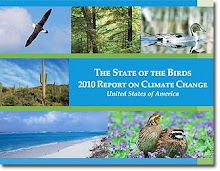
John Flicker, president of the National Audubon Society, has called birds “the canary in the coal mine — a sign that something is going on” in terms of environmental change.

National Audubon recently issued its WatchList 2007, a periodic synthesis of data for the United States that takes into account current species’ population size, population trends, range size of a species and threats to a spread of populations. According to Dr. Greg Butcher, National Audubon’s director of bird conservation, there are 10 regional species on the WatchList’s urgent list and some 37 regional species on the cautionary list.

“The worst of it is definitely in the future,” Dr. Butcher said. Among other things, “we’re worried about the coastal species in 50 to 100 years.”

Geoffrey S. LeBaron, national director of the bird count, elaborated. Should ocean levels rise in coming decades, he said, the already endangered piping plover that nests on Jones Beach and elsewhere, for one, would be particularly vulnerable.

Mr. LeBaron calls forest species the future’s “wild card.” Common, adaptable species with habitats near the human population will probably be relatively unaffected, he said.

For now, there is unease, if not panic, among the New York region’s birders.

Julian Sproule, president of the Saugatuck Valley Audubon Society, in Wilton, Conn., also serves on birding boards at the state level and has a broader perspective on how climate change affects the region. He points to a study led by Alan Hitch, a wildlife expert at Auburn University, that clearly documents a northward trend among certain species. The familiar northern cardinal, Mr. Sproule said, and the Carolina wren are wintering here.

Scott Heth, president of the Sharon Audubon Society in Connecticut, said, “We’re pretty sure that has to do with climate change.” Green herons are atypically wintering in Orient. Mockingbirds, Baltimore orioles, egrets and some hummingbirds are wintering around New York.

Moreover, some birdwatchers lament the loss of habitat throughout the area. It is considered “at least as important as climate change” to species depletion, said Lawrence Trachtenberg, who watches from Westchester.

Dr. Butcher said that habitat loss, caused by “the tremendous growth of the megalopolis” around New York, has already caused the demise of the northern bobwhite, and “has had a pretty dramatic effect” on kestrel populations as well as other species here.

Audubon suggests that citizen action may help forestall the trend. The federal farm bill under consideration would call for wetlands and grasslands protection. It also includes the Conservation Reserve Program, which would encourage private landowners to set aside habitat land. Audubon welcomes grass-roots support for such legislative initiatives, and the Christmas bird count, society administrators say, can serve as a rallying point for this kind of organized advocacy. They also suggest remedies on the home front, like nurturing native backyard plants to create new bird habitats, but are concerned that a new generation of nature stewards is being lost to the lure of the indoor screen.

Susan Krause, president of the Four Harbors Audubon Society in St. James, N.Y., teaches at the Sweetbriar Nature Center in Smithtown. She recommends “Last Child in the Woods: Saving Our Children From Nature-Deficit Disorder,” by Richard Louv (Algonquin Books, 2005).

Mr. Louv is a key member of the Children and Nature Movement, a national effort to address what many see as a spreading disconnect between young people and the great outdoors.

AS a localized solution, Fran Zygmont, president of the Litchfield Hills Audubon Society in Connecticut, reports that his chapter has teamed up with Litchfield classrooms, reaching 2,000 students, to promote birding.

And Alison Guinness, president of the Mattabeseck Audubon Society, in Middletown, Conn., said her chapter had founded a feeder program in local schools in memory of David Titus, one of the region’s pre-eminent birdwatchers.

Mr. Titus, a Japanese scholar who did extensive birdwatching in that nation and inspired a generation of birders in the United States, once called the Christmas bird count “our annual frostbite fellowship.”

Ms. Guinness could not agree more. When asked the secret to skilled birdwatching, she did not hesitate to answer: “Perseverance and lots of warm clothes.”

With a mid-December northeaster on its way, it was pretty frosty as the Lake Tappan team trekked around the reservoir.

“We’re going into the wind now, so buck up!” Mr. Witkowski urged as the group neared an exposed elbow of land. All braced for an abrupt, cold shock.

“Birdwatchers are friendly, willing to share the sport,” Linda Peskac of Park Ridge shouted against the wind. “And it is a sport.”

In the background, a majestic bald eagle sallied from sky to water, effortlessly snatching a fish in its talons.

“Ah, what a day!” Mr. Witkowski observed with a contagious satisfaction.

Searching for Green in Gotham - NYS Dept. of Environmental Conservation

Read original....


New York City is my laboratory. When spring peepers begin chorusing in March, I am transformed from sleepy bookworm into mad scientist, keen to identify every plant and animal I find in my travels through Gotham. On starry summer nights, I creep through Central Park, in search of owls that flit from tree to tree in the shadow of skyscrapers. In autumn, I spend hours with my neck craned to the skyline, watching hawks heading south in migration. During winter, I keep warm in science libraries, thumbing through vivid accounts of wild New York written by early naturalists in whose footsteps I now follow. I am on a mission to determine what plants and animals inhabited my city in the past, and which ones live here still. Why have some species disappeared, while others flourished? Is there any rhyme or reason to these local extinctions? By answering such questions, it might be possible to develop strategies to protect our remaining biodiversity.

I know, I know. To some, New York City is regarded as the land of rats, roaches and other nasty things. Worse, many scientists don't take urban ecology studies seriously. I am often teased by those who do "serious" research in the rainforests of faraway Shangri-las. Compared to them, I feel like an outsider to real science. However, important biological information that has relevance to "wild" places can be discovered in urban areas if you know where to look. Cities like New York afford wonderful opportunities to study changes in biodiversity through time. There is often a history of investigation for particular urban locations made by naturalists dating back as far as the early 19th century, recorded in scientific papers, museum specimens and field notes. This historical record can then be compared to what still exists today in order to understand how and why changes have occurred.

Does the study of New York City's urban ecology have any relevance to other places? Absolutely. Today, most people in North America, South America, Europe and Australia live in cities. By 2025, almost two-thirds of the world's people will live in urban areas. Understanding the effects of rapid development will help conservation biologists decide what kinds of species and habitats to monitor in the coming years as urban sprawl affects natural areas throughout the world. Rather than a strange place to study nature, New York City might be the perfect laboratory to study a habitat that people, plants and wildlife share together. Understanding changes in diversity in New York City through time can shed light on the future of biodiversity everywhere.

Here in Gotham, my favorite species are wildflowers and other plants that grow in our parks. No special skills are needed to find them, and they won't run or fly away when you do. Plants define natural areas in the five boroughs: from the meadows and woodlands of the Bronx to the ponds and forests of Staten Island, to the sandy ocean beaches and salt marshes of Brooklyn and Queens-and even to the baseball fields of Manhattan's Central Park. Native plants (those found here before Europeans arrived) tell us about what New York City was like in the past and our connection to other places near and far. For example, a native tree such as the sweetgum (Liquidambar styraciflua) commonly grows in moist woodlands in all five boroughs and ranges south to Guatemala. Another native species found here, skunk cabbage (Symplocarpus foetidus), is also native to eastern China. American chestnut (Castanea dentata) trees still exist in New York City and so do native orchids. We have at least one globally endangered plant, Torrey's mountain mint (Pycnanthemum torrei), found in fewer than 20 other locations in North America.

New York City also has many non-native plants such as dandelions, hawkweeds and bittersweet. To the casual observer, these invasive plants make natural areas in New York City look vibrant. But looks can be deceiving. These non-native plants tell a tale of disturbance and development, extinction and invasion.

Non-native plants such as purple loosestrife, Asiatic dayflower, garlic mustard and porcelainberry can outcompete native plants creating a landscape of sameness that can adversely affect birds and insects.

Some of these non-native European species are so aggressive they can sprout through the asphalt in parking lots. Alien plants such as porcelainberry (Ampelopsis brevipedunculata), mugwort (Artemisia vulgaris) and Asiatic dayflower (Commelina communis) have run rampant in meadows throughout the city, making it virtually impossible for native species to keep a toe-hold. We have little idea how others such as purple loosestrife (Lythrum salicaria) affect the diversity of our native insects and birds. Overall, in the last 50 years many of our natural areas have become dominated by a handful of nonnative generalist species, creating a landscape of sameness.

As a result, we are losing the diversity that is characteristic of New York City. In order to help combat this invasion and preserve native plant species, we urban scientists needed some weapons of our own: an inventory of what plants once lived here but are now gone (extirpated), and a comprehensive list of what remains (extant). In the past two decades, my colleagues and I have compiled a list of more than 2,100 New York City plant species, 1,369 (65%) native plants and 739 (35%) non-native. New York City is home to about 60% of the native species ever recorded in New York State-an area 150 times larger. Pockets of native plants still thrive in New York City because some of the finest natural areas were set aside as parkland beginning in the mid 19th century, including Central Park in Manhattan and Prospect Park in Brooklyn. Most of the Bronx parks were established in 1888 as part of New York City's first environmental movement, whose motto was "More Parks Now!" By the late 19th century, clubs and organizations with strong interests in plants and wildlife had been established. These included the Torrey Botanical Club (1867), the American Museum of Natural History (1869), the Linnaean Society of New York (1878), the Staten Island Institute of Arts and Sciences (1881), the New York Botanical Garden (1891) and the Wildlife Conservation Society (1895). Today, we have a good idea of what plants and animals were previously found in each borough because of the collections, notes and writings made by members of these organizations.

Since the first comprehensive studies began, native herbaceous plants such as wildflowers, sedges and grasses have been most abundant. Approximately 30% of our botanical diversity comes from just three families of plants whose members generally prefer much sunshine. These include asters and goldenrod species (Asteraceae), grasses (Poaceae), and sedges (Cyperaceae). The abundance of species in these and similar sunloving plant families indicates that from the 19th to mid 20th century, most of New York City's natural areas were composed of open fields and meadows. Closed canopy forests were rare. Since the Second World War, we have lost nearly half of our native herbaceous species. By comparison, only about a fifth of woody shrubs and trees have become extinct in New York City. Certain groups of our native plants have been particularly prone to extinction. Gone are the majority of our native ferns, violets, sedges, grasses, and pondweeds. We have lost 24 of the 30 species of native orchids ever found here. All 21 of the native orchids once found on Manhattan Island have been eliminated. Nine entire plant families (all composed of herbaceous species) have been extirpated from New York City. Sadly, here in the Big Apple, native herbaceous plants, especially wildflowers, appear to have a dim future for a variety of reasons.

Pockets of native plants still thrive in New York City because of its magnificent parks. Half of all the plants ever catalogued in New York State, are found in the city.

In our parks in the last 75 years, development for landfills, highway expansion, baseball fields, buildings and water treatment facilities has caused a net loss of open space for living things. Native herbaceous plants are forced to exist on ever smaller parcels of land. Many sun-loving native plant species are being shaded out as the forest around them has matured. In the few remaining meadows and fields, our native species are losing the war of competition with aggressive non-native plants.

Increased use of city parks has had a negative effect too, especially on erodible slopes and sensitive wetlands. Perhaps the most important lesson to be learned from New York City is that the designation of an area as a park is not sufficient to ensure the preservation of its native plants, or to prevent the invasion of nonnative species. This is most evident in Pelham Bay Park in the Bronx, the second largest park in New York City. Since 1947, at least 145 native plant species have been extirpated, while 136 non-native species became established during this same time frame. Every habitat in that park has a greater percentage of non-native species than just a half-century ago.

In each New York City borough, a wave of extinction threatens our native flora. Not surprisingly, Manhattan and Brooklyn, the two boroughs that developed the fastest in the 19th century, have been affected most. They have the least amount of parkland and have lost approximately 70% of their native species. Even Queens, where most parks were established from the 1920s through the 1960s, lost roughly 62% of its native flora. An alarming trend is clearly evident: in every borough except Staten Island, more native species have been eliminated than still exist. If other boroughs are any indication, the same trend is going to happen to native plant species diversity on Staten Island in the coming years.

Being a true-blue scientist with ear pressed to the ground, I am always listening for solid ideas to help save New York City's remaining plant diversity and prevent further degradation of our natural areas.

Perhaps collecting seeds of native plants for propagation and translocation, or removing acres of non-native plants that carpet our parks could stop the loss of native species. Such endeavors are part of the solution, but we can't forget to preserve one of our most important habitats: the classroom. Growing there now are young New Yorkers in whose eyes I can read two fundamental questions: Why should we care if our native species go extinct? Why is preserving our diversity important?

These are good questions, and ones that people throughout the world are trying to answer. In the last decade, urban naturalists from as far as Italy and Russia have documented the remaining plant species of their cities, found rare native plants and published scientific papers about changes in local biodiversity. Closer to home, the "Chicago Wilderness" movement has sparked public support and fueled a wave of enthusiasm to save or restore pockets of native plants and animals in the urban environment. In more than one California city, people are working to transform abandoned landfills into meadows, wetlands and forests. Perhaps a new perspective is needed, too: besides restoring parks at street level, green space can be created for native species atop buildings, especially in industrial areas. In New York City, just such an idea is taking root. Almost 600 acres of warehouse roofs are being planted with hardy, drought-resistant grasses and wildflowers for climate control. These and similar solutions, especially if they involve young people, are music to my ears.

Right now in New York City, a renewed environmental movement is afoot to preserve our remaining wild plants and places. Naturalist foot soldiers are combing our parks, continuing to note species new to the city. Graduate students from city universities are conducting ecological studies of urban oases. Reporters from the Village Voice and even the New York Times are reminding everyone that good things can still be found in our town. However, the future of New York City's remaining biodiversity depends on more than the efforts of naturalists, scientists and concerned citizens. We need to ignite the imagination of all New Yorkers, from school kids to taxi drivers to the Mayor.

Who cares about the 2,100 plant species that compose New York's parks, yards and city streets? Why is biodiversity important? I don't know, but I can hear the flowers thinking.

Urban ecologist Dr. Robert DeCandido was born and raised in the Bronx. He has studied bird migration, night hunting peregrine falcons, Gotham's nesting owls and American kestrels, and flora of the Big Apple.

Photo: Robert DeCandido

Friday, December 28, 2007

Queens Chronicle - New Eyes In The Sky Watch Liberty Avenue by Stephen Geffon

Read original...


Walking and shopping along Liberty Avenue in South Ozone Park may have been a little safer this holiday season.

In September, the NYPD installed digital video surveillance cameras at 14 points along the avenue between Lefferts Boulevard and the Van Wyck Expressway.

Capt. Joseph Courtesis, commanding officer of the 106th Precinct, requested the surveillance cameras along the stretch because of the high crime there and because the area met the requirements necessary for their installations.

Two cameras pan the areas around each of the light posts to which they are affixed.

After three days of recording, tapes are recorded over if they are not needed for evidence. The cameras’ pan-tilt-zoom capabilities give police the ability to retrieve license plate numbers at distances of two blocks.

The cameras can also go live and feed information to the borough’s command center.

The effects of the cameras have not been assessed yet. The precinct has not compiled crime statistics for the area since September. In addition, Courtesis noted that the deterrent value of the cameras cannot be measured since many in the community are not aware of them.

But those who do know of their installation appear pleased.
“It’s about time,” said Angela Antonino of South Ozone Park. “I think that it’s a good idea.”

She suggested that cameras be placed at high-traffic areas along Rockaway Boulevard.

“An extra eye for the police is always helpful,”said Joy Patron, also of South Ozone Park. “If this is going to be at the cost of less police officers, then it’s not a good thing.”

Courtesis has gotten similar feedback from others. “People like it, they want it in their area.” he said. “My answer to that is I’ll put it everywhere I possibly can. ... I want the shoppers to feel safe.”
Rockaway Boulevard, which has seen periods of high crime, will get cameras soon, Courtesis said, but he could not give a date for their installation.

Courtesis anticipates that once officers begin making more arrests using evidence from surveillance tapes, criminals will be wary of committing crime in the area.

After one such arrest, two robbery suspects who allegedly struck near one of the cameras, originally maintained their innocence. Borrowing the line of sportscaster Warner Wolf, Courtesis suggested: “Let’s go to the videotape.”

After seeing themselves on the surveillance footage, the two confessed. “That is one success story already that aided in our investigation,” Courtesis said.

The NYPD currently operates 120 surveillance cameras in places across the city and, despite the concerns some have raised about their privacy being invaded, plans to install hundreds more. Additionally, the NYPD monitors more than 3,000 cameras installed by the city Housing

Authority in 15 public housing developments. The department also reviews tape from 1,000 cameras in subways, with 2,100 scheduled to be in place by 2008.

Police Commissioner Raymond Kelly has pushed for greater use of cameras, arguing that they have been effective as deterrents to crime and investigative tools.

Thursday, December 27, 2007

Times Ledger - Ridgewood reservoir plans unveiled

Read original...

Ridgewood and Brooklyn activists are concerned that the city Parks Department will upset the natural habitat at the Ridgewood Reservoir in Highland Park as the agency mulls over three options to redevelop the site.

The department posted an online survey last summer which asked residents what they would like to see included in the $46 million upgrade of the 151-year-old reservoir.

The agency is now in the process of reviewing three proposals , including one that would transform the site's third basin into a sports recreation center, a second plan that would preserve most of the reservoir as a park with some outdoor recreation facilities and a third option that would preserve all three of the reservoir's basins as a nature preserve and convert a nearby building into a nature education center.

The refurbishment is part of a larger project to upgrade Highland Park, which is shared between western Queens and Brooklyn.

The reservoir was built in 1856 on a natural basin and remained in regular service until 1959. It was used sporadically as a back-up water supply for the two boroughs until 1989, but its basins have become overgrown with vegetation over the intervening years. Today, the reservoir consists of three basins, pump houses and a caretaker's cottage, but the majority of the park is undeveloped.

There is no water in the reservoir's basins, which contain marshes, birds, vegetation and forest land.

But preservationists said they were upset that the reservoir's third basin would be breached in all three of the plans.

"This is going to affect the species in the basin," said Christina Wilkinson, a member of the Juniper Park Civic Association. "There are perfectly good recreational opportunities at Highland Park by refurbishing fields that are already there and not destroying natural space."

Park Slope bird watcher and preservationist Rob Jett said that endangered species of plants have been identified in the reservoir's third basin, which is the largest of the three basins.

"I'm very leery of what [Parks officials] say they are going to do," he said. "I think the least intrusive plan is leaving it as a nature preserve. But, if they breach the third basin, they won't do much to preserve the forest that is inside of it."

But a spokesman for the Parks Department said the agency would take recommendations from city environmental groups and neighborhood resident associations into account.

"We're looking at the different options and presenting them to community groups for feedback," he said.

He said the department would conduct meetings in the near future with community boards from the two boroughs.

Parks officials said design plans for the park would probably be completed in 2008 and that a ground breaking could be held in 2009. The plan will need approval from Community Board 5, Borough President Helen Marshall and Councilman Dennis Gallagher (R-Middle Village), as well as elected officials and community boards in Brooklyn.

Rep. Weiner Joins Call for Cheney Impeachment Hearings

I applaud Rep Weiner (NY 9) for taking this stand with fellow grassroots democrats who want Bush/Cheney investigated and held accountable for their high crimes...No one is above the law...Way to go..!


Read original...

On Thursday, Congressman Anthony Weiner told Bob Fertik of Democrats.com that he would sign onto Congressman Robert Wexler's letter to Chairman John Conyers urging the commencement of impeachment hearings for Dick Cheney. Wexler, together with Congress Members Luis Gutierrez and Tammy Baldwin, hopes to have a majority of Democrats on the House Judiciary Committee sign the letter.


Of the four committee members named above, only Baldwin is among the six committee members and 25 total congress members backing Congressman Dennis Kucinich's resolution for the impeachment of Cheney. The other five Judiciary Committee members are Hank Johnson, Maxine Waters, Keith Ellison, Steve Cohen, and Sheila Jackson Lee. If these nine committee members sign the letter to Conyers that Wexler hopes to deliver early in January, another 12 Democrats, not counting Conyers, will still not have joined the position of 80 to 90 percent of Democratic voters.

On November 6th, Conyers himself voted against tabling impeachment. So did Congress Members Brad Sherman, Mel Watt, Bobby Scott, and Artur Davis. If those members heed the call of their constituents, Wexler will have a clear majority of 13-8. The other 8 include the relevant subcommittee chair Jerrold Nadler, plus Congress Members Delahunt, Berman, Boucher, Lofgren, Sanchez, Schiff, and Wasserman-Schultz. Of these, only Nadler signed on, during the previous Congress, to then ranking member John Conyers' resolution calling for a preliminary impeachment investigation.

All of these committee members can be contacted and thanked or encouraged to sign on at

Take action -- click here to contact your local newspaper or congress people:
Impeach Cheney Now


http://www.davidswanson.org

Wednesday, December 26, 2007

NY Daily News - Education Job Titles Stump Parents by Erin Einhorn

Read original...

Once upon a time, educators had easy-to-understand jobs: teacher, principal, superintendent.

Not anymore.

Five years into the tenure of Schools Chancellor Joel Klein, a major administrative restructuring of the city schools has brought the wacky culture of corporate job titles to the Tweed Courthouse.

There, among the ranks of top school officials working for Klein is a chief accountability officer making $196,000, a chief knowledge officer making $177,000, a chief talent officer making $172,000 and a chief portfolio officer making $162,000.

There's also a chief equality officer, but he's working for free this year.

Then there are all the corporate titles, in spades. Several divisions each have a chief executive officer, there's a product manager for knowledge management, a demand research manager, a director of virtual enterprise and dozens of senior achievement facilitators.

There was someone called the director of restructuring and human capital, but he's now the senior director of sustainability, at $123,000.

Parents say it's enough to make them dizzy.

"It's a whole mess," said Anastatia Davis-John, the parent association president at Brooklyn's Public School 135.

"It's totally confusing. They switched from districts to regions and now they've switched back, and half the titles you don't know what they mean. ... It's especially difficult for parents who can't speak English. They don't know who is representing what and who is doing what."

Teachers are still called teachers, of course. And principals are still principals - though under a new system that gives principals more autonomy and Klein often calls them "school CEOs."

During the previous restructuring, superintendents were redubbed regional instructional specialists. Now they're back to more familiar titles - superintendents - though they have less authority.

"They keep changing jobs and changing titles, and to me it doesn't make sense. Why don't they stick with what works?" asked Thea Schatzle, a Queens parent leader with kids in three schools.

Schools spokeswoman Debra Wexler said the titles "reflect the job responsibilities of the individual holding a particular position."

Chief Accountability Officer Jim Liebman, for example, heads Klein's accountability initiative to measure the success of schools. He spearheaded the new A-F school grading system.

Asked to guess what he does, though, most parent leaders interviewed by the Daily News were stumped.

"Does he make sure all the chancellor's [regulations] are in order?" asked Carlton Richardson, an elected parent leader.

"Is that the person that everybody else reports to?" Davis-John asked.

Chief Portfolio Officer Garth Harries once led the department's Office of New Schools, but his title changed when his office expanded its scope to include a portfolio of "school choice" options.

Asked what he does, most parents said they couldn't even guess.

"I have no idea," Schatzle said. "If people knew what they were doing, then they could be held accountable [to parents]."

eeinhorn@nydailynews.com


Chiefly confusing

  • Deputy Chancellor for Organizational Strategy, Human Capital and External Affairs / Chris Cerf $196,575 / Oversees administration, personnel, lobbying and communications

  • Chief Accountability Officer/ Jim Liebman $196,575 / Oversees school measurement including quality reviews and A-F letter grades

  • Chief Knowledge Officer / Photeine Anagnostopoulos $177,114 / Oversees development of a system for schools to share ideas about teaching

  • Chief Talent Officer / Amy McIntosh $172,247 / in charge of recruiting, evaluating and retaining good teachers and principals

  • Chief Portfolio Officer / Garth Harries $162,000 / Creates new small schools, charter schools and other student options

  • Chief Family Engagement Officer / Martine Guerrier $150,000 / Oversees outreach to parents and families

  • Chief Equality Officer / Roland Fryer $0 this school year, up to $195,000 next year / Develops strategies to better distribute resources throughout the school system
  •