Sunday, December 30, 2007

Rescuing Gateway - New York Times

Read original...

There is a 26,000-acre national park on the edge of New York City, its nearest point less than an hour from Times Square. But not many New Yorkers know it is there. Though about two million people visit parts of it every year, the park is forlorn and in need of help — from the federal government, from Albany and from the city.

The park is the Gateway National Recreation Area, one of the more discombobulated units in the national park system but one with great potential. Created in 1972, exactly one century after Yellowstone, it encompasses uplands, wetlands and estuaries in three segments connected by water: Jamaica Bay, Staten Island and Sandy Hook in New Jersey.

The great expanses of salt marsh and remnant woodland tracts at Jamaica Bay, and the beaches at Sandy Hook, provide habitat for 330 species of birds and 71 species of butterflies. Three species that live there — piping plovers, least terns and diamondback terrapins — are on the endangered or threatened list.

Earlier this year, the National Parks Conservation Association, a nonprofit group that fights for improvements throughout the park system and annually rates the most distressed parks, gave Gateway the lowest marks for the condition of its natural and cultural (meaning educational) resources of any of the 28 parks and federally protected areas it surveyed.

The marshes are eroding, the beaches are not as clean as they should be, the trails and walkways are merely mediocre, the restrooms and other public facilities leave much to be desired. And a few more rangers to explain what people are looking at would always be helpful, though this is a problem throughout the park system. As the association put it:

“New habitats, restored marshes and modern recreation facilities are needed to create an environment that is suitable for park visitors, native wildlife and plants.”

This state of affairs is partly the result of a bad break long ago: the $92 million that was authorized to rebuild Gateway in 1972 was never appropriated. It is partly the result of the chronic underfinancing of the National Park Service, which the present secretary of the interior, Dirk Kempthorne, is trying hard to correct. And because Gateway is disconnected, and without a unifying personality, ordinary citizens have not attained the kind of critical mass required to force change.

About a year ago, however, the parks association and other friends of Gateway began organizing a lobbying campaign to improve matters. The association also started a competition aimed at creating a master plan to unify the three main units, and the top designs — at least 150 have been submitted — will be presented to the National Park Service for possible inclusion in Gateway’s next general management plan in 2009.

One thing that would definitely help is a reliable waterborne transportation system, and this is where the city, the state and even the Port Authority could help. Gateway has many private friends, and one of them, the National Parks of New York Harbor Conservancy, has been seeking ways to integrate Gateway’s three units with 22 other national parklands in and around New York Harbor, including the Statue of Liberty and Ellis Island.

One of the things the conservancy has in a mind is a water taxi or ferry system that could whisk visitors from one site to the other and then back home again. This is a splendid idea. Each of Gateway’s units is, in a way, an orphan. Fixed up, and knitted together, they could make Gateway the vital urban park it was meant to be.

Saturday, December 29, 2007

The Binocular Brigade - New York Times

Read original...


PATH that skirts the Lake Tappan Reservoir in River Vale was silent but for calls from a flotilla of Canada geese and a team of birdwatchers’ footfalls as they cracked the runner of ice-encrusted snow.

Suddenly, a voice broke the chill morning hush.

“Shrike!” announced Kenneth Witkowski of Hardyston, the team leader. His fellow birders swarmed around his tripod-perched spotting scope, sharing the moment.

The predatory shrike, also known as the “butcher bird,” along with a bounty of about a dozen adult and immature American bald eagles, hundreds of svelte merganser ducks, a lone robin, and a few herons were among the many birds spotted that Saturday morning in Bergen County.

While the group of five recorded their sightings, other birders throughout the nation were doing the same as part of the National Audubon Society’s 108th annual Christmas bird count. The count was established on Dec. 25, 1900, by Frank M. Chapman, a curator of ornithology at the American Museum of Natural History. His intent was to track and tally the birds, not hunt them. Twenty-five counters were dispatched to 27 locations across the United States, including parts of Englewood, Moorestown and Newfield. Those original observers counted a total of 90 species.

Today, there are 11 Audubon chapters in Connecticut, 5 in New Jersey, 5 in Westchester County and 7 on Long Island. The bird count turnout varies from place to place, from a team of two in Peekskill, N.Y., to 60 in Orient, on Long Island.

Some observers take part in multiple counts. Counters, totaling a record 57,851 last winter, include field observers and birders counting at home feeders. Local numbers contribute to Audubon’s yearly totals for the United States, Canada, Latin America, the Caribbean and American protectorates in the South Pacific.

Each chapter selects a single day between Dec. 14 and Jan. 5 to stage its event. The count area is a circle with a 15-mile diameter through a given point. Each birder sets his or her sight on a part of the circle, counts the type of bird flying though and reports it to the group leader. Participants make every effort not to count the same bird twice, and the leader’s separate tally usually serves as a control.

At Lake Tappan Reservoir, Mr. Witkowski forged ahead, identifying species and conducting his own independent count as he moved along. He was followed by team members who, as backup, lingered behind to count larger groups of birds.

Natural features around the tristate region cut a wide swath — fields, farmlands, deciduous forests, wetlands, shorelines and waters — sustaining some 450 species of bird life. Among the species sighted are owls, including the screech and saw-whet, a range of warblers, the ubiquitous Canada geese, peregrine falcons and bald eagles. The latter two species are no longer on the federal endangered species list, a significant victory in Audubon’s view.

But many avid birders are just as happy spotting a humble starling as a rare snowy owl. “I try to get out as often as possible, not always searching for that mega-rarity — the bird that comes from Asia — but just to enjoy the search,” said Steven Biasetti, with the Eastern Long Island Audubon Society in East Quogue.

And the company’s not bad, either. “We have a good time, that’s for sure,” Mr. Biasetti said. “It’s great camaraderie.”

Others value the quiet intimacy between human and bird. “For me, nature is art,” said Mary Normandia of Glen Cove, N.Y. “The colors of the birds, even the decaying matter, the smells. All the great artists, musicians, poets have taken their cues from nature.” Ms. Normandia cites “The Art of Seeing Things” (Syracuse University Press, 2001), by the naturalist John Burrroughs, as a foundation for bird appreciation. Quoting Burroughs, she said, “You must have a bird in the heart before you can find one in the bush.”

A good pair of binoculars also helps. “Field optics are a requirement,” said Rik Kaufman, a birdwatcher with the Saw Mill River Audubon in Chappaqua, N.Y. He suggested “getting a nominal 8X40-sized binocular of the best quality you can afford.” Prices range from $100 to $1,000.

Mr. Kaufman and others also recommended a good guidebook. Roger Tory Peterson, who for a time led counts in southern Westchester, produced the compact 1932 standard “Field Guide to the Birds” (Knopf). An alternative is David Allen Sibley’s “The Sibley Guide to Birds” (Houghton Mifflin, 2000), which may appeal to more sophisticated birdwatchers.

“Birds lend an identity to an area,” said Mike Cooper, who is affiliated with the Great South Audubon Society, in Sayville, N.Y. And that identity, for better or worse, is reflected back in bird behavior and patterns.

John Flicker, president of the National Audubon Society, has called birds “the canary in the coal mine — a sign that something is going on” in terms of environmental change.

National Audubon recently issued its WatchList 2007, a periodic synthesis of data for the United States that takes into account current species’ population size, population trends, range size of a species and threats to a spread of populations. According to Dr. Greg Butcher, National Audubon’s director of bird conservation, there are 10 regional species on the WatchList’s urgent list and some 37 regional species on the cautionary list.

“The worst of it is definitely in the future,” Dr. Butcher said. Among other things, “we’re worried about the coastal species in 50 to 100 years.”

Geoffrey S. LeBaron, national director of the bird count, elaborated. Should ocean levels rise in coming decades, he said, the already endangered piping plover that nests on Jones Beach and elsewhere, for one, would be particularly vulnerable.

Mr. LeBaron calls forest species the future’s “wild card.” Common, adaptable species with habitats near the human population will probably be relatively unaffected, he said.

For now, there is unease, if not panic, among the New York region’s birders.

Julian Sproule, president of the Saugatuck Valley Audubon Society, in Wilton, Conn., also serves on birding boards at the state level and has a broader perspective on how climate change affects the region. He points to a study led by Alan Hitch, a wildlife expert at Auburn University, that clearly documents a northward trend among certain species. The familiar northern cardinal, Mr. Sproule said, and the Carolina wren are wintering here.

Scott Heth, president of the Sharon Audubon Society in Connecticut, said, “We’re pretty sure that has to do with climate change.” Green herons are atypically wintering in Orient. Mockingbirds, Baltimore orioles, egrets and some hummingbirds are wintering around New York.

Moreover, some birdwatchers lament the loss of habitat throughout the area. It is considered “at least as important as climate change” to species depletion, said Lawrence Trachtenberg, who watches from Westchester.

Dr. Butcher said that habitat loss, caused by “the tremendous growth of the megalopolis” around New York, has already caused the demise of the northern bobwhite, and “has had a pretty dramatic effect” on kestrel populations as well as other species here.

Audubon suggests that citizen action may help forestall the trend. The federal farm bill under consideration would call for wetlands and grasslands protection. It also includes the Conservation Reserve Program, which would encourage private landowners to set aside habitat land. Audubon welcomes grass-roots support for such legislative initiatives, and the Christmas bird count, society administrators say, can serve as a rallying point for this kind of organized advocacy. They also suggest remedies on the home front, like nurturing native backyard plants to create new bird habitats, but are concerned that a new generation of nature stewards is being lost to the lure of the indoor screen.

Susan Krause, president of the Four Harbors Audubon Society in St. James, N.Y., teaches at the Sweetbriar Nature Center in Smithtown. She recommends “Last Child in the Woods: Saving Our Children From Nature-Deficit Disorder,” by Richard Louv (Algonquin Books, 2005).

Mr. Louv is a key member of the Children and Nature Movement, a national effort to address what many see as a spreading disconnect between young people and the great outdoors.

AS a localized solution, Fran Zygmont, president of the Litchfield Hills Audubon Society in Connecticut, reports that his chapter has teamed up with Litchfield classrooms, reaching 2,000 students, to promote birding.

And Alison Guinness, president of the Mattabeseck Audubon Society, in Middletown, Conn., said her chapter had founded a feeder program in local schools in memory of David Titus, one of the region’s pre-eminent birdwatchers.

Mr. Titus, a Japanese scholar who did extensive birdwatching in that nation and inspired a generation of birders in the United States, once called the Christmas bird count “our annual frostbite fellowship.”

Ms. Guinness could not agree more. When asked the secret to skilled birdwatching, she did not hesitate to answer: “Perseverance and lots of warm clothes.”

With a mid-December northeaster on its way, it was pretty frosty as the Lake Tappan team trekked around the reservoir.

“We’re going into the wind now, so buck up!” Mr. Witkowski urged as the group neared an exposed elbow of land. All braced for an abrupt, cold shock.

“Birdwatchers are friendly, willing to share the sport,” Linda Peskac of Park Ridge shouted against the wind. “And it is a sport.”

In the background, a majestic bald eagle sallied from sky to water, effortlessly snatching a fish in its talons.

“Ah, what a day!” Mr. Witkowski observed with a contagious satisfaction.

Searching for Green in Gotham - NYS Dept. of Environmental Conservation

Read original....


New York City is my laboratory. When spring peepers begin chorusing in March, I am transformed from sleepy bookworm into mad scientist, keen to identify every plant and animal I find in my travels through Gotham. On starry summer nights, I creep through Central Park, in search of owls that flit from tree to tree in the shadow of skyscrapers. In autumn, I spend hours with my neck craned to the skyline, watching hawks heading south in migration. During winter, I keep warm in science libraries, thumbing through vivid accounts of wild New York written by early naturalists in whose footsteps I now follow. I am on a mission to determine what plants and animals inhabited my city in the past, and which ones live here still. Why have some species disappeared, while others flourished? Is there any rhyme or reason to these local extinctions? By answering such questions, it might be possible to develop strategies to protect our remaining biodiversity.

I know, I know. To some, New York City is regarded as the land of rats, roaches and other nasty things. Worse, many scientists don't take urban ecology studies seriously. I am often teased by those who do "serious" research in the rainforests of faraway Shangri-las. Compared to them, I feel like an outsider to real science. However, important biological information that has relevance to "wild" places can be discovered in urban areas if you know where to look. Cities like New York afford wonderful opportunities to study changes in biodiversity through time. There is often a history of investigation for particular urban locations made by naturalists dating back as far as the early 19th century, recorded in scientific papers, museum specimens and field notes. This historical record can then be compared to what still exists today in order to understand how and why changes have occurred.

Does the study of New York City's urban ecology have any relevance to other places? Absolutely. Today, most people in North America, South America, Europe and Australia live in cities. By 2025, almost two-thirds of the world's people will live in urban areas. Understanding the effects of rapid development will help conservation biologists decide what kinds of species and habitats to monitor in the coming years as urban sprawl affects natural areas throughout the world. Rather than a strange place to study nature, New York City might be the perfect laboratory to study a habitat that people, plants and wildlife share together. Understanding changes in diversity in New York City through time can shed light on the future of biodiversity everywhere.

Here in Gotham, my favorite species are wildflowers and other plants that grow in our parks. No special skills are needed to find them, and they won't run or fly away when you do. Plants define natural areas in the five boroughs: from the meadows and woodlands of the Bronx to the ponds and forests of Staten Island, to the sandy ocean beaches and salt marshes of Brooklyn and Queens-and even to the baseball fields of Manhattan's Central Park. Native plants (those found here before Europeans arrived) tell us about what New York City was like in the past and our connection to other places near and far. For example, a native tree such as the sweetgum (Liquidambar styraciflua) commonly grows in moist woodlands in all five boroughs and ranges south to Guatemala. Another native species found here, skunk cabbage (Symplocarpus foetidus), is also native to eastern China. American chestnut (Castanea dentata) trees still exist in New York City and so do native orchids. We have at least one globally endangered plant, Torrey's mountain mint (Pycnanthemum torrei), found in fewer than 20 other locations in North America.

New York City also has many non-native plants such as dandelions, hawkweeds and bittersweet. To the casual observer, these invasive plants make natural areas in New York City look vibrant. But looks can be deceiving. These non-native plants tell a tale of disturbance and development, extinction and invasion.

Non-native plants such as purple loosestrife, Asiatic dayflower, garlic mustard and porcelainberry can outcompete native plants creating a landscape of sameness that can adversely affect birds and insects.

Some of these non-native European species are so aggressive they can sprout through the asphalt in parking lots. Alien plants such as porcelainberry (Ampelopsis brevipedunculata), mugwort (Artemisia vulgaris) and Asiatic dayflower (Commelina communis) have run rampant in meadows throughout the city, making it virtually impossible for native species to keep a toe-hold. We have little idea how others such as purple loosestrife (Lythrum salicaria) affect the diversity of our native insects and birds. Overall, in the last 50 years many of our natural areas have become dominated by a handful of nonnative generalist species, creating a landscape of sameness.

As a result, we are losing the diversity that is characteristic of New York City. In order to help combat this invasion and preserve native plant species, we urban scientists needed some weapons of our own: an inventory of what plants once lived here but are now gone (extirpated), and a comprehensive list of what remains (extant). In the past two decades, my colleagues and I have compiled a list of more than 2,100 New York City plant species, 1,369 (65%) native plants and 739 (35%) non-native. New York City is home to about 60% of the native species ever recorded in New York State-an area 150 times larger. Pockets of native plants still thrive in New York City because some of the finest natural areas were set aside as parkland beginning in the mid 19th century, including Central Park in Manhattan and Prospect Park in Brooklyn. Most of the Bronx parks were established in 1888 as part of New York City's first environmental movement, whose motto was "More Parks Now!" By the late 19th century, clubs and organizations with strong interests in plants and wildlife had been established. These included the Torrey Botanical Club (1867), the American Museum of Natural History (1869), the Linnaean Society of New York (1878), the Staten Island Institute of Arts and Sciences (1881), the New York Botanical Garden (1891) and the Wildlife Conservation Society (1895). Today, we have a good idea of what plants and animals were previously found in each borough because of the collections, notes and writings made by members of these organizations.

Since the first comprehensive studies began, native herbaceous plants such as wildflowers, sedges and grasses have been most abundant. Approximately 30% of our botanical diversity comes from just three families of plants whose members generally prefer much sunshine. These include asters and goldenrod species (Asteraceae), grasses (Poaceae), and sedges (Cyperaceae). The abundance of species in these and similar sunloving plant families indicates that from the 19th to mid 20th century, most of New York City's natural areas were composed of open fields and meadows. Closed canopy forests were rare. Since the Second World War, we have lost nearly half of our native herbaceous species. By comparison, only about a fifth of woody shrubs and trees have become extinct in New York City. Certain groups of our native plants have been particularly prone to extinction. Gone are the majority of our native ferns, violets, sedges, grasses, and pondweeds. We have lost 24 of the 30 species of native orchids ever found here. All 21 of the native orchids once found on Manhattan Island have been eliminated. Nine entire plant families (all composed of herbaceous species) have been extirpated from New York City. Sadly, here in the Big Apple, native herbaceous plants, especially wildflowers, appear to have a dim future for a variety of reasons.

Pockets of native plants still thrive in New York City because of its magnificent parks. Half of all the plants ever catalogued in New York State, are found in the city.

In our parks in the last 75 years, development for landfills, highway expansion, baseball fields, buildings and water treatment facilities has caused a net loss of open space for living things. Native herbaceous plants are forced to exist on ever smaller parcels of land. Many sun-loving native plant species are being shaded out as the forest around them has matured. In the few remaining meadows and fields, our native species are losing the war of competition with aggressive non-native plants.

Increased use of city parks has had a negative effect too, especially on erodible slopes and sensitive wetlands. Perhaps the most important lesson to be learned from New York City is that the designation of an area as a park is not sufficient to ensure the preservation of its native plants, or to prevent the invasion of nonnative species. This is most evident in Pelham Bay Park in the Bronx, the second largest park in New York City. Since 1947, at least 145 native plant species have been extirpated, while 136 non-native species became established during this same time frame. Every habitat in that park has a greater percentage of non-native species than just a half-century ago.

In each New York City borough, a wave of extinction threatens our native flora. Not surprisingly, Manhattan and Brooklyn, the two boroughs that developed the fastest in the 19th century, have been affected most. They have the least amount of parkland and have lost approximately 70% of their native species. Even Queens, where most parks were established from the 1920s through the 1960s, lost roughly 62% of its native flora. An alarming trend is clearly evident: in every borough except Staten Island, more native species have been eliminated than still exist. If other boroughs are any indication, the same trend is going to happen to native plant species diversity on Staten Island in the coming years.

Being a true-blue scientist with ear pressed to the ground, I am always listening for solid ideas to help save New York City's remaining plant diversity and prevent further degradation of our natural areas.

Perhaps collecting seeds of native plants for propagation and translocation, or removing acres of non-native plants that carpet our parks could stop the loss of native species. Such endeavors are part of the solution, but we can't forget to preserve one of our most important habitats: the classroom. Growing there now are young New Yorkers in whose eyes I can read two fundamental questions: Why should we care if our native species go extinct? Why is preserving our diversity important?

These are good questions, and ones that people throughout the world are trying to answer. In the last decade, urban naturalists from as far as Italy and Russia have documented the remaining plant species of their cities, found rare native plants and published scientific papers about changes in local biodiversity. Closer to home, the "Chicago Wilderness" movement has sparked public support and fueled a wave of enthusiasm to save or restore pockets of native plants and animals in the urban environment. In more than one California city, people are working to transform abandoned landfills into meadows, wetlands and forests. Perhaps a new perspective is needed, too: besides restoring parks at street level, green space can be created for native species atop buildings, especially in industrial areas. In New York City, just such an idea is taking root. Almost 600 acres of warehouse roofs are being planted with hardy, drought-resistant grasses and wildflowers for climate control. These and similar solutions, especially if they involve young people, are music to my ears.

Right now in New York City, a renewed environmental movement is afoot to preserve our remaining wild plants and places. Naturalist foot soldiers are combing our parks, continuing to note species new to the city. Graduate students from city universities are conducting ecological studies of urban oases. Reporters from the Village Voice and even the New York Times are reminding everyone that good things can still be found in our town. However, the future of New York City's remaining biodiversity depends on more than the efforts of naturalists, scientists and concerned citizens. We need to ignite the imagination of all New Yorkers, from school kids to taxi drivers to the Mayor.

Who cares about the 2,100 plant species that compose New York's parks, yards and city streets? Why is biodiversity important? I don't know, but I can hear the flowers thinking.

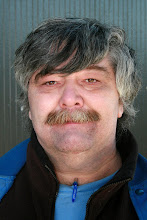
Urban ecologist Dr. Robert DeCandido was born and raised in the Bronx. He has studied bird migration, night hunting peregrine falcons, Gotham's nesting owls and American kestrels, and flora of the Big Apple.

Photo: Robert DeCandido

Friday, December 28, 2007

Queens Chronicle - New Eyes In The Sky Watch Liberty Avenue by Stephen Geffon

Read original...


Walking and shopping along Liberty Avenue in South Ozone Park may have been a little safer this holiday season.

In September, the NYPD installed digital video surveillance cameras at 14 points along the avenue between Lefferts Boulevard and the Van Wyck Expressway.

Capt. Joseph Courtesis, commanding officer of the 106th Precinct, requested the surveillance cameras along the stretch because of the high crime there and because the area met the requirements necessary for their installations.

Two cameras pan the areas around each of the light posts to which they are affixed.

After three days of recording, tapes are recorded over if they are not needed for evidence. The cameras’ pan-tilt-zoom capabilities give police the ability to retrieve license plate numbers at distances of two blocks.

The cameras can also go live and feed information to the borough’s command center.

The effects of the cameras have not been assessed yet. The precinct has not compiled crime statistics for the area since September. In addition, Courtesis noted that the deterrent value of the cameras cannot be measured since many in the community are not aware of them.

But those who do know of their installation appear pleased.
“It’s about time,” said Angela Antonino of South Ozone Park. “I think that it’s a good idea.”

She suggested that cameras be placed at high-traffic areas along Rockaway Boulevard.

“An extra eye for the police is always helpful,”said Joy Patron, also of South Ozone Park. “If this is going to be at the cost of less police officers, then it’s not a good thing.”

Courtesis has gotten similar feedback from others. “People like it, they want it in their area.” he said. “My answer to that is I’ll put it everywhere I possibly can. ... I want the shoppers to feel safe.”
Rockaway Boulevard, which has seen periods of high crime, will get cameras soon, Courtesis said, but he could not give a date for their installation.

Courtesis anticipates that once officers begin making more arrests using evidence from surveillance tapes, criminals will be wary of committing crime in the area.

After one such arrest, two robbery suspects who allegedly struck near one of the cameras, originally maintained their innocence. Borrowing the line of sportscaster Warner Wolf, Courtesis suggested: “Let’s go to the videotape.”

After seeing themselves on the surveillance footage, the two confessed. “That is one success story already that aided in our investigation,” Courtesis said.

The NYPD currently operates 120 surveillance cameras in places across the city and, despite the concerns some have raised about their privacy being invaded, plans to install hundreds more. Additionally, the NYPD monitors more than 3,000 cameras installed by the city Housing

Authority in 15 public housing developments. The department also reviews tape from 1,000 cameras in subways, with 2,100 scheduled to be in place by 2008.

Police Commissioner Raymond Kelly has pushed for greater use of cameras, arguing that they have been effective as deterrents to crime and investigative tools.

Thursday, December 27, 2007

Times Ledger - Ridgewood reservoir plans unveiled

Read original...

Ridgewood and Brooklyn activists are concerned that the city Parks Department will upset the natural habitat at the Ridgewood Reservoir in Highland Park as the agency mulls over three options to redevelop the site.

The department posted an online survey last summer which asked residents what they would like to see included in the $46 million upgrade of the 151-year-old reservoir.

The agency is now in the process of reviewing three proposals , including one that would transform the site's third basin into a sports recreation center, a second plan that would preserve most of the reservoir as a park with some outdoor recreation facilities and a third option that would preserve all three of the reservoir's basins as a nature preserve and convert a nearby building into a nature education center.

The refurbishment is part of a larger project to upgrade Highland Park, which is shared between western Queens and Brooklyn.

The reservoir was built in 1856 on a natural basin and remained in regular service until 1959. It was used sporadically as a back-up water supply for the two boroughs until 1989, but its basins have become overgrown with vegetation over the intervening years. Today, the reservoir consists of three basins, pump houses and a caretaker's cottage, but the majority of the park is undeveloped.

There is no water in the reservoir's basins, which contain marshes, birds, vegetation and forest land.

But preservationists said they were upset that the reservoir's third basin would be breached in all three of the plans.

"This is going to affect the species in the basin," said Christina Wilkinson, a member of the Juniper Park Civic Association. "There are perfectly good recreational opportunities at Highland Park by refurbishing fields that are already there and not destroying natural space."

Park Slope bird watcher and preservationist Rob Jett said that endangered species of plants have been identified in the reservoir's third basin, which is the largest of the three basins.

"I'm very leery of what [Parks officials] say they are going to do," he said. "I think the least intrusive plan is leaving it as a nature preserve. But, if they breach the third basin, they won't do much to preserve the forest that is inside of it."

But a spokesman for the Parks Department said the agency would take recommendations from city environmental groups and neighborhood resident associations into account.

"We're looking at the different options and presenting them to community groups for feedback," he said.

He said the department would conduct meetings in the near future with community boards from the two boroughs.

Parks officials said design plans for the park would probably be completed in 2008 and that a ground breaking could be held in 2009. The plan will need approval from Community Board 5, Borough President Helen Marshall and Councilman Dennis Gallagher (R-Middle Village), as well as elected officials and community boards in Brooklyn.

Rep. Weiner Joins Call for Cheney Impeachment Hearings

I applaud Rep Weiner (NY 9) for taking this stand with fellow grassroots democrats who want Bush/Cheney investigated and held accountable for their high crimes...No one is above the law...Way to go..!


Read original...

On Thursday, Congressman Anthony Weiner told Bob Fertik of Democrats.com that he would sign onto Congressman Robert Wexler's letter to Chairman John Conyers urging the commencement of impeachment hearings for Dick Cheney. Wexler, together with Congress Members Luis Gutierrez and Tammy Baldwin, hopes to have a majority of Democrats on the House Judiciary Committee sign the letter.


Of the four committee members named above, only Baldwin is among the six committee members and 25 total congress members backing Congressman Dennis Kucinich's resolution for the impeachment of Cheney. The other five Judiciary Committee members are Hank Johnson, Maxine Waters, Keith Ellison, Steve Cohen, and Sheila Jackson Lee. If these nine committee members sign the letter to Conyers that Wexler hopes to deliver early in January, another 12 Democrats, not counting Conyers, will still not have joined the position of 80 to 90 percent of Democratic voters.

On November 6th, Conyers himself voted against tabling impeachment. So did Congress Members Brad Sherman, Mel Watt, Bobby Scott, and Artur Davis. If those members heed the call of their constituents, Wexler will have a clear majority of 13-8. The other 8 include the relevant subcommittee chair Jerrold Nadler, plus Congress Members Delahunt, Berman, Boucher, Lofgren, Sanchez, Schiff, and Wasserman-Schultz. Of these, only Nadler signed on, during the previous Congress, to then ranking member John Conyers' resolution calling for a preliminary impeachment investigation.

All of these committee members can be contacted and thanked or encouraged to sign on at

Take action -- click here to contact your local newspaper or congress people:
Impeach Cheney Now


http://www.davidswanson.org

Wednesday, December 26, 2007

NY Daily News - Education Job Titles Stump Parents by Erin Einhorn

Read original...

Once upon a time, educators had easy-to-understand jobs: teacher, principal, superintendent.

Not anymore.

Five years into the tenure of Schools Chancellor Joel Klein, a major administrative restructuring of the city schools has brought the wacky culture of corporate job titles to the Tweed Courthouse.

There, among the ranks of top school officials working for Klein is a chief accountability officer making $196,000, a chief knowledge officer making $177,000, a chief talent officer making $172,000 and a chief portfolio officer making $162,000.

There's also a chief equality officer, but he's working for free this year.

Then there are all the corporate titles, in spades. Several divisions each have a chief executive officer, there's a product manager for knowledge management, a demand research manager, a director of virtual enterprise and dozens of senior achievement facilitators.

There was someone called the director of restructuring and human capital, but he's now the senior director of sustainability, at $123,000.

Parents say it's enough to make them dizzy.

"It's a whole mess," said Anastatia Davis-John, the parent association president at Brooklyn's Public School 135.

"It's totally confusing. They switched from districts to regions and now they've switched back, and half the titles you don't know what they mean. ... It's especially difficult for parents who can't speak English. They don't know who is representing what and who is doing what."

Teachers are still called teachers, of course. And principals are still principals - though under a new system that gives principals more autonomy and Klein often calls them "school CEOs."

During the previous restructuring, superintendents were redubbed regional instructional specialists. Now they're back to more familiar titles - superintendents - though they have less authority.

"They keep changing jobs and changing titles, and to me it doesn't make sense. Why don't they stick with what works?" asked Thea Schatzle, a Queens parent leader with kids in three schools.

Schools spokeswoman Debra Wexler said the titles "reflect the job responsibilities of the individual holding a particular position."

Chief Accountability Officer Jim Liebman, for example, heads Klein's accountability initiative to measure the success of schools. He spearheaded the new A-F school grading system.

Asked to guess what he does, though, most parent leaders interviewed by the Daily News were stumped.

"Does he make sure all the chancellor's [regulations] are in order?" asked Carlton Richardson, an elected parent leader.

"Is that the person that everybody else reports to?" Davis-John asked.

Chief Portfolio Officer Garth Harries once led the department's Office of New Schools, but his title changed when his office expanded its scope to include a portfolio of "school choice" options.

Asked what he does, most parents said they couldn't even guess.

"I have no idea," Schatzle said. "If people knew what they were doing, then they could be held accountable [to parents]."

eeinhorn@nydailynews.com


Chiefly confusing

  • Deputy Chancellor for Organizational Strategy, Human Capital and External Affairs / Chris Cerf $196,575 / Oversees administration, personnel, lobbying and communications

  • Chief Accountability Officer/ Jim Liebman $196,575 / Oversees school measurement including quality reviews and A-F letter grades

  • Chief Knowledge Officer / Photeine Anagnostopoulos $177,114 / Oversees development of a system for schools to share ideas about teaching

  • Chief Talent Officer / Amy McIntosh $172,247 / in charge of recruiting, evaluating and retaining good teachers and principals

  • Chief Portfolio Officer / Garth Harries $162,000 / Creates new small schools, charter schools and other student options

  • Chief Family Engagement Officer / Martine Guerrier $150,000 / Oversees outreach to parents and families

  • Chief Equality Officer / Roland Fryer $0 this school year, up to $195,000 next year / Develops strategies to better distribute resources throughout the school system
  • Tuesday, December 25, 2007

    Am I a Hillary Cheerleader? : NO QUARTER

    Larry Johnson hits the nail on the head with this post...His impressions of Hillary mirror mine from the few times I either met her or have been in her presence she was "very gracious, engaging, and charismatic....(and) she is an attractive 60-year-old woman.". I agree with him wholeheartedly...

    Read original...

    Several of you are wondering who I am backing to be the next President. I have not decided on a final choice because, to be candid, I have little say in the matter. I live and vote in Maryland. By the time primary season rolls around in my neck of the woods and bay inlets, the die will be cast.

    Of the current field of democratic candidates I like three in particular–Joe Biden, Hillary Clinton, and John Edwards. If I were participating in an Iowa caucus or voting in New Hampshire, I’d go for Joe. But he is not getting any traction. So that leaves me with Hillary and Edwards.

    I favor giving Hillary more coverage at No Quarter for a very simple reason–no other candidate for president in my memory has been subjected to as many vile, baseless attacks as this good woman. You don’t have to be a rightwing nut to know or believe some of this garbage. According to these critics Hillary is a murderer, a practicing lesbian who is getting it on with her Saudi chief of staff, a swindler, a cheat, and a coverup artist. Oh yeah, her and Bill employ, so we are told, their own hit squad who run around silencing critics.

    What I find amazing is how inept that Clinton “hit” squad is? If they were worth a damn (or REAL) then critics like this bozo in Texas, Robert Morrow, would be a worm buffet by now (I will not link to anything written by Morrow). Ain’t it amazing that Bill and Hill are known to kill their opponents and yet so many opponents and critics are still walking around unscathed?

    The evil witch, bitch caricature of Hillary is a lie readily embraced by many in America. But it is not the Hillary I have met. I am not a good friend nor a close advisor. And I am not lobbying for a slot in a Clinton Administration. I’m not ready for a pay cut and I like to sleep until 9am. But I have been in her office twice and briefed her on issues concerning terrorism and Iraq. If you had asked me before my first visit in 2005 if she could be president I would have said, “There are two ways–no way and no way in hell”. Sadly, much of my initial opinion about Senator Clinton was based on the filth I had heard about her lack of character and private behavior.

    The briefing occurred shortly after I had testified on the Hill about the harm done to Valerie Plame. Senator Clinton was aware of my testimony and congratulated me on standing up for Val. The Senator was very gracious, engaging, and charismatic. And she does not have fat legs (the number of guys who have dissed her for not having great gams is obscene). She is an attractive 60-year-old woman. But that was not what stood out for me. She is scary smart.

    I was not alone at the briefing–there were two other participants who are well-known experts on the Middle East and Iraq. We had not submitted our briefings in advance. We made our respective presentations and had a genuine, in-depth discussion about viable options. She asked us tough questions and could think on her feet without having to look at notes. She focused on what could be done to achieve U.S. interests in Iraq without bleeding our country’s treasury and military.

    As we talked about the limits and efficacy of using military assets to go after terrorist targets, the Senator brought up the book, Not a Good Day to Die by Sean Naylor. She did more than bring it up. She described in detail the challenges that special operations military forces actually face on the ground. I was stunned. This is not an easy book to read. It is an excellent work and provides enormous detail on special operations and CIA military activities in Afghanistan during Operation Anaconda. But it is tough sledding for folks not familiar with military terminology. She had it nailed, and it was not a mere pre-planned politician’s trick. She knew what she was talking about.

    I came out of that meeting and realized I could be seeing the next President. If people could always see the real Hillary she would win in a cake walk. I admit her main failing is to over-think the politics of every situation and, as a result, she has at times appeared rigid, robotic, and programmed. But that is not the real her. She’s funny, quick, and can think and talk on her feet without choking on a pretzel.

    So if No Quarter appears to be a pro-Hillary site, it is simply me trying to balance out the mountain of shit tossed her way.

    I also like John Edwards. But he has not tasted even a hint of the personal and political attacks that have been launched against Hillary. Therefore I do not feel as much of a need to “defend” him. However, I have given my friends–Wayne Williams and Brad Parker–full permission to publish any John Edwards piece they want. They are rabid Edwards promoters.

    Who would be the strongest national candidate for the Democrats? I think it is Edwards. That’s my analytical conclusion. I worry that the hatred and prejudice against Senator Clinton is so deep that it will be a tough obstacle to overcome. But then I think back to a time when I had accepted the anti-Hillary propaganda and what subsequently happened to my thinking after meeting her. The Hillary I saw behind the closed doors of her office is a genuine, smart, very likable person. If America is permitted to see that woman then she has a chance.

    Monday, December 24, 2007

    Guardian UK - Study Reveals Severe Decline of Europe's Common Birds by Alison Benjamin

    Read original...

    View slide-show...

    A grey partridge: Once common on British farmland, numbers have fallen by 79% since 1980. Photograph: RSPB

    Almost half of common European birds are heading towards "continental extinction", a new report warns today.

    The alarming rate of decline revealed in the report has fuelled fears for the future of many of the continent's birds, including the grey partridge, lesser spotted woodpecker and crested lark.

    Almost half (45%) of Europe's common birds have declined over a 26-year period according to the report, the State of Europe's Common Birds 2007.

    The report's analysis of 124 of Europe's common birds, published by the European Bird Census Council, RSPB and BirdLife International, has revealed that 56 species of Europe's birds declined across 20 European countries between 1980 and 2005.

    Of the 10 common birds showing the greatest declines, five are farmland birds such as the crested lark, which declined by 95%, and the lapwing, whose numbers more than halved. Seven are regular nesting birds in the UK, including the lesser spotted woodpecker, which has suffered an 81% decline, the grey partridge, a 79% decline, and turtle dove, whose numbers are down by 62%.

    A recent study by the Game and Wildlife Conservation Trust revealed that the grey partridge faces additional pressure in the UK from hunters as they are often mistaken for the more common red-legged partridge.

    Mark Avery, the RSPB's conservation director, said: "Seeing a countryside increasingly bereft of familiar birds, like the grey partridge, turtle dove and lapwing, is deeply worrying. These declines are so severe that in Europe they are considered to be heading towards continental extinction – it is only the sizeable populations of both birds in Asia, which prevents them from being considered at risk of global extinction."

    Increasing intensification of farming is thought to be the main cause of the overall 44% decline among Europe's 33 common farmland birds.

    In contrast, 29 species of bird, including the hawfinch, raven and common buzzard, have increased across Europe, and the populations of a further 27 are stable.

    The study was led by Richard Gregory, the chairman of the European Bird Census Council, and head of monitoring and indicators at the RSPB.

    He said: "Unsurprisingly, some of the 10 species, such as the collared dove, that have shown the greatest increases in Europe are birds that don't rely on specialist habitats and have taken advantage of new opportunities."

    "The increases in buzzard and raven are encouraging as the European populations of both birds appear to be bouncing back after decades of unwarranted persecution."

    Gregory added "We know that birds can be excellent indicators of change and although the overall picture is bleak, there are signs of recovery and we have the knowledge to help many of these birds.

    The 10 species that have shown the greatest decline in Europe between 1980 and 2005 are:

    Crested lark (95% decline)
    Lesser spotted woodpecker (81% decline)
    Grey partridge (79% decline)
    Wryneck (74% decline)
    Wheatear (70% decline)
    Nightingale (63% decline)
    Turtle dove (62% decline)
    Willow tit (58% decline)
    Lapwing (51% decline)
    Serin (41% decline)

    The species that have shown the greatest increases between 1980 and 2005 are:

    Hawfinch (658% increase)
    Collared flycatcher (182% increase)
    Raven (118% increase)
    Blackcap (82% increase)
    Common buzzard (80% increase)
    Black woodpecker (77% increase)
    Woodpigeon (71% increase)
    Collared dove (59% increase)
    Chiffchaff (56% increase)
    Green woodpecker (43% increase)

    The Queens Courier - Another “D” School Targeted to Close by Tonia N. Cimino

    Read original...

    Friday, December 21, 2007 5:52 PM EST
    Reaction to the news that Franklin K. Lane High School will be closing is mixed.

    It was announced last week that the Brooklyn school - which received a grade of “D” on Mayor Michael Bloomberg’s schools progress report - will be phased out in the next 3 1/2 years, and that smaller schools will be opening within the existing building.

    “No new ninth graders will be admitted,” said Department of Education (DOE) spokesperson Melody Meyer. “But the current students can finish [at Lane].”

    The school, with a total student body of 2,623 - of which approximately 650 are from Queens - had a graduation rate of 32.6 percent for 2007.


    “The school has been struggling for a while,” said Councilmember Leroy Comrie.

    Meyer confirmed that the institution had been underperforming for the last few years, and said that the smaller learning communities already adopted within grades 10 through 12 will “influence the types of schools set to open.”

    Some themes, programs and equipment from these communities will be utilized in the new schools.

    The DOE has already accepted 135 proposals for the new institutions - at least one in Franklin K. Lane set to open next fall - and will announce its selection in February 2008.

    “I view this as an opportunity to reinvigorate this educational establishment with teachers and programs needed to attract - and retain - children in today’s environment,” said Comrie.

    However, students do not necessarily feel the same.

    “I don’t agree with it,” said sophomore Vanelssy Rodriguez. “They’re just throwing us out.”

    The DOE said that its District Leadership Teams, consisting of PTA members, community education council members, politicians and leaders of community organizations, would be holding workshops open to the public.

    The next meeting will be held on January 12, 2008.

    The Queens Courier CB 10 Votes to Allow Purchase of Property for Group Home Despite Complaints by Nick Brown

    Read original...

    Tempers flared at Community Board (CB) 10’s December meeting as a handful of Ozone Park residents complained about the potential opening of a group home for the mentally retarded.

    In a unanimous vote with one abstention, the board voted to allow the Bernard Fineson Developmental Center to go ahead with the purchase of property on 120th Street in Ozone Park with the purpose of opening a group home there.

    Francine Watnick, Developmental Disabilities Program Specialist at the Fineson Center, spoke at the meeting, held Thursday, December 6 at the Knights of Columbus Hall in Ozone Park.

    Watnick explained that the home would house mildly retarded adults, but residents of the block demanded that the group home be put in a less residential neighborhood.


    Residents insisted their opposition had nothing to do with a bias toward the people who would be living in the home, but did say they worried about noise.

    “The problem isn’t with the home itself,” said one man. “The problem is in putting it on a residential block and changing the makeup of the neighborhood.”

    Attorney Albert Baldeo approached the issue from a legal standpoint, noting that the current owner of the property is also a member of CB 10. Citing official regulations, however, Board Chairperson Betty Braton said there was no conflict of interest.

    “The owner of the property cannot take part in the vote, nor can he speak about the issue without announcing his personal association with the property,” said Braton. “However, the board can still discuss and vote on the issue.”

    Braton said the only valid grounds for a dispute on the home would be over-saturation, but a small group home in the heavily-populated Ozone Park region would not even come close to garnering grounds for that argument, she explained.

    Watnick said the Fineson Center will begin the purchasing process in the coming weeks.

    Destratification Facility Planned

    Representatives from the Department of Environmental Protection attended Community Board 10’s December meeting to announce plans for a destratification facility in Howard Beach. A destratification facility, explained Michael Stallone, lead architect at Hazen and Sawyer, the consulting company designing the facility, is a structure that provides water with the oxygen it needs but often doesn’t get. Improving the water, in turn, creates a healthier environment, explained Stallone.

    “These days, everyone is concerned about the environment,” Stallone said. “What are the things that are evident to us that we need to preserve or clean up? How can we add environmental benefits to everyday things?”

    Stallone said design plans also call for pervious pavement, which includes small openings that allow water to pass through, and Supertherm, a special type of paint that uses nanotechnology to block certain frequencies of heat. The structure will also feature soy-based insulation, and will be constructed largely of recycled metal.

    Queens Chronicle - City Mulls Three Options For Ridgewood Reservoir by Colin Gustafson

    Read original...


    Dense foliage and vegetation have sprouted in the Ridgewood Reservoir, creating a lush habitat for migratory birds and some endangered plant species.

    City officials say they’re still mulling the possibility of axing acres of lush vegetation in the Ridgewood Reservoir in order to clear space for new athletic facilities.

    But preservationists continue to object to the plan, saying it threatens the area’s native plant species and migratory birds.

    Built in Highland Park in 1858 to supply water to eastern Brooklyn, the reservoir serviced tens of thousands of residents until it was closed in 1959. The following year, the city drained two of the site’s three non-working water basins, eventually causing a huge growth of trees, grass and marshland.

    Now, officials from the Department of Parks and Recreation are considering clear-cutting a portion of the third and largest basin under one of three options for redeveloping the 50-acre reservoir.

    The proposals come as part of a $400 million project to refurbish Highland Park under the mayor’s long-term environmental mission to have a park within 10 minutes of every New Yorker by 2030.

    At the reservoir, the most extreme development option calls for transforming the third basin — home to dense forest and vernal marshland — into an “active recreation center,” replete with running tracks, soccer fields and cricket courts, officials said.

    A second option would preserve much of the reservoir as a “naturalistic park” with some outdoor “adventure type recreation,” according to Parks Department spokeswoman Abigail Lootens.

    The most conservative option — and the one favored by preservationists — would leave the reservoir’s three basins largely untouched by developers and steer funding toward converting an old building on the reservoir into a nature education center.

    Still, it’s the first option that bothers nature lovers, who say they’re furious over the prospect of forfeiting their beloved green spaces for synthetic turf fields.

    “These basins are three distinct natural habitats — a bog, a lake and an emerging forest,” said Rob Jett, a 52-year-old amateur bird watcher who opposes the tree-toppling plan. “How many places in the city have these beautiful habitats side-by-side?”

    Since closing to the public in 1989, these habitats have become home to a bevy of different mammals, amphibians, endangered plant species and more than 120 types of migratory and nesting birds. Now, nature lovers fear all this wildlife will be at risk if the city bulldozes the forest.

    Not to worry, Parks officials assured this week. “The portion where we would possibly remove trees is of lower habitat value because it hosts many non-native trees,” Lootens explained. “We believe this will not displace or harm the bird or plant populations.”

    However, even if the wildlife remains out of harm’s way, preservationists still believe the idea of wiping out as much as 20 acres of forest runs counter to one of the mayor’s key reasons for refurbishing Highland Park: to make trees, grass and others green space more accessible to the public.

    Last month, Parks Commissioner Adrian Benepe argued in favor of building new athletic space, arguing that Queens is home to plenty of parkland already, but suffers from a shortage of recreational opportunities.

    He believes the creation of new public athletic spaces at the reservoir will help combat pervasive health problems, like heart disease, obesity and diabetes, especially among children.

    But critics say the park already abounds with recreational facilities, including a band shell, numerous open fields and baseball diamonds — many of which are run down.

    Instead of clearing the reservoir to create new facilities, critics believe the city should simply take better care of the old ones.

    “The commissioner’s point about ... health is a legitimate concern, but not a legitimate argument, especially if we’re talking about destroying a beautiful natural habitat” Jett said. “There’s a huge amount of space in Highland Park that the city could spend more time renovating, first.”

    Parks officials have vowed to heed such input from the community as they decide on the feasibility of the three development options. After finalizing a design sometime next year, the agency will also present its plan to local community boards and elected officials in Queens for approval.

    In the meantime, Jett says he’ll keep fighting to preserve the reservoir in its entirety. “I think we just have to keep moving on the route we’ve been on,” he said, “and try to keep the basins as they are, all three at a time.

    NY Post - Flock Party by Rita Delfiner

    Read original...

    December 18, 2007 -- It's quite a feather in our cap - 7,765 birds were at home in Central Park over the weekend, the largest number counted there in the last five years.

    "The news looks good for birds in Central Park," said Parks Commissioner Adrian Benepe about the annual Christmas Bird Count held Sunday when teams of volunteer birdwatchers fanned out and identified 57 species.

    The most abundant species was the common grackle, with 1,491 sightings - and there was just one sighting of a bird seen rarely this time of year in the park, the brown-headed cowbird.

    There were also 799 European starlings - a bird brought to Central Park from Europe in the 1890s by a group "trying to introduce all the birds in Shakespeare's plays or poems into North America," said Glenn Phillips, executive director of New York City Audubon.

    They are "fierce nest competitors" who have spread across the country and forced out some yellow-bellied sapsuckers from Central Park and other parks, he said. There were also eight yellow-bellied sapsuckers, a species of woodpecker, spotted Sunday.

    The annual peek at the peeps is due to the National Audubon Society, which launched the count in 1900 to counter the then-tradition of Christmas Day "side hunts" - where birds were killed for sport.

    Bird counts in other city parks were not immediately available.

    Experts can't say exactly why more birds were seen around Central Park Sunday than in the last five years of the survey.

    "It probably only has to do with re gional weather conditions," Phillips suggested. "The weather up until the day of the event has been relatively mild."

    And maybe Sunday's windy, wet weather emboldened them.

    "In the summer, they are much shyer," Phillips said. "On Sunday, the park was quiet and the birds were hungry and . . . and not particularly concerned about people, so you got some close-up sightings."

    The Parks Department bird watchers also spotted cedar waxwings, small fruit- eating beauties who "were all over the crabapple trees and completely fearless," Phillips said.

    As for the northern harrier, a hawk that is "never very abundant in Central Park" to begin with, "it's the first time we recorded one at the Christmas Bird Count," he said.

    Central Park is an oasis. Just ask the white-throated sparrows.

    "This is south for them," said Phillips. "They spend the summers in Canada and the winters in Central Park."

    NY Times - Uninvited Guests, and the Hope That They Won’t Stay by Alex Mindlin

    Read original..


    ONE evening in late September, a contractor named Michael Tubridy was relaxing in his boat on Jamaica Bay when he saw a tug pulling a derelict-looking barge. The barge was covered with old tires and rusted pipes, and grass grew on its deck. Two pumps worked furiously to keep it afloat.

    “The bottom line for me was, ‘What is a barge with two monstrous pumps doing on the bay?’” Mr. Tubridy recalled the other day.

    Mr. Tubridy, who lives in Rockaway Park, Queens, followed the tug and saw it leave the barge in Barbadoes Basin, a narrow industrial inlet on the northern edge of the Rockaways. By the next morning, another barge had shown up, and as of Friday the two vessels were sitting there, blocking the inlet and looking thoroughly abandoned. One barge had been partially beached on the scrubby marshland; the other was wallowing in the cold gray water.

    The presence of the barges was reported in The Times Ledger, a weekly newspaper.

    For months, local residents have been complaining about these mystery guests, saying that they look ugly, that trash has been sliding off them into the water, and that their presence could damage the fragile wetlands nearby. According to a joint city-federal study released in August, the Jamaica Bay marshlands are vanishing at the rate of 33 acres a year and will be mostly gone by 2012 unless something is done.

    No owner or government agency has come to remove the barges.

    “It’s kind of mysterious that these two huge barges showed up in Jamaica Bay, came in under three bridges, and ended up in this little basin,” said Dan Mundy, the founder of Jamaica Bay Eco Watchers, a local conservation group. “You have a man-made disaster waiting to happen here.”

    Last week, the wheels of government appeared to be slowly turning. Lt. Cmdr. Richard Moser of the Coast Guard said that his agency had identified the barges’ owner as Pile Foundation Construction in Marine Park, and had confirmed that the barges were not leaking oil into the bay.

    Representatives of Pile Foundation did not respond to three telephone messages seeking comment, but Commander Moser said that the company had told his investigators that the barges were still in use for occasional short hauls. “The owners said that they pump them out and put patches on the holes and use them for a short time,” he said.

    Yancey Roy, a spokesman for the state Department of Environmental Conservation, said in an e-mail message that his agency was trying to confirm the identity of the barges’ owners, after which the department would “take appropriate action to address the situation.”

    For his part, Mr. Tubridy was dubious that the barge he saw would ever float again. “It was being pumped out with very, very big pumps,” he said, “and they destroyed part of the bulkhead putting the thing up there.”

    Sunday, December 23, 2007

    Comment is free: School's Out - The Repub Presidential Candidates Have Repudiated President Bush's Education Policy but Failed to Offer an alternative

    Comment is free: School's out

    In the 2000 election, President Bush made education reform the centrepiece of his campaign. With his education reform platform - No Child Left Behind, a phrase stolen from the liberal Children's Defence Fund - Bush sought to reassure voters, particularly suburban women, that he was "a different kind of Republican", a compassionate conservative who cared about people, particularly the poor. Where previous Republican platforms called for abolishing the federal department of education, Bush called for an expansion of its powers. Where previous Republican campaigns made thinly veiled appeals to white racism, Bush was constantly photographed with smiling, school uniformed black children. And for the first time ever, it looked like Republicans might steal the education issue from the Democrats.

    But what a difference eight years make. Rather than trying to demonstrate their compassion, this year's crop of Republican presidential candidates are crawling over each other to demonstrate their toughness - their lack of compassion - on immigration, torture and a host of other issues. Not surprisingly, given this dynamic, education is hardly at the forefront of Republican stump messages. John McCain's campaign website doesn't even mention education! And if you hear Republican candidates mention No Child Left Behind, it's almost certainly to criticise President Bush's signature education initiative.

    Only one major Republican candidate, former Massachusetts governor Mitt Romney, has anything resembling as a fully formed education plan. It's a respectable listing of moderate Republican positions - promote school choice, pay teachers for student performance, improve math and science education. The most noteworthy thing is that Romney's the only candidate in either party who defends, rather than attacks, No Child Left Behind - a gutsy move given strong opposition to the law in Iowa. Romney's playing up education more than his competitors because Massachusetts schools are among the nation's best-performing. Unfortunately for him, Massachusetts' strong student performance - and the policies that produced it - predate Romney's governorship, so he probably doesn't deserve much credit for them.

    Former Arkansas governor Mike Huckabee and former New York mayor Rudy Giuliani also claim credit for education reforms under their leadership. Huckabee has some valid claims here. His administration implemented curricular reforms and raised teacher pay, and Arkansas students made real achievement gains - not just on state tests but also the more challenging National Assessment of Educational Progress - during his term as governor. Huckabee's seemingly sincere commitment to arts and music education also appeals to parents.

    Such claims are a bigger stretch for Giuliani. His successor, Michael Bloomberg, got the legislature to give him control of New York's schools and, with his chancellor Joel Klein, appears to have had some success. But Giuliani as mayor had little control over his city's schools, and his efforts to claim education accomplishments only raise the question of why he didn't do, sooner, what Bloomberg did.

    Giuliani has also tried to emphasise his conservative bona fides by highlighting his support for school choice. But the striking thing about his school choice platform is how limited the proposals are. Giuliani would offer vouchers to military families and students with disabilities, would support charter schools and would try to establish voucher pilot programmes in high-poverty cities. Those proposals are less sweeping than Bush's 2000 campaign proposal to provide a $1,500 voucher for every child in a low-performing school.

    In fact, while school choice is probably the one education proposal all the Republican candidates can get behind, they're awfully modest in their proposals, especially compared to ideas Republican candidates routinely offered in the 1990s. Even libertarian Ron Paul, who should be more aggressive than anyone on school choice, proposes only a $5,000 tax credit for parents who homeschool or send their children to private schools. That's more modest than the education tax credit proposals that leading libertarian think tanks espouse, and that have been enacted in many states. And it would do nothing for poor kids who most need education options.

    The Republican presidential candidates seem to have both repudiated President Bush's No Child Left Behind and chickened out on their previous support for school choice, leaving them without a compelling vision to offer on education. That's unfortunate, because our education policy is better when both parties have meaningful reform visions that generate serious public debate over education. Perhaps, as we move from the primaries to the general election campaign and the eventual nominee begins focusing on regular moms, dads and educators beyond his base, we'll see some more exciting Republican ideas on education. That's in everyone's interest.