Showing posts with label astoria. Show all posts

Sunday, April 11, 2010

Astoria Scum River Bridge on Vimeo

Read original...


Astoria Scum River Bridge from Jason Eppink on Vimeo.


For more than twenty years, a leaky pipe on 33rd Street beneath the Hell Gate Bridge viaduct approach submerged more than a hundred square feet of heavily-trafficked sidewalk under a festering cesspool of standing water. Astoria Scum River, as it was called, stretched the entire width of the sidewalk, and as winter approached, the river iced over and became particularly hazardous to cross.

Astoria Scum River Bridge was constructed to offer Astorians an opportunity to safely cross this hazard. The unauthorized bridge was a gift to the pedestrians of Astoria in the absence of successful municipal efforts to ameliorate the problem.

The bridge was made at zero cost entirely from recycled materials: an old work bench found on the curb, rescued screws from a disassembled desk, and a metal plate from an expired electrical component. It was installed and dedicated on December 30th, 2009.

On January 25th, 2010, Astoria Scum River Bridge was the subject of a commendation from the office of NYC Council Member Peter F. Vallone, Jr., accompanied by a pledge to work with Amtrak to re-route Astoria Scum River off the sidewalk.

Two days later, Amtrak workers began construction work. Astoria Scum River was quickly routed off the sidewalk, and within a couple months, custom-made grates were installed to complete the project. The bridge, no longer needed, was de-installed on March 20th, 2010 and returned to the curb whence it came.

jasoneppink.com/astoria-scum-river-bridge
bladediary.com/tag/astoria-scum-river-bridge

Credits

Chief Engineer and Head Designer

Chief Designer and Head Engineer

Thanks
Paulo Fonseca
Ryan Good
Debra Keneally
Ben Speiser

Wednesday, December 3, 2008

NYPD Daily Blotter - New York Post

Read original...

Queens

A man was clinging to life after cops found him severely injured on a Ozone Park street early yesterday.

Police said the unidentified man managed to flag down a police car at Cross Bay Boulevard near 149th Avenue at 12:40 a.m. He tried to speak, but collapsed before he could explain what had happened.

He was taken to Jamaica Hospital, where he underwent surgery for severe head injuries and remained unconscious. His fingers were broken, sources said.

Cops said it was not clear if the man, in his late 20s to early 30s and not carrying ID, had been beaten.

An Astoria teenager was arrested after a straphanger snapped this cellphone photo (pictured) of him allegedly carving a graffiti tag on a subway window.

Andrew Morello, 18, was allegedly etching so-called "scratchiti" into the glass of an N-train window Monday.

The witness snapped pictures and sent the images to the NYPD's new "e-tips" Crime Stoppers service.

Cops used the pictures to help them identify and track down Morello, who was charged with criminal mischief and possession of graffiti instruments.

A man was robbed and beaten by thugs i an elevator of a Forest Hills building.

The victim, 49, told cops he had stepped onto the elevator of the building on 112th Street near 72nd Avenue shortly after 2 a.m. on Nov. 7.

One of the men who was already inside grabbed the victim by the hair, put a knife to his throat and the others punched and kicked him, sources said.

They swiped his cellphone and wallet and fled, according to police.

Armed with a description of the attackers, cops arrested Omu Suzuki, 19, on Nov. 18. He was charged with robbery and assault, said a spokesman for Queens District Attorney Richard Brown.

Thursday, August 28, 2008

Triborough Bridge Renamed After Bobby Kennedy - Howard Beach Times by Nathan Duke - YourNabe.com>

Read original...

Astoria's Triborough Bridge has been renamed to honor former U.S. Sen. Robert F. Kennedy. Photo by Christina Santucci

Gov. David Paterson signed a bill into law last week that renamed the Triborough Bridge, which connects Astoria to the Bronx and Manhattan, after the late U.S. Sen. Robert F. Kennedy (D-N.Y.), a spokeswoman for the governor said.

The governor signed the bill, sponsored by state Assemblyman Michael Gianaris (D-Astoria), on Aug. 5 following recent approval by the state Legislature, the governor's spokeswoman said.

The bridge's new name went into effect immediately, Gianaris said.

The assemblyman said Kennedy had long been an advocate for minority groups, so the renaming of the bridge was geographically significant.
*

"Bobby Kennedy was not only a great New Yorker, but also a great American," Gianaris said. "As our U.S. senator for a number of years, he had a platform from which he fought the struggle for equality and civil rights. It's appropriate that a bridge that unites diverse communities bears his name. Those of us who represent those neighborhoods that are served by the bridge will be proud to have his name on it."

Kennedy represented New York in the U.S. Senate from 1965-68. He was assassinated during his 1968 presidential campaign after winning the California primary.

Kennedy's family had long requested that the bridge be renamed in his honor and former Gov. Eliot Spitzer proposed the name change in January, Gianaris said.

The bridge, which can be reached from Hoyt Avenue North in Astoria, is now known as the Robert F. Kennedy Bridge. The structure opened in 1936.

Reach reporter Nathan Duke by e-mail at nduke@timesledger.com or by phone at 718-229-0300, Ext. 156.

Thursday, May 1, 2008

Door Keeper on 79th St. Keeps Stories of Queens by Corey Kilgannon- New York Times

Read original...

Daytime and evening shifts are busy ones for an Upper East Side doorman — hailing cabs, helping with luggage — but how does the late-night doorman pass the wee hours, once quiet descends upon the lobby?

Corey Kilgannon/The New York Times

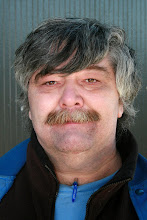
Richard Melnick is an overnight doorman at a building on the Upper East Side of Manhattan. When things turn quiet in the small hours, he works on historical books about Queens.

Sure, some doze or idle away the time, but not Richard Melnick, who handles the doorman duties in a large luxury building on East 79th Street.

Mr. Melnick writes books — historical books about Queens — and sometimes the dawn comes too soon and interrupts his ruminations on the Queensboro Bridge or the Steinway piano plant.

“In order to do this job, you’ve got to embrace the night,” he said recently at 3 a.m., standing in his chocolate brown uniform, including the peaked doorman’s cap and white gloves. “You have to make the night work for you. A lot of doormen don’t — they watch the clock and the night destroys them. I’m lucky that once I’ve taken care of all my duties and things are quiet, I can work on my historical projects.”

Mr. Melnick, 47, is the president of the Greater Astoria Historical Society, which also covers Long Island City. He is single with no children, and he is devoted to the bygone days of neighborhoods like Steinway and Hunters Point. He rides his bicycle from Astoria, over the Queensboro Bridge, to work.

When foot traffic subsides after midnight in the building’s lobby, the old days come alive in preserved documents and sepia photographs in countless cardboard boxes he brings from the society’s archive.

The less romantic modern era returns at dawn with the delivery of the morning papers, the rush of office-bound executives and residents padding down to the building’s indoor pool.

Mr. Melnick, who works an 11 p.m.-to-7 a.m. shift, writes history for neighborhood newspapers and has been involved in writing four books on the areas of Queens nearest the East River (including a book on the river itself). His latest book is on the Queensboro Bridge, which will have its centennial next year.

He gives walking tours and helps curate the group’s archives. He also organizes field trips, presentations and lectures for students, historians and the general public. The society has exhibits in its space in the Quinn Building on Broadway in Astoria. The building mainly houses a funeral home, and the historical society always smells of fresh flowers.

Mr. Melnick hopes to support himself with his writing someday, but he wonders if getting his nights to himself might disrupt his work habits.

“Working at night really focuses my energy and lets me become absorbed in the past,” he said, standing at his doorman’s desk and flipping through historical documents on Newtown Creek. “Every night I work as a doorman, I become a better historian.”