Showing posts with label earth day. Show all posts

Saturday, April 30, 2011

Ridgewood Democratic Club Meeting on April 29th - Meeting Theme "Earth Day and Our Environment"


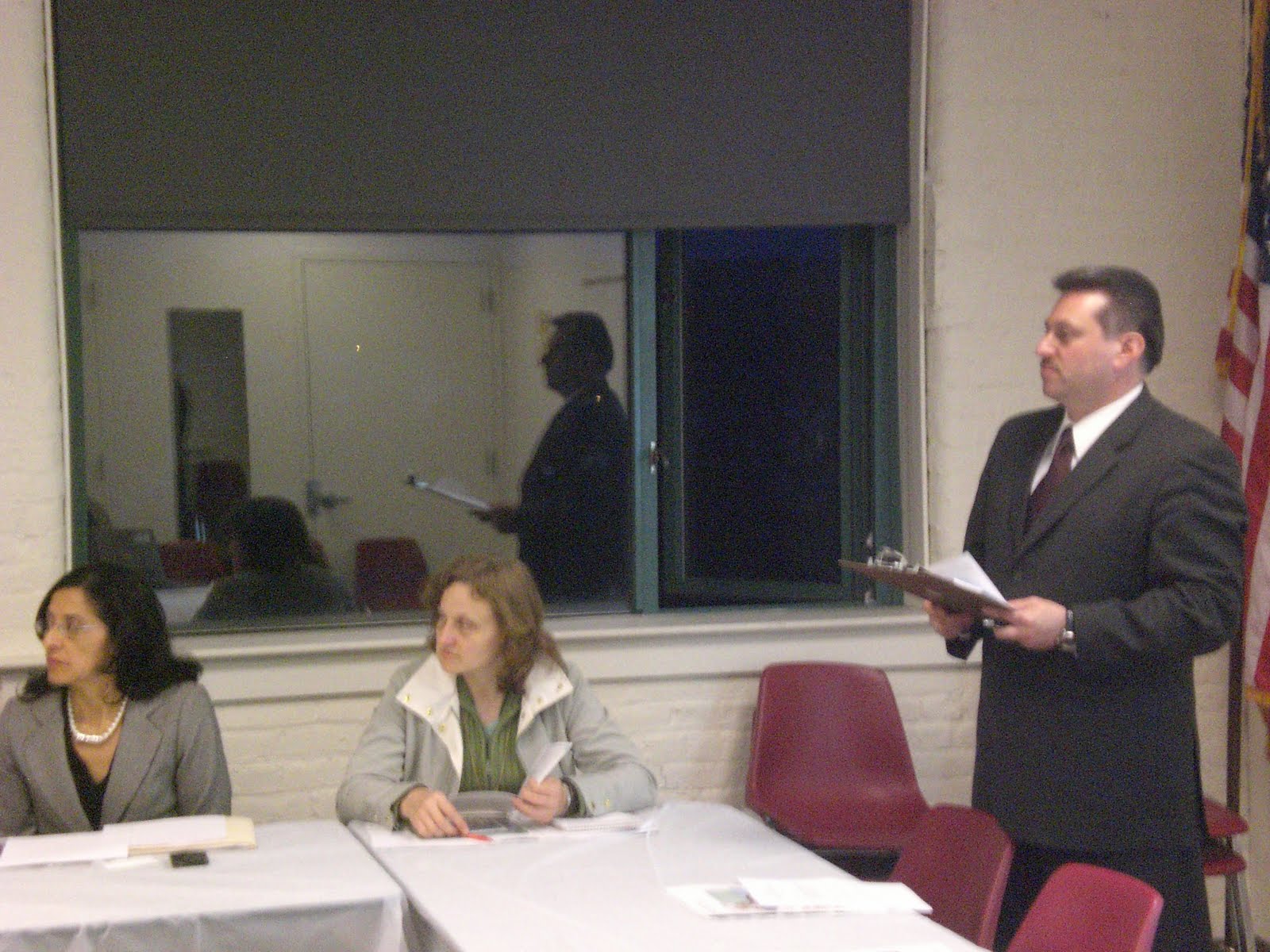
On Friday, April 29th the Ridgewood Democratic Club held their regularly scheduled monthly meeting at their historic 100 year-old clubhouse on Putnam Avenue in beautiful downtown Ridgewood.

The meeting was chaired by the amicable Jim Grayshaw, President of the Club. Assembly Member Cathy Nolan led off the agenda with a recap of happenings in Albany.

The theme of the meeting was Earth Day and our environment.

The first speaker was Shiobhan Ciresi who spoke on the issue of chemtrails (geoengineering). Her presentation was entitled “Chemtrails Worldwide Phenomenon Happening in Long Island and NYC Skies”. It was a fact-filled, thought provoking talk on this insidious threat being posed against mankind and Mother Earth by this technology. For more on her work, visit her website, Operation Humanity Transcending. Sign her petition by clicking here.


Here's a YouTube video by a friend, Sallie Elkordy, from Queens,of the Peace and Freedom Party on this phenomenon over our area. Visit Global Skywatch, for additional information...


The second presenter was Edie Cunningham who spoke on Genetically Modified Organisms (GMO) seeds and their wide-spread use in American agriculture by large corporate interests led by Monsanto Chemical Corp. Recently over at the Grist, David Roberts has published a provocative essay on the GMO's that I would recommend that anyone interested in the subject read.


Both speakers fielded numerous questions from the assemblage after their presentations.


The last speaker was Monica Sui a constituent of the 15th Senatorial District and an intern with the Human Rights Campaign, who provided details about her recent meeting with Senator Joe Addabbo on the Marriage Equality matter that may be considered during this legislative session. She informed the members that Senator Addabbo is looking for guidance on this matter from his constituents and she urged that everyone please contact his office voicing their support for this important civil rights initiative. Senator Addabbo can be reached by phone at 718-738-1111. For the record, local clergy and myself accompanied Monica during her meeting (pic from meeting) to Senator Addabbo's office.


The meeting ended with coffee, cake and pleasant post meeting conversation.


The Club's over 100 year old building recently sustained extensive water damge from the rainy spring and needs intensive repairs of the roof and ceilings. Therefore,  I would urge one and all to attend the RDC's Annual Dinner Dance on May 18th at Riccardo's by the Bridge in Astoria. 


Click on image to enlarge and print

Monday, April 25, 2011

Volunteers Embark On Earth Day Cleanups by Roger Clark - NY1.com

Watch original...


Volunteers all over the city spent Friday cleaning up recreational areas to mark Earth Day.

In Queens, the Hindu community took part in a cleanup of Jamaica Bay where offerings from religious ceremonies are creating environmental concerns.

The space, part of the National Park Service's gateway recreation area, is near the North Channel Bridge in Broad Channel.

"We come here and we make our offerings to the mother, because we believe the water for us is mother. She is a deity, what we worship. But at the same time we need to keep our mother clean, too. So after making our offerings into the water we should clean up after that," said Hindu Priest Chunelall Narine.

"We do promote a healthy environment, and although it's hard for some to understand the different situation that we're in, we do respect the community and we hope to clean up for Earth Day and to promote a good environment," said Clean-Up Volunteer Kamelia Kilawan.

For the past five years, park rangers have been working with the Hindu community to educate worshipers about the dangers posed to the environment and wildlife when leaving behind ritual items, like pieces of fruit and coconut shells.

"They can disrupt food chains and delay migration, they certainly can affect the water quality of Jamaica Bay," said Kathy Krause, Gateway National Recreation Area.

"It is our responsibility and duty to protect, to do whatever we can to protect the earth and keep the earth as clean as possible," said Hindu Community Leader Bhoj Dindiyal.

Other events across the city are focusing on green businesses and green cars.
Friday marks the 41st annual Earth Day celebration.

Sunday, May 2, 2010

Senator Addabbo Discusse New Energy Cost-Saving Initiatives for Small Businesses with Community Leaders on Earth Day...

Teams with Local Electeds, Con Ed and National Grid


On Thursday, April 22, NYS Senator Joseph P. Addabbo, Jr., held a Roundtable discussion to inform local small businesses, civic leaders and Chamber of Commerce presidents about vital energy cost-saving strategies they can use to save thousands of dollars a year.


Lillie Manjarrez, Community Relations from National Grid, Anne Krzyzanowshi, Representative from NYS Assemblywoman Cathy Nolan; NYS Assemblyman Mike Miller and NYS Senator Joe Addabbo.


As part of a broader movement to go green this Earth Day, the Senator was joined by NYS Assemblyman Mike Miller, NYC Councilwoman Liz Crowley and representatives from Con Edison and National Grid to discuss what local businesses can do to go green and cut costs.


Today, only a fraction of eligible businesses take advantage of free Con Ed and National Grid energy surveys that can substantially reduce their energy costs, from anywhere between 8 and 40 percent. For example, of Con Ed's 280,000 eligible customers, only 21,000 have requested surveys, less than 8 percent.


Con Ed offers an expansive array of affordable energy-saving options to businesses including a free on-site energy efficiency survey and free energy savings upgrades. Additionally, they cover 70 percent of installation costs for energy-saving upgrades. Similarly, National Grid has several programs to enable businesses to reduce carbon emissions, go green, and cut costs.


Some small businesses have already taken advantage of such savings. A survey conducted by Con Edison of a catering business in Queens showed how they could easily obtain annual cost savings of $12,750 for only a one-time cost of $974.


Lillie Manjarrez, Community Relations from National Grid; Anne Krzyzanowshi, Representative from NYS Assemblywoman Cathy Nolan; NYS Senator Joe Addabbo.


“Small businesses across Queens stand to save thousands of dollars a year through taking advantage of these simple and affordable measures,” said Senator Addabbo. “We need to make an aggressive effort to assist our small businesses in our communities. Also, as we move into the 21st century, we must continue to explore new ways to protect our planet.”


NYS Assemblyman Mike Miller said, “Every little bit helps, whether we are talking about a small business's bottom line or protecting our environment.”


"I commend Senator Addabbo and my colleagues for bringing together this important roundtable in support of our small businesses. Our City’s economic recovery will be driven in large part by our small businesses, making it in our best interest to support them," said NYC Council Member Elizabeth Crowley.


Con Ed Representative Ryan Southard said, “With Con Edison footing upwards of 70% of the tab for energy conservation measures, our Small Business Direct Install Program is a great win for small businesses and for the environment. We’re grateful to Senator Addabbo for convening the roundtable and working diligently with us to promote energy efficiency for small businesses in Queens .”


“National Grid is happy to work with businesses to help them save energy, improve efficiency and reduce the bottom line," said Joe Rende, Vice President of Energy Solutions Delivery at National Grid. "The Roundtable discussions are a great opportunity for us to provide information about energy efficiency programs and other initiatives and learn more about how we can help our customers.”


Eileen Reilly, Maspeth Town Hall; Jim O'Kane, Maspeth Chamber of Commerce; Ken Camillou, National Grid; and Lillie Manjarrez, National Grid .


Pearle Vision's owner, Anthony Presti, expressed delight with his past Con Edison energy survey. "It was seamless, they went in to survey, were out fast and it was simple. I heard about it from a nearby business owner who had big savings. Con Edison changed my light bulbs--I saved 40% or better. I saved $20,000 in 4 years. My other store in Jackson Heights is five times larger than my Ozone Park location, but now I only have a $1,100 monthly bill. I'll put my kids through college with $20K saved here and there."


Addabbo concluded, "These programs have been underutilized and we need to continue to encourage small business owners to take advantage of these free services provided by Con Ed and National Grid. There is no central place for business owners to go to research energy efficient savings measures, which is why I am hosting two informational sessions later this month.”


The Senator's two informational sessions for small businesses, where they can sign up for a free energy survey with Con Edison and National Grid, will be held on May 6 at St. Mary Gate of Heaven School Auditorium, 104-06 101 Avenue, Ozone Park, from 7-9 PM. The other will be on May 13 at Glendale Memorial Building, 72-02 Myrtle Avenue, Glendale, from 7-9 PM.

Thursday, April 29, 2010

New York City Public Advocate Bill de Blasio and State Leaders Launch Campaign to End Government Use of Styrofoam...

Campaign Kicks off with Rally at Public School Featuring Parents, Students, and Piles of Styrofoam Trays and Cups Collected from Schools and Government Buildings

On Earth Day, New York City Public Advocate Bill de Blasio, State Senator Liz Krueger, and Assemblymember Brian Kavanagh launched a statewide campaign to end government use of Styrofoam. The campaign kicked off with an early morning rally at a Manhattan public school featuring parents, students, and piles of Styrofoam trays and cups collected from schools and government buildings.

As part of this campaign, de Blasio, Krueger, and Kavanagh are recruiting elected representatives to sign the Stop Polystyrene And Revitalize the Environment (SPARE) Pledge, which calls on leaders in State and City Government to eliminate use of Styrofoam food service products in office operations and at their events. The SPARE Pledge will build momentum for a state and city legislation to eliminate government use of Styrofoam

New York City and State government should be leading by example and ending their age old dependence on Styrofoam,” said Public advocate Bill de Blasio. “Everyday, our City’s schools alone discard 850,000 Styrofoam trays, doing tremendous damage to our environment. Hopefully by recruiting elected leaders to join our coalition and pushing legislation on the State and City levels we can make New York completely Styrofoam free.”

I am proud to be a part of this coalition of City and State Leaders that have banded together to end the use of Styrofoam in our offices and at all of our events," said Senator Krueger. "There is no reason that anyone should continue using a product that is so toxic to our environment when there are more environmentally sound alternatives available. Today, in honor of Earth Day, I pledge to help build our coalition of local and state leaders who will lead the way in ending the use of Styrofoam.”

"New Yorkers have a right to expect that their government officials will make sensible, environmentally responsible choices when buying products with taxpayer funds," said Assemblymember Brian Kavanagh. “Unfortunately, the cups, plates, trays, and other food service items made of Styrofoam that we routinely see in the cafeterias of public hospitals, schools, and universities just don't meet this standard. A child might spend 5 minutes drinking from a Styrofoam cup before tossing it aside, but unfortunately that same cup might remain with us on this Earth 500 years from now. Today on Earth Day and in the coming year, let's finally agree to put an end to our misplaced reliance on Styrofoam."

The SPARE campaign is providing support for City legislation that Public Advocate de Blasio will be introducing which would prohibit city agencies and reasonable sectors of the food industry from using Styrofoam and also for state legislation, S2832-A/A428 (Krueger/Kavanagh), which will replace Styrofoam with recyclable and compostable products throughout government Statewide. The state legislation A428-A passed the Assembly on April 20th as part of the Earth Day package, and is currently progressing in the Senate.

Sunday, April 25, 2010

CURES - Civics United for Railroad Environmental Solutions Earth Day Event at Mafera Park...

CURES (Civics United for Railroad Environmental Solitions) Earth Day Event included a march from Middle Village to 69th St. and Otto in Glendale to Mafera Park. After the march there was a press conference with local elected officials, Senator Joe Addabbo, Assemblyman Andrew Hevesi, Assemblyman Michael Miller, Councilmember Elizabeth Crowley and community leaders. The electeds and and civic association leaders spoke about solid waste legislation that closes loopholes in state environmental law, education and outreach followed by a public lands cleanup in Mafera Park.


CURES Mission Statement


Civics United for Railroad Environmental Solutions -- CURES -- is a coalition of 13 civic associations from Maspeth, Middle Village, Ridgewood, Glendale, Elmhurst, Woodside, Forest Hills, and Woodhaven -- all communities along the local railroad corridor. CURES believes that increased railroad traffic is coming as both a cost-saving and environmentally sound measure.

However, our organization is dedicated to ensuring that this increase in railroad traffic does not come at a cost of increased environmental burdens for our communities. Our communities already are suffering from noise, the stench of garbage left sitting on sidings for long periods of time, health-threatening diesel emissions from outdated locomotives, and security threats from easy access to rail yards that store dangerous cargo, such as liquefied petroleum gas.

Therefore, we pledge to work with federal, state, and local agencies, our elected officials, and the railroads themselves to lobby for funding to retrofit old diesel locomotives to reduce their polluting emissions and cut back on idling; to ensure that the rail yards themselves are free of hazards and threats to neighborhood health and security; and that the railroads are proactively utilizing cleaner technologies and new controls in an efficient and responsible manner for the good of their own businesses as well as the health and welfare of our neighborhoods and NYC.

CURES Members - February 2010

Citizens for a Better Ridgewood - COMET - Farmers Oval Civic Association – Forest Hills Cooperatives

Glendale Civic Association - Glendale Clean & Green – Glendale Property Owners Association

Juniper Park Civic Association - Liberty Park Home Owners – Maspeth/Middle Village Task Force

Maspeth West End Civic Association - New Ivanhoe Civic Association – Ridgewood Property Owners Association


Wednesday, April 21, 2010

Tell Mayor Bloomberg to Stop Destroying the Rainforests - Rainforests of New York

Read original...


You probably don’t know that… the New York City government is the single largest consumer of tropical hardwoods in North America. The City depletes countless acres of forests and uses the wood for tens of thousands of park benches, for subway track ties, for 12.5 miles of boardwalks, for the decking of South Street Seaport, the pilings and bumpers of the Staten Island Ferry Terminals and the Brooklyn Bridge promenade. The use of these woods doesn’t just destroy the environment and wildlife—if funds murderous cartels, military juntas, forced labor camps and land theft. In February 2008, Mayor Bloomberg called for a 60% reduction in city agencies’ use of rainforest wood by 2020. However, with newly proposed marine transfer stations, miles-long renovations of Hudson River Park and dozens of other projects—none of which are counted in his reduction plan—NYC is actually geared to double its consumption of tropical hardwoods.

Scientists report… that tropical deforestation typically begins when a logging road cracks open the forest for the first time. But we know logging roads aren’t the first step. The process begins here, in places like NYC’s Department of Sanitation and Hudson River Park Trust, when officials demand tropical woods instead of alternatives.

There are alternatives… that NYC can use instead of rainforest wood. For the tracks of the L train lines, Chicago Transit Authority switched to recycled plastic lumber and reported that it will last at least twice as long as tropical timber—thus reducing maintenance costs substantially. After years of work by Rainforest Relief, NYC Parks Department has finally accepted that certain domestic hardwoods last as long as tropical hardwoods: Parks recently ordered $50,000 of sustainable domestic lumber for new benches. A good start, but NYC agencies must do more.

Wednesday, May 6, 2009

A Green Future?: Jamaica Bay Marsh Loss In Decline Thanks To Army Corps Restoration by Michael Lanza _ Queens Tribune

Read original...

Conservationists like Bill Dunphy, who helps remove abandoned boats from the bay, have struggled for years to prevent decline at the marshes.


Jamaica Bay is going to the birds. And that's a good thing.

Officials gathered at the bay on the eve of Earth Day to announce that the City’s only wildlife refuge had grown for the first time in decades.

“These marshlands are the very foundation of this ecosystem,” said U.S. Rep. Anthony Weiner (D - Kew Gardens). “They are havens for insects, attract clams and support fish and birds. For years, concerned residents and environmentalists have warned us that they are disappearing. We can say now that the marshlands are coming back.”


The bay is home to 325 species of birds, 91 species of fish and 214 species of special concern – including some classified as threatened and endangered. The salt marshes also serve as natural levies for the City – breaking down storm surges and protecting against coastal flooding.

Conservationists have struggled for years to stanch the loss of marshlands, which are dissappearing at a rate of 44 acres every year. And for the first time, they are seeing glimmers of hope. The marshes expanded by 15 acres this year.


The increase was thanks to a $16 million Army Corps of Engineers project to restore Elder’s Point, a small island in the northern portion of the bay where 48 acres of marshland were rebuilt. The engineers replaced 240,000 cubic yards of beach soil and transplanted more than 750,000 native plants into the depleted area.


“We’ve now tried to expand by quite literally growing grass elsewhere, planting it in acres in this area and trying to see if it holds,” Weiner said. “And the answer so far is: yes it’s holding.”


Jamaica Bay is home to 325 bird species. Pollution and erosion have threatened the bay’s ecosystem for decades.

Jamaica Bay’s marshes have suffered for years under the twin threat of rising sea levels and water pollution. Nearby water treatment plants dump more than 15,000 kilograms of nitrogen every day into the surrounding waters, according to the National Parks Service, killing the marsh plants that form the foundation of the wetlands’ ecosystem and strengthen island beaches against erosionary forces.

“This is a jewel. And it’s a jewel that disappearing little bit by little bit,” Weiner said. “We have to stop the man-made reasons that we have this problem. We have to stop dumping nitrogen in the water here as we process our waste water. We have to do something about global climate change that’s causing the water levels to rise. And generally speaking we have to be better stewards of the earth if we expect to be better stewards of Jamaica Bay.”

To combat those threats, Weiner announced plans to hold and improve on this year’s gains.

Paramount among them is an effort to reduce nitrogen emissions by 60 percent using $431.5 million allocated to the state for environmental initiatives through federal stimulus funds. The money will fund plans to retrofit four coastal sewage plants, significantly reducing their nitrogen output.

Meanwhile, engineers will continue to build on their success at Elder’s Point. An additional $9 million was allocated for restoring nearly 100 acres of marshland over the next few years. The engineers will build 60 acres of marsh using 250,000 cubic yards of sand on Yellow Bar Hassock, 34 acres of marsh using 200,000 cubic yards of sand on Elders Point West and study additional restoration options for sites around the bay.

“We have to reverse the trend of what we’re losing each year,” Weiner said. “We’re going to have to do more work here to keep up with the loss that we have.”

More than 2,000 acres of marshes have disappeared from the bay since the decline began in 1924. And while Weiner acknowledged that restoring the marshes would be a long and expensive slog, he said the alternative is unacceptable.

“We’re putting our finger in the dike right now,” he said. “It’s a race – we are putting in 50 acres and losing 44. It’s not a great success, but it sure beats the alternative.”

Monday, May 4, 2009

Jamaica Bay's Earth Day Success Story by Lisa Fogarty - Queens Chronicle

Read original...
Congressman Anthony Weiner points to diagrams that show a significant loss in salt marshes at Jamaica Bay within the last 60 years. (photo courtesy Anthony Weiner)

Queens residents — as well as local birds, fish and hundreds of endangered species — have an added reason to celebrate this Earth Day. Congressman Anthony Weiner (D-Brooklyn and Queens) announced Tuesday that 50 acres of threatened marshland in Jamaica Bay have been restored and, thanks to his new four-part plan, wetlands rehabilitation is about to become a paramount priority.

Jamaica Bay’s 26,645 acres of salt marshes, which are home to 91 species of fish, 325 species of birds and 214 other species that include threatened and endangered animals, also play a major role in mitigating wave, wind and flood damage to its surrounding residents. Over the last 60 years, however, the marshes have begun to erode, mainly because of rising nitrogen levels that could be attributed to several factors, including their proximity to Kennedy International Airport and Jamaica Bay’s Wastewater Treatment Plant, Weiner said.

“We’ve had a rough patch for the salt marshes of Jamaica Bay. We’ve gone through this period where they’ve been disappearing little by little and that is bad news,” Weiner said. “We all understand the ecosystem requires a strong foundation. The foundation of the ecosystem of Jamaica Bay and the wildlife that live here are the salt marshes and marshland.”

Between 1924 and 1994, more than 1,800 acres of salt marsh disappeared, at an average rate of about 26 acres per year. That rate of loss increased between 1995 and 1999, with 220 acres of marsh being depleted at an average rate of 44 acres per year.

In 2006, Weiner addressed the issue by helping to fund a $16 million Army Corps of Engineers project to rebuild Elders Point East, just one of the marshlands in Jamaica Bay. The plan proved a success. Engineers were able to recover 43 acres of wetland by adding beach and transplanting more than 750,000 native marsh plants into the barren area. Last year, for the first time in history, Jamaica Bay actually gained more marshland than it lost, Weiner reported.

But the effort to restore Jamaica Bay is an ongoing challenge, said Barry Sullivan, Gateway National Park’s general superintendent. Sullivan lauded Weiner’s efforts, but noted that at the same time 43 acres were replaced at Elders Point, the Bay lost about 40 acres.

“While we made a net gain, the net gain is really fighting an uphill battle,” Sullivan said.

Weiner’s new four-point plan involves using federal stimulus funds to reduce nitrogen levels in Jamaica Bay by 60 percent in 10 years, with a reduction of 20 percent in the next three years. In order to accomplish this goal, the congressman proposes appropriating a portion of the $200 million the city will receive from the Clean Water State Revolving Fund to modernize the four sewage plants surrounding Jamaica Bay. Experts say the plants are responsible for dumping more than 250 gallons of nitrogen-rich wastewater into Jamaica Bay each day.

Weiner also plans to build on the success of the Elders Point East project by requesting $9 million to provide engineers with the resources they need to build up 60 acres of marsh on Yellow Bar Hassock, a nearby wetland. The National Park Service predicts Yellow Bar will be entirely lost by 2020 unless efforts are made to restore growth in the area.

The fourth point in Weiner’s plan calls for engineers to double the number of saltwater cordgrass and salt marsh plant hammocks replanted in both Yellow Bar Hammock and upcoming Elders Point West.

Weiner and Sullivan admit the project cannot restore the marshlands back to their original state. Global warming, human neglect and rising sea levels share the burden of blame for the erosion of wetlands, Sullivan said.

Still, engineers have the ability to reverse the trend, they said. Gateway National Recreation Area attracts 10 million visitors a year and is the third most visited park in the country — a veritable urban oasis, Weiner said.

“It’s easy to forget that New York City, with airplanes going out by the dozens every day, with concrete beneath our feet, the honking of horns, that we are standing in the most visited urban national park in the country,” Weiner said. “This is a jewel, and it’s a jewel that’s disappearing little bit by little bit.”

Wednesday, April 22, 2009

Ten Easy Ways To Go Green - Op/Ed By Council Member Elizabeth S. Crowley

The earth’s climate is changing, and global temperature is rising. Weather patterns are becoming increasingly unpredictable, and communities worldwide are facing disastrous consequences. And people are causing it. Americans alone, represent five percent of the world’s population, consume twenty-three percent of the world’s energy and produce thirty percent of the world’s pollution.

As Americans, we are recognized as intellectual world leaders and I believe that we will find the solution to climate change. It’s not just our scientists or our new technologies that will help towards the solution, it’s our everyday people. There are a lot of things that we can do, as individuals and as a community, to alleviate climate change. But we need to start now.

We have to use less energy in order to reduce our CO2 emissions and our carbon footprint. Calculating one’s carbon footprint is the primary way to measure how much CO2 an individual personally consumes and it is our responsibility to diminish our own impact on the environment. (Estimate of your carbon footprint by visiting: www.epa.gov/climatechange/emissions/ind_calculator.html). The most effective way to do this is by buying locally grown, produced and manufactured goods; using less energy; and decreasing the amount of garbage you produce. Going green will help you live better, support our local economy and, in the long run, save money.

As we celebrate the Earth this week, we are reminded about our impact on the planet and we are challenged to think of ways we, as individuals, can become energy efficient and save money in the process. Here some ways to integrate going green into your daily routine:

1. Buy Local: supporting local businesses and manufacturers not only serve as an economic engine for the community, it reduces CO2 emissions. When products are shipped in from foreign countries, there is a tremendous amount carbon emissions associated with the trip. Furthermore, products made abroad tend to be mass-produced and of less quality, requiring a heavier manufacturing process and more packaging, which generates more waste.

2. Drive Less: even if it’s once a week, try biking, walking, taking public transportation or car-pooling. With roughly seven-hundred million cars on the road worldwide, over thirty percent of America’s CO2 emissions come from vehicles, acting as one of the leading causes of Global Warming. Driving less not only helps the environment, it saves you money and helps you get into shape!

3. Use Fuel Efficient Vehicles: using fuel efficient vehicles can reduce carbon emissions and oil consumption by fifty percent. Drive a hybrid, small car, motorcycle or scooter. It will help the environment and reduce your gas bill. My hybrid has saved me five-hundred dollars annually from fuel alone. Also, when I drive to Manhattan, I try to carpool at least two to three people.

4. Recycle: it’s the best ways to help the environment. Recycling reduces garbage in landfills, reduces carbon emissions by reducing manufacturing and transportation emissions and enables our Earth’s natural resources to be more evenly distributed among the world’s population. To find one of the many recycling center near you, visit www.recyclingcenters.org and type in your zip code. Remember to ask about curb-side pick-up schedules of recyclable materials and how you can get your own recycling bin. Recycling is also about reusing bags when you go to the grocery store or reusing your mugs every time you go to refill your coffee.

5. Use Compact Fluorescent Light Bulbs (CFLs): CFLs use twenty-five percent less energy than standard light bulbs and last ten times longer. When you can’t use CFLs, replace standard bulbs with halogen bulbs.

6. Use Power Strips: most electronics continue to use electricity if they are left plugged in, even when they are turned off. When electronic equipment is plugged in and not in use, it uses of ten percent of the electricity used in most homes. An easy way to fix this is by plugging all your electronics into power strips which provide an easy way to turn power on and off.

7. Turn Off Your AC When Not In Use: install a programmable thermostat or use a timer to turn on your air conditioner a half hour before you return home. Contact Con Edison for a free programmable thermostat by visiting www.conEd.com/cool or calling 866-521-8600. Also, with roughly forty percent of unwanted heat coming in through the window, make sure to close your shades, curtains and blinds to keep out the sun.

8. Energy Audit Your Home: buildings contribute to seventy percent of our City’s carbon emissions. Improve your home’s energy efficiency by contacting the Community Environmental Center (found on-line: www.cecenter.org) to schedule a home audit which could save you thirty percent on your utility bills.

9. Compost Your Food: did you know that a lot of your food waste can become nutrients for the soil in your garden? Join or create a compost or community garden, which will decrease waste in landfills. Learn more about composting by contacting the Queens Botanical Gardens (found on-line: www.queensbotanical.org)

10. Educate Yourself and Spread the Word! My office has created a booklet of detailed information on global warming, more ways to decrease your carbon footprint and other resources. Please contact us at 718-366-3900 or visit us at our office at 64-77 Dry Harbor Road, Middle Village, Queens 11379.

The future of the planet and all its inhabitants depend on us Americans to modify our lifestyles. Climate change may seem to be a slow process but since the industrial revolution, it has accelerated at an alarming rate. If we all do our own part and work together as a community, we will save the environment, improve our health, save money and create a better future for our children.

Rep Ed Towns Honors 39th Earth Day...

U.S. Representative Edolphus “Ed” Towns (NY-10), today commemorated Earth Day’s 39th anniversary and emphasized his commitment to reducing global warming and helping to preserve the environment for future generations.

A lifetime champion of green technology and improved efficiency, Rep. Towns proudly supported the American Recovery and Reinvestment Act (ARRA), which is now investing billions of dollars nationwide in projects that will lower energy costs, reduce American dependence on foreign oil, and create jobs to stimulate our economy.

“I was a proud co-sponsor of the economic stimulus legislation that is helping to get our economy back on track while making crucial investments in green projects that will conserve our environment and halt global warming,” said Rep. Towns. “The stimulus is an excellent example of an opportunity where we can stimulate our economy with jobs that will help improve the planet.”

Rep. Towns also outlined several steps he intends to take as Chairman of the House Oversight Committee to reduce the federal government’s carbon footprint, including expanding the “Green the Capitol” initiative.

“Making older buildings more efficient, improving the fuel efficiency of the federal vehicle fleet, increasing standards for green buildings and requiring all federal agencies to use environmentally sound disposal methods are just a few things I hope to achieve as Chairman that will reduce the federal government’s energy consumption and save millions of taxpayer dollars,” stated Rep. Towns.

In addition, Rep. Towns also helped to fund local projects that will reduce Brooklyn’s dependence on foreign oil and reduce energy costs for all Brooklynites.

“Projects like the East River Kinetic Hydropower System (KHPS) Turbines, which will provide 5 megawatts of clean, renewable energy and create new high-tech, high-paying jobs are symbolic of the revolutionary steps we can take to protect our planet and ensure our children and grandchildren live in a safe and clean environment,” said Rep. Towns. “I am committed to supporting investments that will positively benefit Brooklyn and the entire planet for years to come.”

Sunday, April 27, 2008

Go Green - Save the Environment...A New Blog..!

My daughter Kayla has set up a blog of her own with the name Go Green - Save the Environment...I wish her all the luck in the world to get her message out...!


This all about going green and saving the environment from pollution. If you want to go green this is the place for you. Have fun looking to see how to become more greener!

Friday, April 25, 2008

Big Apple Goes Green For Earth Day - NY1: Brooklyn

Read original...

Watch video...

People across the city celebrated Earth Day Tuesday in a wide variety of ways.

In honor of the day, one Brooklyn man found a way to make fast food good for the environment. He took a 1965 Lincoln Continental, pictured above, and converted it to run on cooking grease. He said he can get 28 miles per gallon, and all he needs is the oil from the restaurant he runs.

"We took the gas compression engine out, put a diesel engine in, retro-fitted it, and it literally runs," said restaurant owner Sean Meenan. "We have the grease, after we use it we strain it, and we put it straight in the engine, and it runs right through and the car runs on our used plantain and French fry oil."

One local congressman who took a spin in the eco-friendly car said Meenan has the right idea.

"One of the things we need to do in government is get out of the way so innovation like Sean has done here can take hold in a larger form," said Congressman Anthony Weiner.

As a tribute to Earth Day, Weiner also took some time to discuss the future of Gateway National Park in the city.

The congressman said he wants Gateway to come to mind when people think of famous national parks such as Yosemite or Grand Teton.

While $70 million has already been spent over the past 10 years to spruce up the park, Weiner says there is still more to do.

"We have an ambitious $100 million plan for the next 10 years," said Weiner. "Everything from making sure that we keep these resources clean, to making sure that the boardwalk and benches are in good shape, to making sure that we restore the delicate ecosystem here in Jamaica Bay."

There are also plenty of events being organized throughout the city in celebration of Earth Day, including nature walks, lectures, crafts, and concerts.

Friday, April 18, 2008

School Copier Waste a Focus in Pre-Earth Day Event by Christina Hernandez -- Newsday.com

My friend Kenny Luna is at it again...check out this year's Earth Day project for students..!


Read original...


Yellow caution tape blocked the entrance of a second-floor room in Robert Moses Middle School.

Inside, the North Babylon school's copy machine was suffering from a case of "tree-biting rabies." Decorated with a single eye and two arms that shoved paper into its red mouth, it spewed foam in the form of yellow balloons.

The machine and all photocopies were off-limits at the school yesterday as part of "The Great Copy Machine Epidemic."

The goal of the pre- Earth Day effort, which was designed by a North Babylon teacher and in place at 30 schools nationwide, was to help stop global warming by limiting copy machine usage.

"Schools are a place where we use tremendous amounts of photocopies," said the teacher, Kenny Luna, 32. "Simple changes make a big difference."

The seventh-grade science teacher said he hopes the initiative starts discussions that raise awareness and lead students to make changes in their daily lives. "It's not just a poster contest," he said. "It actually reduces carbon emissions."

Participating schools diagnosed their own made-up disorders, such as "treeberculosis" and "tree pox," said Luna, who dressed as a mad scientist in a curly white wig and lab coat yesterday. Students, some wearing medical scrubs, had helped decorate the machine.

Schools in Lynbrook, Levittown, Garden City, Lindenhurst, Middle Island and Northport had their own copy machine epidemics, Luna said, as well as schools in 13 states and the Caribbean island of Curacao.

Based on figures he compiled from the Environmental Defense Fund's Paper Calculator, Luna estimated that his "national day of action" saved 16 trees and 3,700 pounds of carbon dioxide emissions.

But if every school in the nation participated, he said, more than 38,000 trees and 9 million pounds of carbon dioxide emissions would have been saved.

Beginning Tuesday, Earth Day, polls will open on Luna's Web site, greatcopyepidemic. com, to determine which school was the most creative in communicating the message that making photocopies affects global warming. The winner will receive a $125 prize to buy and plant a tree, he said.

Diagnosis: "Carbon Footprint Swollenitis"

Grace Hill Elementary, Arkansas


In 2006, Luna, with the help of The Home Depot, gave every North Babylon student an energy-saving compact fluorescent light bulb. The initiative, "Mr. Luna's Bright Idea," saved North Babylon residents about $500,000 in energy costs, he said.

Luna conceived the copy machine project last year after learning about an Oregon school's no-copy day. Luna devised the faux-illness idea hoping it would appeal to students. It did, and Luna's students are enthusiastic about how the initiative will grow in coming years.

"Everyone will see it, and they'll think it's weird, but cool," said seventh-grader Moumita Khondaker, 12. "It can be like a holiday."