Showing posts with label richard ravitch. Show all posts

Monday, June 14, 2010

Ridgewood Democratic Club Annual Dinner Dance on June 10th, 2010 at Riccardo's By the Bridge...

The Ridgewood Democratic Club (RDC) held it's annual Dinner Dance at Riccardo's by the Bridge in Astoria on June 10th, 2010...The affair was hosted by RDC President James Grayshaw, Assemblymember and 37th Assembly District - Part B District Leader Cathy Nolan, 37th Assembly District - Part B District Leader Tom Bornemann, and RDC President James Grayshaw and RDC Executive Board members Lois Marbach and Joan C. DeCamp...


Click here to view these pictures larger


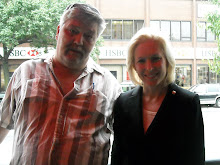
The gala affair began with a visit by New York State Lt. Governor Richard Ravitch...The award for Labor Leaders of the Year were presented to Michael Mulgrew - President of the United Federation of Teachers and Pat Collins, Jr., - President of the Steel Workers International Union...


The Business Leaders of the Year were Mary Gasparic - Amalgamated Bank, Ridgewood Branch Manager and Michael Lewis - Lewis Monument Company of Ridgewood, NY...


The Man and Woman of the Year were awarded to Donna Dowd and John Sendlein...


The Lifetime Service Awards were presented to Ann Maggio and John Mistrella...


The Community Service awards were presented to Chet Szarejko - The Polish-American Congress and to Paul Finnegan - New York Irish Center...


And, the Public Service Awards of the Year were presented to Assemblymember Michael Gianaris and New York City Councilmember Jimmy Van Bramer...


Local political leaders on attendance at the reception were Member of Congress Nydia Velazquez, State Senator Joe Addabbo, New York Assemblymember Michael Miller and New York City Councilmember Elizabeth Crowley....


Monday, May 3, 2010

Why is Gov. Paterson Bashing Smart Borrowing? His Own Lieutenant Governor Understands It by Rory Lancman...

Read original...

This Op-Ed by Assemblyman Lancman in the Daily News, is in response to Governor Paterson's Op-Ed in last Sunday's NY Times...

Of all the arrows in a New York governor's quiver - and there are many, New York's governorship being one of the nation's constitutionally strongest - perhaps none flies with greater effect than the power to frame the debate, both through the budget the governor alone can propose and the bully pulpit from which the governor alone can command statewide attention.

This is why Gov. Paterson's increasingly frequent flings against the modest borrowing proposed by the state's lieutenant governor, Richard Ravitch - his own appointee - are so unhelpful. These shots are way off target, and more importantly are poisoning hopes for a speedy and rational resolution of the current state budget stalemate.

The governor has compared the state to a household or small business, arguing each faces the same strictly binary choice - "cut spending or increase revenues" - and that "borrowing accomplishes neither of those goals." The governor likens borrowing to "getting a bank loan to buy your groceries," and concludes that Ravitch's suggested borrowing will merely "delay our inevitable day of fiscal reckoning past one more November election."

However, limited borrowing has its place in our financial order, particularly as constructed by Ravitch, and particularly where, as here, the budget deficit confronting the state is not, as the governor argues, the result of "years of overspending" (another frequent fling of the governor) but instead the result of a violent economic downturn plaguing the entire nation and pushing hundreds of thousands of New Yorkers to the edge of a financial precipice of their own.

The national scope of the problem is undeniable. As detailed by the nonpartisan Center on Budget and Policy Priorities, at least 41 states experienced shortfalls in their 2010 fiscal year budgets, and 42 states have estimated gaps in their projected 2011 fiscal year budgets. New York's current and projected budget gaps, as a percentage of the state's overall budget, are about average as states go. This is why New York isn't contemplating the draconian cuts and sometimes wacky gimmicks being proposed in other states: Hawaii cut its school week to four days; Arizona sold its state capitol building; California . . . well where does one begin?

Because our budget deficit is demonstrably not rooted in any unique dysfunction in New York's fiscal policies or in our choices as a state to invest in our schools and health care system, the general admonition against making borrowing a part of the state's deficit reduction plan is misplaced.

We are not bailing our budget process out; we're bailing our people out. By employing restricted, short-term borrowing to cover approximately 10% of our projected four-year budget deficit, we are not aggravating a problem of our own making, but rather mitigating the already punishing impact on New York families of a national economic crisis and ongoing cuts in education, health care, mass transit, infrastructure and everything else.

The alternative? Even deeper cuts, resulting in greater pressure on local governments to raise property taxes, lay off workers and suspend capital projects. In other words, the exact opposite of what is broadly acknowledged to be necessary to pull our economy out of recession.

This is why, even in the worst of times, parents might sensibly decide to borrow for a child's college tuition while paring expenses elsewhere, and a small firm might increase its total long-term debt obligation by re-financing existing debt at lower interest rates with more manageable monthly payments.

Finally, the short-term borrowing proposed in the Ravitch plan cannot be viewed in isolation from the rest of the plan. It also includes such long-sought-after-reforms as moving the beginning of the state's fiscal year from April 1 to July 1, applying generally accepted accounting principles to the state's budgeting process, and mandating multiyear financial planning with obligatory adjustments on a periodic basis if the state budget goes off track. (The plan's creation of an appointed review board bears closer examination as a potentially unwise delegation of power to a body of people unaccountable to the electorate, but that's a different issue.)

As a whole, the plan, including its modest borrowing component, is structurally sound and puts New York on a path to fiscal stability. We owe it to future generations of New Yorkers to leave platitudes aside and make the hard, pragmatic decisions which will keep our people working and move this state forward.

Lancman is a New York State assemblyman representing Queens.


Saturday, March 20, 2010

Beware of the Wise Men, New York by Rory Lancman -- Times Union - Albany NY

Read original...

There is much to commend in Lt. Gov. Richard Ravitch's recently released plan to address New York's long-term fiscal problems, including its call to change the start of the state's fiscal year from April 1 to July 1, apply Generally Accepted Accounting Principles to the state's budgeting, require multi-year financial planning and require quarterly certification that the state budget is on track, with mandatory adjustments if it is not.But the proposal to turn over this last critically important responsibility to an unelected panel of "highly respected private citizens" (the plan's phrase, not mine), potentially triggering a governor's power to unilaterally impose across the board budget cuts, is misguided. It is emblematic of a certain world view that is simultaneously idealistic and cynical, but either way, undemocratic.

The power to gauge whether the budget is on a five-year track is no trifling thing. It is not a simple question of mathematics. It involves substantial judgment calls about the efficacy of revenue enhancements and cost-saving measures. These are regularly some of the most hotly contested issues in government.

To rip just a few such questions from recent headlines: Will a slight increase in the personal income tax for people making hundreds of thousands of dollars a year raise what its supporters hope? Or far less, because it will drive wealthy New Yorkers to leave the state?

Will downsizing prisons save what supporters claim, or cost the state more money in the long run?

Is the governor's projected deficit in next year's budget correct, or understated by as much as a billion dollars?

These "calculations" are as much based on the values and judgment of the individuals doing the calculating as on any mathematical or accounting formula.

The idealism behind the faith in such "panels of wise men" (and women) is obvious. Removed from the grind of political calculation, and accomplished in their respective fields of business and finance (and perhaps past government service), they are free to do what is right for right's sake.

The cynicism is obvious as well. The wise men can provide cover by delivering the dreadful news that elected officials are too afraid to deliver. When the hard decisions are made, "The wise men made us do it," will be the excuse.

But our experience with other such panels of wise men should give us pause. They have had a bad run of late. Politics is rarely really removed from a panel's deliberations, and appointees as often as not either gleefully exceed the scope of their mandate or slavishly follow the directives of their appointing master.

The panel of three wise men given the task of vetting state comptroller candidates for the Legislature's consideration in 2007 following the resignation of the previous comptroller sat mute for hours upon hours of hearings, and then made the political decision to exclude obviously well-qualified candidates who happened to be legislators.

The panel of wise minds known as the Commission on Judicial Nomination took it upon themselves to exceed their mandate to examine whether candidates for chief judge were well qualified, and instead excluded a plainly well qualified Court of Appeals judge because of extraneous considerations that have yet to be fully explained.

Similar results can be seen with other recent panels and commissions. For example, the New York City Traffic Congestion Mitigation Commission was charged by the Legislature with studying congestion in the city. Ultimately, the members who already supported the mayor's congestion price proposal when they were appointed just rubber-stamped his plan along "party lines."

For these reasons, it would be far better to require the Legislature itself or the comptroller to affirmatively certify compliance with a five-year financial plan on a quarterly or semiannual basis, after public hearings on the matter. Ultimately, they answer to the public for their decisions, and their judgment -- good or bad -- is rooted in the authority and legitimacy which only they possess as elected representatives of the people.

In our constitutional order, there is no room for panels of enlightened wise beings to which we can turn over our government to save us from ourselves.

First published in print on Page 1: Friday, March 19, 2010

Assemblyman Rory Lancman, a Democrat, represents the 25th District in Queens.