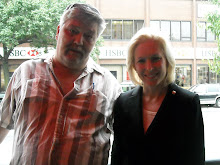
On April 20th, I attended the Richmond Hill Historical Society meeting held at Monsignor Leonard Center, (112th Street and 85th Avenue, across from Holy Child Jesus Church). The meeting room was filled to capacity with a small overflow needing to use the adjoining anteroom.
President Nancy Cataldi told the assemblage of approximately fifty participants about recent developments regarding the court-supervised purchase of The Republican Club building in Richmond Hill. The landmarked building was auctioned off in a Queens courthouse last Friday. The audience applauded the encouraging news of the building's pending preservation.

Judge James Ortenzio, the former chairman of the New York Republican County Committee has vowed to take advantage of an option that a Queens judge left open to him to annul the winning bid and purchase the property.
The good news was applauded by members of the club, but Nancy reminded everyone that this is not a “done deal” yet, although a very promising development (pardon the pun).
[Queens Chronicle: Former Party Boss Vows To Purchase Landmark...]
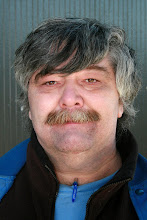
The primary reason I attended this meeting was to see a slide show presentation by their featured speaker, Kevin Walsh, the author of "Forgotten New York" and web master of Forgotten-NY.com.
After some minor problems were fixed with a non-compatible PC-adapter necessary to run the slide-projector, Mr. Walsh gave an informative and historically elucidating presentation.
Among his photos were a variety of architectural marvels and structures dating back to the Revolutionary war period. He also showed a wide variety of street signs, ornate street lights and bridgework, which highlighted the quality workmanship of past era's. He explained, that many of his photos are of objects very often hidden in plain sight to the average person.
Included in his photo collection were a few of vintage signage painted on the side of buildings during the Civil War period which were literally hidden for decades by buildings that abutted them. They have been re-discovered in recent years when buildings next to them have been demolished. In rare instances, he's found them in practically pristine condition.
Mr. Walsh stressed that to notice these wonders, one has to be constantly cognizant of their surroundings, looking up at the building and down at the sidewalks and streets. You have to be unafraid of being mistaken for a tourist.
Many of slides were of beautiful historically important building that have been razed to make way for modern over-sized monstrosities in New York City, especially the borough of Queens.
 The beginning of his lecture began with Richmond Hill, among Mr. Walsh's slides were photographs of afore-mentioned Republican Club. Mr. Walsh explained how the club remained an important gathering place for the Republican Party throughout the 20th Century well into the 1980s.
Presidents Teddy Roosevelt, Harry Truman, Richard Nixon and Gerald Ford have all given speeches here, and Ronald Reagan appeared here during primary season in 1976 and during the 1980 campaign.

Next was The Triangle Hofbrau, Kevin told the audience that according to the RHHS that Babe Ruth and Mae West were patrons of the Triangle Hofbrau in the 1920s and that Vaudeville-era pianist/composer Ernest Ball (1878-1927) wrote the music for the now-standard “When Irish Eyes Are Smiling” in one of the hotel’s guest rooms in 1912, the lyrics were later written by someone else.
 Other outstanding historical buildings of note that were highlighted in Richmond Hill included the RKO Keith's, built in about 1928 and featured on the web site, Cinematic Treasures.org.

The Church of the Resurrection is the once small wooden Gothic Revival edifice built by architect Henry Dudley in 1874, the structure is preserved within the present French Gothic stone building, which was finished in 1904, though further extensions continued until 1926. Jacob Riis was a parishioner and President Theodore Roosevelt attended a wedding here. Dudley, the architect also built the landmarked Saint James Episcopal Church in the Bronx. I made frequent visits to this church in the late '60 and early '70, being a former acolyte at St. Matthews Episcopal Church in Woodhaven, The Church of the Resurrection's sister-parish.

Mr. Walsh also showed a fascinating old faded “Bangerts” sign still on a storefront on 117th Street and Hillside Avenue. The sign boasts what he told us must be its original 1927 marquee, intact, despite the neon letters no longer functioning.

Among the historical tidbits I was able to learn is that on 104th Street in Manhattan near the Museum of the City of New York, there is a statue commemorating Alabama gynecologist, Dr. J. Marion Sims, considered the father of modern gynecology.

Near the end of the presentation, Mr. Walsh showed a photo of Arbitration Rock, which was purportedly the original dividing line separating Brooklyn and Queens.
 Arbitration Rock is now on display at the Onderdonk House in Ridgewood, the present home of the Greater Ridgewood Historical Society. The Onderdonk House is the oldest Dutch Colonial stone house in New York City. A home has been on the property since the 1660's, with the present structure probably dating back to the 1820's, built over the original stone foundation.
The lecture and slide show was approximately one hour in length and I felt that Mr. Walsh had an excellent grasp of his subject matter and kept the sometimes dry material lively and interesting with numerous amusing personal anecdotes and keen observations.
Before adjournment, Ms. Cataldi mentioned the upcoming RHHS Victorian Tea event ($15) held at Oak Ridge in Forest Park. She informed the membership that the event sells out quickly.

I would heartily recommend that anyone with an interest in local history to attend one of Mr. Walsh's lectures or purchase his book.
I will surely be attending future Richmond Hill Historical Society gatherings and would recommend it to others.