Showing posts with label trash. Show all posts

Tuesday, December 7, 2010

Councilman Ulrich and DSNY Commissioner Doherty Unveil New Street Corner Litter Baskets in Ozone Park

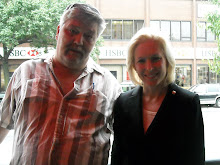
Queens West Superintendent Hans Banderson, Borough Chief Douglas Marsiglia, Assistant Commissioner, Office of Community Affairs  Maria Termini, DSNY Commissioner John J. Doherty and Council Member Eric Ulrich..

Council Member Eric A. Ulrich (R-Queens) was joined on Tuesday by Sanitation Department Commissioner John J. Doherty at 93rd Street and 101st Avenue in Ozone Park to announce that 35 street corner litter baskets will be installed as part of an effort to keep one of the area’s busiest commercial strips attractive to residents, merchants and shoppers.

Ulrich said, “We are doing everything we can to keep Ozone Park clean. These new trash cans will raise the profile of one of the district’s main shopping strips, discourage illegal dumping on street corners, and improve the quality of life for residents and business owners alike.”

Doherty said, “By funding these initiatives, Council Member Ulrich provides a great example of how elected officials and residents, working together with the Sanitation Department, can make a real difference in helping to keep their communities clean.”

Council Member Ulrich allocated $18,270 in this fiscal year’s budget for the new litter baskets. Installation of the receptacles, which are designed with a narrow opening on top to discourage illegal dumping of trash on street corners, represents the latest aspect of Ulrich’s quality of life agenda.

Sunday, July 4, 2010

Canning Political Garbage: Council Members Rightly Take Names Off Trash Bins - NY Daily News Editorial...

Read original...

After years of complaints from these quarters, the City Council seems to have kicked the dirty habit of plastering members' names on garbage cans.

The good news comes from the new list of Council slush fund projects - which shows that while four members have allocated tax dollars for extra street baskets, using them as free, publicly funded advertising isn't so popular anymore.

That's a break from the past 15 years, when the Council and one borough president spent more than $1 million - including $56,000 last year - to pay for thousands of cans with labels like "Sponsored by Council Member So and So."

This year's garbage cans are largely name-free.

Brooklyn's Letitia James details her $3,000 item as "High-End Litter Baskets without the Council Member's name." Brava!

Said Eric Ulrich of Queens ($25,000 for 50 baskets on 101st Ave. in Ozone Park): "Why would anyone want their name on something that trash gets thrown in?"

Speaker Chris Quinn put in for $7,500 for receptacles in Murray Hill. Her spokesman said Quinn's name won't be on the cans.

The last member, Larry Seabrook of the Bronx, has set aside $15,000 for baskets for his district. We don't know his naming plans because his office didn't return calls yesterday.

Now that the practice appears over, the Council should outright ban it. City government sponsors enough garbage already.

Friday, June 18, 2010

Waste Transfer Stations Worry Queens Leaders by Ivan Pereira - YourNabe.com

Read original...

The city unveiled its updated plans for its new waste transfer stations near LaGuardia Airport and Newtown Creek.

The city Sanitation Department updated Borough President Helen Marshall and community leaders Monday on its plans to build two new transfer stations in Queens, but Marshall said she is still concerned over the facilities’ im pact on the surrounding neighborhoods.

Harry Szarpanksi, a deputy commissioner for the department, showed off a presentation on its construction of the North Shore marine transfer station in College Point and a waste transfer facility in Sunnyside during the Borough Board meeting.

The facilities, which are still years from full operation, were designed to decrease costs and end the use of long-haul trucks that transport waste in the city, according to the commissioner.

“Once these facilities are up and running, there will be no truck trafficking routes out of the city,” he said.

The College Point marine transfer station will collect trash from neighborhoods east of Flushing Meadows Corona Park, load the waste into specially designed containers and ship it off to another facility via a barge, Szarpanksi said.

The facility has sparked concerns from residents and elected officials, including U.S. Rep. Gary Ackerman (D-Bayside), over the ecological effects it could place on the surrounding area, especially LaGuardia Airport. Critics have said the facility’s garbage could attract more birds to the area, which could pose a threat to flights coming in and out of the airport.

Szarpanksi reassured Marshall and various members of the borough’s community boards that when the facility begins operation sometime in 2013, it will be safe and not disturb the community. He showed diagrams and plans of the station, including its high-tech loading and container machinery, and said all operations would be done in an enclosed space to prevent the escape of odors.

The second waste station, located near Review Avenue in Sunnyside, will be using the rail system near Newtown Creek to get the waste out of Queens and leaders have expressed their doubts about the project.

The facility, slated to begin construction sometime in November, would manage, store and transport roughly 2,100 tons of waste a day from western Queens , according to Szarpanksi.

Lydon Sleeper, chief of staff for City Councilwoman Elizabeth Crowley (D-Middle Village), said he was worried about the logistics of the station — especially its use of the non-public railroads in the area.


“We need to have a conversation on what it means to put it on rail and rail it through neighborhoods,” he said. “You wouldn’t want a [garbage] truck and put it next to someone’s home.”

Szarpanksi said preliminary plans include installing a treatment system to neutralize the odor in the building’s exhaust air and the use of airtight containers.

Marshall said she was frustrated by the foot-dragging in getting the facilities up and running since the idea of the transfer stations was in the planning stages when she was a councilwoman.

“What’s taking so long?” she asked.

The sanitation commissioner said several delays and long planning have contributed to the late opening of the facilities, but reassured the borough president that the agency was committed to making them a reality soon.

Wednesday, June 16, 2010

Queens is Trashiest Boro by Reuven Blau - NYPOST.com

Read original...

This NY Post story doesn't surprise me at all (in fact I was going to post an item on my blog with the photos below)...I have been noticing how filthy my community and others have become in Bloomberg's New York City so I began taking photographs of the corner trash cans near my home in early June...I think the intersections of Liberty Avenue and Crossbay Boulevard and the intersection of 101st Avenue and 94th Street/Woodhaven Boulevard are the worst I've seen in all my years living in the neighborhood - which is the late 1960's ...Take a look at the slideshow to see for yourself...The photos were all taken on three different days - June 3rd, June 7th and June 13th...I must say that every neighborhood I've visited recently in Queens and Brooklyn have looked terrible, but Manhattan still looks like the Emerald City...In King Bloomberg's NYC we have to keep the tourists happy - screw the tax paying residents...


What a waste!
Queens neighborhoods are at the top of the heap in garbage collection, leading the city with 160,000 tons of trash picked up by the city's Department of Sanitation last year.
The district encompassing Jamaica, St. Albans and Springfield Gardens swept the field, with an output of 82,124 tons of trash, followed by the district that includes Flushing, College Point and Whitestone, with 77,081 tons.
In third place, the district that collects from the south shore of Staten Island dumped 70,249 tons, while the Upper East Side weighed in with a close 69,744 tons. Borough Park in Brooklyn trailed in fifth place, with 67,869 tons.
New York City's population stands at 8,363,710 and is growing by some 30,000 to 60,000 a year, according to the American Community Survey.
Still, the city's overall refuse output continued to drop for the fourth year in a row, despite the increasing population.
In 2009, 2.5 million tons of trash was collected, down from 2.6 million in 2008.
"Its definitely recession driven," Turso said.

Monday, December 28, 2009

Free Electronics Recycling Event at District Office of NYS Senator Joseph P. Addabbo, Jr., on Saturday, January 9, 2010..

Click on image to enlarge...


WHO: New York State Senator Joe Addabbo, Jr., is sponsoring a free, post-holiday recycling event at his district office, in collaboration with representatives from e-Green Management, LLC. Recycle your unwanted electronic equipment; two trucks will be available to collect your old, outdated items to make room for new equipment.

WHAT: E-Waste Collection Event – FREE!

Participate in an environmentally responsible free event that will prevent your electronic waste from entering into a landfill and polluting our environment. e-Green promotes “zero waste to landfill” ethics and operates “cradle to cradle” under all Federal, State and local regulations to ensure the responsible recycling of all e-waste collected. e-Green will recycle your unwanted electronic equipment, including: computers, fax machines, scanners, laptops, monitors, typewriters, copiers, cameras, cell phones, televisions, printers, telephones, servers, PDAs, batteries.

WHERE: Senator Joe Addabbo, Jr. - District Office, 159-53 102nd Street, Howard Beach, New York 11414

WHEN: Saturday, January 9, 2010, 10 AM – 3 PM

Once the equipment is accepted here, the following process takes place: all hazardous components (batteries on circuit boards and portable equipment, mercury switches, toxic capacitors, fluorescent lamps, leaded glass from monitors, etc.) will be extracted prior to destruction. These are then disposed of in an environmentally sound manner, exceeding Federal and State regulations. Non-hazardous materials (paper, plastic, metal, glass, etc.) are recycled. All material assigned to destruction is totally disassembled, shredded, incinerated or a combination of these.

For more information about this event or e-waste recycling, please contact Senator Addabbo’s district office at 718-738-1111.


Tuesday, November 10, 2009

Brooklyn Bridge Park Getting Green by Rich Calder - NY Post

Read original...

Although only a tiny fraction of Big Apple parks recycle, a new one now under construction along the Brooklyn waterfront is set to take being green to another level.

The planned 85-acre Brooklyn Bridge Park, which is set to partially open this winter after two decades of planning, is being partially built with recycled materials. This includes scraps from former pier sheds that were torn down to make way for the park.

The park will also feature an irrigation system relying on recycled rainwater and an on-site recycling system for its waste.

Even project opponents furious over the park’s controversial plan to include luxury condos won’t be able to find fault with its recycling initiatives.

Lisa Willner, a spokeswoman for the state-city entity overseeing the Brooklyn Heights-DUMBO plan, said a containment tank set for Pier 1 would hold up to 104,000 gallons of water that will be used to irrigate the park. Storm water could also be stored at other parts of the park, she said.

Although officials of the planned park are taking recycling seriously, the Post reported Monday that few city-run parks recycle. Not only are routine recyclables like bottles, cans and paper being sent to landfills, but so is other waste that is supposed to be trashed separately, such as animal carcasses, medical waste and bins of used kitchen oil.

Dog Skull and Pelvis - Pelham Bay Park - November 9, 2009. Geoffrey Croft/NYC Park Advocates

Of the city’s 1,875 parks, only Central Park has a strong recycling program and at least 18 others – including Brooklyn’s Prospect Park, Marine Park, McCarren Park and Manhattan Beach — have smaller ones.

City Parks Department workers collected 35,035 tons of waste in parks last year, and the Department of Sanitation supplemented service by collecting thousands more.

The Parks Department couldn’t provide a breakdown of how much tonnage gets recycled, but DOS confirmed that whatever waste it collects at parks heads to landfills and isn’t separated and recycled.

Over the past two decades, more than 10,000 abandoned vehicles have been ridded from parks. DOS collects the vehicles, and an agency spokesman said it’s unclear whether cars get recycled because private companies hired by the city decide how the cars should be disposed.

Monday, November 9, 2009

Trash Collectors at New York City Parks Are Not Correctly Separating and Recycling by Rich Calder - NY Post

The Mayor allows Chancellor Joel Klein and the Department of Education to ignore the recycling laws, as well...I suppose, the laws of New York City are only for ordinary people and don't apply to King Bloomberg and his administration....


Read original...

ECO NO-NO: Cleanup workers at city parks are told by supervisors to cut corners and send recyclables, like plastic water bottles, along with regular trash to landfills.

Big Apple parks are anything but green.

A Post investigation found there's little recycling going on in city green spaces, but the more shocking news is how waste collected in parks gets dumped.

Not only are routine recyclables like bottles, cans and paper being sent to landfills, but so is other waste that is supposed to be trashed separately, such as animal carcasses, medical waste and bins of used kitchen oil, according to some longtime parks employees responsible for garbage pickups.

One worker said supervisors routinely give orders like "make sure it all disappears," meaning dump everything on garbage trucks, because it's the fastest solution for cleaning parks.

"Not much gets recycled. We pick up everything -- furniture, concrete, even dead animals," said a worker whose route covers parts of Brooklyn parks.

The trash gets trucked to waste-transfer stations, where it is prepared for disposal at landfills.

When told of the whistleblowers' comments, Parks Department spokeswoman Vickie Karp said workers are "misreading park policy," adding the department is "committed to recycling."

Central Park has an extensive recycling program that includes bottles, cans and scrap metal. There are smaller recycling programs in at least 18 other parks citywide -- including Brooklyn's Prospect Park and Manhattan's Union Square -- and the goal is to eventually expand to other parks, she said.

But Geoffrey Croft, of the watchdog group New York City Park Advocates, said the amount of parks recycling is "indefensible" considering there are 1,875 parks citywide and only a tiny fraction of them have recycling bins.

"This is a city where home and business owners are fined for not recycling, but the city agency responsible for the largest amount of land [14 percent of the city] -- the Parks Department -- is not required to," Croft said. "And this is the city's supposed 'green' agency.' "

Tuesday, June 5, 2007

New York Times: Target: Trash by Alex Mindlin...


Hiroko Masuike for The New York Times


IT was 5 in the afternoon, and the scratched-up green Dodge pickup was stopped at a light at Foster and Remsen Avenues in Canarsie, Brooklyn. A teetering bureau and a load of wooden slats were in back.

Lieutenant DeRossi, left, and Officer Joseph Fontana follow a pickup during their patrol in Brooklyn.

“Look at that,” said Lt. Robert DeRossi, a barrel-chested, baby-faced officer who was at the wheel of an unmarked white Jeep.

His partner, Officer Joseph Fontana, thinner and bespectacled, followed his glance through the windshield. “Let’s follow,” he said.

The men tailed the truck three miles northeast into a deserted, marshy patch of East New York, watching it make repeated U-turns.

“He’s spooked,” Officer Fontana said.

At one point during the 30-minute tail, the pickup doubled back on them and passed the Jeep as the two officers studiously pretended to ignore it.

“Is he eyeballing us?” Lieutenant DeRossi asked.

“He doesn’t even know we’re here,” Officer Fontana replied.

Finally, the pickup turned onto the southernmost block of Forbell Street, a lonely stretch near the Belt Parkway that is bordered by blocks of scrub, and pulled in next to a graffiti-scrawled shipping container surrounded by a spray of junk.

For a few minutes, nothing seemed to be happening. From 600 yards away, the officers settled in to watch. “Give him a chance,” Officer Fontana said, half to himself.

Then a tiny form appeared in the bed of the pickup, and an object flew off the truck into the weeds beside the road.

“Bobby, they’re dumping!” Officer Fontana shouted. “Go down there!”

A man in a plaid work shirt was tossing planks and slats onto the road. As the Jeep rolled up, he began to tip over the bureau. When it hit the ground, Lieutenant DeRossi said: “O.K. Let’s get him.”

Lieutenant DeRossi and Officer Fontana are members of the Sanitation Department’s Illegal Dumping Task Force, a unit of 35 armed plainclothes officers, former sanitation workers all. And this is their busy season. Construction work and spring cleaning pick up in April and May, generating large amounts of debris; some 21 dumpers’ vehicles were impounded in May of last year, a number exceeded only in August.

“The season’s heating up,” Inspector Robert D’Angelo, the unit’s commander, told a group of his officers during a briefing at their Bensonhurst headquarters in early May. “Keep your eyes open. Let’s get back to hunter mode, and be careful.”

To nab their prey, task force officers fan out across the city and work around the clock, sometimes following potential dumpers for miles or lying in wait for them in vacant lots. Sleuthlike, they poke through magazines that have been discarded amid spring-cleaning debris, looking for mailing labels that will help them track down offenders.

Sometimes officers sit in a welding truck, wearing hard hats and posing as welders. They have been known to lie belly down in high grass at stakeouts. When Lieutenant DeRossi was a rookie, he was fond of hiding in trees, eyeing potential offenders through the leaves.

As with many other hard-to-control crimes, the punishment for illegal dumping is stiff: a fine of at least $1,500 for each person caught in the act, and a cleanup charge of $150 per cubic yard of material. In addition, officers impound the vehicle used, a practice that tends to strand dumpers in the city’s most godforsaken corners.

A look at the task force’s yearly impoundment rates suggest that on a historical scale, the problem is waning. The city’s construction boom, though it has created much stuff to dump, has also consumed many of the vacant lots that were once desirable dumping sites, and many of those remaining are being watched more closely.

Last year, 201 dumpers’ vehicles were impounded, the second-lowest number on record; the lowest was in 2005. By comparison, the task force impounded 464 vehicles in 1995, and close to 1,000 a year throughout the late 1980s. If current trends continue, New York may lose the unwatched no man’s lands where dumping thrives. But for now, many of those parts of the city are still around.

When illegal dumpers are caught, they seldom look panic-stricken, like the perps on cop shows. More often, they wear a puzzled but friendly expression, a look that says, “What seems to be the problem, Officer?”

Read entire article...