Thursday, August 9, 2007

New York Press - Brooklyn's Life Aquatic by Matt Cowan

Read original...

BROOKLYN'S LIFE AQUATIC

How oysters may save the Gowanus

By Matt Cowan

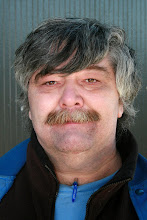
Photo courtesy of NYPress

Standing on the bank of the grimy Gowanus Canal, aphrodisiacs don’t automatically spring to mind. However, lodged among the car wreckage, sewage and Gambino body parts, lies a thriving colony of oysters, chilling, eating, procreating and staying close to home—not unlike many street corners in various popular Brooklyn neighborhoods.

Before there’s a run on cocktail sauce, lemon wedges, these bivalves are not exactly bound for the ice trays of The Oyster Bar at Grand Central. No, eating an oyster from the bottom of these waters would be gastronomic Russian Roulette. Think instead of little Al Gore mollusks: maybe gobbling up a little too much as they work but, along the way, making the environment a cleaner, safer place for the rest of us.

Most of us think of oysters merely as odd-looking appetizers and slow, but steady pearl producers. But in reality, they play a crucial role in the health of the bodies of water in which they reside. Each oyster by its natural functions cleans and builds and contributes to the life around it. So it goes that, the dirtier the water, the less edible the oyster. And the present day Gowanus—a grimy stretch of Brooklyn with chain-link fences and a dilapidated squat house called the Bat Cave across the way—is a pretty messy home.

“Oysters are native to the Gowanus,” explains Katie Mosher-Smith, a young Vermont native and mother of two who now lives in the neighborhood. She’s also the program director for the Gowanus Oyster Stewards. "They’re native to all of the East Coast. In fact, the Gowanus had tons of oysters—food for the rich and food for the poor. They were big back then—the size of dinner plates, it’s said.” According to Mosher-Smith, when the Gowanus was a navigable channel, the oysters would clean the water and formed an ecosystem, like building reefs, that provided natural filtration. “But all the harvesting and the dredging kind of wiped out the oysters,” she explains. She says it will take a “hybridization of remediation” to clean up Gowanus and other bodies of water like it, but history has taught us that oysters are cheap and effective labor.

Mosher-Smith coordinates a cadre of neighborhood residents who come down to this stretch of the Gowanus Canal most Saturday afternoons to haul out their oyster nets and count, measure and clean the oyster population. Sitting around with this earnest group of urban environmentalists, scrubbing shellfish and learning about the seals that used to navigate this stretch of water and the squatters and gentrifiers that do now, the experience is a combo of a day at the dog park, an afternoon planting trees and a symposium on the evolution of Brooklyn.

There’s a familiar, jokey aspect to the Saturday gatherings. Everyone puts on thick rubber gloves and cleans, counts, measures and chats. Kids and dogs pad about the water and rustle around with the stacks of kayaks that belong to fellow activists, the Gowanus Dredgers. It’s like a staff retreat of mostly thirtysomething, mostly white professionals are a mixture of neighborhood activists, environmental enthusiasts, grad students and educators all feeling like they’re doing their part to get the city’s water a little cleaner.

This oyster renaissance is thriving beyond Gowanus—like the Harbor School, a high school in Bushwick, which is devoted to maritime studies. During a recent party on Pier 40 organized by the River Project, a couple of Harbor School students explained to curious adults all about their atypically Bushwickian forays along New York’s Waterway. Jeriel Stafford is a 10th grader from Brownsville who inherited his fascination with the life aquatic from his father who worked on a sailboat back in his native Granada.

Young Stafford explains how he goes a couple of Saturdays out of every month to collect oysters, measure them and see if they’re actually growing. He makes sure to point out that “in Harlem, the oysters grow slowly because of the CSO.” That’s the oh-so-appetizing “combined sewage overflow.” Enough said.

Teachers in Carroll Gardens/Gowanus (more of a generational than spatial distinction from what I understand) are using this project to connect with their students in a multitude of ways. Keith Wynne teaches upper elementary science at the Carroll School in the neighborhood. He describes working with Mosher-Smith and the Gowanus Oyster Stewards to teach his students: how to take care of oysters, why you’d want to be an oyster gardener and what benefits oysters have for our environment. Along with the intrinsic preference kids have for mucking around outside, Wynne’s students also “share stories with their parents and grandparents who grew up in the neighborhood, who can remember playing around the canal. It’s a real way to build bridges between generations.”

Then again, those lessons from the past may not be as distant as some may think. As one young woman who grew up in Howard Beach said, “Fuck a hundred years ago, people I grew up with in the neighborhood were eating oysters out of the water 10 years ago. Yuck.”

There’s also a social aspect to the oyster project: Saturday oyster gatherings, parties, meetings, art projects, T-shirts. New York can be such a paradoxically overcrowded, isolating place to live, people seek out little niches in which to band together and coexist—not unlike groups of oysters—in small societies based on common interests. As much as it may seem that Brooklyn oyster gatherings would be fertile soil for a wacky mélange of characters, it’s actually an impressively earnest, professional and dedicated crew. The strangest comment to come out of the oyster party was from a young woman who said that she felt like “a fish trapped in a human’s body,” but that didn’t mean that she wandered around Union Square with papier-mâché gills and anti-hook propaganda. No, instead she’s devoted herself to marrying art and the environment and developing naturally-powered coral reefs to clean waterways and protect under-sea populations.

It’s a somewhat peculiar (if currently trendy) calling, to be an urban environmentalist. A common theme among the people involved in this project—and the related maritime projects connected together by common goals and crossover events—was that they had come to New York like many others, for work, change of lifestyle, social opportunities and all that, but missed the easier connection to nature that exists in less paved-over parts of the world. “There were some environmental issues I got involved in near a place we have Upstate,” recalls Mosher-Smith. “And that’s probably what took me in this direction. Also, I wanted to teach my kids that when you see a problem, you can figure out a way to get involved and make it better.”

So far, it’s unclear how effective this cleaning effort will be. The toxic output of the city is a formidable foe. But perhaps, someday, maybe even when the third graders of Mr. Wynne’s class at the Carroll school are all grown up, they’ll sit on the bank of the Gowanus Canal, sucking down fresh oysters to prime themselves to create yet new generations of urban environmentalists. Like Brooklyn, oysters are an acquired taste. And like New York, environmentalism can be a pain in the ass.

NY Daily News: NYC COP SAVED BY BADGE GOES FROM FINEST TO BRAVEST | By CHUCK BENNETT | New York News | New York City News | NY News

Read original...

August 1, 2007

Miracle cop Stuart Ingram will keep "shielding" the public from harm even after trading in his police baton for a firefighter's ax.

The fresh-faced 22-year-old -- whose life was saved when his police shield shattered a knife thrust at his heart -- was among 256 new "probie" firefighters who graduated from the Fire Academy yesterday.

On March 22, a drunken maniac in Howard Beach, Queens, tried to stab the rookie cop with a 10-inch kitchen knife. The blade struck squarely on the nickel-alloy badge pinned to his chest and instantly broke into five pieces.

"Thanks [to the badge manufacturer] for making it stronger than the knife," Ingram said after the incident. "I guess [the badge] will have a little sentimental value now."

Ingram said he expects to be assigned to a firehouse in Queens. He added that all the focus on him is unwarranted.

"There are plenty of other people that better deserve the attention, such as all the ones mentioned in today's ceremony that served in the war and served their country," he said.

The first class of 2007 included 19 U.S. military veterans.

NY Daily News: With Influx of West Indian and South Asian Families, PS 108 Starts First Cricket Club...

Children's Pressline: Going Batty over Cricket

With influx of West Indian and South Asian families, PS 108 starts first club


Amanda Manick, 10, is at bat.


Bryan Hanif hurls a ball during practice at PS 108.

Wickets, stumps and googlies are making their way into Queens' schoolyards, but even though these words may sound straight out of a Harry Potter novel, put down the boy wizard books − and pick up a cricket manual.

With an influx of West Indian immigrants, cricket has arrived and is growing in many Queens neighborhoods and schools.

"Cricket is better than basketball," said Amanda Manick, 10, captain of the cricket team at Public School 108 in Ozone Park. The elementary school is the first in Queens to offer cricket to students. "You get to run a lot and exercise a lot," said Amanda, who was born in Trinidad and Tobago, where her parents often played cricket.

The neighborhood children's obsession with cricket stems from their Trinidadian, Guyanese and South Asian families, who brought a renewed interest in the sport to America.

"I like batting and bowling people," said Puran Mangal, 12, another PS 108 student who was referring to positions on a cricket team.

When PS 108 teacher Ranjit Singh saw an increase in the popularity of cricket, he started a school club. "The team aspect of it is very appealing because students can [use] it off the field," Singh said.

Most kids had already learned the basics of cricket from parents and relatives, making it easier for coaches to teach them the skills necessary to play. Singh, the cricket club adviser, continues to assist the kids on how to play cricket and also brings them closer to their roots. "We are hoping cricket will be popular with a majority of West Indians and South Asians," Singh said.

Cricket, which originated in England in the 17th century, spread through many colonies.

"Most of the kids who are playing cricket now in America are from the Caribbean and India," said Linden Fraser, a regional coach at the International Cricket Council. Cricket shares some similarities with its American counterpart, baseball, with innings, fielders and batters, but that is where the similarities end. In cricket, each team usually has 11 players, and games can last from seven hours to a couple of days.

The International Cricket Council, founded at the height of cricket's popularity in 1965, has become a leading group in the cricket world.

"People come together through all ethnic groups. It will help the kids in their daily lives. You have to be physically and mentally fit to play this sport," said Fraser, who was a player on the national Guyanese cricket team.

Fraser is now trying to obtain more sponsorship for cricket in America. "We need sponsorship if we want this sport to become mainstream," Fraser said.

The PS 108 program meets twice a week for an hour and a half and is usually played in the school gymnasium. The gym is not big enough to play properly because a traditional cricket field is 100-160 yards across. There are no other elementary cricket programs yet, so the team of 30 plays among themselves. Parents have started to become a part of the program as well through volunteering.

At the moment, Amanda is happy playing cricket for her school, but she has aspirations of taking her skills to the next level. "I want to continue to play cricket as I get older — maybe even professionally," she said.

Additional reporting by Sue Chen, Samantha Shokin, Adam Thometz and Sana Venjara

Queens Chronicle - Date Set For Aqueduct Decision by Joseph Wndelken...

Read original...

Date Set For Aqueduct Decision
The word won’t come for another six weeks, but Gov. Eliot Spitzer is getting closer to deciding who will run the state’s thoroughbred racing track franchise.

On Sept. 4, the governor’s office announced this week, Spitzer will choose one of the four firms bidding for the rights to the coveted contract.

Spitzer’s announcement came three weeks after the state’s Inspector General released a report on the integrity of the four firms — the New York Racing Association, Capital Play, Excelsior Racing and Empire Racing — after conducting extensive background checks on their members. Spitzer’s racing panel heard presentations about the bidders’ plans in April.

Plans presented include building gaming resorts and high-end retails strip at Aqueduct Race Track in Ozone Park and Belmont Park Raceway in west Nassau County.

Spitzer has indicated that an operator may be named to run both the gaming and racing ends of the franchise or that separate operators may be named for the two different ventures.

The New York Racing Association has run the two downstate tracks, along with Saratoga Race Course, located upstate, since 1955. They currently operate under Chapter 11 bankruptcy protection and have been mired in scandal for the last five years. Their contract with the state expires on Dec. 31.

On July 13, Mohegan Sun, which operates a casino in Connecticut, entered into a partnership with Capital Play.

Joseph Wendelken

Times Ledger - Guv to choose operator for Aqueduct in Sept. by Howard Koplowitz...

Read original...

Gov. Eliot Spitzer announced Friday he will name his choice for the license to operate the state's horse racing franchise at Aqueduct and two other tracks no later than Sept. 4 - and he may decide to pick more than one suitor.

The license, currently held by the New York Racing Association, expires at the end of the year and includes the rights to operate racing at Aqueduct Race Track in Ozone Park and Belmont Park in Elmont, L.I. The third track comprising the franchise is Saratoga Race Course in Saratoga Springs upstate near the Adirondack Park.

Although four bidders - NYRA, Excelsior Racing Associates, Empire Racing Associates and Capital Play Inc. - submitted proposals in April to a racing panel formed by Spitzer, the governor is allowing the potential suitors to update their bids or confirm there are no changes to their plans "because there have been significant changes in the structure, ownership and organization of some of the proposed operators," Spitzer said.

For instance, Excelsior was backed by the family of New York Yankees owner George Steinbrenner and headed by his son-in-law, Steve Swindal, but they left the group in April after Swindal's wife filed for divorce.

More recently, Capital Play added Connecticut casino Mohegan Sun to its group this month.

Spitzer may decide to pick one of the bidders to operate the racing component of the tracks while choosing another to control the gaming aspect, according to a statement released by his office Friday.

Aqueduct is slated to have video lottery terminals, gambling devices similar to slot machines, installed at the track after state law was amended in 2001 to allow the machines. Spitzer and the state Legislature would need to sign off on the VLTs for Belmont.

The bidders are being asked to say whether they are interested in controlling both gambling and racing at the tracks. They may also decide to seek a joint arrangement under which one suitor partners with another and one handles gambling and the other racing, according to the statement.

After Spitzer makes his recommendation on which suitor should win the bid, his choice would then be sent to the state Legislature, which would have to approve the governor's decision.

Reach reporter Howard Koplowitz by e-mail at hkoplowitz@timesledger.com or by phone at 718-229-0300, Ext. 173.

TheTorontoStar.com: On the (wrong) road with Jack Kerouac

Read original...

As he set out, albeit unwittingly, to change the literary landscape, Jack Kerouac started off by going the wrong way.

Sixty years ago this month – July 17, 1947, to be exact – Kerouac, then 25, left his mother's house in the Ozone Park district of Queens, New York, on the first of four treks around the United States and into Mexico that would lead to the publication 10 years later of his autobiographical novel On The Road.

September will mark the book's half century. It remains a steady seller. Biographies and critical studies of the father of the Beat Generation appear regularly. Kerouac, who was already developing a drinking problem when he hit the highways, died in 1969, aged 47.

As he tells it in On The Road, he'd been "poring over maps" and thought he'd hitchhike to the West Coast along "one long red line called Route 6 that led from the tip of Cape Cod clear to Ely, Nevada, and there dipped down to Los Angeles... To get to 6, I had to go up to Bear Mountain."

Kerouac took the 7th Ave. subway to the end of the line at 242nd St. and then a trolley to Yonkers. "Five scattered rides" took him to Bear Mountain, where it began to rain "in torrents... I began crying and swearing and socking myself on the head for being such a damn fool... I looked like a maniac, of course, with my hair all wet, my shoes sopping. My shoes, damn fool that I am, were Mexican huaraches, plant-like sieves not fit for the rainly night of America and the raw road night."

He got a lift south with someone who told him, "There's no traffic passes through 6. If you want to go to Chicago you'd be better going across the Holland Tunnel in New York and head for Pittsburgh...

"And I swore I'd be in Chicago tomorrow, and made sure of that, taking a bus to Chicago, spending most of my money, and didn't give a damn, just as long as I'd be in Chicago tomorrow."

It was a rocky start to an odyssey that would resonate through the years and put generations of beatniks, hippies, call them what you will, out there with hope in their hearts and faith in their thumbs.

Legend has it that Kerouac wrote On The Road in 1951, in three Benzedrine-fuelled weeks, with no margins or paragraphs, on a single scroll of paper almost 37 metres long. Certainly, such a scroll exists. It was bought in 2001 by Jim Irsay, owner of the Indianapolis Colts, for $2.4 million (U.S.). It's comprised of pieces of tracing paper taped together and was typed from the notebooks in which Kerouac had written segments of the book as they happened.

The manuscript went through several painful revisions, cuts and rejections before being accepted by Viking Press. To mark its anniversary, the original "scroll" version is being published in book form. Several excised scenes, involving sex and drugs, have been restored.

By the time his book appeared, Kerouac was a sadder, wiser man who never came to terms with what he'd wrought. Or with the teenagers who would show up on his doorstep and wonder why he didn't want to go wandering with them.

They'd have done better seeking out Neal Cassady, the basis for Dean Moriarty in On The Road, and who, until his death in 1968, never really came off it.

NY Post: Gun Clue in Bodega Dad Slay by Philip Messing...

Read original...


August 3, 2007 -- The gun used to kill a Queens bodega owner during a botched robbery in June was linked to a shooting in Brooklyn two months earlier, sources said.

Detectives are hoping the new information brings them a step closer to catching the killer who pumped a bullet into Bolivar Cruz's face as he tried to protect his daughters during a South Ozone Park holdup - part of a spree of 19 bodega robberies.

Investigators examining shell casings determined that the gun used to kill Cruz was used shoot a Brooklyn teenager.

Sheakwan Grey, 16, was shot April 23.

Cruz, 53, was gunned down as he tried to protect two of his seven daughters in a June 11 stickup.

Cops said three men - two of them brandishing guns - burst into Cruz's Kennedy Mini Market at 133-45 135th St. at 9:30 p.m. and announced a robbery.

In addition to Cruz, there were several other people in the store, including his daughters Angelina, 27, and Jalissa, 16. The thugs ordered a co-worker and a customer to get down on the floor, police said.

Cruz reached for his own weapon - an unlicensed .380 semiautomatic - but was wounded before he could get off a shot. Cruz died several days later.

philip.messing@nypost.com

Queens Gazette: See What's Going On And Visit The New Penn Park...

I went on this tour, the park looks great...I like that they selected all native grasses and trees, it will provide low maintenance and enhance the natural environment of the area immensely...The park will afford visitors an impressive view of Jamaica Bay and of the entire panorama. (The park isn't expected to be open for approximately 5 years, contrary to the article)...


See What's Going On And Visit The New Penn Park:

After eight years of planning and preparation and seven years of construction Penn Park became an ecological gem at a cost of $87 million. In approximately five years the communities of East New York, Woodhaven, South Ozone Park and Howard Beach will have access to Jamaica Bay.

This week the Citizens Advisory Committee (CAC) and the New York City Department of Environmental Protection (DEP) officially opened the new Penn Park at the Brooklyn Sports Club off Pennsylvania Avenue on the Belt Parkway.

After a brief introduction buses took park goers onto the park's grounds for a leisurely educational tour. For more information e-mail PennFountain@aol.com or call 347- 446-8566.

For Arlo Guthrie, 'Alice' brought what he wanted - International Herald Tribune

I had the pleasure of meeting Arlo after his free show at Lincoln Center on August 2nd. What a nice guy, my 14 year old daughter mentioned to him that she went to school in Howard Beach, she was delighted when he knew where her school was and shared with her that he went to PS 63 in Ozone Park (a few blocks from our house). He told her how he had to walk from Rockwood Park to Ozone Park every morning for school back then, too. He played about ten numbers, a few of his oldies like Alice's Restaurant and Stealin', he did one of his dad's songs and he ended the show with Good Night, Irene...


Read original...

International Herald Tribune

For Arlo Guthrie, 'Alice' brought what he wanted
Wednesday, August 8, 2007

WASHINGTON, Massachusetts: This year has already marked several milestone anniversaries in the life of Arlo Guthrie, unrepentant litterbug and patriarch of one of America's iconic musical families.

On July 10, the silver-haired singer-songwriter celebrated his 60th birthday here at his hillside compound in the Berkshires, surrounded by his four children and a brood of grandchildren. The party, a low-key burgers-and-beer affair, came in the middle of a rare solo tour by Guthrie and coincided with the release of a new live recording titled "In Times Like These," on which Guthrie is accompanied by the University of Kentucky Symphony Orchestra.

Two noteworthy 40th anniversaries have also rolled around, or soon will. One is pegged to the release of "Alice's Restaurant," the 18-minute song and album of the same name that put Guthrie on the pop-music map during the hippie-fied Summer of Love. Last month Rolling Stone magazine named Guthrie's album one of the rock masterpieces of 1967, along with the Beatles' "Sgt. Pepper's Lonely Hearts Club Band." The other, more solemn anniversary commemorates the death of Guthrie's father, the folk-music legend Woody Guthrie, who died of Huntington's disease in 1967, at age 55.

Between concert gigs and birthday candles, Tom Brokaw scheduled an interview with Guthrie, and the celebrity photographer Annie Leibovitz showed up at Camp Guthrie to snap a family portrait for Vanity Fair. "She was a real pro, as nice as she could be," says Guthrie, still slightly dazed from the glossy home invasion. "But man, it took all day."

Given all that's happened in recent weeks - Vanity Fair? Sixtieth birthday?

He looks like he just stumbled out of the Woodstock festival parking lot - one might expect to find Guthrie in a nostalgic frame of mind.

Or not.

Reflective, maybe. Contented, absolutely. Nostalgic? Not his style, sorry.

He happily talked about the life of the folk singer and the benefits of yoga, about why taking musical risks is so important and why the "Ricky Nelson syndrome" of recycling audience-pleasing hits is a drag.

"If you do anything for 40 years, you can do it comfortably," says Guthrie, sitting by his backyard swimming pool one morning in late July. "And it will always be good. But unless you're willing to risk it being bad, it can never be great."

He'll ramble on, too, replete with Arlo-esque flourishes, about why he may never tackle another acting job or write another kids' book, both of which he's done. Or, conversely, why he just might, provided the right offer comes rumbling down life's highway. "After I finished the first book," Guthrie said with a grin, "my publisher asked what the next one was about. What 'next one,' I said. This ain't Harry Potter."

To make the light in Guthrie's eyes really shine, bring up the Guthrie Center in nearby Great Barrington, which sponsors a variety of community-building projects ranging from puppet shows to yoga. "It's all the positive remnants of the '60s," he said. "Everything that's gotten lost over the past 10 to 15 years."

Or mention Pete Seeger, Guthrie's lifelong friend and mentor. "Pete and my dad both realized the history of people in song was being lost," Guthrie says with genuine emotion. "When I look at what I'm doing here, I agree with them philosophically. It's why I do songs like 'St. James Infirmary' and 'Goodnight Irene' " on the new album. "I'm not just a singer-songwriter doing songs in the key of me."

As far as "Alice," goes, though, Guthrie doesn't live there anymore. "To be honest, I had no idea it was the anniversary of the Summer of Love until someone e-mailed me about Rolling Stone," Guthrie said.

"I left the entertainment industry part of my life behind in 1983, when we decided not to work with major record companies anymore," said Guthrie, who launched his own label, Rising Son Records, that year and whose music business now includes all four children.

"Woodstock. The 'Alice's Restaurant' movie. 'City of New Orleans.' I recommend it to anyone who's 18. But as a life? No thanks."

If any mile marker has proved meaningful, Guthrie continued, it was the day he outlived his father. Huntington's disease, a genetically inherited neurological disorder for which there is no cure, struck Woody Guthrie in his late 40s. Arlo Guthrie made the decision years ago not to be tested.

"I spent the day talking to my dad about it, as it were," he says, visions of another classic Arlo monologue about fame, family and fate dancing in the air. "I said, 'All right, there's progress. And if my kids live a day older than I get to be, we're moving in the right direction, anyway.' "

Clearly they're moving forward musically. Abe Guthrie is a guitarist, keyboard player and vocalist who's toured with his dad for 20 years when not fronting his own band, Xavier. Sarah Lee Guthrie records and performs with her husband, the alt-folkie Johnny Irion. Cathy Guthrie comprises one half of the duo Folk Uke. Her performing partner is Amy Nelson, daughter of Willie, the duo's name playing not only on their chirpy, ukulele-based sound but on their R-rated lyrics as well. When their two famous fathers join them onstage, Arlo and Willie are introduced as the Horse You Rode in On.

"Cathy was going to be the smart one and go to college," Guthrie says with a laugh. "After a year, she tells me she's learning the ukulele. 'It's not serious,' she says. 'It's only four strings.' "

" 'Yeah,' I say, 'it starts with four strings. But pretty soon you're up to five strings, then six.' "

Annie Guthrie runs the family business office. Along with her three siblings, she's moved back to the Berkshires compound her parents bought in 1969. The farmstead has expanded over the decades to include several dwellings, a business office and home recording studio, and 400 acres, or 160 hectares. Scattered about are vestiges of Guthrie's troubadour past, including a 1954 tour bus Guthrie piloted himself when his kids were in diapers.

Twenty years ago, Guthrie bought an old U.S. Coast Guard building in Roseland, Florida, intending to make it his wintertime base. In 2005, he built an addition for his record company and mail-order business. Two hurricanes came along, and tore the addition apart. Guthrie had no insurance and was stuck with roughly $1 million in damages. He was cited by the local code enforcement board this year for maintaining an unsafe building. News accounts of his head-butting with the local authorities drew parallels to "Alice's Restaurant," his famous song about being busted for littering one Thanksgiving Day in the mid-'60s.

Two weeks ago, Guthrie attended a board hearing in Florida and was granted a 90-day reprieve.

Teacher's aide gets 20 years for raping child -- Newsday.com

Read original...

A woman who raped a 4-year-old boy at a Queens day care center was sentenced Tuesday to 20 years in prison, prosecutors said.

Khemwatie Bedessie, 38, a former teacher's aide at Veda's Learning Center in South Ozone Park, was convicted in June of first-degree rape, six counts of first-degree sexual abuse and one count of endangering the welfare of a child in a jury trial before Queens Supreme Court Justice Michael Aloise, who imposed Tuesday's sentence.

Bedessie molested the boy on three occasions from Jan. 4 to Feb. 11, 2006.

"The defendant, by her own admission, took advantage of her position of trust to sexually abuse a four-year-old child," Queens District Attorney Richard Brown said in a statement. "One can only hope that he recovers from the emotional and physical trauma she inflicted upon him. The defendant is a danger to society and her lengthy prison sentence will ensure that other children are protected from such a sexual predator."

Bedessie would separate the boy from the other children during early morning hours and at nap time, then take him into a bathroom where she sexually abused him, prosecutors said. During the trial, jurors watched Bedessie's videotaped confession in which she said she "couldn't help herself," prosecutors said.

TWIST IN BODEGA ROB-SLAY | By PHILIP MESSING | New York News | New York City News | NY News

Read original...

August 4, 2007 -- Investigators said a string of bodega robberies in Queens - including one that left a father of seven daughters dead - is likely not the work of a single group of thugs, but two or more sets of bandits, authorities said yesterday.

While detectives believe the fatal June 11 shooting of bodega owner Bolivar Cruz in South Ozone Park was connected to at least two of the other robberies, they are not sure the same group of thugs committed the others, sources said.

Complicating matters, a third group may have been responsible for another bodega robbery, in Springfield Gardens Thursday, in a store that has been hit three times this year.

"Whenever [the cops] come, they say, 'It happened again? We feel so bad.' They're trying their best," said Tassidaq Butt, who owns the Great Supermarket on 144th Avenue.

He said two armed men burst into his store Thursday afternoon, and one wore a blue bandanna over his face - something similar to bandits in many of the other robberies.

He said one of them was black and the other Hispanic and came in with a gun drawn, screaming, "Give me the f---ing money or I'm going to shoot you!"

philip.messing@nypost.com

NY Daily News: Owners, clerks and families say danger is ever-present...

Read original...

Children's Pressline: Robbers plague bodegas

Owners, clerks and families say danger is ever-present

Bodega owner Santos Garcia in Jamaica. He reports that he has been robbed six times in 16 years.


At City Hall, concerns about bodega robberies bring together government officials and members of various organizations.

Santos Garcia's safety is a constant concern to his daughter Maxelin, 9. "I feel scared that he'll get robbed and get hurt," she said through tears about her father who is a bodeguero in Jamaica.

In the 16 years Garcia has worked in bodegas he has been robbed six times. Only once were the perpetrators caught by the police.

At their Ozone Park bodega, the Reyes family has an added danger: Their home is above the store. Armed men have robbed their father's store three times. "Two men just came, put a gun to his face, and jumped over the table and stole the money," said his daughter Jennifer, 16.

Anthony Walsh, 10, whose mother, Maria, owns a deli in Ozone Park that has been robbed twice by armed men, said, "She likes it, but I don't feel safe there." Last January, thieves robbed the Walshes' bodega, hitting Anthony's uncle over the head with a gun. In a recent robbery, Anthony's grandmother and cousin were also present. "Anything is better than what my mom is doing right now," said Anthony.

"Running a bodega is not just a regular business," said Jose Fernandez, president of the Bodega Association of the United States. "These people can't work in these conditions, in fear for their lives."

Fernandez and his family are no strangers to violence. "My father and mother were robbed three times at gunpoint," he said.

In a recent press conference, Fernandez, Assemblyman Jose Peralta (D-Queens) and Councilman Hiram Monserrate (D-Queens) called on Mayor Bloomberg to make bodega security a priority.

In 2004, Bloomberg created Operation Safe Store (Operacion Tienda Segura), a program designed to install security cameras and other safety measures in bodegas. The pilot program started with 10 stores and was supposed to expand, but never did.

"The mayor needs to live up to his promises," said Peralta, "Bodegas are the lifeline of our community. Their safety is our priority."

Despite these precautions, Jennifer Reyes said that her father's livelihood is still at risk. "I don't even know what anyone can do for their safety because [the robbers] come armed," she said.

Fernandez said "3,000 bodegas are in immediate need of security attention, and are on a waiting list." Bodegas on this list are located in high-crime neighborhoods and have reported numerous robberies.

"One of the people that died on this waiting list was Bolivar Cruz," said Fernandez, referring to the high-profile murder in June that left seven children fatherless. But bodega owners don't feel protected by the police. "I don't think the police officers really made an effort to find the robbers," said Jennifer Reyes of the men who stole from her father. None of the thieves have been caught in the three crimes against the Reyes' bodega.

Even with all the violence against bodegas, the owners still must return to their stores.

"After being robbed I was scared to come back to my job, but I had to go back. I have to support my family," Santos Garcia said.

Wednesday, August 8, 2007

YouTube - Jimmy Breslin: "Beware the ChickenhawksTOON" v30

YouTube - "Beware the ChickenhawksTOON"

Courier-Life Publications: Canarsie Pier from dusk to dawn - Vandalism hampers clean-up efforts by Helen Klein...

Read original...

Canarsie Pier from dusk to dawn - Vandalism hampers clean-up efforts
Photos by Helen Klein

Should Canarsie Pier be closed to vehicles from dusk to dawn?

That’s the question that has been posed by the National Park Service (NPS), which oversees the pier and is trying to cope with problems that appear to occur after night has fallen.

According to Park Ranger John Daskalakis, who conducted a pair of hearings on the matter at the Ryan Visitor Center at Floyd Bennett Field, when park personnel go to clean up the pier in the morning, they find quantities of detritus at the pier, which is part of the Gateway National Recreation Area.

“The basic thing I get, again and again, is how it looks the next day,” Daskalakis explained. “What I get from my guys is, ‘Who’s breaking bottles in the playground?’ ‘Who’s dumping?’”

Cleaning up afterwards, Daskalakis added, “is a daunting job.”

Because of this, Daskalakis said, NPS is considering “closing the pier to most vehicles at 9 p.m. in the summer, and 6 p.m. in the winter, like Plumb Beach. In a nutshell, it would help us in doing all the things we try to do.”

This includes adding public programming at the pier and making it an appealing environment for those who use it.

“By limiting vehicular traffic,” added Pete McCarthy, acting deputy assistant superintendent for Gateway, “we think we can resolve a lot of the problems with vandalism. We understand the concerns of the community. We don’t want to hurt the community as a result of this, but we need to solve the problem so we have a better experience for people going down there.”

Parking Problems

Another issue, McCarthy said, is that commuters use the pier’s parking lot during the day, despite signs forbidding commuter parking. “If you go there at 6 a.m.,” he noted, “there are usually more cars than people, because they drop their cars off and move on. We don’t feel we have enough parking because people are doing these things.”

Residents generally appear to oppose the closure. One, who attended the Tuesday night meeting, said that closing the pier to vehicular traffic would discourage Canarsie residents from going there at night, taking away from the community a recreational opportunity that many enjoy.

Rather, he suggested, NPS should step up enforcement for littering. “Once they see that tickets are being issued, I’m pretty sure they won’t do it,” he noted.

“I think closing the pier certain hours would distract from what the pier brings to Canarsie,” the resident went on. “It’s one of the nicest parts of Brooklyn.”

In addition, a group of residents opposed to the vehicular nighttime closure attended the Friday night hearing.

“Affront to Canarsie”

Steven Kaye, vice president of the South Canarsie Civic Association (SCCA), said that closing the pier at night would be “an affront to the people of Canarsie. It is another step,” he added, “in the long series of steps that have been taken by the National Park Service to destroy recreational opportunities and history within our community.”

Historically, Kaye added, the pier offered area residents a variety of amenities, including “a mooring area and marina, with a fueling station on a barge alongside the pier. There were boat rentals, the sale of fishing tackle and bait, the sale of snack foods and boat service. Once the National Park Service took over,” Kaye went on, “these facilities disappeared.”

Not only, said Kaye, was he requesting that NPS keep the pier open 24/7, “I am demanding that the National Park Service open a suitable food concession and tackle shop, clean up and rehabilitate the parking lot, plant suitable vegetation like the trees that formerly grew at the pier and start working with the community to restore the marine recreational opportunities that were taken away over the past few years.”

Mary Ann Sallustro, the president of SCCA, recalled that Senator Charles Schumer, when he was in the House of Representatives, had promised that the pier would always remain open. “All have a right to access the water,” she contended.

Keep It Open, Secure

Rather than closing the pier to vehicles at night, she said, there should be 24-hour security, which would “enable” residents of Bayview Houses “to safely enjoy their front yard,” and would allow anglers to fish both day and night. There should also, Sallustro said, be 24-hour food service at the pier, to provide a rest stop for motorists on the Belt Parkway.

Sallustro also suggested that the pier be utilized to provide ferry service to Canarsie, something she said was in keeping with efforts to take cars off the street that is at the heart of the congestion pricing initiative being pursued by Mayor Michael Bloomberg.

Gerry Weiner agreed. “All over the city, in Manhattan and parts of Brooklyn, the waterfront is being reclaimed,” she noted. Canarsie Pier, Weiner added, is used for recreation, both by those who fish and by those who come to sit in the sun and “play cards, checkers and chess.” It is also family-friendly, Weiner said. There, she noted, “Children learn about the environment and become the fishermen of the future.”

A Different Perspective

But State Senator Carl Kruger was of the opinion that the pier should be closed to both vehicles and pedestrians at night.

Kruger, who represents the adjacent communities of Bergen Beach and Mill Basin — but not Canarsie — said during the Tuesday meeting that Canarsie Pier had become what Plumb Beach used to be.

“Drugs, prostitution, illicit activities exist in some form or fashion at Canarsie Pier,” he said.

What NPS proposes to do by closing the pier’s parking lot at night, he contended, “is not going to return the pier to family living after dark.” Rather, he said, closing the pier altogether at night is “the right way to go. It is a way of returning that residential area back to the community. If at some point we see we were able to reclaim it, that may be time to revisit the issue. Right now, the only way to stop something is to stop it dead in its tracks.”

Assemblymember Alan Maisel said that he did not see the necessity of closing the pier’s parking lot as early as 9 p.m., suggesting that problematic behavior most likely occurs much later on, in the early morning hours.

“I’m concerned about the residents of Canarsie,” he stressed. “During the summer, it’s very hot.” It would be a shame to take the resource away from those who live nearby “just because you have a few bad guys.”

With only one resident in attendance at the Tuesday meeting, Maisel also suggested holding another meeting on the proposal, in Canarsie and not at Floyd Bennett Field.

One local resident, who asked that his name not be used, said he could “understand the sanitation issue,” as presented by Daskalakis. Still, he said, “I live in Canarsie and I have never heard of criminal activities going on at the pier. I know things do happen, but the pier is a recreational center for our neighborhood.

“I go late at night to hang out and to get away from the neighborhood,” the resident went on, “and I don’t see anything wrong. I’m talking about 12 o’clock at night.”

Daskalakis also said he had not heard about the sort of criminality that Kruger spoke of. “I shouldn’t say it doesn’t happen. He may know more than I do, but I haven’t heard of things quite like that.”

Currently, NPS is doing scoping on the issue. Eventually, Daskalakis said, it is the superintendent in charge of the Jamaica Bay unit who will make the decision whether to close the parking lot at certain times. “She certainly doesn’t want to see a hasty decision or one that’s not well-thought-out,” he stressed.

Another public hearing on the issue will be held in Canarsie. It is tentatively scheduled to take place on August 6th, at 7 p.m., at the Hebrew Educational Society, 9502 Seaview Avenue.

Harnesslink - New Zealand: VRC TO PARTNER CAPITAL PLAY INC

VRC TO PARTNER CAPITAL PLAY INC:

Harnesslink News Room 11:22 AM 08-Aug-2007 NZST

Capital Play, Inc. today submitted its bid to operate Saratoga Racecourse, Belmont Park and Aqueduct racetracks in New York State as well as the Video Lottery Terminal (VLT) Racing at Belmont Park and Aqueduct racetracks, showcasing the team’s increased strength and unparalleled partnerships in its $1.8 billion guarantee to the State of New York

Since its presentation to the State on April 11, Capital Play, in line with the requirements and requests of the State, has added partners that strengthen its standing as the “Best in the World for New York.”

“The addition of the Victoria Racing Club, Mohegan Sun and Extell Development Company, to our already strong financial partners of Plainfield Asset Management and CIBC, along with Blue Chip Farms, makes the Capital Play team not only the best choice for the future of New York racing but for the whole of its economy,” said Karl O’Farrell, Founder and CEO of Capital Play.

“We believe with these partners our bid is the strongest in all areas and we look forward to working with the Governor and the Legislature in delivering on our promise to revitalize the racing industry.”

The Victoria Racing Club (VRC), operators of one of the world’s best thoroughbred racing tracks, will provide unparalleled racing management experience and expertise to Capital Play.

Established in 1864, the VRC has successfully developed the Flemington racetrack into a world-class racing venue with attendances at the Melbourne Cup Carnival having increased by more than 140% since 1999.

With the sponsorships of 75 corporate partners, the VRC has doubled its revenues at the Flemington track, dramatically increasing the financial returns from both racing and non-racing activities, and providing first-class entertainment and wagering opportunities, whilst maintaining the highest integrity in all its dealings and activities.

It currently conducts 69 group and listed races (equivalent to a graded race in the US).

In addition to its many notable successes at Flemington racecourse, the VRC hosts the world-famous Melbourne Cup.

The Melbourne Cup is a truly international event, and this year 48 entries from a wide range of countries, including the United States, Canada, France, England, Ireland, Japan, Hong Kong, and United Arab Emirates were received for the race.

The minimum prize money paid by the VRC for standard Saturday races is $64,300 (AU $75,000).

In 2006, the Melbourne Cup Carnival injected $419 million into the Victorian state economy and attracted more than 420,000 fans, which included over 90,000 out-of-state tourists.

Watched by 700 million people in 120 countries, the Melbourne Cup was seen by more viewers than the Super Bowl and has become known as the “race that stops the nation.”

Building on the economic development potential of the Melbourne Cup Carnival the VRC launched the Melbourne Cup Business Network in May 2005, to develop and assist networking and business opportunities between Australian and international businesses focused around the excitement and atmosphere of one of the World’s most prestigious race.

“The New York Racing franchise is one of the most important in the world and we are pleased to be joining Capital Play to assist them in delivering a renaissance of racing in New York, positioning it where it should be on the Global Stage,” said Rod Fitzroy, Chairman of the VRC.

The Mohegan Tribal Gaming Authority (MTGA) will develop and operate the VLT business of the Capital Play bid.

MTGA operates two of the most successful casinos in the United States.

The Mohegan Sun in Connecticut is the most profitable casino on the east coast. Mohegan Sun has the second highest revenues per machine in the East at $414 per day per machine.

With over 6,000 slot machines and 300 table games, Mohegan Sun is a complete entertainment destination with over 3 million square feet, a 10,000 seat arena, meeting and convention space, over 40 retail outlets, and 1,200 room luxury hotel.

The sister property, Mohegan Sun at Pocono Downs, has the highest machine win per day in the East at $438 per day per machine, substantially higher than all the casinos in Atlantic City, Florida, or Las Vegas.

The Mohegan Sun at Pocono Downs became the first and most successful commercial gaming and racing in Pennsylvania.

Upon completion of its most recent expansion, it will have approximately 2,500 slot machines, three fine dining restaurants, a 300 seat buffet, a quick serve dining area, retail shopping, and two night life venues.

“Mohegan Sun has extensive experience in bringing the best entertainment and ancillary benefits to gaming,” said Mitchell Grossinger Etess, CEO of Mohegan Sun.

“We are pleased to be a part of the Capital Play bid and know that our combined strengths represent the best opportunity to turn around the racing industry and enhance its economic benefits to New York State.”

Extell Development Company is a nationally acclaimed real estate developer of residential, office, retail and hospitality properties.

The organization, founded and chaired by Gary Barnett, is distinguished by innovative thinking, cutting edge design, a dedication to excellence and a commitment to public private partnerships.

Extell’s growing portfolio totals approximately 20,000,000 square feet of development projects.

Extell’s notable national projects include the Intercontinental Hotel in Boston, the Insurance Exchange Building in Chicago and The Brickell in Miami.

In New York, its headquarters, Extell’s recent projects include the W Hotel in Times Square, The Orion in the Theater District, Ariel East and West Towers on the Upper West Side, and The Avery and The Rushmore within Riverside South a world class planned community.

“Capital Play has put together a tremendous team to bring about change for New York,” said Marc Shaw, Executive Vice President of Extell.

“We believe that our development expertise is key to creating the infrastructure that will fuel an economic resurgence so very much needed here, providing additional benefits to the racing franchise as well as every single New Yorker.”

Capital Play Inc. again submitted three financial options and showcased its $250 million in guaranteed equity from Plainfield Asset Management and $550 million in debt financing from CIBC.

The Capital Play Inc. bid structure (not including funding committed for real estate developments) is as follows:

Proposal 1 - $1.81 Billion – no upfront payment

$50 Million in Annual Lease Payments (Worth $1 Billion adjusted for inflation) $700 million for Track and Facility improvements including VLTs $110 Million to Pay Off Pension Liabilities

Proposal 2 - $1.5 Billion – upfront payment of $250m

$250 Million Upfront Lease Payment $22 Million in Annual Lease Payments (Worth $440 Million adjusted for inflation) $700 million for Track and Facility improvements including VLTs $110 Million to Pay Off Pension Liabilities

Proposal 3 - $730 Million – upfront payment of $100m with VLTs only at Aqueduct

$100 Million Upfront Payment $22 Million in Annual Lease Payments (Worth $200 Million adjusted for inflation) $320 million for Track and Facility improvements including VLTs $110 Million to Pay Off Pension Liabilities

Led by Karl O'Farrell, Capital Play, Inc. is a New York State corporation formed to bid on and secure the rights to operate the New York thoroughbred racing franchise.

Last year, it submitted the highest bid to the Ad Hoc Committee on the Future of Racing. It again submitted the highest bid in April, worth more than $1.8 billion.

Capital Play's mission is to operate the three thoroughbred racetracks in New York -- Saratoga Race Course, Belmont Park, and Aqueduct racetracks -- and a VLT casino at Aqueduct and Belmont Park if approved by the Legislature.

Its mission includes a commitment to reinforcing the rich heritage of New York State's thoroughbred racing and breeding, bringing together the "Best in the World" model to reinvigorate the economic and financial contribution of this industry in New York State.

Capital Play will reemploy as many existing NYRA executives, managers, supervisors and employees as it reasonably can.

The human resource and selection expertise of the Capital Play team will be charged with conducting a transparent and rigorous internal selection process to ensure that leaders throughout the organization at NYRA possess the necessary skills, experience and motivation for executing a range of change initiatives that must be implemented.

With its addition of the VRC, Mohegan Sun and Extell Development Company, Capital Play has truly presented “The Best in the World for New York”.