Friday, April 16, 2010

Fire Allegedly Started by Child Destroys Two Homes in Ozone Park, Queens - 7online.com

Read original...

Investigators say a child sparked a fire that destroyed two homes in Queens.

The fire happened around 4:00 p.m. on Wednesday (April 14th) at 108-8? 86th Street in Ozone Park and spread next door.

Witness told firefighters that they saw an 11-year-old boy playing with fire behind the houses.

It's not yet clear if he lived in one of the homes.

No word on whether he'll face charges.

A firefighter and one other person suffered minor injuries.

More than a dozen people were left homeless.

Thursday, April 15, 2010

How Not to Publish a Campaign Website When Citing Your Experience in Education - 38th Assembly District Version...

Click on image to enlarge...

I would think that if you are running on an education platform, you might want to spell things correctly on your campaign website...It's spelled Safety..!


Democrat Nick Comaianni -

Is the only candidate for Assembly with Leadership and Experience in the field of Education. Nick will put our children and families first in Albany.

Assemblyman Lancman Passes Legislation To Keep Guns Out Of The Hands Of Domestic Violence Perpetrators

“Domestic violence offenders have no business purchasing or possessing a firearm, which they could use to further terrorize their families. Statistics show that over one-third of all women homicide victims are killed with a gun by their male partners,” said Assemblyman Lancman.


A recent study found that one in four women has experienced domestic violence in her lifetime, and nearly three out of four Americans personally know someone who is or has been a victim of domestic violence.[1] Here in New York State, approximately 450,000 domestic incidents are reported annually to police departments.[2]

“New York is one of the safest states in the nation and it must stay that way. To achieve this, we must support laws that prevent violent persons from possessing weapons,” Assemblyman Lancman said. “Victims of domestic violence often have close, personal relationships with their abusers, and that is why they need special laws to protect them from additional physical, emotional and financial violence.”

The other bills passed in the Assembly’s domestic violence package would:

  • Prohibit employers from discriminating against victims of domestic violence or stalking committed by a member of the same family or household; the legislation also includes a right for the domestic violence victim to a reasonable accommodation from the employer of unpaid leave to deal with legal and medical issues relating to the domestic incident (A.9018-A);

  • Prohibit housing discrimination against domestic violence victims by forbidding landlords and sellers of property from denying an individual the right to purchase, rent, lease or inhabit housing because of involvement in a domestic dispute (A.9020-A);

  • Require criminal or family court judges to inquire about the defendant’s or respondent’s ownership or possession of a firearm when orders of protection are sought (A.4320-A);

  • Establish the “Address Confidentiality Program” for domestic violence victims, by authorizing the secretary of state to accept service of process for victims of domestic violence and their children (A.10180);

  • Allow domestic abuse victims who have an order of protection to obtain an unlisted telephone number without charge (A.6509-A);

  • Expand the class of domestic violence victims who may cast special ballots (similar to absentee ballots) in elections to include non-relatives and individuals who have suffered emotional harm at the hand of an abuser (A.3910-A).

Another important piece of legislation that passed the Assembly earlier this year requires orders of protection issued in family court to be translated into the native language of the individuals (A.5273-A). This will allow non-English speaking individuals and those with a hearing impairment the opportunity to better understand what was reported in court. Other measures in the package passed today will:

  • Strengthen orders of protection by authorizing family courts to extend an order for victims who are afraid of recurring violence upon a showing of good cause, even if there has not been an actual recurrence of violence (A.6195-A);

  • Clarify the expiration date to indicate that the date of sentencing, not conviction, be used to determine the expiration date of an order of protection issued in relation to a family offense (A.8807-B); and

  • Provide that orders of protection can’t be denied solely on the basis that the alleged abuse was not simultaneous with the date of the application (A.8393-A).


To further help victims of domestic abuse, the Assembly passed a bill Assemblyman Lancman supported that would expose individuals or parties who fail to obey or enforce an order of protection to joint liability for all non-economic damages sought by a claimant, after a fact-finding by a judge or jury (A.5516). The measure re-enforces New York’s zero-tolerance policy about domestic violence.

Senator Kirsten Gillibrand Visits Orphanage During Trip to Haiti...

Official Congressional Trip to Assess Earthquake's Impact on Child Welfare

Visit Included Meetings With Haiti’s President and First Lady, Discussion With Local Child Welfare Agency, And Tour Of Port-Au-Prince Orphanage


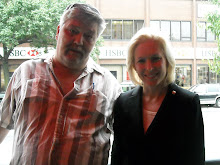
U.S. Senator Kirsten Gillibrand’s visited a Port-Au-Prince orphanage during an official Congressional Delegation trip to Haiti last week with Senator Mary Landrieu (D-LA) and Delegate Eleanor Holmes Norton (D-DC). The group assessed the impact on child welfare from the earthquake that devastated the country earlier this year. Senator Gillibrand now plans to work with her Senate colleagues on new legislation to help bolster Haiti's child welfare system. In addition to visiting the orphanage, the group also met with Haitian government officials and NGO leaders to discuss ways in which Haiti’s children can be assisted.

Photographs of Senator Gillibrand’s visit to the orphanage are available here.

This trip was an important opportunity for me to see firsthand how the hundreds of thousands of vulnerable children are faring,” said Senator Gillibrand. “As a mother of two young children, I was heartbroken to see so many young children in Haiti suffering. I pledged to the Haitian President and First Lady that America would stand with the people of Haiti as they recovered. My focus now is on continuing our aid efforts and on crafting legislation that would help to significantly improve life for Haiti's children.”

On Monday, Senator Gillibrand met with President René Préval, First Lady Elisabeth Delatour Préval and other governmental officials to discuss the challenges Haiti is facing. Senator Gillibrand also toured the Rose Mina Orphanage to see firsthand how the earthquake has impacted Haiti’s youth.

Senator Gillibrand plans to work with Haitian leaders as they increase access to education for all of Haiti’s children, improve conditions in Haiti’s orphanages, with the ultimate goal of keeping families together. In the Senate, she plans to work with her colleagues to increase support for public education, register all children, and improve the adoption process to ensure that children may be reunited with families, and when that is not possible, may be adopted by qualified families.

Haiti, the poorest nation in the Western Hemisphere, was devastated by a magnitude 7.0 earthquake on January 12. The powerful earthquake destroyed schools, hospitals, and much of Port-Au-Prince’s infrastructure, leading to the loss of over 230,000 lives and displacing over 1.3 million people from their homes. Many of those affected are young children who have been separated from their families.

Haiti has a very young population. Prior to the earthquake it was estimated that 65 percent of the population was under the age of 25, and 40 percent was under the age of 14. It was also estimated that over 300,000 children were unaccompanied by their parents, with about 50,000 living in orphanages. Only 20 percent of Haiti’s school children attended public schools. With the earthquake’s recent devastation, the number of vulnerable children in Port-Au-Prince has risen drastically.

Prior to the Earthquake, many children were sent to unregulated orphanages, not because they did not have parents, but because their families were too poor to give them shelter, food and education. Thus about 80 percent of the children in "orphanages" had families. Only a small number of orphanages were regulated by IBESR, Haiti’s children’s welfare agency. Since the humanitarian parole of almost 1,000 orphans who joined families in the U.S., due to the devastation caused by the earthquake, the already slow adoption process has been virtually stopped.

State Senator Joe Addabbo: Increases in Government Transparency

NYS Senator Joseph P. Addabbo, Jr., announced the Senate has taken another step forward in lifting the veil on state government operations by opening the legislative process to the public with the passing of a package of ‘Sunshine’ policy bills. The package is designed to provide the public with greater access to information they were long denied in order to hold state government accountable and to the highest standards.


“Sunshine Week is a national plan to create a dialogue about the importance of open government and freedom of information. Participants include print, broadcast and online news media, civic groups, libraries, nonprofits, schools and others interested in the public’s right to know,” explained Addabbo. The Senator added that an essential aspect of the democratic process is keeping society informed of the deliberations and decisions being made by policymakers, which the Senate Sunshine Policies attempt to achieve.

Bills in this package include:

  • S4284 requires open meetings to be held in a room of adequate size for citizens and officials to attend.
  • S3195B allows any meeting of a public body to be recorded, broadcast, Webcast and photographed as long as it is not disruptive to the proceedings of the meeting.
  • S7109 requires each agency and house of the legislature to proactively publish frequently requested records on its Internet Web site.
  • S7054 clarifies the court's authority to invalidate an action taken when the public body acted in violation of the open meetings law.

“The state’s legislative body has made great strides in making legislative information easily accessible to the public,” Senator Addabbo said. “Our people want and deserve to know what their elected officials are fighting for on their behalf and to be able to participate in the decisions that affect their lives.”

New rules stipulate that open meetings must be held in a room that can adequately accommodate anyone who wishes to attend and that any public meeting can be recorded, photographed, broadcast and webcast as long as it is not disruptive to the meeting. In addition, each agency and house of the legislature must post frequently requested records to its Web site.

Public access to government decisions is further promoted by making clear that a court may invalidate an action taken in violation of the open meetings law.

“It is my strong belief that the public has every right to know what government is doing and why,” said Senator Addabbo. “As the Chair of the Senate Elections Committee, I am pleased that every one of our committee meetings is audio- and videotaped and is posted to the Senate Web site within 24 hours. I believe that this type of access will help to foster citizen participation in government and will create a much needed partnership.”

The State Senate has implemented on the Senate Web site a searchable database where the public can access information such as, recordings of session, public meetings and hearings as well as committee records (nysenate.gov/video_archives). The Senate recently began publishing payroll reports and making them searchable and available online (nysenate.gov/opendata) to the public making the Senate one of, if not the only, government entity that does so.

Senator Addabbo expressed optimism that the more transparent government becomes, the more that citizens will participate in the process.

NYPD 106 Precinct Cop of the Month for April 2010 - PO Brian Drechsel...

Click on image to enlarge...

NYPD 106 Precinct Cop of the Month for April 2010, Police Officer Brian Drechsel...

Wednesday, April 14, 2010

Queens Borough President Helen Marshall and Community Boards Rally Against Proposed Budget Cuts That Threaten Future of the Boards

Queens Borough President Helen Marshall and representatives of the borough’s community boards rallied on the steps of Borough Hall, Tuesday, April 13th to support the restoration of proposed funding cuts in the city’s $64 billion budget that threaten their future.

The staffing at our 14 community boards now is generally only one or two full-time employees with a small amount of funding for support services,” said Marshall, who served on her local community board for more than a dozen years.

Each of the boards is currently facing a reduction in funding of more than $17,000 under Mayor Michael Bloomberg’s proposed $63.6 billion budget for the fiscal year beginning July 1st.

There is no question that reducing the board to a full-time district manger and one part-time individual will limit the board’s ability to perform their City-Charter-mandated functions,” stated Marshall.

At an all-day public hearing held in February, Marshall and members of her Borough Board heard numerous boards testify about the dire effects of additional proposed cuts in the Mayor’s Preliminary Budget. Community Board 7, the largest of the city’s 59 boards with 259,000 residents within its borders, testified that reduced funding would result in reduced staffing.

Community board representatives consistently testified that the cuts could dramatically effect staffing and supplies. The boards, which have suffered from continuing reductions in funding in recent years, are slated for another five percent reduction starting July 1st.

Marshall has consistently said that she will rigorously resist any effort to diminish the role of the boards in local government. “These boards help us to perfect democracy by bringing City Hall to neighborhoods directly affected by proposals that affect land use, city services, parks and a multitude of other issues,” she declared. At her swearing-in last January, Marshall vowed to “oppose any effort to stifle their (community boards) voices.

The former “Community Planning Boards” and “Little City Halls” were strengthened more than three decades ago when the 1975 City Charter was adopted, giving the boards roles in neighborhood land use, preparation of the capital and expense budgets and delivery of local city services. The role of the boards was reaffirmed in the Charter adopted in 1989.

Each community board has up to 50 members who serve staggered terms of two years. Members serve without compensation.


Monday, April 12, 2010

Parents Fuming Over Brooklyn's Playground's 'Hot' Steel Attraction by Elizabeth Hays - NY Daily News

Read original...


Welcome to Brooklyn's hottest new playground.

Parents are fuming about the new playground in Brooklyn Bridge Park, which features metal climbing domes for kids that critics charge get scorching hot on sunny days.

"It's outrageous," said James Wagman, whose son, Matthew, 6, gasped the other day when he put his hands on one of the shiny structures placed in full sunlight. "My first reaction was, 'That's nutty. Why did they put that in a playground?'"

Julie Lundberg said her 20-month-old son Bode Bulhak burst into tears after he touched one.

"It was a pain cry," said Lundberg. "He was saying, 'Ouch, Ouch,' and his hands were all red," she added. "They need to fix it."

The steel domes are the main play equipment inside Brooklyn Bridge Park, which opened at the base of Old Fulton St. last month.

Park officials said they have hung signs warning parents to "exercise caution" on sunny days and insisted that several young trees planted near the domes "will supply shade in the coming weeks and alleviate this heat."

But critics said it was unlikely the small trees would provide enough shade any time soon - and worried the problem will get worse this summer.

"It's only April. Imagine what it's going to be like on a 90-degree day," said activist Geoffrey Croft from New York City Park Advocates, which has battled the city over too-hot black safety mats in playgrounds. "This equipment should be tested before it gets installed."

A joint Daily News and New York City Park Advocates investigation in 2008 found that black playground mats can top 165 degrees on hot days and cause scores of burns to kids each year.

Dr. Roger Yurt, director of New York-Presbyterian Hospital's burn center, said the park's metal play equipment could get even hotter.

"We know that the rubber mats are a problem. I would expect that steel in direct sunlight is even worse than what we've seen," said Yurt.

Parents wondered why the metal structures were installed in the first place.

"It's a pretty gross oversight," said Paul Catlett, 42, a tourist from Kentucky who visited with his son, Henry, 11. "Anybody who knows anything about steel knows it gets extremely hot with any kind of sustained exposure to sunlight."

Broad Channel Journal - Broad Channel Loses Free Trips on Cross Bay Bridge by Fernanda Sanchez - NYTimes.com

Read original...


Ending free trips on the Cross Bay Bridge for Broad Channel residents will have an impact. Chester Higgins Jr./The New York Times

ZIP code 11693 in southeastern Queens spans two communities divided by water and a half-mile-long toll bridge. One of them is Broad Channel, a narrow island in Jamaica Bay with cottages on stilts and a quaint business district that has a nail salon, a bar, a pizzeria, a deli and little else.

Dan Mundy Jr., the president of the Broad Channel Civic Association, says that “around here, people live on a budget, so every dollar counts.” Chester Higgins Jr./The New York Times


If a car is vandalized in Broad Channel, the owner must cross the toll bridge linking the island to the Rockaway peninsula in order to file a police report. The closest pharmacy, hospital, gas station, grocery store and bank are also on the other side of the bridge, and so is the rectory for the local parish, which was merged in 2008 with a parish in the Rockaways.

Broad Channel’s only Roman Catholic church has no resident priest and a limited Mass schedule. Broad Channel has a post office, located inside a variety store, but it does not offer post office boxes or sell money orders. It had a laundromat, but it burned down on Wednesday.

For its roughly 3,000 residents, daily trips to the peninsula over the Cross Bay Veterans Memorial Bridge are something of a necessity. The toll is $2.75 for drivers without an E-ZPass. But for the past 12 years, residents of Broad Channel and the Rockaways have been allowed to cross it without charge.

But their free ride is about to end.

Sometime in July — the exact date has not yet been set — the Metropolitan Transportation Authority will end a program that instantly credits their E-ZPass accounts with the toll imposed every time they cross the bridge. It is part of an effort to close the transit agency’s $800 million budget gap, which also includes eliminating subway lines, reducing subway service and scrapping some bus routes.

Under the new rules, residents of Broad Channel and the Rockaways who have an E-ZPass will no longer be credited the $1.13 toll they pay each time they cross the Cross Bay Bridge, although they will not be charged if they make more than two crossings a day. The transit agency estimates that ending the program will bring in an additional $3.5 million a year. It is part of a package of cuts and other money-saving measures totaling about $93 million.

To many people in Broad Channel, a largely working-class enclave, it means paying to get to the doctor’s office, go to work, pick up a child at school or attend a meeting of the local community board. It is not uncommon for families to have lived there for generations; many of the residents are civil servants.

“It makes no sense to have to take out-of-pocket money to do a job I’m not paid for,” said Dan Mundy, 72, who volunteers on five committees at Community Board 14, which meets in Far Rockaway. “Am I upset? Yes, I’m upset. I’m also angry.”

He is not the only one. An online petition against eliminating the toll refund gathered 1,000 signatures in four days and drew some nasty comments, including one comparing the transportation authority’s board members to terrorists. At a public hearing in Queens last month, protesters chanted “no more tolls” as the board’s chairman, Jay H. Walder, who grew up in the Rockaways, took his seat.

Phone calls have been pouring into the office of Assemblywoman Audrey I. Pheffer in Rockaway Beach. And among business owners in Broad Channel, there is a palpable sense of dread.

People who live in the Rockaways are “not going to want to pay a toll to buy a dozen bagels,” said Al Pisani, one of the owners of a bagel shop that is about to open just off the toll plaza on Cross Bay Boulevard, Broad Channel’s main roadway.

The Cross Bay bridge opened in 1939, and drivers have paid to traverse it ever since. (To this day, old-timers reminisce about how it cost just 10 cents into the 1970s.)

A spokeswoman for the transportation agency, Joyce Mulvaney, said the agency was obligated by the state to charge tolls at the bridges and tunnels it operates and then to use the money to maintain the crossings and subsidize mass transit services.

Only the Legislature can abolish the toll for everyone, and Ms. Pheffer, a Democrat whose district includes Broad Channel and the Rockaways, has introduced many bills hoping to do just that over the years, with no success.

Broad Channel has a wildlife refuge and 20-some residential blocks of mostly single-family home. It is so narrow that the water is visible on both sides from Cross Bay Boulevard. The A train stops there, but the ride to the financial district often takes 90 minutes. Someone who uses the bridge to get to work will now have to pay nearly $600 a year.

“A hundred bucks may not seem like much for some people, but around here, people live on a budget, so every dollar counts,” said Mr. Mundy’s son, Dan Mundy Jr., 46, a firefighter who lives in the house that belonged to his grandfather and is the president of the Broad Channel Civic Association.

Anthony Causi, 28, who moved to Broad Channel four years ago and owns an insurance agency there, put it this way: “We’re already paying more for everything, so I think of this as nothing but an unfair tax.”

There is another crossing on the northern end of Broad Channel, the Joseph P. Addabbo Memorial Bridge, which connects the island to the Howard Beach section of Queens. It is operated by the city’s Department of Transportation, is at least a mile longer than the Cross Bay bridge and is free.

Sunday, April 11, 2010

Astoria Scum River Bridge on Vimeo

Read original...


Astoria Scum River Bridge from Jason Eppink on Vimeo.


For more than twenty years, a leaky pipe on 33rd Street beneath the Hell Gate Bridge viaduct approach submerged more than a hundred square feet of heavily-trafficked sidewalk under a festering cesspool of standing water. Astoria Scum River, as it was called, stretched the entire width of the sidewalk, and as winter approached, the river iced over and became particularly hazardous to cross.

Astoria Scum River Bridge was constructed to offer Astorians an opportunity to safely cross this hazard. The unauthorized bridge was a gift to the pedestrians of Astoria in the absence of successful municipal efforts to ameliorate the problem.

The bridge was made at zero cost entirely from recycled materials: an old work bench found on the curb, rescued screws from a disassembled desk, and a metal plate from an expired electrical component. It was installed and dedicated on December 30th, 2009.

On January 25th, 2010, Astoria Scum River Bridge was the subject of a commendation from the office of NYC Council Member Peter F. Vallone, Jr., accompanied by a pledge to work with Amtrak to re-route Astoria Scum River off the sidewalk.

Two days later, Amtrak workers began construction work. Astoria Scum River was quickly routed off the sidewalk, and within a couple months, custom-made grates were installed to complete the project. The bridge, no longer needed, was de-installed on March 20th, 2010 and returned to the curb whence it came.

jasoneppink.com/astoria-scum-river-bridge
bladediary.com/tag/astoria-scum-river-bridge

Credits

Chief Engineer and Head Designer

Chief Designer and Head Engineer

Thanks
Paulo Fonseca
Ryan Good
Debra Keneally
Ben Speiser

Hundreds Bet On New Careers At Aqueduct - Asa Aarons - NY1.com


Unemployed New Yorkers recently headed out to Aqueduct Race Track in hopes of winning big in the job market. NY1's Asa Aarons filed the following Employment Report.

Queens' Aqueduct Race Track is traditionally a place for betting, playing the odds and hopefully winning. Recently, the track hosted a job fair where people seemed to be betting on their talents in hopes of winning employment.

The event gathered hundreds of vendors to reach out to the unemployed. Health care companies topped the list of active recruiters.

"We have home health aide positions. We're looking for people to go to work in the homes, taking care of patients, the most vulnerable. So we're looking for people that really are caring, are compassionate and want to do this and make a difference in someone's life," said Jeanne O'Donnell of Progressive Home Health Services.

"Our organization here is to connect you. It doesn't matter if you're Chinese or you're Japanese or you're Hispanic. We connect you for business purposes. It doesn't matter where in the world you are, we can do that," said Shanie Persaud of the Guyanese and American Business and Professional Council.

The mission of the job fair was not only about finding new employment, but finding a new direction.

Whole sections were set aside for career counselors, and workshops specializing in transitional employment. The added educational touch was the brainchild of New York State Senator Joseph Addabbo.

"It was also important to me that if I couldn't find them a job today to try and help them find a job in the future," Addabbo said. "So we had seminars. Seminars based on career changes, or how to improve your resume or interview techniques."

The counselors also shared excellent advice for older job seekers.

"Small and mid size companies need people with experience because they can't afford to hire five or six people with different job titles. You have those five or six things in one person and they need you," said Workbook One Career Center Senior Career Advisor Joseph Ross.

"It's motivating me. And so I can possibly go back into seeing the other recruiters," said job seeker Denise Emanuel.

"They say that the economy is bad. But if you look at this fair it tells you that there are jobs out there. And people should go for them," said job seeker Emmanuel Bandoh.

Perhaps it was the added business recruiters, perhaps the educational workshops. Maybe it was being in a place where people can win big. Whatever the reason, the job seekers appeared to be feeling positive and lucky.

On the Move MTA Wants to Shift Q10 Route by Stephen Geffon - Leader-Observer

Read original...


The Metropolitan Transportation Authority’s (MTA) proposal for a route change on the Q10/South Ozone Park bus was sent back to the drawing board by the members of Community Board 10 at their meeting last week based on concerns from community residents.

Robert Lai, deputy director of Service Design Operations Planning for the MTA, told the members of CB10 that the agency was proposing to change the current 131st Street segment of the route, which runs from Rockaway Boulevard to North Conduit Avenue, to 130th Street, which he said was wider compared to the narrow 131st Street. Lai said that on the current route two buses cannot pass each other in opposite directions.

“One has to wait for the other to pass,” he said.

Lai also noted other reasons why the MTA believes the Q10 route change would be beneficial; it is a more direct route avoiding extra turns and use of a wider street would give drivers improved visibility and provide for safe operation of the buses.

According to Lai, three new bus stops at primary intersections would be established at 130th Street and Sutter Avenue and 133rd and 135th avenues. The changes are slated to take effect in late June.

A survey conducted by the MTA found that 8 percent of the 1,260 Q10 daily riders would have a shorter walk to the 130th Street bus stops, 44 percent would have a similar walking distance, and 47 percent would have a longer walk.

Community residents affected by the proposed bus route change expressed their views to the board.

Martha Taylor Butler, representing Assemblywoman Michelle Titus, said that when she first heard about the change she thought is was a good idea. She said that 131st Street is very narrow and it is indeed unsafe traveling on it. However, Butler said that after thinking about it and talking to neighbors and constituents, she now had concerns about the change.

One of her main concerns was that it will be difficult for riders to transfer to the Q9 bus at the new bus stop at Rockaway Boulevard and 133rd Avenue. Butler also said she had safety concerns about the bus stop at Rockaway Boulevard and 130th Street since it is by a gas station.

“It’s not a safe place to stand,” she said.

Board 10 chairwoman Betty Braton told Butler that although the board concurred with some of her concerns with the bus stops, when an agency says that the change is being made for safety the board has to evaluate those issues in making their recommendation.

South Ozone Park resident Adelle Rogers, who lives on 130th Street, said the two blocks of 130th Street between 133rd and 135th avenues are the widest, with the street narrowing from there to Rockaway Boulevard. She added that with P.S. 96 located on 130th Street and Rockaway Boulevard, when school is in session there is so much traffic congestion from the school buses and parents parking their cars on the street that the buses are unable to get through.

Rogers said that in the morning traffic is backed up on 130th Street from the Conduit to 133rd Avenue. She told Deputy Director Lai she didn’t understand why the MTA would change the whole route when only two blocks were wider. Rogers also wanted to know where, with the MTA having a deficit, the money was coming from to make this change.

Bianca Peebles, a lifelong resident of 130th Street, said she didn’t understand the MTA’s reason for making the change since the Q10 bus had been going down 131st Street for years. She concurred with Rogers about the congestion at 3 p.m. when P.S. 96 lets out, and agreed that the bus would not be able to get through.

She added that the corner of 130th Street and Rockaway Boulevard is not safe for people to wait for the bus.

“I see no purpose (in changing the bus route) for two or three blocks,” said Peebles, adding, “personally, I don’t think that it’s a good idea.”

The board recommended that the MTA meet with the 130th Street residents and see if their concerns could be addressed. Lai said the residents' comments would be taken into consideration and the agency would particularly look at the bus stop along Rockaway Boulevard at 130th Street and see what can be done.

After concluding two additional informational public hearings on the board’s agenda: a Stormwater Management Pilot Project in Ozone Park and a Department of Transportation design proposal for additional parking on 156th Avenue between 77th and 78th streets in Howard Beach, Braton noted the valuable function that community boards play and asked that residents support the board and urge the city administration give them a budget that will allow them to function.

Braton said that if the board’s budget is cut to $144,000, as proposed by the city, “we are essentially out of business.”

Wildlife and Progress Return to Jamaica Bay by JoAnne Castagna - Queens Chronicle

Read original...


Melissa Alvarez examines the root mass and stems of a plant that has been pulled out by geese or brant on one of the islands. PHOTO BY USACE, NYD

A few years ago, the U.S. Army Corps of Engineers and partnering agencies restored Elders Point East, a marsh island in Jamaica Bay that had been deteriorating. Last summer, Melissa Alvarez, a senior project biologist with the Army Corps’ New York District, made a few interesting discoveries while inspecting the island.

“I saw movement in the water as the tide was draining one of the creeks,” Alvarez said. “I looked closer and saw something I’ve never seen — there were dozens of juvenile horseshoe crabs swimming within the tidal creek. They were the size of a quarter, but this meant so much more. It means that the restored island is now providing successful breeding for horseshoe crabs.”

Later in the year, Alvarez also found a nest of diamondback terrapins, a New York State-protected species of turtle — yet another indication of the success she says they’ve had at Elders Point East and will soon have at Elders Point West.

Elders Point East and Elders Point West are marsh island complexes located within the 26-square mile Jamaica Bay Park and Wildlife Refuge that was the country’s first national urban park and one of the Gateway National Recreation Areas.

The once-vibrant marsh islands were once a single 132-acre piece of land named Elders Point, but years of degradation split them into separate islands now connected by muddy land. Over the last century, the islands have been disappearing at a rate of 44 acres per year, even faster in the last decade. It’s believed that a great deal of the degradation is due to regional urbanization and that if it is not halted, it could cause the islands to be eliminated by 2012.

According to Alvarez, maintaining the health of the marsh islands is critical to the well-being of the wildlife and the 20 million people that live and work in the greater New York region.

“From a smaller scale perspective, the marsh islands are a home for a variety of wildlife, including fish and shellfish, which are an important food source for birds and help improve water quality by removing things like nitrogen and phosphates,” Alvarez said. “From a larger perspective, the marsh islands provide stability and water storage during storm and flood events.”

The islands also act as filters or natural cleansers for the bay as the plants capture and cycle different nutrients and particles out of the water, she added. By restoring Elders Point, and other marsh islands, the more interior islands may also be protected, resulting in less erosion to personal property, more species available for recreational fisheries, better water quality and preservation of the Gateway National Recreation Area that is visited by millions of people each year.

To restore the islands, the Corps of Engineers’ New York District has teamed up with agencies including the National Park Service, Natural Resource Conservation Service, New York City Department of Environmental Protection, Port Authority of New York & New Jersey and the New York State Department of Environmental Conservation.

In 2006, the agencies restored East by pumping 250,000 cubic yards of dredged sand onto the island, shaping it to simulate the proper elevations of a marsh island, and hand-planting native species of grass including saltmarsh cordgrass, salt hay and spike grass that were grown from seed collected within Jamaica Bay.

The team began work on West last fall, pumping 240,000 cubic yards of beneficially used dredged sand onto the island, which is primarily composed of mud, and grading it to the appropriate elevations for a marsh. Work on West is expected to be completed by early summer.
The Army Corps and its partnering agencies may return to Jamaica Bay, says Mark Lulka, project manager for the New York Districts’ Harbor Branch.

“As we obtain additional experience and funding, we hope to build a few other marsh islands as the years go by,” Lulka said.
To learn more about the Elders Point restoration and other projects including the Hudson-Raritan Estuary Comprehensive Restoration Plan, visit harborestuary.org/watersweshare/.

— JoAnne Castagna is a technical writer and editor with the Army Corps of Engineers.

Saturday, April 10, 2010