Showing posts with label science. Show all posts

Friday, July 11, 2008

Its Where Horseshoe Crabs Get Lucky by Corey Kilgannon - City Room - Metro - New York Times Blog

Read original...

Watch video...

This is a sexy time of year for Martin P. Schreibman, a marine biologist who lives in the Rockaways and works at Brooklyn College.

“It’s prehistoric romance, all over the beaches — I love it,” he said while strolling the shoreline recently at Plum Beach, just off the Belt Parkway in Brooklyn. There, by the lapping waters of Jamaica Bay, were hundreds of horseshoe crabs, crawling up onto the sand.

“They’re all here for one reason: to make baby horseshoe crabs,” said Dr. Schreibman, as he picked up stray horseshoe crabs that had become stranded up on the beach and tossed them back into the water. “Throw back a stranded horseshoe crab, you’ll be saving the crab and helping future generations.”

Dr. Schreibman founded the Aquatic Research and Environmental Assessment Center at Brooklyn College, where he has been raising horseshoe crabs from eggs for many years.

There are always setbacks for an urban marine biologist. He pulled several mating horseshoe crabs out of the discarded plastic garbage bags in which they had become entangled. Recently, he lost a number of his young lab-raised crabs to a raccoon that had broken into the labs and went fishing in the growth tanks.

But Dr. Schreibman has a special optimism for these unsung creatures. This is a man who wooed his wife by taking her — along with a beach blanket and a bottle of wine — down to certain beaches where the crabs gather, because he finds it romantic.

“How could you not find this sexy?” he said, pointing out five male horseshoe crabs attached to a female. The males were seeking to fertilize the eggs that the female digs into the sand after crawling up onto shore.

O.K., so maybe not everyone can see the intense eroticism in aquaculture the way Dr. Schreibman does, especially given that it is hard to imagine one of these prehistoric creatures in a bikini or a Speedo, or cruising the singles bars. Nevertheless, his enthusiasm is more a byproduct of his desire to help protect the crabs, which for the past month have been crowding the shorelines of Jamaica Bay. The federal government agrees, and recently put a moratorium on harvesting them in Jamaica Bay, to preserve the populations.

“They’re wildlife,” said Brian Feeney, a National Parks Service spokesman at the Gateway National Recreation Area, which oversees Jamaica Bay. “It’s like shooting an elk or a raccoon.”

Mr. Feeney said that violators can be arrested or given a summons, depending on how many crabs they have taken.

George Frame, with the Gateway National Park, said the moratorium was put into place in recent months partly to protect their nesting sites and to preserve the populations of horseshoe crabs, whose eggs are a vital food source for certain migrating birds.

“We’ve given them full protection to keep them from declining,” he

Also threatening the horseshoe crab is the loss every year of an average of 45 acres of salt marsh in Jamaica Bay, which has an approximate total of 900 acres of such marshland left, he said. Environmentalists are trying to restore areas of marshland in the bay, which would provide a crucial habitat for the crabs, Mr. Frame said.

“I counted 1,400 crabs at a recent high tide on one island in Jamaica Bay,” he said. “I once counted 1,800 on a stretch of shoreline in Broad Channel.

The ban frustrates fishermen who rely on the horseshoe crabs to bait their conch and eel traps. Some of them complain that such bans only encourage lawbreaking fishermen to catch the crabs at night and sell them in huge quantities on the black market to medical researchers for their blood, which is used to test for pathogens.

Tuesday, June 10, 2008

Basics - Harvesting Horseshoe Crabs for Bait May Be Taking a Toll on Population by Natalie Angier - NYTimes.com

Read original...


Horseshoe crabs may look ancient and alien and battery-operated, they may look like Wilma Flintstone’s idea of a Roomba vacuum cleaner, yet to the sixth-grade students from Columbus School in nearby Bridgeport, the most outrageous thing about the bronze-helmeted creatures crawling clumsily along the beach was not their appearance but their size — or rather sizes.

One boy pointed to a linked pair of horseshoe crabs, a relatively compact specimen maybe seven inches across clinging to the tail end of a much larger companion. A kid crab hitching a ride on its mother? No, explained Jennifer H. Mattei, head of the biology department at Sacred Heart University in Fairfield, who led the expedition. They were both full-grown, a male and a female, and the female was the bruiser out front.

Among horseshoe crabs, Dr. Mattei explained, adult females are a good 25 to 30 percent bigger than their mates, a fact that the girls greeted with hoots of triumph, boys of indignation. Why are the females bigger? a boy demanded. It’s supposed to be the other way around!

As it turned out, the answer to that question was closely tied to the reason the students from Cheryl Crevier’s class had ventured out on a flawless June morning to the shores of Long Island Sound. With clipboards purposefully in hand and tape measures jauntily around neck, the 22 children were there to help catch, measure and tag as many specimens as they could find of the American horseshoe crab, or Limulus polyphemus, one of the oldest and most tenacious species on Earth. Fossils found this year in Manitoba reveal that the animal’s architecture has hardly changed in 445 million years.

The student project is part of a major effort now under way from Maine to Florida, as researchers and volunteers race to take advantage of the spring spawning season, when the crabs lumber from their wintering seabeds on the continental shelf and head inward to the shoreline to breed, and thus can be readily counted (www.projectlimulus.org). Experts are desperate to know whether their suspicions are correct — that as a result of being harvested en masse for use as fishing bait, horseshoe crab populations are beginning to crash.

The loss of the horseshoe crab would be tragic, researchers said, not only because the creatures are fascinating and cute and predate the dinosaurs by 200 million years, but also because so many contemporary life forms depend on them. Their annual spawns draw hundreds of species of migratory birds, predatory fish, reptiles, amphibians and various other alimentary canals eager to brunch on the freshly deposited Limulus eggs. “Horseshoe crab eggs are like filet mignon around here,” Dr. Mattei said. “They’re a very popular item on the menu.”

A bounteous one, too. “A single female horseshoe crab can put down 80,000 eggs a year, four million in her lifetime,” said John T. Tanacredi, a professor of earth and marine sciences at Dowling College in Oakdale, N.Y.

We, too, are multiply tethered to the ancient mariners. From their blood we extract a protein that is exquisitely sensitive to bacterial toxins and is used to test surgical instruments and intravenous drugs to ensure they are safe. The relatively simple visual circuitry of the horseshoe crab has proved an ideal model system for decoding the basis of sight. “Only with the horseshoe crab eye is it possible to predict what each nerve fiber in the retina will send to the brain as it sees,” said Robert B. Barlow, a professor of ophthalmology at the State University of New York Upstate Medical University.

The Columbus School students, after being assured that the crab was harmless and surmounting their squeamishness at holding something that, when turned over, looks very much like a large version of the scorpions and spiders to which the horseshoe crab is more closely related than it is to standard crabs like the Dungeness, took to their task with gusto.

They scooped the crabs out of the water carefully and held them, as instructed, like bowls of soup. They punctured small holes in the hard, chitinous shell with special tools designed by Dr. Mattei and her colleagues Mark Beekey and Barbara Pierce. And before a crab could ooze more than a spot of its distinctive blue blood — the color the result of the crab’s blood using copper as an oxygen ferrier rather than iron, as we do — they inserted the white numbered tag.

While they worked, the students learned about the horseshoe crab, how it uses its ice-pick-like tail, or telson, to steer in the water and to right itself should it be overturned in the sand, how the crab is a generalist willing to feed on plankton, bits of fish and worms, and how it lacks jaws for chewing and so grinds up its food with the help of bristles on its legs and an internal gizzard that contains bits of sand and gravel.

Dr. Mattei explained that in the ever-shifting tidal environment, the solid crabs are coveted real estate. “Over 20 species of organisms can be found living on their shells,” she said, including barnacles, slipper shells, blue mussels, sponges, flatworms and leeches, a baggage sum that, if not helpful to the crabs, doesn’t usually hurt them either.

She described the crab’s life cycle, how the animals shed their shells some 17 times before reaching adult size at around nine years of age. The males emerge from that final shell-shucking with a distinguishing pair of “boxing gloves” on their front claws, which they use for the all-important task of clinging to the back of a female for months at a time. While conjoined, the couple doesn’t have sex. But whenever the female lays a clutch of eggs, the male is well positioned to fertilize them by releasing a spermic plume.

“Females are bigger just for the physics of carrying all those eggs,” Dr. Mattei said. Sperm, by contrast, is gossamer, and male-male combat rare. “It’s whoever gets there first,” Dr. Mattei said, a reproductive strategy that may, in fact, reward the petite.

Alas, sometimes the first comer is a large warm-blooded crab with opposable thumbs. In the last few years, the Asian market for North American eel and conch meat has soared, and it seems that gravid female horseshoe crabs make the best bait. Even the stalwart Limulus can’t last if all its eggs end up in one basket — shaped like a fisherman’s boat.

Tuesday, May 6, 2008

Study: New Yorkers Breathing In Dangerous Mix Of Toxins - NY1: Queens

Read original...

Watch video...

A new report released today shows that nearly half of all New Yorkers live in areas where the air does not meet minimum standards.

The American Lung Association's 2008 State of the Air report says seven of New York State's 33 counties receive failing grades for air quality. More than 8.2 million people live in that area -- adding up to nearly half of the state's population.

New York City also finished eighth among all cities most polluted by ozone.

The Bronx and Manhattan both failed tests for annual and short-term particle pollution, while Queens failed for annual particle pollution, and Staten Island failed for ozone.

The ALA says New Yorkers are breathing in a dangerous mix of toxins.

"To a large extent, New York City's air problems are the result of high traffic, the density of traffic," said Louise Vetter, president and chief executive officer of the ALA of NYC. "We are also faced with power plant pollution blowing from the Midwest. And the power fuel used to heat our buildings is actually quite dirty."

"So building emissions, vehicle emissions, and then power plants create a triple threat for the New York City area," she continued.

Eight counties did improve to an A for ozone pollution.

"We've seen over the last nine years that the ozone levels are particularly high and the particle pollution is particularly dangerous," said Vetter. "Some boroughs have seen modest improvements, from and F to a D in ozone. But really, if your child brought home a grade of a D, you wouldn't be comfortable with that and New Yorkers require better air quality."

New Yorkers had a mixed reaction to the report.

"I don't think [the air quality is] that bad," said one New Yorker.

"Sometimes when it's really hot, there's a kind of heaviness and you feel like there's a lot of smog or smoke in the air and you draw a breath in, yeah you feel something uncomfortable," said another. "But you get used to it."

The Lung Association says poor air quality can contribute to respiratory diseases, such as asthma attacks, coughing, wheezing, chest pain and even death.

"There has been an increase in the patients that have been coming in with referrals from internists just to pulmonologists in particular for breathing," said Dr. Sonali Sethi of St. Vincents Hospital. "

Smog gets worse with heat, and with summer just around the corner, expect a decrease in air quality and an increase in respiratory problems.

One New Yorker suggested for improvements, "More mass transit, more carpooling, less cars."

Los Angeles retains its title as most polluted city in the country -- but Pittsburgh has grabbed the distinction of "sootiest."

Numbers are based on air quality measurements reported to the Environmental Protection Agency.

Tuesday, March 25, 2008

The Great Copy Machine Epidemic

A friend, Kenny Luna, is working to create a day of action in schools with "The Great Copy Machine Epidemic of 2008"...and he's hoping you can help get schools in your area involved...Here's a link to his announcement on TreeHugger as well to their website...

If you’re a regular visitor here or at other green blogs, then you’re sure to have heard of Kenny Luna. Kenny teaches science at Robert Moses Middle School in North Babylon, N.Y...

Last year, Kenny and his grade 8 science students tried get Oprah to back their plan to see every kid (Pre-k - 12) in the US get a compact fluorescent light bulb to help raise awareness of and fight global warming. According to their calculations, if 50 million kids in the US replaced one incandescent in their home with a CFL, the US as a whole could realize $2.3 billion in energy savings, not to mention eliminate many tons of carbon emissions. this would fight global warming by reducing carbon emissions from power plants, and help put America on the path to environmental sustainability.

CFL light bulbs are 75% more efficient than incandescent light bulbs. This means less energy is needed and less harmful greenhouse gases are emitted!

His video "A Bright Idea..!" is a permanent part of this blog and can be found on the right sidebar next to this posting...Their mission was to get Oprah to give away something more practical than a bunch of cars that the recipients can’t afford to pay the taxes and insurance on. Kenny and his students wanted Oprah to use her super media powers to make this a reality... He succeeded in giving every child in North Babylon one thanks to Home Depot..!


Last year on Friday May 4 while I was the Co-President of the the Parents Association of Elizabeth Blackwell Middle School 210 in conjuction with Kenny's plan - we arranged for a visit by Ms. Kasey Jacobs a Program Coordinator at the Citizens Campaign for the Environment.

Kasey presented the original slide show of Al Gore's "An Inconvenient Truth"... Kasey had gone to Tennessee to train with Al Gore to show the slide show....She put on a fabulous presentation of the material...The kids were fascinated and had lots of question..

Kasey is committed to educating the public on the climate crisis, so please consider scheduling a CCE presentation on the climate crisis in your commutnity. And, for more information about global warming and how to reduce your carbon footprint, visit them online at
www.citizenscampaign.org/campaigns/global_warming.htm.


We also had Chris Neidl, the IT/Development Associate and Education and Outreach Coordinator for Solar One, who with his team brought 100 CFL bulbs to the presentation at the school. The PA distributed the 100 bulbs free of charge to all participants...

So we did our little bit to help solve the global warming problem...my thanks go out to Ruth Ann Farmer, Edwin Natal, Lali Estrada, Judy Chetri, Claudia Gleim, Maria Ferrer and Nadege Trenard for their helping to make this a successful event for all involved...


What's the Crisis?


The Great Copy Machine Epidemic

With confirmed cases in New York and Florida, and with rumors coming out of California, Texas, and Maine about possible outbreaks there, it’s clear that what experts are calling the Great Copy Machine Epidemic has struck schools across America. The symptoms include the tendency of school photocopy machines to chew up trees at an amazing rate, and furthering the use of enormous amounts of energy to create the paper on which they print, contributing to global warming.

Of course, the students and faculty on the crisis team at the Robert Moses Middle School where symptoms of the disease were first observed are working feverishly to uncover the cause. And they’re asking schools across America to join them in a national day of action to help stop global warming on April 17th by putting their school photocopier under quarantine for the day, and asking teachers and students not to make or use any photocopies in class.

Now that may help cure the problem but it won’t uncover precisely what disease is striking the machines. Fortunately there’s a great, fun way that you can help do just that by putting together a crisis team in your school to creatively demonstrate what you believe is making your photocopier sick. Then taking a photograph and emailing it to copy crisis headquarters for further analysis by the deadline of April 19th to help solve the crisis.

The most creative entries that convey the message that the use of excess paper contributes to global warming will be chosen as finalists and posted on the site where everyone is invited to come and vote.

The winning school will win the title of “Copy Crisis Team of the Year” along with a $100 grant to plant a tree on school grounds that's being provided by teacher and crisis team coordinator Mr. Luna, who points out that “There is no better time than now to get schools involved in a positive way in the fight against global warming. Unfortunately, the world will not stand still if we sit by and do nothing.”

To get involved head over to www.greatcopyepidemic.com and find out how easy it is to get your school on-board.

Tuesday, September 25, 2007

Jamaica Bay Bio-Blitz on September 7th & 8th...


I attended this event at Jamaica Bay Wildlife Center from about 2 pm on September 7th until roughly 2am on September 8th, 2007...

I tried my best to help at the Registration Desk with some other volunteers from the NY Biology Teachers Association...it got really hairy there in the beginning of the day...


It was well attended, when I left that evening (early morning) there were over 100 participants...

Some 665 species were identified in the 24 hour period, a few of the highlights found was an adult Katy-did, a Praying Mantis, some big grasshoppers and two tree frogs...

I'd like to thank Prof. Gillian Stewart and Prof. John Waldman from CUNY Queens College and Jill Tripp and Nancy Khan from the National Parks Service, Jamaica Bay Institute and Suzi from National Geographic...for organizing this important community event...

I think it's important to recognize the hard legislative work being done on both the City level by City Councilman James Gennaro (Chairman - Environmental Committee) and in Washington, DC from Representative Anthony Weiner (NY 9th)...I'm proud of his 100% rating by the League of Conservation Voters on their
2006 National Environmental Scorecard...He deserves our thanks...

Look up your delegation's scores Send a letter to your Members of Congress -- let them know you're watching!

I feel this will provide a comprehensive base-line of species which currently exist in Jamaica Bay...

It was a pleasure to help out these fine folks who are doing a great job towards for protection of the environment of Jamaica Bay...

The more information we possess of this unique ecological environment in the City of New York, the better we will be able to protect it for future generations of New Yorkers and Americans...

NYBTA Activities: NYBTA @ Jamaica Bay BioBlitz

NYBTA Activities: NYBTA @ Jamaica Bay BioBlitz


NYBTA
at
Jamaica Bay BioBlitz
September 7-8, 2007


Times Ledger - BioBlitz of Jamaica Bay wetlands teaches lessons

Times Ledger - BioBlitz of Jamaica Bay wetlands teaches lessons

Ready, set, blitz! Science and nature lovers gathered at Jamaica Bay last weekend to take part in a scavenger hunt that explored the ecosystem's biodiversity.

The BioBlitz competition was the first ever event at the blighted bay where science experts led teams of volunteers on a 24-hour trek into the marshes, woods and trails in search of its exotic fauna and flora. The blitz has been held at dozens of other national parks, wilderness areas and marshlands across the country attracting hundreds from all over the world.

In Jamaica bay teams had a lot of organisms to find in a large amount of space including From red foxes, horseshoe crabs, and even non-indigenous species like Western jackrabbits.

"It's a bit overwhelming for your average person to learn about different plants that live here, so this will give them a chance to do it in an organized way," said Dr. David Franz, a biology professor from Brooklyn College who led the invertebrates team.

The event, which was created by the National Parks Service and Queens College, was held to increase awareness of the bay for the people who never take notice of the body of water despite its proximity to the city and escalating warnings about its vanishing marshlands.

"Anything we can do to draw attention to the plight of this natural resource...is a great step forward," said Councilman James Gennaro (D-Fresh Meadows), chairman of the Council's Committee on Environmental Protection, at Friday's opening ceremonies.

A report issued last month by the National Park Service and Jamaica Protection Plan Advisory Committee found that the bay has lost 70 percent of its marshlands in the last 50 years and could lose them completely in five years if nothing is done to stop their disappearance.

More than 100 volunteers took part in the scavenger hunt, and many stayed for the full marathon at the bay's national wild refuge's camp area. At the end of the event teams put their findings into a massive database that will be logged and studied by scientists, according to Gillian Stewart, a Queens College assistant science professor who co-ordinated the event.

"It's particularly good for students to interact with scientists and learn the in's and out's of identification," she said.

Participants came from all parts of the borough and some even arrived from out of state to take part in the adventure.

"It was interesting to see what types of birds there were. It's great that you have this large undeveloped area near a large city," said Doug Wood of Pennsylvania, who came to look for the bay's birds.

Gennaro praised the event's coordinators and participants for bringing the bay into the limelight at a time when it faces enormous environmental hurdles.

"This is a success by the virtue that we have young scientists and people who want to immerse themselves in the natural beauty and splendor of Jamaica Bay," he said.

On a somber note, Franz issued a bleak outlook for the future of the bay in view of the eroding marshlands.

"If the condition continues to deteriorate, then there won't be food for the fish, and that can totally disrupt the food chain here," Franz said.

Reach reporter Ivan Pereira by e-mail at ipereira@timesledger.com or by phone at 718-229-0300, Ext. 146.

NPS Digest - Volunteers Gather 665 Species Around Gateway’s Jamaica Bay (NPS Digest)

Volunteers Gather 665 Species Around Gateway’s Jamaica Bay (NPS Digest)

At midday Friday, September 7, an eager crowd of scientists, amateur naturalists, students and volunteers gathered at Gateway National Recreation Area’s Jamaica Bay Wildlife Refuge for the start of the first ever Jamaica Bay BioBlitz. Organized as a partnership between the National Park Service and Queens College (CUNY), the program was designed to collect and analyze as many species as possible over a 24 hour period. Field teams had specifically been instructed to explore less studied areas, such as Fort Tilden and Floyd Bennett Field, in order to expand the already extensive list of species known to exist in the park.

As survey teams returned from the field they congregated in the Refuge’s conference room which had been transformed into a temporary research laboratory. There scientists and volunteers huddled over microscopes and scoured field guides as they worked to identify the more obscure specimens.
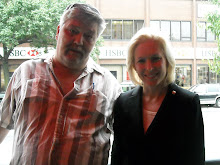
Throughout the event ranger-led programs provided opportunities to learn about the natural history of species found in the Jamaica Bay area. At the Refuge base camp displays put together by the Brooklyn Children’s Museum, the New York Aquarium, and the Queens Botanical Garden provided interactive activities with live animals and biofacts. A lunchtime workshop on nature sketching by a scientific book illustrator was a special treat for those wanting to create their own field notebook.

This first ever BioBlitz for Jamaica Bay was envisioned by the Jamaica Bay Institute of Gateway National Recreation Area and co-organized in partnership with research faculty in the sciences at Queens College. One of these researchers, Dr. John Waldman, discovered that the numerically dominant fish in the east and west ponds at the Refuge, which had long been considered to be the Atlantic silverside, Menidia menidia - the same as the dominant species in Jamaica Bay's marine waters – was M. beryllia, a very similar but different tidewater species.

By the end of the 24 hour effort 273 volunteers had enthusiastically stepped into hip waders, wielded an insect or fish net, raised binoculars, or looked through a hand lens as part of the intensive effort to gather information about the extent of the park’s biological diversity. At the closing ceremonies a tired, but still very excited crowd cheered when the final tally of 665 species was announced.


Name: Nancy Khan
Phone Number: 718-338-3338 x 223
Email: nancy_khan@nps.gov

Queens Chronicle -BioBlitz Participants Storm Jamaica Bay by Lucy Torres...

Queens Chronicle - ‘BioBlitz’ Participants Storm Jamaica Bay

Many Queens residents drive through Broad Channel on their way to Rockaway’s beaches without appreciating the ecological diversity in Jamaica Bay.

At last week’s first annual BioBlitz, a 24-hour ecological festival based at the Jamaica Bay Wildlife Refuge, located on Broad Channel, diversity was both catalogued and celebrated.


More than 260 people, ranging in age from 2 to 81, worked over the 24-hour period to document the different species near the refuge, as well as in Fort Tilden, located in Rockaway, and in Floyd Bennett Field, in Brooklyn. Over half of the participants were volunteers. While many left early on Saturday morning, some worked straight through.

Beyond listing the different species in the area, participants sought to give scientists the opportunity to study their findings.

“Our main goal is to get researchers out in the park doing basic science, doing research and then getting that translated,” said Nancy Khan, a refuge staff member.

Khan added that the BioBlitz allowed scientists and average citizens to better understand the environment around them in a festive atmosphere.

Participants were greeted with T-shirts, water bottles and an assortment of healthy snacks.

Councilman James Gennaro (D-Fresh Meadows), chairman of the Environmental Protection Committee, helped kick the event off late Friday afternoon.

“It’s critical that we preservemarshland,” he said. “It plays a critical role in protecting the mainland of Queens and Brooklyn, from tidal action to wave action, and also the wetlands, which are incubators for marine life and a lot of terrestrial life as well.”

Coordinated by Queens College Professors Gillian Stewart and John Waldman, the BioBlitz was sponsored in part by the CUNY Institute for Sustainable Cities, Jamaica Bay Institute and the Gateway National Recreation Area.

Among the many excursions BioBlitz offered was Friday evening’s sunset walk, where spectators watched the sun stretch across Jamaica Bay at dusk; Saturday morning’s butterfly search and Saturday’s nature sketching class.

Many college students who were interested in learning more about the bay’s delicate ecological balance volunteered.

“I just want to get involved, even if it’s around the area,” said a graduate student from Brooklyn. Both the student and her friend volunteered to study jellyfish, which involved extracting samples and later identifying species collected.

Queens College biology graduate student Jonelle Orridge came out to study plants, but also to do her part to increase awareness about ecology.

“If (we) reach out to the high schools and make principals aware (of ecological events) students could have a better grasp of what is going on around them.”

Orridge, who is involved in community outreach, believes the best way to learn about the environment is to offer programs at parks and promote events in publications.

By the end of the event, researchers found 665 species, including 166 species of terrestrial plants, 34 insects and 27 species of marine invertebrates.

Congressman Anthony Weiner (D-Forest Hills) helped close the event by saying: “BioBlitz, species by species, item by item, is making us aware just how diverse it (Jamaica Bay) is. We have to do everything to protect it.”

Daily News - This scavenger hunt's truly a wild affair

This scavenger hunt's truly a wild affair

Volunteers raced against the clock to collect, identify and count as many living things as they could find in 24 hours at the Jamaica Bay Wildlife Refuge recently.

The 250 nature enthusiasts — ages 2 to 81 — hiked the 9,000-acre grounds armed with butterfly nets and binoculars as part of the park's first BioBlitz, organized by Queens College and the Jamaica Bay Institute.

The tally: 665 species, including birds, mammals, insects and fish.

But the BioBlitz was about more than just numbers.

"It's one thing to be able to read about science in a magazine or a textbook, but it's another thing to be able to go out and see how scientists conduct their work in the field," said John Waldman, 52, a Queens College biology professor and a BioBlitz organizer.

During the marathon event Sept. 7-8, scientists and volunteers collected specimens and took them back to a makeshift lab in the visitors center. Scientists worked together at the center, peering through microscopes and cross-referencing textbooks, to categorize the findings.

"Probably one the most inspirational moments was at about midnight," Waldman said. "There was a little boy here who was helping us count, and he didn't want to go home. His father was rubbing his eyes and wanted to get out of here. But they didn't leave until 2 o'clock. And they [came back the next day]. He couldn't get enough of it."

That boy was John-Kaarli Rentof, 12, of Manhattan, who declared he wants to be a herpetologist — someone who studies amphibians and reptiles. The boy's favorite finds were a red-spotted newt and two tree frogs.

"One of the frogs was a big guy, and he was gray, and the other was a small one and it was green. I put them in a bag to bring them back and I gave them a shower in the water fountain," he said.

Inspiring the next generation of naturalists was a key goal of the event.

Earlier this summer, the Jamaica Bay Watershed Advisory Committee released a report contending the refuge's salt marsh islands — which serve as a natural sewage-battling filtration system — were vanishing much faster than previously thought. They could be gone in as little as five years, the report said.

At the event's closing ceremony, Rep. Anthony Weiner (D-Queens, Brooklyn) called on New Yorkers to help protect the park.

"Would it be so bad to lose one mollusk? Would it be so bad to lose one bird? The answer is we have no idea what the impact would be if we lost one species or all of the others," Weiner said.

Queens Tribune - Jamaica Bay Surprises:Need To Document Dwindling Species Spurred By Estuary’s Rapid Degradation

Queens Tribune: Jamaica Bay Surprises:Need To Document Dwindling Species Spurred By Estuary’s Rapid Degradation:

The Jamaica Bay Watershed Protection Plan Advisory Committee, established by law in 2005, released a study last month showing that the Jamaica Bay wetlands are disappearing much more rapidly than was previously thought. After comparing 2003 maps to 2005 maps, the Advisory Committee projected that the wetlands would be gone by 2012.

The causes behind the rapid loss of the wetlands are varied and include high toxin levels, rampant seaweed growth and grazing geese. However, concern is mounting over the role of nitrogen dumping.

Councilman Jim Gennaro (D-Fresh Meadows), chairman of the Committee on Environmental Protection, held a hearing Sept. 6 in order to discuss the nitrogen factor.

Every day, four of the City’s wastewater treatment plants dumps into the bay 250 million gallons of treated wastewater, which contains 30 to 40 thousand tons of nitrogen.

The Advisory Committee has declared that nitrogen levels must be reduced by 55 percent by 2015, a recommendation modeled after the Long Island Sound.

According to City Council spokesman Anthony Hogrebe, the Department of Environmental Protection has committed to reducing nitrogen levels and must present a detailed plan by Oct. 1 of this year.


Bring On The BioBlitz

“How many people have actually been to this bay,” Gennaro asked a circle of scientists, students and volunteers who had gathered last Friday afternoon to take part in BioBlitz, a 24-hour expedition to tally the flora and fauna in the area. As Gennaro had suspected, the vast majority of participants — all wearing baby blue BioBlitz T-shirts — were first timers.

Jamaica Bay is the largest urban wildlife refuge in the country, and the only accessible by train. The visitor center is immaculate, the white pebbled paths hardly disassembled by foot traffic; it is yet another Queens’ attraction regularly described as an undiscovered gem.


Queens College professors Dr. Gillian Stewart and Dr. John Waldman organized BioBlitz to generate species lists and maps for park management. Their goal was to showcase the biodiversity that currently thrives in Jamaica Bay in order to highlight the need to protect the area wetlands.

“This is the generation that is either going to save or lose Jamaica Bay,” Gennaro said at a press conference last Friday before everyone divided into teams to survey the 9,155-acre refuge, protected since 1972 as a part of the Gateway National Recreation Area.


Waldman headed up the fish team. Net in hand, he addressed his group.

“This isn’t Mars,” he said. “But there are always surprises if you look hard.”

Waldman penned “Heartbeats in the Muck,” a book about the degradation of New York Harbor and its recent comeback. Having served with the Hudson River Foundation for 20 years, he is hardly a stranger to tracking wildlife. He explained how BioBlitz is unique.

“Typically you chip away,” Waldman said. “This is an intense snapshot."

Scientific Method

Waldman, joined by a National Parks Service Superintendent Dave Taft, lead his team to the first pond and distributed waders. Holding onto opposite sides of a green net, the scientists waded into the shallow pool. Waldman immediately started to sink.

“The lagoon used to be sturdy enough,” Taft acknowledged. “You could get some footing.”

The men agreed that changing circulation patterns had caused the pond’s softest settlement to build up. With 21 hours remaining, they decided to relocate to another site.

Upon arriving at the next pond, Waldman and Taft ventured in with their net. Drawing it back toward the shoreline, they discovered an abundance of tiny fish. The group crowded around and complaints from the college students that it smelled bad quickly subsided as hundreds mummichogs and silversides wiggled for air.

“It’s one thing to look in a textbook,” Taft said. “It’s another thing to get there and see it for yourself.”

The leaders asked if anyone wanted to drag the net and with no one volunteering they began the process again.

Baruch College freshman Anastasia Vasilchuk stood at the water’s rim with her hands on her hips. Her ecology professor had recommended she sign up.

“The air itself is healthy and fresh compared to the city,” Vasilchuk said. “All you see there is pigeons.”

She watched the scientists intently as they made their way toward her with a net full of fish. Although she had never conducted a similar study, she knew her goal for the afternoon.

“To find more than 10 [species],” she stated, adding, “It’s nice to know they all exist in this area,” she said.

But Waldman’s findings were not encouraging.

“More of the same,” he said looking down at the pile of fish. “What it lacks in diversity it makes up for in quantity.”

By the time the group was finished assessing the evidence, many had died on the sand.

“It’s the way of life,” Vasilchuk said before picking up her backpack and following the group to the East Pond.

The group, unused to the scientific method, seemed to be losing energy and focus. Three students left for the A train before the group had even arrived at its next destination. But as Waldman and Taft drew back their net for the third time, they revealed two more species: white perch and grass shrimp. The team’s bucket was quickly filling with diverse specimen.

Waldman, who grew up in the Bronx, described his childhood as a “Huck Finn environment within city limits.” He said that people mistakenly assume that crystal clear mountain springs boast the most wildlife.

“These mucky places are where you have the real life,” he said.


A New Discovery


After dinner Waldman ventured to the Bay’s marine waters and gathered more silversides. Then, alone in his tent, he took out his microscope and noticed something unusual.

He realized that the silversides from the bay differed considerably from those found in the pond water. It was midnight and the rest of his team was asleep, totally unaware of his discovery.

The next day, at the end of the 24 hours, Waldman’s group had found 14 species of fish. The announcement of these new “tidewater silversides,” however, was his group’s most significant contribution to the expedition.

“This is the heart of New York City,” Waldman said from his Queens College office Monday morning. “It has been walked on, netted and birded. You don’t expect dramatic surprises, but you also don’t know everything you think you know.”

Knight News - BioBlitz Set to Tally Jamaica Bay's Flora and Fauna...


BioBlitz Set to Tally Jamaica Bay's Flora and Fauna - News:

Queens College researchers will stage the first BioBlitz Friday and will descend to the wildest reaches of New York City to conduct a round-the-clock tally of flora and fauna for the Jamaica Bay area.

This event, co-sponsored by Queens College, the Jamaica Bay Institute, the CUNY Institute for Sustainable Cities, the Gateway National Recreation Area of National Park Service and the North Atlantic Coast Cooperative Ecosystems Studies Unit, is set to last 24 hours and researchers will be equipped with nets and insect repellents, in addition to their notebooks.

Professor John Waldman from the biology department and professor Gillian Stewart from the earth and environmental sciences department organized this event, which targets thousands of acres within the Gateway National Recreation Area, between the borders of New York and New Jersey.

Although Jamaica Bay may be an urban location, it is rich in wildlife, consisting of red foxes, horseshoe crabs and invasive species such as Western jackrabbits. Jamaica Bay simultaneously serves as a major flyover area for hundreds of migrating visitors such as hawks, ospreys and monarch butterflies.

According to professor Waldman, in an effort to document Jamaica Bay's biodiversity, the researchers are going with a team of different specialists in plants and animals to survey a plot of land. It may be a "quick and dirty look" of what is already there; however, it will enable the scientists to account for a future baseline.

Planners of the event hope that this event will raise awareness of biodiversity. New York City Councilmember James Gennaro, who has played an important role in preserving New York City's water supply, is set to speak at the event. In addition to Gennaro, Barry Sullivan, the superintendent of the Gateway National Recreation Area, and Kim Tripp, the director of the Jamaica Bay Institute will address the participants.

The schedule of activities on Friday evening and Saturday morning will include guided field walks, workshops on sketching plants and animals in the wild and even a junior BioBlitz for children. Professional naturalists will be staking out various parts of the park in four-hour shifts.

Upon returning to the wildlife center, they will file their regular reports. Their findings, which will include a final species count, will be revealed at the closing ceremonies where Congressman Anthony Weiner will serve as a guest speaker. Weiner has made Gateway one of his top priorities and has secured $66 million for the park since his election in 1998.

There are a limited number of positions available for volunteers, who are expected to bring their own water and snacks, and no bedding will be provided. Luckily, camping will be permitted at Floyd Bennett Field.

"If you can attend the event, you should," said senior Alexandrea Bowman. "This event is especially important as the ecosystem of Jamaica Bay has been seriously disrupted. A lot of the marsh has been lost in the past 100 years. Surveys like this one are needed for remediation."

Newsday.com - DIARY: Jamaica Bay's Teeming Wildlife by Merle English...

DIARY: Jamaica Bay's teeming wildlife -- Newsday.com: "

There were bats, and owls, horseshoe crabs and ribbon snakes. And even a few lesser-known species: Teddy Bear caterpillars, and sphinx moths.

In all, 665 species were collected in the first 24-hour survey of wildlife in and around Jamaica Bay.

The creatures were finds of scientists, naturalists and members of the general public participating in what is being billed as BioBlitz, sponsored by the Earth and Environmental Sciences Department at Queens College in Flushing and the Jamaica Bay Institute at Gateway National Recreation Area.

For two days, 250 people from the City University of New York, private and public high schools, the state Department of Environmental Conservation, the National Audubon Society, the American Littoral Society, other organizations and neighborhood residents tallied terrestrial and aquatic species in the federal park.

"This is all about getting people excited about nature," Gillian Stewart, assistant earth and environmental sciences professor at Queens College, said. "It's a combination of people doing this all their life and people who've never done this."

John Kaarli, 12, of Manhattan, was among many young volunteers. He repeatedly dipped a small net into a fish tank until he brought up a live killifish. Shrimp and seaweed were also in the tank.

"I love nature," John, an aspiring herpetologist, said. "I have hated all my life people polluting the planet, things dying in the rain forest, spider monkeys losing their habitat. A tree that took maybe 500 years to grow is cut down in five minutes, just wiped off the planet."

He arrived for the BioBlitz at 6 p.m. Friday with his father, Peter, a retired math and science teacher. They stayed until 2 a.m. Saturday and were back later that day.

One purpose of the BioBlitz was to "highlight the natural resources and get people to understand the rich biodiversity of Jamaica Bay," said Kim Tripp, director of the Jamaica Bay Institute.

Two hundred BioBlitzes have been held internationally since Sam Droege, a biologist with the U.S. Geological Survey, conducted one in Washington, D.C., 10 years ago. "It's awareness. It's education," said Suzi Zetkus, a volunteer at the Museum of Natural History who organizes such events.

John Waldman, a Queens College biology professor, said BioBlitz is "a concept that's growing. It brings a lot of scientists together to get information it would take years to get. People see how scientists work in the field, and they're being exposed to high-level science also. We've opened a lot of eyes," he said.

Rep. Anthony Weiner (D-Forest Hills) told the scientists and volunteers, "People are having a dramatic impact on this park. We as neighbors have an obligation to protect it. We have no idea of the impact of losing a single species on the others."

For Maria Acevedo of Flushing, it was all about knowledge. "It's always good to know what you have in the area," she said.

Epoch Times - College Plans 'BioBlitz' for NYC's Jamaica Bay by By Evan Mantyk

Epoch Times | College Plans 'BioBlitz' for NYC's Jamaica Bay

NEW YORK—Just south of John F. Kennedy Airport, and with Manhattan's skyscrapers still visible in the distance, Jamaica Bay is a 9,000-acre wildlife refuge that remains a unique portion of the Big Apple. It's probably the only place in New York City where you will get a chance to see a red fox, a horseshoe crab and a jackrabbit in their natural habitat.

Equipped with nets, notebooks, and insect repellent, Queens College researchers will descend on the refuge on Sept. 7, and they won't emerge for 24 hours. They're not filming an episode of "Survivor," they're staging the first BioBlitz—a round-the-clock tally of flower and animal species present in the bay. The event, open to the public, is meant to be fun and raise awareness about the great value of this natural treasure.

Event co-organizer, Professor Gillian Stewart said Jamaica Bay "is comprised of incredibly diverse landscapes. There are wetlands, ponds, forests, estuaries, marshes, rivers, uplands, meadows, etc. This rich ecosystem is home to a huge number of marine, estuarine, and terrestrial species as well as thousands of coastal migratory organisms."

While Jamaica Bay has been protected by the federal government since 1972, being in such close proximity to JFK airport and the commercial and industrial development of New York City has taken its toll. For example, about 49 of the 65 square kilometers of wetlands have been filled in or are disappearing, and sewage treatment plants have impacted the water quality.

"The BioBlitz is not aimed to stop development or destruction, but instead to make the public aware of the amazing biodiversity in their 'backyard.' We hope people will realize how close and accessible this amazing resource is," said Stewart.

The schedule of free activities on Friday Sept. 7 and the following Saturday morning will include guided field walks, a workshop on sketching plants and animals in the wild and a junior BioBlitz for children. Meanwhile, professional naturalists will be staking out parts of the park in four-hour shifts, returning to the wildlife center to file regular reports.

"We're going to take a team of scientists with different specialties in plants and animals, and survey the hell out of a plot of land," said Queens College Professor John Waldman. "It's a quick and dirty look at what's there, giving us a baseline for the future."

The final species count, and other interesting findings, will be announced at closing ceremonies on Sept. 8 at 3 p.m., when Congressman Anthony Weiner will speak.

Whether for the BioBlitz or just to getaway from the city, Jamaica Bay is amazingly accessible via the A Train.

"Anyone can go and visit Jamaica Bay at the Wildlife Refuge, Fort Tilden, and Floyd Bennett Field, and other sites," said Stewart. "This is the only unit of the National Park Service accessible by subway."

Saturday, June 30, 2007

Newsday.com: Mushrooms Become Source for Eco-Building by Jessica M. Pasko...


TROY, N.Y. -- Eben Bayer grew up on a farm in Vermont learning the intricacies of mushroom harvesting with his father. Now the Rensselaer Polytechnic Institute graduate is using that experience to create an organic insulation made from mushrooms.

Combining his agricultural knowledge with colleague Gavin McIntyre's interest in sustainable technology, the two created their patented "Greensulate" formula, an organic, fire-retardant board made of water, flour, oyster mushroom spores and perlite, a mineral blend found in potting soil. They're hoping the invention will soon be part of the growing market for eco-friendly products.

Bringing the insulation to market is still at least a year away though, said McIntyre, and will require much more research and work, not to mention more sophisticated equipment and a better work space.

"We've been growing the material under our beds," said McIntyre, adding that they've applied for a grant from the National Collegiate Inventors and Innovators Alliance.

The two young developers -- Bayer is 21, McIntyre 22 -- graduated in May from RPI with dual majors in mechanical engineering and product design and innovation.

"I think it has a lot of potential, and it could make a big difference in people's lives," said RPI Professor Burt Swersy, whose Inventor's Studio course inspired the product's creation. "It's sustainable, and enviro-friendly, it's not based on petrochemicals and doesn't require much energy or cost to make it."

The two say recent tests at the National Institute of Standards and Technology have shown it to be competitive with most insulation brands on the market. A 1-inch-thick sample of the perlite-mushroom composite had a 2.9 R-value, the measure of a substance's ability to resist heat flow. Commercially produced fiberglass insulation typically has an R-value between 2.7 and 3.7 per inch of thickness, according to the Oak Ridge National Laboratory in Tennessee.

With a rapidly increasing global population, a limited supply of natural resources, and rising energy prices, eco-friendly housing products are selling fast. Numerous companies have carved out their niche selling "green" building supplies such as recycled fiber board and plant-based paints. The Environmental Home Center in Seattle sells an insulation made from denim scraps and another made from 100 percent recycled paper among their many green building products.

After looking through about 800 patents, though, Bayer and McIntyre realized they'd hit upon a relatively original idea. Unlike many green building products, Greensulate isn't made from pre-existing materials. It requires little energy or expense to produce because it's grown from organic material.

Here's how it works: A mixture of water, mineral particles, starch and hydrogen peroxide are poured into 7-by-7-inch molds and then injected with living mushroom cells. The hydrogen peroxide is used to prevent the growth of other specimens within the material.

Placed in a dark environment, the cells start to grow, digesting the starch as food and sprouting thousands of root-like cellular strands. A week to two weeks later, a 1-inch-thick panel of insulation is fully grown. It's then dried to prevent fungal growth, making it unlikely to trigger mold and fungus allergies, according to Bayer. The finished product resembles a giant cracker in texture.

"It really allows for a myriad of uses," said McIntyre. He said they've envisioned modifying the product to make structural panels that could be grown and assembled onsite to produce sustainable homes.

"Green building materials should be evaluated on the idea of cradle to cradle," said Evelyne Michaut of the Natural Resources Defense Council.

In the cradle-to-cradle industrial model, goods should either be fully biodegradable or reusable, limiting waste and pollution, according to Michaut, a sustainable city advocate from Santa Monica, Calif.

"That's the ultimate environmental reference," she said, adding that it seems like Greensulate is on its way to fulfilling that criteria.

For Bayer and McIntyre, their next step will be creating larger pieces of Greensulate to use in building a wall. From there, they'll perform further testing to see how the product stands up to various elements, including saturation and humidity. McIntyre said they have one two-year-old sample that's been exposed to the elements and shown no sign of degradation.

As part of their development plan, they're entering a new business incubation program at RPI to get their company, Ecovative Design, off the ground. Eventually, they hope to land a partnership with another company.

"Our biggest challenge is that while we have this technology, we still have a lot of research to do," said Bayer. "The key is to really make sure we have a product that is mature and robust before we bring it to the market."

Newsday.com: Giant Penguins May Have Roamed Peru by Randolph E. Schmid...

WASHINGTON -- Giant penguins as tall as 5 feet roamed what is now Peru more than 40 million years ago, much earlier than scientists thought the flightless birds had spread to warmer climes. Known mostly for their presence in Antarctica, penguins today live in many islands in the Southern Hemisphere, some even near the equator.

But scientists thought they hadn't reached warm areas until about 10 million years ago

Now, researchers report in this week's online edition of Proceedings of the National Academy of Sciences that they have found remains of two types of penguin in Peru that date to 40 million years ago.


One of them was a 5-foot giant with a long sharp beak.

Paleontologist Julia Clarke, assistant professor of marine, earth and atmospheric sciences at North Carolina State University, said she was surprised at the new find.

"This is the same age as the earliest penguins from South America. The only other record from the continent of that age is from the southernmost tip of the continent," she said. "The new finds indicate they reached equatorial regions much earlier than anyone previously thought."

The big bird is larger than any penguin known today and the third largest known to have ever lived, she added.

It is particularly unusual for such a large penguin to have been living in a warm climate, she noted. "In most cases, the larger individuals of a species or among related species are correlated with colder climes and higher latitudes."

The beak of the large penguin -- Icadyptes salasi -- "looks remarkably spearlike," she said. But the researchers don't know its exact feeding style.

The second new species -- Perudyptes devriesi -- was approximately the same size as a living King Penguin -- 2 1/2 to 3 feet tall -- and represents a very early part of penguin evolutionary history, the researchers said.

The research was funded by the National Science Foundation Office of International Science and Engineering and the National Geographic Society.

Sunday, June 17, 2007

NY Times: Don Herbert, ‘Mr. Wizard’ to Science Buffs, Dies at 89 by Richard Goldstein...

Published: June 13, 2007

Don Herbert, who unlocked the wonders of science for youngsters of the 1950s and ’60s as television’s Mr. Wizard, died yesterday at his home in the Bell Canyon section of Los Angeles. He was 89.

Don Herbert, around 1955.

The cause was bone cancer, his son-in-law Tom Nikosey told The Associated Press in confirming the death.

Mr. Herbert held no advanced degree in science, he used household items in his TV lab, and his assistants were boys and girls. But he became an influential showman-science teacher on his half-hour “Watch Mr. Wizard” programs, which ran on NBC from 1951 to 1965.

Millions of youngsters may have been captivated by Howdy Doody and the Lone Ranger, but many were also conducting science experiments at home, emulating Mr. Wizard.

“Watch Mr. Wizard,” which was aimed at youngsters between 8 and 13, received a Peabody Award in 1953 for young people’s programming. More than 100,000 children were enrolled in 5,000 Mr. Wizard Science Clubs by the mid-1950s.

After his children’s program went off the air, Mr. Herbert remained a presence in TV science programming with general-audience shows like “How About” and “Exploration.” NBC revived “Watch Mr. Wizard” for one year in the early ’70s. In the 1980s Mr. Herbert reprised his children’s shows with “Mr. Wizard’s World” on the Nickelodeon cable network. He became something of a TV celebrity beyond his lab as a guest of Johnny Carson, David Letterman and Regis Philbin and a panelist on “Hollywood Squares.”

Working in shirtsleeves on his TV laboratory set, Mr. Herbert aroused the curiosity of children in an informal way that turned sometimes arcane scientific conceptions into fun. “What was really remarkable about Mr. Wizard was that he talked to the kids as if they were real people,” said Frank Wilczek, a physicist at the Institute for Advanced Studies in Princeton, N.J., in a 1990 interview while recounting informal approaches to teaching science.

During the 1960s and ’70s, about half the applicants to Rockefeller University in New York, where students work toward doctorates in science and medicine, cited Mr. Wizard when asked how they first became interested in science.

Donald Jeffry Herbert was born in Waconia, Minn. He took part in dramatic productions at La Crosse State Teachers College of Wisconsin. After graduating in 1940 with a degree in English and general science, he acted opposite Nancy Davis, the future Nancy Reagan, in summer stock.

After service as a bomber pilot in Europe during World War II, he worked as an actor, model and radio-show writer in Chicago, then developed “Watch Mr. Wizard,” which made its debut in 1951 on WMAQ-TV, the NBC affiliate in Chicago. The program later originated in New York and was eventually carried by more than 100 stations.

Although Mr. Herbert had some scientific knowledge from his college studies, “everything on the show I learned by doing it,” he once said. He accumulated 18 file cabinets filled with notes.

His hallmark was the use of common objects to illustrate scientific principles. He cut out sections of paper plates to illustrate an optical illusion, ran smoke through a soda straw to make air currents visible and shined a flashing light to represent the strength of radiation.

“If you used scientific equipment that’s strange to the child, it’s not going to help him or her understand,” Mr. Herbert told the Voice of America’s “Our World” program in 2006. “So we used everyday equipment.”

Mad magazine and the comedic pairing of Bob and Ray spoofed Mr. Herbert, to his delight. In fact, his experiments sometimes did go awry.

“Once I was supposed to pour two colorless fluids into a glass, and by the count of five the fluid was supposed to turn black,” he once recalled. “It was a complicated experiment in which many factors, like temperature and acidity, had to be just right for the fluid to turn black. Well, I think I counted to 20 before it changed. But even when things went wrong, we would always explain why.”

Mr. Herbert continued to spread knowledge of science in his final years, reprising his original shows on DVDs.

He is survived by his wife, Norma, and six children and stepchildren.

Mr. Herbert was complemented by the youngsters he recruited to help with the experiments. One of them, Rita McLaughlin, Mr. Herbert’s sidekick at age 14, became a soap-opera actress.

“What really did it for us was the inclusion of a child,” Mr. Herbert told The St. Louis Post-Dispatch in 2004. “When we started out, it was just me up there alone. That was too much like having a professor give a lecture. We cast a boy and a girl to come in and talk with me about science. That’s when it took off.”

Mr. Herbert once said in an interview how “all the kids were just terrific, but they ideally had to be around 11 or 12. Once they got beyond 13, they became know-it-alls.”

Asked why he didn’t use his own children on his programs, Mr. Herbert replied, “Because then I couldn’t fire them.”

Wednesday, June 6, 2007

Newsday: Alarm Over Gender-bending Chemical by Delthia Ricks

An unusual mix of public health advocates, environmentalists and laundry workers joined yesterday in a petition demanding that federal authorities ban a chemical additive found in some household detergents and other cleaning agents.

The petition, which was submitted to the federal Environmental Protection Agency, also called for studies of human risks related to the dirt-lifting agents called nonylphenol ethoxylates, or NPEs.

Studies have shown NPEs to be potent gender-benders, believed to be responsible for transforming male fish into females in waterways worldwide. Marine scientists at Stony Brook University say NPEs are the likely culprit in the decline of male winter flounder in Jamaica Bay.


The groups calling for a ban of NPEs say the transformed fish may be "the proverbial canaries in the coal mine," and that human safety issues have yet to be uncovered.

The EPA had no comment on the petition yesterday. European and Canadian regulators have banned NPEs in domestic laundry detergents and other cleaning agents. Petitioners, including the Sierra Club, want the EPA to require appropriate labeling of products with NPEs and to eventually ban their use in consumer products.

Nearly 400 million pounds of NPEs are manufactured in the United States annually, petitioners wrote.

"Nonylphenol ethoxylates are in the larger class of chemicals we refer to as endocrine disrupters. That's the concern," said Dr. Michael McCally, executive director of the Washington, D.C.-based Physicians for Social Responsibility, a public health advocacy organization, and one of the petition's signers.

"NPEs ... affect gene expression by turning on or off certain genes," McCally said.

As a class, endocrine disrupters are known for mimicking the female hormone estrogen, the reason some marine species have become females.

McCally, a clinical professor of preventive medicine at The Mount Sinai Hospital in Manhattan, theorizes that medical conditions that are far more insidious, requiring decades to manifest, could be caused by endocrine disrupters.

Corporations such as Procter & Gamble removed NPEs from their products more than a decade ago.

Eric Frumin, health and safety representative for United Here in Manhattan, a union that represents about 100,000 laundry workers in North America, is calling for safety studies involving NPEs. United Here signed the petition submitted to the EPA.

Frumin voiced concern for laundry workers at a Cintas laundry facility in Central Islip where he said hundreds of uniforms and other garments are laundered. Cintas Corp. has switched to non-NPE detergents at its Connecticut facility, Frumin said.

Wade Gates, spokesman at Cintas headquarters in Cincinnati, said the company's Connecticut facility is the only one nationally where the detergent has been changed because of state regulations.

Saturday, April 21, 2007

Laughing Gulls...Is Spring Here...?

While taking a walk on the beautiful day yesterday...I saw what appeared to be Bonaparte's Gull or Laughing Gulls..!

So when I got home and my daughter finally let me use the computer I started reading...I had forgotten about what a nuisance gulls are to aircraft traffic at John F. Kennedy International Airport...

DOES SHOOTING ALTER FLIGHT PATTERNS OF GULLS...a study by the International Bird Strike Committee

Aerial Photography Techniques to Estimate Populations of Laughing Gull Nests in Jamaica Bay, New York, 1992-1995...Gulls (Larus spp.) have frequently been reported as a hazard to aircraft. There was an increase in Laughing Gull (L.atm'cilla) collisions with aircraft at John F Kennedy International Airport during the 1980s related to an expanding nesting colony adjacent to the airport in Jamaica Bay. This strike increase prompted various management actions including egg oiling, shooting gulls, and vegetation management. Belant and Dolbeer predicted that these management programs would have a minimal effect on national Laughing Gull populations; however, an accurate estimate of the size of the nesting colony in Jamaica Bay was needed annually to assess effects on the local population. A ground-based count of this colony in 1990 totaled 7,579 nests...

Laughing Gull...from an excellent site The Complete British Bird...it's a beautiful collection from the full collection of original colour Morris's British Bird prints from 1891...


Managing birds and controlling aircraft in the kennedy airport-jamaica bay wildlife refuge complex: the need for hard data and soft opinions...During the 1980s, the exponential growth of laughing gull (Larus atricilla) colonies, from 15 to about 7600 nests in 1990, in the Jamaica Bay Wildlife Refuge and a correlated increase in the bird-strike rate at nearby John F. Kennedy International Airport (New York City) led to a controversy between wildlife and airport managers over the elimination of the colonies...

An article from The Auk AGE-SPECIFIC REPRODUCTION BY FEMALE LAUGHING GULLS (LARUS ATRICILLA) Richard A. Dolbeer and Glen E. Bernhardt U.S. Department of Agriculture, Wildlife Services...The age at which female gulls first reproduce is poorly documented. We examined plumage and reproductive organs of Laughing Gulls (Larus atricilla) collected from May–August 2000–2001 at John F. Kennedy International Airport, New York, to determine age-specific reproductive effort.

SIGNIFICANT HABITATS AND HABITAT COMPLEXES OF THE NEW YORK BIGHT WATERSHED Jamaica Bay and Breezy Point...An interesting and informative report on Jamaica Bay...

The Jamaica Bay Laughing Gull Colony - 2002 Nest Count...