Thursday, July 1, 2010
Police Crack Down on Chatty Drivers by Stephen Geffon - Leader-Observer
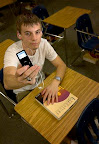
On Tuesday, June 22, at the stroke of midnight, police officers from the 102nd and 106th precincts along with officers citywide began a 24-hour crackdown on the use of hand-held cell phones while driving as part the NYPD's focus on traffic infractions linked to death and injury.
Police officials said that officers issued 4,527 summonses across the five boroughs to drivers who were chatting while driving during the 24-hour time frame The 106th Precinct alone issued 27 summonses for this violation. The number of summonses issued by officers of the 102nd Precinct was not available at press time.
Similar efforts from earlier this year resulted in 6,882 summonses handed out on March 25, and 7,485 summonses on January 21, according to NYPD statistics.
Individuals using hand-held cell phones while driving in the city face a fine of $130 ($200 for taxi drivers). Drivers can be fined $150 for text-messaging, though a ticket can only be issued as a secondary offense when a driver gets pulled over for another violation.
Exempt from the crackdown were drivers using their phone to call 911 and those who use hand-free options – their cell phone’s speakerphone feature, wired or wireless Bluetooth headsets, or the Bluetooth connectivity now built into GPS devices.
According to the NYPD, during 2009, police issued on average 617 summonses a day to drivers using hand-held cell phones, a total of 195,579 for the year. On previous crackdowns, NYPD-issued tickets for phoning while driving surpassed the daily average. On October 22, 2009, 7,529 summonses were issued for this infraction, and on August 21, 2009, 7,432 tickets were issued.
In addition to being illegal, “driving while talking on a cell phone is dangerous and endangers both drivers and pedestrians,” the NYPD said in a statement. A police spokesperson added, “it has just been demonstrated that motorists distracted by holding a cell phone while driving and speaking on a hand-held cell phone while driving has led to accidents, including fatalities.”
A University of Utah study found that drivers who talk on their cell phones, or even use a hand-free device, are as impaired as drunken drivers.
Frank Dardani, president of the 106th Precinct Community Council, said the cell phone enforcement shouldn’t be just for one day, “it should be everyday.” Dardani added that in addition to talking on a cell phone, other distractions such as putting on makeup, eating lunch while driving, and drinking hot coffee also pose the danger of an accident.
“Distracted driving in itself should be addressed (by police) on a daily basis,” he added.
Assemblywoman Audrey Pheffer said, "crashes due to driver inattention or distraction are all too common and result in far too many tragedies. Drivers must be focused on the road and not on their cell phone conversations. It is unfortunate that this has had to become a police enforcement priority due to people’s lack of compliance with the law.”
Taxi drivers in the city face even more stringent regulations issued by the Taxi and Limousine Commission (TLC). Last January, TLC announced new regulations prohibiting the use of all forms of distractive electronic devices for taxicabs, livery, black car, luxury limousine, commuter van, and para-transit vehicles.
“The time has come to put an end to the abuse of distracted driving by taxicab and for-hire vehicle drivers,” said TLC Commissioner Matthew Daus. “First and foremost it is a safety issue, but it is also a customer service issue when a driver’s concentration is split between his cell phone conversation, his driving, and his passenger. There is no reason to wait for a tragedy to occur before drivers get the message that such distractions are dangerous and entirely unacceptable.
“The new regulations create a true 'three strikes and you’re out' reality for TLC-licensed drivers by providing a framework by which their TLC licenses would be revoked for three violations within a 15-month period,” added Daus.
Saturday, September 19, 2009
NYS Assembly Consumer Affairs and Protection Committee Chair Audrey I. Pheffer Applauds T-Mobile’s Decision to Abandon Paper Billing Charge
Assembly Consumer Affairs and Protection Committee Chair Audrey I. Pheffer (D-Queens) today commended T-Mobile for its decision to not go forward with a planned policy change that would have required customers who receive a paper bill to pay a fee of $1.50 per month. The “Paper Bill Charge,” announced last month, generated numerous complaints and inquiries from customers.
Upon learning of the new fee from a constituent, Pheffer immediately contacted T-Mobile to express her concerns with the policy. Pheffer noted that paper billing charges unfairly impact consumers that do not have Internet access in their homes, as well as those that are uncomfortable using the Internet, including many senior citizens and those concerned about personal privacy. Pheffer further noted that paper billing charges disproportionately affect low-income consumers, who are less likely to have access to the Internet.
“Many consumers, including many senior citizens and those concerned about privacy, are uncomfortable using the Internet,” said Pheffer (D-Queens). “These consumers should not be forced to bear the burden of an additional monthly charge in order to receive a paper bill. Businesses need to look at other ways to achieve the environmental goal of reduced paper use, such as incentive-based programs, that do not penalize consumers.”
Monday, June 9, 2008
Cell Phone Tower Draws Community Angst by Stephen J. Bronner and Tonia N. Cimino- Queens Courier
Read original...
Margaret Diaz moved into her home on Pitkin Avenue in Ozone Park just two years ago, but she is ready to move.That’s because of the 82-foot-high cell phone tower erected late last month directly across the street from the house she rents.
“They said they sent out notices, but they didn’t,” said Diaz. “They didn’t notify anyone. I’m going to be moving out with this thing here.”
The tower, currently in use by T-Mobile, stands on land owned by the Mokom Sholom Cemetery. The owners of the cemetery, who authorized the use of its space, could not be reached for comment.
The city commissioned construction of a 10-foot extension to the tower, which will be used as part of the New York City Wireless Network (NYCWiN). NYCWiN is a high-speed information system designed to give the “city’s emergency responders high-speed data access to support large file transfers, fingerprints, mug shots, city maps, and full-motion, streaming video; and will also support a host of other public service applications,” according to the web site for the Department of Information Technology & Telecommunications (DoITT).
A spokesperson for DoITT said that they have contacted Borough President Helen Marshall and City Councilmember Joseph Addabbo for approval.
“T-Mobile believes that Ozone Park residents deserve the peace of mind that comes with expanded wireless coverage - the ease of staying connected to the important people in their lives, and to improved access to emergency services,” said Jane Builder, Senior Manager for External Affairs for T-Mobile.
“ . . . Our new installation at 80-35 Pitkin Avenue will allow area residents to benefit from enhanced wireless coverage. We believe that this location represents the optimal balance between the needs of wireless users and the concerns of residents - many of whom are wireless customers today.”
Builder continued, “The wireless industry is closely regulated by the Federal Communications Commission (FCC), which sets rigorous science-based guidelines and exacting standards designed to ensure the protection of residents’ health and safety. T-Mobile antennas operate well within national safety guidelines established by the FCC.”
Two of Diaz’ neighbors said they had not received prior notice of the construction. Daniel Rios, however, said he received a notice in the mail. “They asked if I had any objections, and they were going to have a meeting about it,” said Rios, who said he has lived at his house on Pitkin Avenue for 40 years. “I knew way before it was up.”
Betty Braton, chair of Community Board 10, told The Courier that the application for the tower had been submitted about a year ago, and that it had been previously approved by the city.It came before the Community Board and was approved with the condition that it be shorter than the originally proposed height of 90 feet, she said.
“It’s a balancing act between the system the city requires for public safety and everyone [else],” said Braton. “Eighty-two feet makes for a pretty big pole.”
Diaz said she feared that the tower could pose a danger to public health, but a technician on site said that unless someone is high above the ground - near the top of the tower - it poses no threat.
“Radiofrequency emissions from antennas used for wireless transmissions such as cellular and personal communication systems signals result in exposure levels on the ground that are typically thousands of times less than safety limits,” wrote the Health Physics Society on their web site. “Therefore, there is no reason to believe that such towers could constitute a potential health hazard to nearby residents or students.”
The issue will be on the agenda at the next meeting of Community Board 10 on Thursday, June 5.
Friday, April 25, 2008
New Cell Tower Is News To Locals by Lee Landor - Queens Chronicle
Cellular transmission equipment was installed on the roof of a building near St. Elizabeth’s School in Ozone Park — news to the school and parents.Small laminated signs posted around St. Elizabeth’s School in Ozone Park warned parents that their children are in danger and urged them to call local politicians for help.
Neither the school, nor Assemblywoman Audrey Pheffer (D-Ozone Park) knew of the signs or the situation that prompted their creation — the installation of a cell phone tower on the roof of 84-04 95th Ave.
“The radiation that is released by cellular antennas ... is especially damaging to children,” the signs read. Some words were highlighted for emphasis and, to passersby, seemed to link St. Elizabeth’s and Pheffer to “danger” and “radiation.”
Cell towers are unlikely to cause cancer, according to the American Cancer Society. Studies on the effects of radiowaves and radiofrequency emitted by the transmitters have not determined potential health risks to the general public, but have found possible problems relating to occupational exposure, according to the World Health Organization.
St. Elizabeth’s principal, William Ferguson, was upset about the use of the school’s name on the signs claiming the tower is a health risk. The signs’ creators are most likely also responsible for e-mailing an anonymous letter to a handful of elected officials and newspapers demanding they take action.
“People misread it,” Ferguson said. “The tower is not on our building and they shouldn’t use our name. (The signs) weren’t authorized by us.” He fears parents will associate the school with the tower installation and pull their kids out.
“I have to look at it as a positive,” Pheffer said of having her name associated with the situation. “People felt that something was wrong in the neighborhood, that they should call my office because they get results.”
Cell phone tower installations have become common in the last few years, the assemblywoman said: “as people increase cell phone usage, (the companies) need towers. To install towers, they need a buildings department permit.” Pheffer has asked the Department of Buildings to inspect the tower near St. Elizabeth’s and make sure it adheres to the permit.
She is also reviewing legislation proposed in the Assembly that prohibits the placement of cellular transmission equipment, including towers and antennas, within 500 feet of a school in New York City.
An unsigned e-mail, with return address Concernedparishioners@yahoo.com, was written on behalf of St. Elizabeth’s School and Church, despite the “concerned parishioners” failure to notify either of the problem. E-mails requesting a name or contact number were not returned.
The concerned parishioners — who may not even be affiliated with St. Elizabeth’s Church, according to Ferguson — urged readers to support the Assembly bill.
They also suggested that a temporary restraining order be placed on the wireless service provider responsible for erecting the tower, which the concerned parishioners claimed had not yet been operating last week.
Because there is no current law restricting the installation of cellular transmission equipment near schools, the tower on the roof of 84-04 95th Ave. is as of right. “On a private house, as long as they have the permit, at this point, there’s nothing that we can find that would demand that they remove it,” Pheffer said.
Ferguson said there is no question that he would call for the tower’s removal if it posed a danger to students. But currently, he said, that has not been proven.
Several parents who had not heard anything of the situation indicated they would have to research the potential health risks involved with cellular transmission equipment in order to become concerned.
“I’m going to try to find out what the downsides are,” said Edwin Diaz, while waiting to pick up his 10-year-old.
One way to do that, he added, is holding an informational meeting between parents, school officials, the building owner and the wireless service provider.
When reached by phone, building owner Raymond Masaitis refused to answer questions about the tower installation, and calls to wireless service provider Metro PCS were not returned. But it appeared that parents weren’t demanding answers because they were not informed of the situation.
Kathy Afnaime, whose two children attend St. Elizabeth’s School, was angered that she did not receive notification of the tower installation. She considered circulating a petition calling for the tower’s removal, despite not yet knowing its possible effects.
Confused about what is considered a safe distance between a tower and a place where children congregate, Maria Rodriguez wants to research the matter. She picked up her twin sixth graders and headed home. “I’ve got some homework to do.”
Wednesday, February 13, 2008
Roundup of Education Articles...
Ravitch Quits a Publication That's Boosting Bloomberg
By ELIZABETH GREEN
Staff Reporter of the Sun
February 13, 2008
Mayor Bloomberg standing atop Tweed Courthouse, the headquarters of his education department, in an the illustration for an art in the upcoming issue of a prominent education journal. Graphic by Dale Step
A prominent education journal will suggest in its next issue that Mayor Bloomberg's commitment to improving schools would make him a good candidate for president. But the idea is already running into resistance, with one of the journal's board members, the historian Diane Ravitch, resigning as a protest of what she called an effective presidential endorsement.
The article, which will appear in the spring 2008 issue of Education Next, opens with an illustration depicting a defiant Mr. Bloomberg standing atop Tweed Courthouse, the Lower Manhattan headquarters of the city Department of Education. He grips a long sword in one hand, carries a shield decorated with the New York City seal in the other, and is dressed in full knight's armor.
Headlined "New York City's Education Battles," the article describes Mr. Bloomberg's education plan as a victorious destruction of what had been a "personal patronage mill." It also says that the management changes have been a mixed bag for students, whose math scores the journal says are rising, while reading scores are flat.
It ends on a positive note, arguing that, despite critics' attempts to burst his bubble, "Bloomberg just may have outsmarted everyone."
The mayor's presidential potential is addressed in a sidebar, which concludes, "With all that cash on hand, why not go for the whole ball of wax? If he does, Americans might have a renewed opportunity to ponder the state of American education."
An editor's note by the magazine's editor in chief, the Harvard government professor Paul Peterson, also tackles the presidential question, applauding Mr. Bloomberg for tackling head-on a problem that he says the current presidential candidates have failed to address.
Ms. Ravitch, a professor at New York University who has followed the changes in the New York City schools under Mr. Bloomberg closely and has been a vocal critic, told The New York Sun that she resigned from the board of Education Next after reading the article. "How can a magazine with an editorial board endorse a candidate for president when no one on the editorial board was consulted?" she said.
She said she was also protesting inaccuracies in the story, which she said is "based on ideology, not evidence." Math scores have risen, she said, but only among fourth-graders. A respected national test, the National Assessment of Educational Progress, last year concluded that New York City eighth-graders had made no significant progress on math and English since Mr. Bloomberg took control of the schools.
Mr. Peterson said yesterday that he had not received Ms. Ravitch's resignation letter, and he said he would be disappointed if he does receive it.
He said the article is balanced and an example of good journalism. He added that his personal opinion is that he would be happy to see Mr. Bloomberg jump into the presidential race.
"It would put education on the national agenda," Mr. Peterson said. "We would start talking about education policy, and I think that would be good. That would be good for our schools."
In an interview, the author of the main article, Peter Meyer, said he agrees with Ms. Ravitch that the city's education results during the Bloomberg administration have been minute. "It is pretty amazing that, six, seven years into this, we barely see a blip," he said, adding that had Ms. Ravitch been given an instructional role in the city schools there would have been more improvement.
But Mr. Meyer said of the mayor, whom he interviewed for the story, "I think he'd make a great education president."
He said Mr. Bloomberg's potential to elevate education as an issue is just one reason to support him. "He would make a great manager of the bureaucracy, I think as he has proved in New York," Mr. Meyer said. "I think he would be good for education and good for education reform."
The article describes Mr. Bloomberg as a compact man who "carries himself like a linebacker." It says the mayor was "sobered" by last year's NAEP test results. "Even though there was some progress in math scores for eighth-graders, overall the results for them weren't what we would have liked them to be," Mr. Bloomberg is quoted as saying.
Contacted yesterday, two other Education Next board members said they would not support a Bloomberg presidential run.
A professor of political science at Stanford who chaired Mayor Giuliani's education advisory team before Mr. Giuliani dropped out of the race, Terry Moe, said Mr. Bloomberg is a good manager but he should not run for president. "What's the point except to serve as a spoiler?" he said.
The president of the Fordham Foundation, Chester Finn, said he is leaning toward Senator McCain.
"We elect mayors to fix schools and such; we elect presidents to keep the nation safe in a dangerous world," Mr. Finn said. The Fordham Foundation led by Mr. Finn and Harvard's Program on Education Policy and Governance are sponsors of education next, which is sponsored by the Hoover Institution at Stanford University.

Ravitch Quits Ed Next Board Over Lazy Bloomberg Puff Piece
According to this Elizabeth Green story in the NY Sun Ravitch Quits historian Diane Ravitch has slpit from Paul Peterson et al on th board of Education Next over a new article that to praise Mike Bloomberg's stewardship over the New York City Schools and endorsed his candidacy.
Maybe this is just Ravitch throwing a tantrum -- I'll be interested to see what others think -- but publishing a puff piece about Bloomberg seems like a tin-eared and a cockeyed move to me, given all the substantive and widespread criticism that his DOE has received, not to speak of the political moment having long passed.
Losing Ravitch and endangering Ed Next's reputation over a freelancer's article seems even dumber. The Ed Next folks had to know she'd have strong feelings about the piece, which upon first skim reads like it was written by someone new to the topic -- not in a good way (here).
It's full of first-person "I met Bloomberg" fluff, includes fuzzy snapshots that look like they were taken with a disposable camera, and ignores things like the high exclusion rates that made NYC's NAEP scores seem higher than they otherwise would have been, the zigzag path of the Klein reforms, the failed efforts at weighted student funding, etc. Several other recent articles about school reform in NYC have done a much better job (LynNell Hancock in The Nation here, Sol Stern in City Journal here, Elizabeth Green from the Sun here.)
Disclosure: I have written for Education Next in the past and could have written a much better article. Of course, I'll probably never be asked to write for them again.
Schools Chancellor Joel Klein says Brooklyn's Racial Quotas are Old School...
By CARRIE MELAGO
DAILY NEWS STAFF WRITER
Wednesday, February 13th 2008, 4:00 AM
Schools Chancellor Joel Klein is asking a federal judge to immediately remove 34-year-old racial quotas from seven Brooklyn middle schools.
The motion asked the judge to lift a 1974 desegregation order that calls for a 6-to-4 ratio of whites to minorities in the schools that house sought-after gifted and talented programs.
The order "has outlived its usefulness as a remedy for unlawful segregation that itself has long since disappeared," the motion reads.
The Education Department's motion comes several weeks after a student of Indian descent sued the city because she didn't get into one of the schools, Mark Twain Intermediate School, even though white students with lower test scores did.
McKinley Unique On Cell Phone Suspension
Buffalo, NY (WBEN/AP)--Districts around the nation are balancing security against disruption with a range of anti-cell phone policies, but few enforce things the way McKinley High School did, with the suspension of a student for talking to school board officials recently about the firing of a favorite coach.
A WBEN survey of area districts found most will not allow any student to use a phone during regular school hours, but few would suspend for a first offense.
A few examples:
In the Sloan, Depew, Lakeshore, East Aurora and Kenmore-Tonawanda districts, phones are not banned, but can not be used during the day.
In New York City, an outright ban on having cell phones in school has prompted a lawsuit by a parents group.
Several districts loosened their policy after the West Virginia shootings, as colleges move toward encouraging phones as a means of emergency text communication.
Some districts allow student use with prior permission from a teacher, usually only granted for calls to a parent or guardian, for special or urgent purposes.
Detroit bans cell phones, and a two-time violator will not get the phone back.
Boston relied on a school-by-school approach until recently, when it changed the policy to let students have a phone, but only if it is turned off and out of sight. Locally, Kenmore-Tonawanda is considering similar changes, to erase a school-by-school patchwork.
Los Angeles lets kids have cell phones, but they can use them only during lunch and breaks.
Kenneth Trump, president of Ohio-based National School Safety and Security Services, said his research indicates most schools ban the phones. Others require students to turn off the devices during school hours.
"It's really very simple," says Buffalo Teachers' Federation President Phil Rumore.
"You have to have strong rules and you have to continue to enforce them, otherwise kids will continue to get away with it," Rumore says, adding that cell phones have been used in bullying, gang fights, and planning an attack on teachers.
Yet McKinley's tough policy used recently against student Jayvonna Kincannon seems to be an exception to the regional rule.
"It would be progressive disicpline," says Jeffrey Rabey, Lakeshore superintendent.
"It would range from, if it were the first time incident, it would be probably a verbal warning, and if it's a continued issue, it could lead to confiscation of the cell phone with where they can get the cell phone back if the parent picks it up. If it continues it can be anything fom in school suspension to anything like -although I don't believe it has ever happened- an out of school suspension."
Adds Sloan Superintendent James Mazgajewski: "First offense it might be just a warning, the second time it might be detention. Eventually if it continues it may end up being a suspension, but it would take some time."
New York City Ban in Court
Elizabeth Casanola carries her cell phone everywhere — even through the metal detectors at her school.
The high school senior puts the phone under her pants by her waistline, where she knows she won't be patted down. Or she smuggles the phone into school in pieces — the battery separate from the main body.
A ban on cell phones in the nation's biggest school system is creating an uproar among parents and students alike, with teenagers sneaking their phones inside their lunches and under their clothes, and grown-ups insisting they need to stay in touch with their children in case of another crisis like Sept. 11.
Parents have written angry letters and e-mails, staged rallies and news conferences, and threatened to sue. Some City Council members are introducing legislation on their behalf.
But Mayor Michael Bloomberg and Schools Chancellor Joel Klein have staunchly refused to drop the ban. They insist cell phones are a distraction and are used to cheat, take inappropriate photos in bathrooms and organize gang rendezvous. They are also a top stolen item.
Students have refused to give up their phones, saying the devices have become too vital to their daily existence and to their parents' peace of mind.
“My mother, she needs me to have the cell to call me and check up on me,” said Steven Cao, 16, a sophomore who lives in Staten Island and attends Stuyvesant High School in Manhattan. He called the ban stupid.
Some parents would prefer a policy that lets students have cell phones but prohibits their use in classes.
New York's 1.1-million-student school system has banned beepers and other communication devices since the late 1980s. But schools have long used an “out-of-sight, out-of-trouble” approach. Then, late last month, city officials began sending portable metal detectors every day to a random but small set of schools to keep out weapons. And the detectors have led to the confiscation of hundreds of cell phones.
New York has one of the country's toughest policies on student cell phones. It also bans other electronic devices, such as iPods.
New York principals said the ban is tough to enforce, especially in large schools without metal detectors.
“Every kid today does carry a cell phone,” said Howard Lucks, principal of New Utrecht High in Brooklyn. “The kids keep them in their backpacks, their pockets. As soon as they see an administrator or teacher, they put it away very quickly.”
Even at schools with permanent metal detectors, students find ways to sneak the phones inside.
Once inside the school, another tactic is to hide the phone in a sandwich roll, according to one principal. Some students leave phones at nearby stores that charge small holding fees.
Yen Ramirez, a junior at Manhattan's Washington Irving High, said students need their phones for emergencies. The ban is a problem “because you never know what could happen.”
Students insist that most classmates use their cell phones responsibly, and they brush off criticism that previous generations got along fine without them.
"It's kind of ridiculous that we think we can't survive without a cell phone when people did it for thousands of years," said Elisa Muyl, 14, a freshman at Stuyvesant. "But now that they have this invention, we should use it."
Sunday, July 15, 2007
NY1: DOE Announces Program Allowing Some Students To Bring Phones To School by Michael Meehan...
Watch video...
July 12, 2007 - Some high schools students may be able to bring their cell phones to school in September - despite a citywide ban.
The Department of Education announced Thursday that 18 schools will participate in a pilot program allowing students lockers outside of schools to safeguard their phones and electronic devices.
The lockers will first be offered to 25 percent of the student body at schools like Port Richmond and McKee High School on Staten Island.
But, some people NY1 spoke with doubt the program will work:
"Do they honestly think that the kids will put their cell phones in the locker? That's not going to happen,” said one student. “And, on top of that, not everyone is going to get a lock.”
“I don't really think they should they should put in the locker because you never really know when your family member or something could happen to you when your in school,” said another. “You could be in the bathroom and nobody's around, and you can call 911 from the bathroom."
The move comes following complaints from parents who believe students need their phones for safety reasons.
Monday, July 9, 2007
Salon.com: Hives Among Us by Lenora Todaro...
July 8, 2007 - Nothing will stop urban beekeeping fanatics from making their own organic honey -- not traffic, not smog, not even the law.
"Beekeeping is a completely sensuous experience," says Roger Repohl, a beekeeper at the Genesis Community Garden behind St. Augustine's Catholic Church in the South Bronx, in New York. "You touch and taste the honey, listen to the bees hum, smell the smoke." Clad in his "vestments" -- a white beekeeper suit, veiled hat, thick canvas gloves -- he squeezes a "smoker," a bellows attached to a can that he's filled with pine needles and lighted with a match. The smoke warns the bees that the keeper is approaching to inspect the hive, but the aroma evokes Christmas. "I use pine needles," he says, "because they smell good and you might as well be an aesthete about the experience."
Repohl's hives are not the natural conical ones that inspired 1960s hairstyles, but square wood boxes stacked five high, like file cabinets, or dresser drawers. He harvests about 300 pounds of honey a year at this peaceful outpost in the middle of auto repair shops, hardware stores and a mom-and-pop slaughterhouse.
Beekeeping is illegal in New York City. The law lumps honeybees together with alligators, lions and ferrets as "wild and ferocious animals." The city's urban beekeepers, then, form an unofficial secret society of asphalt naturalists -- romantics drawn to the beauty of a beehive's intelligent design, epicureans seeking the delectable taste of locally procured honey, and off-the-grid types keeping nature alive in the city. Restrictions on beekeeping like those in New York City are uncommon, however. "Chicago has beehives on top of City Hall," says Kim Flottum, editor of Bee Culture magazine. "Chicago, along with Dallas, Boston, San Francisco and Portland, actively promote beekeeping for pollinator health."
After years in which they seemed like charming throwbacks -- rooftop denizens and community gardeners procuring raw honey and making beeswax candles, tending to insects that inspire fear and awe and irritation -- beekeepers and their bees are having a moment. The current national interest in locally grown and organic food and low-impact city living is inspiring people to look into ways to have their hands in their own food production, whether by joining CSAs (community-supported agriculture), raising chickens, or keeping bees.
There are 513 beekeeping associations across the United States, according to Bee Culture magazine. Of its 12,000 readers, Flottum says, "Fifteen percent live in cities with more than 100,000 people." However, trying to put a number on how many hobbyist beekeepers there are "is like asking how many people garden," he laughs. "From our surveys, we estimate about 75,000."
Troy Fore, executive director of the American Beekeeping Federation, which provides educational programs about bees for children and scholarships for graduate students of apiculture, says he feels the increased interest in beekeeping. "The further people get from the agrarian life and the more media attention to bee losses there is, the more people say, 'Well, maybe I'll get into beekeeping.'"
This interest, coincidentally, puts urban and backyard beekeepers on the cutting edge of one of agriculture's biggest dilemmas: colony collapse disorder -- the "AIDS of bees," as Dennis vanEngelsdorp, acting state apiarist for the Pennsylvania Department of Agriculture, puts it. VanEngelsdorp is part of the CCD research team at the University of Pennsylvania. With CCD, the honeybees, highly organized, predictable creatures with finely tuned homing instincts, leave their hives to gather pollen and never return, like sailors drifting into the Bermuda Triangle.
More than a quarter of the country's 2 million commercial bee colonies have been wiped out, according to the Apiary Inspectors of America, and the hobbyists are not necessarily immune. At stake, says the U.S. Department of Agriculture, is one-third, or $15 billion annually, of the food we eat -- everything from almonds and apples to cherries and pears.
Explanatory theories abound, from pesticide and pathogen to radiation from cellphone towers and the onset of the Rapture. Losses by backyard beekeepers have been estimated only anecdotally, but the beekeepers are fearful of the implications. VanEngelsdorp says "pollinators are canaries in the coal mine," and their disappearance is a referendum on the state of our environment -- a reminder of the brilliant and frightening interdependence of our ecosystem.
Bees stroll along Repohl's neck like parrots on a friendly pirate's shoulder. He has an intimate knowledge of their ways and a knack for reading their moods. Still, he says, "Sometimes I stand there looking at them just paralyzed and I don't know what to do. It's like looking into the mind of God."
Repohl is a choir director who lives in the St. Augustine rectory in the South Bronx, providing an ecological education to local kids and sweet honey to those in the know. Each month the honey he procures takes on the flavor of the flowers in bloom: In June, linden flower; in July, clover. No bland-tasting honey pumped into supermarket plastic bears here. He's dealt with mites, but thus far has been spared CCD.
During a hive inspection, Repohl uses a tool similar to a chisel to pry open the top and assess the health of his hive. In a hive of some 60,000 bees, workers and drones, only one queen rules. Inside the honeycomb's hexagonal shapes, connected like so many votive candles, worker bees deposit pollen for making bee bread and nectar for curing honey. Deeper down in the hive we see the brood: brownish-tan in color, capped with wax from side to side indicating a strong colony. Repohl breaks open a drone pupa and the bees go to work removing the carcass, which he says they will eat. "Bees live so that the hive may survive," he says, "but bees also eat their brothers."
Repohl grew up in the San Fernando Valley, "halfway between L.A. and Disneyland." He came to the Bronx to do a Ph.D. in theology at Fordham University and befriended a former Trappist monk and master beekeeper who ran St. Augustine's Church at the time. Now, Repohl, through his workshops at Wave Hill in the North Bronx and in garden conversation, baptizes many a soul into beekeeping. During my visit, we worked while we talked, scraping propolis (a type of glue the bees create to seal the hive) from the hive frames before checking to see if the queen he'd ordered from Texas had been accepted by the hive. She hadn't. The bees were busily preparing the peanut-shaped cell for a queen of their own. In another hive, bee babies were being born, squirming in circles to push out of their eggs, arms up high, as if at the top of a roller coaster.
Norman Bantz, a Yonkers apitherapist, keeps his hives conspicuously between his door and driveway, the din of the Bronx River Parkway just yards away. The hives buzz with spring fever. At the other end of his unmanicured yard lay empty hive boxes lined with wax moth carcasses. Now in his 80s, Bantz believes that honeybee stings help treat multiple sclerosis and arthritis; he (and many other beekeepers) claim that eating raw, unpasteurized local honey banishes seasonal allergies. He began beekeeping decades ago to help one of his sons, whose allergies were so bad that he couldn't go outside to play baseball. He and his wife, married 62 years now, sting each other weekly, and he says, "I never have been in a hospital except to visit friends."
Both Repohl's and Bantz's hives have been untouched by CCD. Bantz's theory about CCD lays some of the blame with bioengineering. "Queens usually fly out to mate with a drone in the air," Bantz explains. "The drone has to be very strong to hold them both together, but today the queens are artificially inseminated, the species weakens and loses its instincts." Repohl uses minimal pesticides and says his bees live a relatively happy, isolated life in the South Bronx, so he prefers to leave the diagnosis of CCD to the scientists. But he likes this theory from his piano tuner: "He thinks bees have gotten turned on to hip-hop and when they do their little dance to tell their sisters where the honey is the bees just take off and don't come back."
Sidney Glaser, the retired beekeeper at the Clinton Community Garden on West 48th Street in Manhattan, found his hive dead after winter; the bees had disappeared, probably casualties of CCD. On May Day, as children dance around the Maypole, only flies circle his hive. A Brooklynite by blood and accent, a veteran of the Peace Corps, Glaser began beekeeping on the Lower East Side 20 years ago, having joined the Green Guerillas after retiring from teaching. Wearing denim jacket, pants and shirt, he appears slightly confused and impatient for his apprentice, Michael Hegedus, to arrive with a new queen and a colony of bees to replenish the deserted hive. He has his smoker at the ready, burlap burning in the can.
Glaser likes to tell the story about his bee beard, for which he is infamous in these parts. He first made one while in Paraguay, and then did it again five years ago for PBS. "I hung the queen cage around me like a necklace and all the bees come and gather around her. Before I knew it I had guys on the set doing it as well."
Hegedus, an actor who renovates Brooklyn homes, arrives with a cardboard box from South Carolina marked "fragile" and bearing the cartoonish image of a bee. Inside, the bees hum actively. Hegedus says he's waiting to hear the scientific evidence on CCD but he likes to tell people: "It's the gasoline exhaust. Let's get rid of the guzzlers."
To date 35 states have experienced CCD. Maine is not one of them. Once commercial beekeepers have pollinated the state's vast blueberry fields, there are concerns that CCD could come here as well -- that the epidemic, having decimated agribusiness pollen factories and consumed city and suburban hives alike, will spread up the coast like urban blight.
Sitting in a House and Garden-ready country kitchen on the 65-acre Maine farm of the D'Entremont family, Phil Jackson ponders what CCD might mean for them. "If a commercial keeper has lost 80 percent of his hives, you can't say, 'I won't use a cellphone,' and hope that will bring the bees back," he says. The cellphone theory, which proposes that the radiation from cellphone towers interferes with bees' navigational powers, has been discredited by some scientists but is still under investigation. Yet Jackson's point is clear: They have not been able to rule out any possible explanations.
Jackson started beekeeping during World War II to have some extra sweetener when sugar was being rationed. Since then he's seen the "complete disappearance of wild honeybees" and watched the simple art of beekeeping become complicated. Not so long ago, he says, "basically they took care of themselves and you'd get 50 to 75 pounds of honey." But problems have come with mites, and now CCD.
"If CCD continues then we're at the threshold of catastrophe, especially the farming business. It's one thing for us backyard keepers to not have a jar of honey, but for the big apple farmer, that [beehive is] a livelihood." Without bees to pollinate, the apple fields' survival is at risk.
The D'Entremonts, Chuck and Peg, have been raising their own beef, chicken and turkeys, and making maple syrup for 30 years. Their 18th century house has window sills blooming with orchids, and hummingbirds feeding outside the window at eye level. Chuck D'Entremont thinks that Maine has so far been spared CCD "because of what we do with diversity" -- keeping a variety of flowering plants and wild grasses. "And the state of Maine has very strict pesticide license requirements," which means that beekeepers are alerted when large sprays for gypsy moths or other pests will happen, and take precautions.
The theory that the bees have been taken out by pesticides seems obvious enough, and one group of pesticides -- neonicotinoids -- has been cited in particular. They impact the central nervous system of insects and can lead to memory and navigational impairment. To be careful, the D'Entremonts don't order their queens by mail or use pesticides. "Somebody said to me that CCD was like human Alzheimer's," says Chuck D'Entremont. "If the bees are getting Alzheimer's, then the things that are happening to them may be happening to us."
Nutritional deficiency (the replacement of agricultural diversity with vast fields of a single crop), environmental stress (global warming screwing up the bee's sensitive attention to seasons), and turning bees into migrant workers for large-scale agribusiness (a movable pollination force that travels by truck from state to state during blooming season) may also play a role in the ultimate diagnosis. The autopsies that vanEnglesdorp and his group are currently performing on those bees that have been recovered are leading toward an "all of the above" answer, but it's a mystery in need of a particular detective, a cross between Agatha Christie and Rachel Carson.
Massachusetts farmer David Graves runs an underground collective of 17 rooftop keepers in New York City, finding homes for orphaned hives, then selling their honey at his stand in Manhattan's Union Square Greenmarket. One of his hives sits precariously on a platform, 13 stories up on top of a hotel. Just Food, an organization that addresses food and farm issues, is lobbying the New York City Council to legalize bees so they don't have to be hidden high in the sky and so that the city can contribute to pollinator health.
"Usually zoning changes to restrict beekeeping are the result of one bad beekeeper who pissed everybody off," says Bee Culture magazine's Flottum. "Or one bad neighbor who's pissed off. And anyway you can't legislate bees. If a bee wants to get in a hollow and make a hive it will. It's like telling chipmunks where to dig holes. Having zoning restrictions on bees is just plain silly."
As for change, as vanEngelsdorp puts it: "Things happen a backyard at a time." Or one rooftop.
Saturday, July 7, 2007
Newsday.com: Local Growers Watch Vanishing Act of Honeybees by Cynthia Hernandez...
Their announcement Thursday came a week after U.S. Secretary of Agriculture Mike Johanns said that the honeybee decline could cost the country up to $90 billion in agricultural losses.
Theories as to why their numbers have declined include weather and the appearance of mites. Research efforts are under way nationally to pinpoint the cause.
As part of his Farm, Nutrition, and Community Investment Act, a bill introduced in May, Schumer seeks $250 million to be allocated over 10 years to the Agricultural Research Service, an arm of the Department of Agriculture, to study the phenomenon and find ways to restore bee colonies to healthy levels.
Without bees to pollinate Long Island's crops, millions of dollars in local revenue could be lost, said Joe Gergela, executive director of the Calverton-based Long Island Farm Bureau.
Virtually every type of fruit and vegetable could be affected, he said.
To date, however, experts say Long Island's farming industry has not been affected by the disappearance of honey bees. These experts say, however, that if the problem continues, the region could see dramatic losses in some crops.
Crops that could see the most impact are fruits, like apples, peaches and pears. But, Gergela said, pumpkins, tomatoes and flowers could be affected as well.
The entire Long Island farm industry, he said, produces $250 million in revenue yearly.
Long Island remains New York State's most productive farming region, with crops like flowers, corn, tomatoes, melons and grapes for the wine industry.
Dale Moyer, agricultural program director for the Cornell Cooperative Extension Service in Riverhead, said he is worried about the decline, which he said started more than a decade ago.
But he has not seen a major impact on Long Island yet.
"I'm not aware of folks this year who have had a poor crop because of lack of pollination," he said.
There are many possible explanations for the national decline, said Julie Suarez, director of public policy for the New York State Farm Bureau.
Parasitic mites are partly to blame, she said, as well as poor weather conditions. Temperatures above 50 degrees are imperative for bees who need to get exercise and tend to hives, Suarez said. But last winter was cold, snowy and long, and could have played a role in the dwindling of local populations.
Despite these clues, Suarez agreed more research into the decline was needed.
"I think it's the only answer," she said. "Until we determine what the cause is we're just flying blind."
Aside from Schumer's effort, another bee-related bill is buzzing around Congress. Last week, Sen. Barbara Boxer (D-Calif.) introduced the Pollinator Protection Act, which would also provide funding to study the disappearances.
Schumer said his farm bill would focus on issues of the Northeast, including the honeybee decline.
"The bottom line is that we wanted the farm bill to pay attention to our crops," he said.
Saturday, June 30, 2007
New York Times Blog: Following Urban Bees on Their Daily Rounds by Sewell Chan...
Honeybees (Photo: Richard Perry/The New York Times)
The mysterious and alarming collapse of honeybee populations throughout the United States has prompted a new local study of the phenomenon.
The Center for Biodiversity and Conservation at the American Museum of Natural History and the Greenbelt Native Plant Center at the New York City Department of Parks and Recreation are joining forces to study bees native to the city, and the indigenous plants they pollinate. The pilot program will recruit volunteers to collect data and spread the word about the key role bees play in pollinating plants.
In case you forgot to mark it in your calendar, National Pollinator Week began on Sunday. The week is designed to promote the health of resident and migratory pollinating animals.
“Bees are a crucial part of our urban ecosystem,” said Eleanor Sterling, director of the Center for Biodiversity and Conservation. “We are very pleased to be collaborating with Parks to examine the relationship between the city’s native bees and plants.”
The project is modeled on a similar recent study carried out in San Francisco and has been modified to focus on East Coast bees and plants. About 800 species of bees are found east of the Mississippi River and a surprising number — more than 200 — have been documented in New York City.
Throughout the week, Liz Johnson, manager of the Center for Biodiversity and Conservation’s metropolitan biodiversity program, and Ed Toth, director of the Greenbelt Native Plant Center, are giving volunteers a one-hour orientation and training session. The natural history museum said in a news release:
The G.N.P.C. will distribute six native, bee-pollinated flowering plants to volunteers, which they will be directed to plant in a sunny location in their own backyards. Twice per month over the summer and fall, the volunteers will observe how long it takes for bees to discover the plants and which bee species visit their flowers. Data from the pilot period will be analyzed by Johnson, Toth, and other project advisors, and the results will be released sometime during the winter.
Monday, June 18, 2007
NY Post: Antennae: Cash Cows by Debbie Cohen...
While Jobs' hoped-for payday will come June 29 when Apple's iPhone debuts, the Queens business owner is already cleaning up - the car-wash maven will pocket $24,000 a year for leasing some roof space to mount 10 AT&T cellphone antennas.
The 20-year deal inked last year - with 3 percent to 5 percent annual increases built in - will, over the course of the agreement, put more than $700,000 into the business owner's pocket.
And this business owner, who asked that his name and his exact business location not be revealed so nearby building owners and customers stay out of his hair, is far from alone.
All over Gotham, more and more property owners are cashing in by renting out roof space for cellphone antennas as companies race to keep up with technology.
As carriers like Verizon Wireless, T-Mobile, Sprint and AT&T, which will offer the iPhone, offer more services like video broadcasting, Wi-Fi and text-messaging there has been a 20 percent to 30 percent increase in antenna placements in the city over the past two years, according to one industry executive.
The spike in antenna installations around town is the direct result of this ramp-up in demand for smart phones, BlackBerrys and other wireless gadgets, said the executive, Hans Fiedler, a manager with MCM, Inc., a Connecticut-based rooftop-site development company, who works with carriers to find suitable locations.
One Queens church got $42,000 a year for leasing roof space to Sprint for eight antennas.
"It's like having the perfect tenant - no complaints at all," said the owner of the Queens car wash, who noted that the extra cash helped pay the mortgage and other debt.
Thursday, June 14, 2007
NY1: DOE Says Cell Phone Searches Keep Kids Safe...
Schools Chancellor Joel Klein defended the Department of Education’s cell phone searches Wednesday, saying the process makes schools safer. The NYPD agrees and says that since September 2006, 27 guns have been confiscated on school grounds during school hours. However, the NYPD was not able to say if any of the guns were seized through random searches or metal detectors. Some students and parents have accused the searches of being overly aggressive. City officials say they will try to eliminate this problem; however, they maintain the policy is an important step in keeping students safe. "Any effort that's made to take weapons out the hands of students that can harm other students is well worth the effort,” said Deputy Mayor Dennis Walcott. “And, as indicated by the chancellor, we've been doing scanning for a number of years and most scanning goes extremely well." Still, there are critics of what the searches are yielding. "The security issues are legitimate for searching for weapons and handguns, but they are not legitimate for banning cellphones," said civil rights attorney Norman Siegel. Also seized were more than 19,000 cell phones, as well as more than 3,000 other electronic devices like iPods.
Monday, June 4, 2007
New York Times: Sweep at School Turns Up a Trove of Electronic Contraband -

When Olivia Lara-Gresty saw the metal detectors at the entrance of Middle School 54 on the Upper West Side, she turned around and ran home to ditch her contraband before joining her sixth-grade class.
The cellphone police had arrived.
Not everyone was so savvy. The Police Department was there to carry out a random sweep for prohibited items, requiring all 900-plus students at the school to walk through metal detectors before entering.
Their total haul included 404 cellphones, 69 iPods, 23 other electronic devices, two knives and one imitation gun.
“People were crying,” said Samantha Haber, 14, an eighth grader.
Officially, the X-ray scans are meant to catch dangerous items. But since the unannounced sweeps began in April 2006, they have mostly detected cellphones, infuriating parents who see them as lifelines and have loudly opposed the checks.
The Education Department first banned “communication devices” around 1988, when the electronic toy of choice was a beeper. But the rule was not strictly enforced until last year, when the Bloomberg administration took action to prohibit cellphones in schools.
The sweep yesterday was one of the biggest so far since the crackdown. An unannounced visit to a Queens school on Wednesday yielded only 40 cellphones, 16 iPods and 33 unspecified electronic devices. The police collected only 83 cellphones during a sweep at a Bronx school a week ago, but also took 37 items like headphones, batteries and can openers — all forbidden.
According to rules set by Middle School 54’s principal, Elana Elster, the items confiscated yesterday could be picked up only by parents, and no earlier than Tuesday. But she later amended those instructions in an e-mail message to parents, saying that students could take home the cellphones and other items at the end of the day on Friday.
The initial instructions left hundreds of students leaving school yesterday at a loss.
“I feel naked,” said Krystal Corchado, 15, an eighth grader whose phone was seized. “I feel like I lost something very important to me.”
Around the corner from the school, a group of six students who had managed to hold onto their phones discussed their narrow escapes.
Ian Newcomb pulled his blue Samsung phone from his pocket to demonstrate how it evaded capture. “It’s nearly all plastic, so the metal detectors didn’t pick it up,” he said. “It was in my pocket the whole time.”
Maybe the metal detectors were not even turned on, suggested Axel McFarland, 11. “They didn’t even beep,” he said.
One furious parent, Leslie Lyons, whose eighth-grade daughter had taken Ms. Lyons’s cellphone to school, threatened to call the police after exchanging a few sharp words with an assistant principal. “I haven’t talked to our lawyer yet,” Ms. Lyons said. “I’m filing a criminal complaint that they stole my phone.”
Still, the high drama of the cellphone sweep appeared to provide a few teachable moments. In one humanities class, the children wrote strongly worded letters to Mr. Bloomberg, said David Garfinkel, 12. Other students taped homemade signs reading “No Phones, No School” to their backs in protest, said Athena Buckley, a sixth grader.
Ms. Elster, the principal, stood wearily on the front steps at 3:30 p.m., after the students had dispersed. “I’m not going to talk,” she said, shaking her head.
Wednesday, May 16, 2007
Queens Gazette: Composto Is Named SD 30 Head by Richard Gentilviso...
Just a few years ago, community superintendents were an endangered species. But after Schools Chancellor Joel Klein officially appointed Dr. Philip A. Composto as superintendent for District 30 along with 31 other community superintendents and nine high school superintendents at a ceremony at the Department of Education last week, it was back to the future.
"Dr. Composto will continue as our superintendent," said Jeannie Tsavaris- Basini, president of Community Education Council District 30 at the CEC 30 May meeting held at P.S. 92 in Corona after attending the DOE installation earlier that same day, May 8.
In 2003, Mayor Michael Bloomberg virtually eliminated the 32 community school districts, shutting offices, cutting staff and creating 10 regions to replace them. Then, in January, Bloomberg announced a second major restructuring of public schools and eliminated the 10 regional offices.
Composto, with more than 29 years' experience, was initially selected as a Local Instructional Superintendent for Region 4 which encompassed District 30. When the state legislature blocked Bloomberg's efforts to make community districts completely a thing of the past, Composto was tagged to oversee District 30.
Since then, he has served as community superintendent for District 30. A resolution requesting that Composto continue to serve was unanimously passed by CEC 30 in April. Effective July 1, community superintendents will report directly to the Chancellor.
Community superintendents will also work closely with the DOE's new Office of Accountability to monitor school performance. They will have the power to appoint principals and rate them as well. Community superintendents are the primary liaison to Community Education Councils.
Chancellor Klein also announced last week that beginning next September, public schools will receive over $900 million in additional funding that will be distributed according to a new formula.
"We're making history," said Kathleen Grimm, Deputy Chancellor for Finance and Administration, at the CEC 30 May meeting. "We've begun our journey to allocate the resources that we have in our city in an equitable way. We've made a commitment- no school will be a loser."
Sandy Brawer, executive director of operations in Regions 4 and 5, said the new Fair Student Funding allocation formula will empower schools to make their own choices, fund those choices and hold the schools accountable for their choices. "All of these pieces [of the formula] will help schools move forward, I have no doubt in my mind," he said.
In another development affecting public schools last week, a lawsuit seeking to reverse the city's ban on cellphones in schools was dismissed by a state Supreme Court Justice. The lawsuit, filed by a group of eight parents in July, argued that the prohibition of cellphones in schools violates the constitutional rights of students, while agreeing that they should not be used during school.
The DOE maintains that cellphones in schools are disruptive and can be used to cheat.Wednesday, May 9, 2007
NY1: Judge Sides With Cell Phone Ban, Parents To Appeal Decision...
The cell phone wars could go on, as parents say they may appeal the ruling of a judge who sided with the city in its ban on cell phones in public schools. The lawsuit by eight parents claimed the Department of Education policy violates the constitutional rights of students and parents, who say cell phones are needed in case of emergencies. Some students NY1 spoke with said they believe they should be able to have their cell phones on hand, as long as they are responsible with them. "I really need my cell phone to get in contact with my mother because she's always calling me and I need to call her to tell her where I'm going, what I'm doing,” said one student. “And I think it's going to be a giant loss if we lose our cell phones, not because so we can talk to our friends, but for basic responsibility purposes.” “If I take the bus in the morning they'll call me in the morning and they like for me to call them when I get out of school,” said another student. But the DOE says the policy preserves a safe learning environment for students, arguing cell phones are disruptive and can be used for cheating. The judge agreed saying the decision on whether cell phones should be permitted in schools should be left up to the DOE, and not the court. The city's lead attorney on the case says the court did the right thing.
Tuesday, May 8, 2007
Cell Phone Ban Upheld by Court...
A State Supreme Court justice ruled yesterday that New York City’s rule prohibiting students from bringing cellphones to public schools was “rational,” rejecting an effort by parents who had sought to overturn the ban. In a 50-page decision, the justice, Lewis Bart Stone, said the court could decide only whether the rule was a reasonable way to prevent students from using cellphones in school and that he could not suggest a different rule, even if he preferred one. “The court finds that banning possession in the school is not an irrational method to accomplish such goal,” he wrote. Justice Stone also rejected a claim that the rule violated students’ and parents’ constitutional rights. “Neither the state nor federal constitutions include any express constitutional right to bear cellphones,” he wrote. Norman Siegel, above, a lawyer for the parents, said they were considering an appeal. “We will not rest until the ban is lifted,” he said. David Cantor, a spokesman for Schools Chancellor Joel I. Klein, said the city was pleased with the decision.
CBS/AP: Judge: City Ban On Cell Phones In Schools OK
(CBS/AP) NEW YORK The city ban on students having cellular telephones in public schools is rational and legal, a judge ruled Monday in support of a policy that parents have vigorously opposed.
The Department of Education's ban has existed for years in the nation's biggest school system, but until last spring many students carried cell phones without risk of punishment.
When the city began random security checks in schools in April 2006 as part of a weapons crackdown, authorities began finding and confiscating hundreds of cell phones, prompting protests over the no-phone policy.
Eight parents who wanted their children to have cell phones in schools filed a lawsuit against the Department of Education on July 13, 2006, challenging the ban as irrational and unsafe. They also argued that it intruded on a parent's right to determine a child's care, custody and control.
DOE officials responded that cell phones were disruptive in schools and could be used for cheating. They said the ban was a reasonable way to preserve a safe learning environment and did not violate anyone's rights.
Manhattan state Supreme Court Justice Lewis Bart Stone agreed.
He said he did "not rule on the wisdom or lack of wisdom of the cell phone rules" or on any future modification or repeal the DOE might choose to make about rules regarding possession of cell phones in public schools.
The judge noted that the parents suggested there might be technological "fixes" that would satisfy both sides, but no suggestion was compelling enough for him to find the DOE cell phone rules faulty.
Even if he were to try to impose a technology-based decision, the judge said, the rapid pace of technological change would probably make obsolete any decision he might issue.
City lawyer Eamonn Foley said the judge "correctly held that the Department of Education had a rational basis to adopt its cell phone policy and that the policy does not violate any constitutional right of students or their parents."
Many parents disagreed with the judge's ruling and were disappointed by it, their attorney Norman Siegel said.
"We remain committed to reversing the ban and are seriously considering appealing the decision," he said. "We will not rest until the cell phone ban is lifted."
NY Daily News: State court says city can ban cell phones in schools
The city ban on students having cellular telephones in public schools is rational and legal, a judge ruled Monday in support of a policy that parents have vigorously opposed.
The Department of Education's ban has existed for years in the nation's biggest school system, but until last spring many students carried cell phones without risk of punishment.
When the city began random security checks in schools in April 2006 as part of a weapons crackdown, authorities began finding and confiscating hundreds of cell phones, prompting protests over the no-phone policy.
Eight parents who wanted their children to have cell phones in schools filed a lawsuit against the Department of Education on July 13, 2006, challenging the ban as irrational and unsafe. They also argued that it intruded on a parent's right to determine a child's care, custody and control.
DOE officials responded that cell phones were disruptive in schools and could be used for cheating. They said the ban was a reasonable way to preserve a safe learning environment and did not violate anyone's rights.
Manhattan state Supreme Court Justice Lewis Bart Stone agreed.
He said he did "not rule on the wisdom or lack of wisdom of the cell phone rules" or on any future modification or repeal the DOE might choose to make about rules regarding possession of cell phones in public schools.
The judge noted that the parents suggested there might be technological "fixes" that would satisfy both sides, but no suggestion was compelling enough for him to find the DOE cell phone rules faulty.
Even if he were to try to impose a technology-based decision, the judge said, the rapid pace of technological change would probably make obsolete any decision he might issue.
City lawyer Eamonn Foley said the judge "correctly held that the Department of Education had a rational basis to adopt its cell phone policy and that the policy does not violate any constitutional right of students or their parents."
SI Advance: Cell phone suit by Island parents against DOE dismissed
The lawsuit filed on behalf of two Staten Island mothers and six other public school parents against the Department of Education's cell phone ban has been dismissed, according to the suit's lead lawyer, Norman Siegel.
The July filing sought to challenge the constitutionality of the cell phone policy - which effectively prohibited students from carrying cell phones to and from school and upset many parents who said their children relied on the devices to keep them safe.
Siegel said his team was considering an appeal of the decision by New York state Supreme Court Justice Lewis Bart Stone.
--Contributed by Yoav Gonen
NY Sun: Parents Lose in Court Case on Cell Phones by SARAH GARLAND
The group's lawyer, Norman Siegel, said he was disappointed, but vowed to continue to fight the city over the ban, which he has argued is unconstitutional.
"It's not over yet," one of the eight plaintiffs in the case, Ellen Bilofsky, said. "It's still an unfair and unenforceable rule, and we intend to keep fighting against it."
Ms. Bilofsky said she was compelled to join the lawsuit after the terrorist attacks of September 11, 2001. Her daughter, Jessica — then a 14-year-old freshman at Stuyvesant High School — that day wandered for hours around Manhattan unable to contact her parents because she didn't have a cell phone at the time.
Ms. Bilofsky's son, Alexander, is now a sophomore at Stuyvesant, and she said she constantly fears for his safety when he doesn't carry a phone.
Read More...1010WINS News: State Court Says NYC Can Ban Cell Phones in Schools
NEW YORK (AP) -- The city has a right to ban cell phones from public schools, a court ruled Monday, reinforcing a policy that has angered parents.
The ban had been in place for years in the nation's biggest school system, but until last spring many students carried the phones without consequence.
When the city began random security checks in April 2006 as part of a weapons crackdown, authorities began finding and confiscating hundreds of cell phones, prompting protests over the no-phone policy.
Parents who wanted their children to be able to take phones to schools had sued to strike down the ban. They said it was safer for children to have phones.
The Department of Education said the phones were disruptive and could be used for cheating.
Education officials said the cell phone policy was a reasonable way to preserve a safe learning environment and didn't violate anyone's rights.
"(The Manhattan state Supreme Court) correctly held that the Department of Education had a rational basis to adopt its cell phone policy and that the policy does not violate any constitutional right of students or their parents,'' said Eamonn Foley, a lawyer for the city.
Sunday, April 22, 2007
Bay News: District 22 hangs up on DOE - Community Education Council jeers continued cell phone ban...
04/21/2007
They’re bringing back the fight.Although controversy surrounding the city’s ban of cell phones in public schools has quieted down, District 22’s Community Education Council (CEC) is once again calling for the policy to be eliminated.
“Cell phone ban – we redid that resolution,” explained CEC President Christopher Spinelli.
Originally passed by the council last spring, the resolution was sent to the city Department of Education (DOE) as a plea to reconsider the ban.
It asserted, “Cell phones are not a superfluous luxury item but rather an integral and essential life-tool used to confirm the safety and whereabouts of their user/students, and thereby promoting the peace of mind of those who are responsible for them, something parents and guardians and caregivers are entitled to at the very minimum.
“Many of the students of District 22 use cell phones to remain in touch with their parents and guardians throughout the day to assure those caregivers that they are safe and well, and to advise of any change in plans, and to generally let it be known that they are where they are supposed to be.”
Members of the CEC still maintain that cell phones are a vital lifeline between parents and children who travel to school early in the morning and often attend after-school programs or work in the afternoon.
Michael Benjamin, a member of the CEC, said it is “ridiculous in this post-9/11 world” to not allow children to have direct access to their parents in case of emergency.
“It belies logic to cause them to not be able to communicate with their parents,” he said.
Read entire article...
Thursday, April 19, 2007
CNN: Study: Abstinence Programs No Guarantee...and Stephen Colbert's Perspective on Abstinence and the Bumblebee Colony Collapse study...
As a follow-up to two of my recent posts:
Stephen Colbert gives a wag of his finger to the recent abstinence only study and he also weighs in on the widespread colony collapses of bumblebees due to cell-phones radio waves...and an article from cnn.com on the abstinence study...
WASHINGTON (AP) -- Students who took part in sexual abstinence programs were just as likely to have sex as those who did not, according to a study ordered by Congress.
Also, those who attended one of the four abstinence classes that were reviewed reported having similar numbers of sexual partners as those who did not attend the classes. And they first had sex at about the same age as other students -- 14.9 years, according to Mathematica Policy Research Inc.
The federal government now spends about $176 million annually on abstinence-until-marriage education. Critics have repeatedly said they don't believe the programs are working, and the study will give them reinforcement.
However, Bush administration officials cautioned against drawing sweeping conclusions from the study. They said the four programs reviewed -- among several hundred across the nation -- were some of the very first established after Congress overhauled the nation's welfare laws in 1996.
Officials said one lesson they learned from the study is that the abstinence message should be reinforced in subsequent years to truly affect behavior.
"This report confirms that these interventions are not like vaccines. You can't expect one dose in middle school, or a small dose, to be protective all throughout the youth's high school career," said Harry Wilson, the commissioner of the Family and Youth Services Bureau at the Administration for Children and Families.
Monday, April 16, 2007
The Flight of the Bumblebees...Are Cellphones to Blame..?
Are mobile phones wiping out our bees?
Scientists claim radiation from handsets are to blame for mysterious "colony collapse" of bees
By Geoffrey Lean and Harriet Shawcross
Published: 15 April 2007 - Independent UK Online Edition
It seems like the plot of a particularly far-fetched horror film. But some scientists suggest that our love of the mobile phone could cause massive food shortages, as the world's harvests fail.
They are putting forward the theory that radiation given off by mobile phones and other hi-tech gadgets is a possible answer to one of the more bizarre mysteries ever to happen in the natural world - the abrupt disappearance of the bees that pollinate crops. Late last week, some bee-keepers claimed that the phenomenon - which started in the US, then spread to continental Europe - was beginning to hit Britain as well.
The theory is that radiation from mobile phones interferes with bees' navigation systems, preventing the famously homeloving species from finding their way back to their hives. Improbable as it may seem, there is now evidence to back this up.
Colony Collapse Disorder (CCD) occurs when a hive's inhabitants suddenly disappear, leaving only queens, eggs and a few immature workers, like so many apian Mary Celestes. The vanished bees are never found, but thought to die singly far from home. The parasites, wildlife and other bees that normally raid the honey and pollen left behind when a colony dies, refuse to go anywhere near the abandoned hives.
The alarm was first sounded last autumn, but has now hit half of all American states. The West Coast is thought to have lost 60 per cent of its commercial bee population, with 70 per cent missing on the East Coast.