Friday, July 2, 2010

Relief at Hand for Troubled Jamaica Bay by John Collins Rudolf- Green Blog - NYTimes.com

Read original...

Nicole Bengiveno/The New York Times

Jamaica Bay, the 31-square-mile water body encircled by the Brooklyn and Queens waterfront, is an expanse of nature lying wholly within the confines of New York City. The bay’s salt marshes, islands and shallow waterways provide a home to hundreds of species of birds and marine life, from peregrine falcons to sea turtles.

But the bay’s highly urbanized location – its immediate neighbor to the east is Kennedy International Airport – and years of pollution and neglect have left it in far from pristine condition. And while the bay is no longer the dumping ground it once was, problems remain, chief among them an accelerating rate of loss of salt marshes in the bay.

Environmentalists assign much of the blame for the disappearing marshlands on high flows of nitrogen flowing into the waters of the bay from the city’s sewage treatment plants. The dissolved nitrogen is also responsible for low dissolved oxygen levels in the bay, harming marine life.

To reduce the city’s nitrogen discharges, the Bloomberg administration announced in March that it would spend about $115 million over the next decade on nitrogen-control technologies at sewage plants on the bay. That investment began paying off this week, as work started on the installation of a state-of-the-art ammonia recovery system at the 26th Ward wastewater treatment plant on Jamaica Bay.

The system will prevent approximately 2.4 million pounds of ammonia, a nitrogen-rich compound, from entering the bay every year. It will be installed by the ThermoEnergy Corporation under a $27.1 million contract with the city.

New York City’s overall goal is to reduce nitrogen discharges into Jamaica Bay by 50 percent, the city’s environmental protection commissioner, Cas Holloway, said in a statement.

“Preserving Jamaica Bay is a top priority for the Bloomberg administration,” Mr. Holloway said.

Thursday, July 1, 2010

New York City Council Passes $63B Budget by Bridgette Outten - Politic365

Read original...

The New York City Council overwhelmingly passed a $63 billion city budget Tuesday, approving the plan with a 48-to-1 vote.

Mayor Michael Bloomberg and council officials agreed on a four-year budget outline that includes budget cuts “on almost services, but also preserves many things that had been on the chopping block,” according to WNYC Radio.

Funds were cut for schools, libraries and social programs as decreasing revenues called for budget adjustments. Businessweek noted the budget keeps the police department staffed with 35,000 in uniform and 20 fire companies open.

Businessweek added:

“The city rolled over $3.6 billion of surplus to balance the fiscal 2011 budget and drew down $375 million from a health-care trust fund. Job losses, including dismissals, may total hundreds among the city’s 300,000 employees, the mayor said. More cuts may be necessary should the U.S. Congress reject a Medicaid funding bill New York is relying on for $600 million in the next two years, Bloomberg has said.

‘We were faced with difficult decisions to make,’ said (Council Speaker Christine) Quinn. ‘The budget we’ve reached focuses on our limited resources, on protecting core services to the most vulnerable New Yorkers.’”

The budget also includes $395 million added by the city during negotiations — $61.5 million to libraries, $31.1 million to the City University of New York and $37.7 million for children’s services, according to published figures.

The budget also contains about $50 million for “member items,” which WNYC Radio described as “controversial grants individual council members make to community groups.”

New York Transit Museum Takes The Exhibits To The Streets

Read original...

The New York Transit Museum is taking a few of its ‘exhibits' out for a spin, offering an unforgettable adventure July 31 and August 21, 2010. Passengers will experience the flickering lights, soft seating, and gentle rumble of 1930s and 1940s subway travel onboard the Museum fleet of pre-WWII R 1/9 subway cars. Be sure not to miss the double dose of Nostalgia in August, as the rail fleet travels to the Rockaways for day-long bus rides onboard the fleet of historic buses from the 1940s and 1950s. Says Roxanne Robertson, director of special projects at the New York Transit Museum, "Nostalgia Train and Bus excursions offer the public a chance to relax and enjoy the ride. While most people are focused on their commute from point "A" to point "B," Nostalgia excursions are about the journey and the equipment, not about rushing to the next destination."

Both Nostalgia Train excursions will depart from the New York Transit Museum's decommissioned Court Street subway station at the corner of Boerum Place and Schermerhorn Street in Brooklyn Heights. Tickets are still available for the remaining two excursions -- Adults: $45; Children $20; Museum Members $30; and Children of Museum Members $15. For tickets and reservations call (718) 694-1867.

The "Coney Island Bound" excursion on July 31, 2010, offers passengers a day at the beach or additional rides on the 1930s - 1940s R 1/9 pre World War II rolling stock. Dine on Coney Island's famous franks and lemonade, or chow down on world class salt-water taffy and other tasty seaside treats. The IND revenue series subway cars known as the R1 - R9s, all entered operation in the 1930s. The first cars ordered (R-1) were numbered 100 - 399 series and operated on the new Independent Subway's 8th Avenue line beginning in 1932. They featured wicker seats, overhead fans, porcelain hand-holds and poles offering more spacious seating than their IRT and BMT counterparts.

Each IND R 1/9 subway car was built within a sixty-foot, six inch length and contained 60 seats in a mixed pattern of cross and lengthwise seating. The interior arrangements were standard IND design for many years. Nicknamed "City Cars", they retained the same basic design and mechanical systems with a riveted shell and utilitarian green paint that epitomized the somber industrial look of the Depression years. Yet, even with the depression-era somberness of that time period, the 8th Avenue IND "A" line inspired the classic swing number, Billy Strayhorn's "Take the ‘A' Train" that Duke Ellington made famous. The R 1/9 class of subway cars delivered more than 45 years of continually reliable service.

The Transit Museum's final scheduled Nostalgia Train for the 2010 season departs August 21, 2010 and is headed "To the Rockaways, By Rail and Bus!" The vintage R1/9 railcars will take passengers from the New York Transit Museum and across Jamaica Bay to Rockaway Park, arriving just in time for lunch (not included). Here you may stroll on the beach, travel by vintage bus to Gateway National Park or even take turns riding on the assorted 1940's and 1950's vintage buses, which will be operating continuously. At the end of the day, you may ride the museum train back to downtown Brooklyn or midtown Manhattan or, for an extra $5.00, ride a vintage bus across Jamaica Bay and through Brooklyn back to the Broadway Junction - East New York ‘A' line subway station. Select buses from the Museum fleet (c. 1940s & 1950s) will provide mid-day bus rides at Rockaway Park on August 21, 2010.

Reservations and advance payment are highly recommended and Museum membership offers substantial year-round discounts. For Nostalgia Train reservations call 718-694-1867.

The Case of the Early Test Scores and Resulting Confusion by Anna Phillips - GothamSchools

There is nothing like gaming the tests to make charters look good. This is out and out fraud..!
Read original...


When the New York Post ran a story last week praising a Harlem charter school network’s test scores, a few principals wondered why their own schools’ scores hadn’t arrived.

State and city officials were also puzzled. City eighth graders sat for the science and social studies exams only weeks ago and the state won’t release the results for months, so how did Harlem Village Academies have their scores?

Harlem Village Academies Chief of Staff Matt Scott explained that because the network grades its own tests and the state publishes scoring guides online, it was able to figure out how its students fared in advance of the state’s official release. According to the network, all of its eighth grade students passed the state’s science and social studies exams this year.

“We do not release test scores for Science or Social Studies until the school report cards for 2009/2010,” said SED spokesman Tom Dunn. “They are not scheduled for release until next winter. The charter school promoted their own performance.”

The early release highlights the different ways that charter and district schools grade their students’ state tests.

Charter schools can grade their own students’ exams because in the eyes of the State Education Department, each charter school is treated as its own school district, or “local education agency.”

New York City’s district schools grade their tests collectively, as they’re all part of the same local education agency. Every year, the city pulls teachers out of their classrooms to grade state tests — these could belong to their school or other schools — but in most cases charter schools grade their own.

The exception is the math and English exams. Most of the city’s charter schools grade these tests together as part of a consortium run by the New York City Charter School Center. Similar to district schools, each charter school that participates sends teachers to grade for several days, though the Center uses software to ensure that teachers do not grade their own schools’ exams, said Charter Center head James Merriman. But the grading consortium is optional and charter schools must pay for the service, so some schools choose not to.

BP — For the Rest of Us: The Marcellus Shale by TobyWollin - Firedoglake

Read original...

Okay boys and girls, it’s time for a little more "energy-based geology" courtesy of your Aunt Toby. You didn’t know that I know anything about geology, did you? Well, I had better since I live smack dab in an area which given the amount of natural gas formation there is (see map), has the potential to make the BP oil volcano pollution look like small change.

This is the Marcellus Shale formation (actually, there is another, even larger shale formation that all of the energy companies are looking at that lies underneath the Marcellus, called, interestingly enough, the Utica Shale formation, but that is a discussion for another time). Energy companies have been sending their "land men" all over Pennsylvania and Upstate New York to get landowners to sign land leases which will allow them to drill for natural gas.

Natural gas. What could be more patriotic? Our own supply of energy (cue “Hail to the Chief”). There are so many problems with this that it is only through frankly people’s poverty, lack of information, the energy companies’ "hit em fast before they get smart," local government’s suffering for tax revenues, and general greed that things have gotten going at all.

And start they have. The amount of infighting, "you got more than I did," "don’t tell me what to do with my land," "I’ve got flames coming out of my sink taps," and general hair pulling has been truly mindboggling here in New York. But I’m glad we are into fighting because at least there has been a slowdown in terms of what is happening in New York State, especially with New York City’s DEP (the water quality people who bought upstate New York the Cannonsville and other reservoirs) screaming bloody murder to protect New York City’s water and now the Delaware Watershed folks putting a hold on any drilling due to fears of water pollution from the use of "fracking fluid," a water-based liquid comprised of 80 different chemicals, many of which have been found to cause neurological damage and cancer.

But that has not helped Pennsylvania, which is two years into the natural gas drilling "boom," with all of its attending issues and problems:

Worker deaths from explosions and safety problems.

Major watershed pollution with a large fish kill at Dunkard Creek between PA and WV.

200,000 gallons of fracking fluid have been found to have been dumped in the Allegheny National Forest.

Road Damage from trucks and equipment: Marcellus Drilling Road Damage

Social problems associated with companies bringing drilling crews into rural areas (so much for all the job creation that this supposedly provides): Social Ills

And a government which seemingly will not use the tools at its disposal to regulate, tax and control the energy companies trying to get at the energy (see Coal Fields, Pennsylvania): PA State Gov’t Ill Equipped

The Marcellus even has its own documentary, “Gasland," with its very own “Michael Moore," whose name is Josh Fox: Marcellus Shale Documentary

There is one other thought I have which is this: If upstate New York and Pennsylvania’s economies were roaring with good manufacturing jobs, the way they were 40 years ago, would anyone be worried about getting value out of their land? I think one of the aspects which is being ignored in this is that these are two states which have aspects very much alike: huge percentages of the state are relatively income poor and land rich and decisions are being made by outsiders negotiating with people in the large metropolitan areas which are relatively land poor…and income rich. This is like how states site prisons – rural areas with no other options will take prisons and then find out that there are costs that they have no way of paying. In the short and long term, the Marcellus Shale is the same: A few people will make a lot of money on a personal basis – everyone else in the area will end up paying in increased taxes to pay the social and infrastructure costs. That’s right – companies like BP understand this concept well: it’s call privatizing the benefits…and socializing the costs.

In addition (thanks to Elliott!):
NY and fracking
More NY Moves on Fracking
Shale gas spin job

For general sites:
marcellus-shale
Binghamton PressConnects Marcellus Shale Pages

(map of the Marcellus Shale courtesy of chuckchuckchuck)

Charters: Will the Free Market Improve Education? By Claus von Zastrow - Public School Insights

Read original...


Another study of charter schools has dealt a big blow to the most die-hard supporters of the free market in schooling. It seems a charter school's popularity is no guarantee of its success. The invisible hand will not deliver better results.

The Department of Education just released the new study (PDF), which focuses on charters at the middle school level. The study examines schools that had more applicants than they could accommodate and compares students who were randomly selected to attend those schools with those who were not. It concludes that, on average, the schools "are neither more nor less successful than traditional public schools in improving student achievement, behavior and school progress."

Charters, it seems, helped some students but hurt others. Like other studies before it, this report supports a far more cautious charter strategy than we're hearing from politicians and pundits these days. Here are some of the big lessons I drew from the study:

Even the Most Popular Charters Did Not Outshine Traditional Public Schools
First, let's not forget that this study did not review a representative sample of charter schools. It examined the small share of charters that had many more applicants than they could take. These are the charter schools parents are most likely to choose, so we would expect them to be the high fliers.

And that's a pretty select group. Of the almost 500 charters that had been been around long enough to meet the study's criteria, only 36 made the final cut. Some declined to participate, but the vast majority were not sufficiently oversubscribed to take part in the study. Would the less popular charter schools--or those that would rather not be studied--perform worse than the 36 chosen ones? It's hard to say, but my instinct tells me they're not likely to perform better.

If popular schools that have to resort to lotteries are in some cases doing worse than traditional public schools, what does that tell us about the power of school choice to improve students' performance? We all know how hard it is to close even the least successful schools.

The Free Market Did Not Guarantee Success
The one area where charters really outshone traditional public schools was parent and student satisfaction. But this finding reveals that people can be very happy with lackluster results--an inconvenient truth for those who would say the free market will make schools better and better.

The finding that parents and students are happier with the most popular charters isn't all that shocking. The schools are oversubscribed, after all. Charters full of disgruntled parents are not likely to inspire new parents to enter their children in the lottery. What's more, if you tried but failed to get your child into a popular school, chances are you're none too enthusiastic about the school you tried to leave.

But the charter schools in the study do seem to earn the praise they get from parents. Parents whose children won the lottery were more likely to report that they receive calls from their schools. They were also more likely to say they attended school events. The fact that charters were smaller on average than the comparison schools may account for some of this finding. Still, it seems that traditional public schools could learn something from the most popular charters.

Yet the fact remains: Too often, satisfaction does not translate into strong academic results. That's a real problem for the free marketeers.

We Have to Learn from the Best Charter and Non-Charter Schools
There is some good news in the report for charter supporters, but nothing to warrant the no-holds-barred charter expansion plans cherished by the True Believers. Charter schools serving more low income or low achieving students had positive effects on those students' math scores. (Reading scores were a wash. Reading remains the toughest nut to crack.) So it would behoove us to study those schools more closely to see what they are doing right.

Overall, though, charters seemed to drag down the math and reading results of students who did not receive free or reduced-price lunch. That finding, too, deserves serious attention. Policy makers have to think hard about what kinds of charter school regulation are most likely to feed the flowers and kill the weeds.

Of course, we should also pay attention to what does and doesn't work in traditional public schools. Some do very well by their low income students, and others flop. In the end, I'm more interested in how well a school is doing than in how it is governed.

The Hype Surrounding Charters Endangers Good Policy
The huge and well-funded campaign for charter schools seems way out of proportion with the results charters have delivered so far. The nuance of the IES study is nowhere to be found in the grand pronouncements of politicians and pundits. Films like The Lottery and Waiting for Superman are fueling the notion that charters are always better than traditional public schools. The best charter schools have been poster boys for all charter schools, while the worst traditional public schools have come to represent all traditional public schools.

Could this massive sales job be making parents less discriminating? Could it widen the gulf between parent satisfaction and anemic results? Could it blind policy makers to the pitfalls of rapid charter expansion?

In the end, all the PR around charter schools may undercut the very free market forces some charter friends embrace. Markets depend on information we can trust. Hype just clouds our judgment.

Council Undoes Many of Bloomberg's Proposed Cuts in Budget Vote by Connor Adams Sheets - YourNabe.com

Read original...


Queens residents can breathe a sigh of relief along with the rest of the city, as the City Council passed by a vote of 48-1 a $63 billion budget Tuesday night that reversed many of the most feared cuts Mayor Michael Bloomberg included in his proposed budget.

The budget, which arose from a deal struck between Bloomberg and the City Council late last Thursday night, included $37.4 million in funding to keep 20 FDNY companies slated for closure under Bloomberg’s proposal and $38 million to avoid closing libraries.

“We’ve managed to get restorations for the firehouses, we’ve managed to get restorations for the libraries so there will be five-day-a-week operation in Queens,” Councilman Dan Halloran (R-Whitestone) said. “All the city pools will stay open all summer. All the district attorneys, their funding will pretty much be restored and we’re working on addressing the disparities between the offices.”

Funding for district attorneys’ offices has long been distributed unevenly among the boroughs, with the Queens office traditionally getting less than its fair share, Halloran said. The Council plans to close that gap during negotiations.

“Unlike Albany, the City of New York has once again passed an on-time, balanced budget that does not include any tax increases,” Councilman Eric Ulrich (R-Ozone Park) said. “Thanks to years of responsible budgeting and smart planning, the city’s strong fiscal position has allowed us avoid drastic cuts to areas that would have had a devastating impact on the lives of nearly every New Yorker.”

Some fiscal hawks have criticized the budget because it includes more spending on “pork barrel” discretionary spending projects than it did last year, despite the weak economic climate.

The Council increased discretionary spending from $363.5 million last year to $396 million this year — a jump of 9 percent, according to the New York Post.

One remaining question looms about the budget: what amount of state and federal funding the city will receive. Most of that money goes to state-run programs, but there would still be a need to do some budget modifications if the state ends up approving less funding in its final budget than the city is currently banking on.

Guest Column by Senator Kirsten Gillibrand: Beyond Pride - Pam's House Blend

Read original...


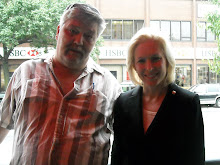
On Sunday, I was proud to march in Manhattan's Pride parade all the way from 38th St. & 5th Ave. to Christopher St. in the West Village, near where the Stonewall riots took place 41 years ago this week.
It was on June 28, 1969 that a group of lesbian, gay, bisexual and transgender New Yorkers stood up, fought back, and openly challenged a police raid on the Stonewall Inn, a gay bar on Sheridan Square. Gay New Yorkers, for the first time, took to the streets and publicly identified themselves and the modern gay rights movement was born. The Stonewall Uprising was an act of unheralded bravery that kicked off a battle for LGBT equality, a fight that we are still waging to this day.

As you know, the LGBT community remains subject to the injustice of institutionalized prejudice every day. The time is long overdue to grant LGBT Americans the equal rights and equal protection they deserve. It's unconscionable that in 2010 America, LGBT men and women are barred from openly serving in our armed forces, can be fired from their jobs or denied housing simply because of who they are, and are denied marital status and benefits. This must change.
So, as Pride month comes to a close and we look toward the ongoing battle for equality, I'd like to outline my legislative agenda to eradicate this institutionalized prejudice towards LGBT Americans. It is an agenda that I pledge I will continue to fight for all year round even as we look back, remember and celebrate the events that kicked off what I consider to be the civil rights march of our generation.

1. Repeal “Don’t Ask, Don’t Tell.”
Since 1993, over 13,000 brave men and women have been discharged from the United States Armed Services solely because of who they are and who they love. We have lost over 800 soldiers in mission critical posts, including 10% of our foreign language experts, especially in Arabic and Farsi, who are invaluable in the global fight against terrorism. This policy is detrimental to unit cohesion and morale, as well as antithetical to the moral foundation upon which our Army and nation have been founded. One year ago, I asked the Senate Armed Services Committee to hold the first hearings on the subject since 1993. During this vital hearing, Admiral Mullen, the Chairman of the Joint Chiefs of Staff, testified that, “For me personally, it comes down to integrity – theirs as individuals and ours as an institution.” This testimony ensured the historic votes in which the Senate Armed Services Committee and the House of Representatives voted to repeal DADT. I call on my Senate colleagues to ensure that ‘Don’t Ask, Don’t Tell’ repeal language remains in the 2011 Defense Authorization bill. It is time for Congress to fully repeal this destructive policy to strengthen America - both militarily and morally.

2. Pass a fully sexual and gender identity inclusive Employee Non-Discrimination Act (ENDA).
It is against the law to terminate an employee on the basis of race, religion or gender. However, LGBT Americans can still be fired from their jobs with no recourse or legal redress. No statute addressing sexual orientation and gender identity exists at the federal level, and working LGBT Americans are at risk every day, especially in tough economic times, of losing their jobs. We must do better: all Americans should be viewed the same in the eyes of the law and deserve equal protection in the workplace.

3. Ensure that Immigration Reform includes the Uniting American Families Act (UAFA).
When Congress takes up comprehensive immigration reform, I will push for language supporting this key measure in the final bill. I support a system where LGBT couples can sponsor their partners and place them on a path to citizenship. Too many families are kept apart every year due to this injustice.

4. Repeal the Defense of Marriage Act (DOMA).
The right to enter into a federal civil marriage contract with the person who you love should be a basic right, not a privilege, and should be recognized in all 50 states and accorded all of the over 1,000 federal rights and privileges granted to non-same sex married couples. According to the Defense of Marriage Act, the federal system classifies marriage as only existing between a man and a woman. DOMA should be repealed outright. Marriage equality should be the law of the land.

5. Amend the 1964 Civil Rights Act to include full federal protections for LGBT Americans.
We should amend the 1964 Civil Rights Act to grant full equality to LGBT Americans. This watershed bill is among the most important strides our nation has made in the last century, providing equal protection under law to all Americans, regardless of race, gender and religion. Sexual orientation and gender identity should be included in this landmark legislation. It is a matter of justice, fairness, equal opportunity and equal protection.

I'm sorry I'm not able to stay and answer questions in the comments right now but look forward to reading them all. Thanks for all your hard work and activism on behalf of equality.

P.S. You can see more pictures from Pride on my Facebook page. And please join our Out For Kirsten Facebook page as well.

Fresh Air Vacations For New York City Children by Kristen Hetland - 1010WINS.com 

Read original...


More than 180 children left their homes in the city Wednesday to spend some time in the country as part of the Fresh Air Fund’s annual summer program.

PHOTOS: Free Vacations for Kids

The Fresh Air Fund has provided free vacations to more than 1.7 million disadvantaged children in New York City since 1877.


Alice Stockton-Rossini reports

Each year, the organization sends 5,000 children either to spend a week with a host family or spend the summer at a camp in the country. The program gives children the chance to go on vacation each summer when their families would not normally be able to afford it.

“The program makes time for children to be children and do it in a safe place,” Executive Director of Fresh Air Fund Jenny Morgenthau said. “Some of these children have seen driveby shootings. Getting away from the city makes these kids aware of the other lives that are out there.” Morgenthau said the vacations also help build self-esteem within the children.

Each child that is taken in by a host family develops a bond with that family that often lasts for many years, she said. Some children will stay with the same family year after year and some host families will actually come to New York to visit the Fresh Air child they hosted.

For mother Tracy Jordan, sending her son, Amir, 10, to spend a week with a host family means he will be able to experience things she has never been able to provide for him.

“The generosity and kindness of the host families is a wonderful thing,” Jordan said. “They can give my son the things I don’t have the time or resources to do. It gives him a chance to do something outside of what he does everyday. He gets to meet new people, go to new places and do new activites. He never would have gotten this opportunity otherwise.”

The Fresh Air children boarded buses to Vermont, Massachusetts, upstate New York, Connecticut and Canada Wednesday to begin their week-long vacations.

While on vacation, the children will have the opportunity to go swimming, hiking, biking and visit the country. Ultimately, the activites are left up to the host family.

The Fresh Air Fund is dependant on its volunteers and the donations of corporations. To learn more about the organization and its mision, visit http://www.freshair.org/.

Displaced Black Landowners Fight to Reclaim Georgia Land by Shaila Dewan- NYTimes.com

Read original...


HARRIS NECK NATIONAL WILDLIFE REFUGE, Ga. — When the managers from the federal Fish and Wildlife Service talk about this 2,800-acre preserve of moss-draped cypress, palmetto and marsh, they speak of endangered wood stork rookeries and disappearing marsh habitat, dike maintenance and interpretive kiosks.

But when the members of the Harris Neck Land Trust talk about it, they speak of injustice, racism and a place they used to call home.

In 1942, Harris Neck, a thriving community of black landowners who hunted, farmed and gathered oysters, was taken by the federal government to build an airstrip. Now, the elders — who remember barefoot childhoods spent climbing trees and waking to watch the Canada geese depart in formation — want to know why they cannot have it back.

The Harris Neck Land Trust, formed by the former residents, their descendants and a handful of white families who owned land but did not live on Harris Neck, is asking Congress to return the land. The Fish and Wildlife Service maintains that the land is a crucial part of the national refuge system.

On its face, the quest of the former residents pits the goal of environmental conservation against that of righting a historical injustice. But it is also a conflict about two ways of life — one that tries to protect natural resources from human encroachment, the other demonstrating that humans can live in harmony with nature.

To the former residents, the suggestion that they cannot coexist with the wildlife on Harris Neck is absurd. “Wildlife was a part of us all of our lives,” said Kenneth R. Dunham Sr., 80, who was a child when the federal government gave Harris Neck families two weeks to leave before their houses were bulldozed and burned. “In my back door, I could hear the wild geese coming. We left food in the field so they would have something to eat.”

Harris Neck was deeded by a plantation owner to a former slave in 1865. Black families who settled there built houses and boats and started crab and oyster factories. But the community, many descendants suspect, was too independent for the comfort of McIntosh County’s whites.

During World War II, when federal officials were looking for a site for an Air Force base, the county’s white political leaders led them past thousands of uninhabited acres to Harris Neck. The government condemned the land and ordered the families to clear out with the promise, some residents recall, that they could come back after the war. Blacks received an average of $26.90 per acre for the land, while whites received $37.31, according to a 1985 federal report. In 1962, the wildlife refuge was established.

Trust members do not imagine that they can recreate their old way of life, but their plan for the land is meant to be similarly low impact. It includes solar energy, cutting-edge sewer treatment and organic farming. Most of the acreage would remain wild and open to the public.

But a little more than a tenth of the land would be developed — each of about 70 families would get four acres, with design requirements and a strict covenant that the land, now worth $100,000 or more an acre, could not be sold. There would be an eco-lodge and a convention center, which the county now lacks.

Transferring federally protected land is, of course, no easy matter. Representative Jack Kingston, a Republican who represents the area, has been generally supportive of the trust’s efforts but has tried to caution its members on the political difficulties. “Environmental advocates can be formidable adversaries,” he wrote in a May 25 letter to the trust.

Environmental groups, for the most part, have yet to voice opposition. Deborah Sheppard, executive director of the Altamaha Riverkeeper in nearby Darien, was hesitant to address the issue, saying that her organization had not taken a position. “This is not the traditional question that’s posed to environmental groups, and to the extent that people aren’t being responsive, it’s probably that they don’t know how to weigh in,” she said.

As a local resident, though, Ms. Sheppard said she was familiar with the history of Harris Neck and sympathetic to the former residents, displaced from land whose status as a wildlife refuge has helped drive the construction of million-dollar retreats nearby.

“People continue to suggest that people from Atlanta with money can live here in an ecologically sound way — why can’t people with experience hunting and fishing and living off the land live in an ecologically sound way?” she said. “Those people are rightly suggesting that they have a historic capacity to interact well with their natural resources. And the rest of us haven’t.”

Complicating matters is that the former residents are themselves, in a way, endangered. They are Gullah/Geechee, descendants of West African slaves who became some of the nation’s earliest black landowners. Their distinctive culture, preserved for years by isolation on the coastal barrier islands, has been threatened by development to such a degree that in 2006, Congress designated a Gullah/Geechee Cultural Heritage Corridor stretching from North Carolina to Jacksonville, Fla.

But without access to the land that sustained the Gullah way of life, there are few options for preserving it. Some official ideas were detailed in a letter from Cynthia Dohner, the regional director of Fish and Wildlife, who proposed, in lieu of returning the land, an “annual homecoming day” at Harris Neck and the chance to collaborate on an “interpretive kiosk.”

Evelyn Greer, 82, recalls the forced move out of Harris Neck in vivid detail: residents lugging furniture by hand or mule cart, leaving jars of preserved food and livestock behind. On the morning their house was to be demolished at 6 a.m., she and her mother woke early to retrieve a treasured phonograph and its two records. On the path, her mother froze.

“I heard the fullness in her voice,” Ms. Greer recalled. “She said, ‘We in plenty of time, but we’re too late.’ ” The house was in flames.

The family moved into a barn owned by the white man her mother worked for.

Now, Ms. Greer and other trust members meet monthly to pray, sing and mull their next move. There will be a meeting with a congressman who is friends with President Obama, and another with a Georgia Department of Natural Resources employee. Two longshoremen were in the room at a recent meeting — maybe the A.F.L.-C.I.O. could do something. “The Return of Our Land,” read an agenda. Then, pointedly, “Community Meeting No. 49.”

Mr. Dunham rose to deliver encouragement. “We’re going to move on, and we’re going to come on in spite all,” he said to amens and mm-hmms. “Won’t that be a happy time, when we all get to heaven? I’m talking about Harris Neck, now.”

NYPD Ready to Blow Up Your Illegal Fireworks Display by Stephen Geffon - Leader-Observer

Read original...


With the Fourth of July approaching, local precinct police officers will be taking a zero tolerance stance on fireworks use.

“For children’s safety and the safety of all residents, we are going to make sure that we prevent the discharge of fireworks,” said a police department official.

Fireworks burn at an extremely high temperature and can quickly burn through clothing and skin, causing serious injuries. Items such as sparklers are mistakenly thought to be safe, when in fact they can be very dangerous. Fireworks should only be handled by trained professionals, authorities said.

NYPD strategy this year for combating fireworks use includes sending crime prevention officers into areas where past fireworks incidents have occurred and warning residents that using fireworks will result in fines and arrests.

A law passed by the City Council imposes an additional $750 penalty – on top of existing fines – on anyone caught using fireworks.

Flyers will be put in residents' mailboxes warning about this tougher stance, which includes a policy of confiscating automobiles used in fireworks trafficking. The flyers also publicize a reward of $1,000 for information leading to the arrest and conviction of individuals possessing or distributing fireworks.

On July 4, additional NYPD officers are expected to be assigned to the 6 p.m. to 2 a.m. shift with officers in plainclothes and in uniform specifically assigned to strictly enforce the law.

“The illegal use of fireworks is a dangerous activity, and their use often leads to tragic results,” said NYC Police Commissioner Raymond Kelly.

Kelly said the NYPD is increasing their efforts as the 4th of July approaches in order to ensure public safety in the city.

Police Crack Down on Chatty Drivers by Stephen Geffon - Leader-Observer

Read original...


On Tuesday, June 22, at the stroke of midnight, police officers from the 102nd and 106th precincts along with officers citywide began a 24-hour crackdown on the use of hand-held cell phones while driving as part the NYPD's focus on traffic infractions linked to death and injury.

Police officials said that officers issued 4,527 summonses across the five boroughs to drivers who were chatting while driving during the 24-hour time frame The 106th Precinct alone issued 27 summonses for this violation. The number of summonses issued by officers of the 102nd Precinct was not available at press time.

Similar efforts from earlier this year resulted in 6,882 summonses handed out on March 25, and 7,485 summonses on January 21, according to NYPD statistics.

Individuals using hand-held cell phones while driving in the city face a fine of $130 ($200 for taxi drivers). Drivers can be fined $150 for text-messaging, though a ticket can only be issued as a secondary offense when a driver gets pulled over for another violation.

Exempt from the crackdown were drivers using their phone to call 911 and those who use hand-free options – their cell phone’s speakerphone feature, wired or wireless Bluetooth headsets, or the Bluetooth connectivity now built into GPS devices.

According to the NYPD, during 2009, police issued on average 617 summonses a day to drivers using hand-held cell phones, a total of 195,579 for the year. On previous crackdowns, NYPD-issued tickets for phoning while driving surpassed the daily average. On October 22, 2009, 7,529 summonses were issued for this infraction, and on August 21, 2009, 7,432 tickets were issued.

In addition to being illegal, “driving while talking on a cell phone is dangerous and endangers both drivers and pedestrians,” the NYPD said in a statement. A police spokesperson added, “it has just been demonstrated that motorists distracted by holding a cell phone while driving and speaking on a hand-held cell phone while driving has led to accidents, including fatalities.”

A University of Utah study found that drivers who talk on their cell phones, or even use a hand-free device, are as impaired as drunken drivers.

Frank Dardani, president of the 106th Precinct Community Council, said the cell phone enforcement shouldn’t be just for one day, “it should be everyday.” Dardani added that in addition to talking on a cell phone, other distractions such as putting on makeup, eating lunch while driving, and drinking hot coffee also pose the danger of an accident.

“Distracted driving in itself should be addressed (by police) on a daily basis,” he added.

Assemblywoman Audrey Pheffer said, "crashes due to driver inattention or distraction are all too common and result in far too many tragedies. Drivers must be focused on the road and not on their cell phone conversations. It is unfortunate that this has had to become a police enforcement priority due to people’s lack of compliance with the law.”

Taxi drivers in the city face even more stringent regulations issued by the Taxi and Limousine Commission (TLC). Last January, TLC announced new regulations prohibiting the use of all forms of distractive electronic devices for taxicabs, livery, black car, luxury limousine, commuter van, and para-transit vehicles.

“The time has come to put an end to the abuse of distracted driving by taxicab and for-hire vehicle drivers,” said TLC Commissioner Matthew Daus. “First and foremost it is a safety issue, but it is also a customer service issue when a driver’s concentration is split between his cell phone conversation, his driving, and his passenger. There is no reason to wait for a tragedy to occur before drivers get the message that such distractions are dangerous and entirely unacceptable.

“The new regulations create a true 'three strikes and you’re out' reality for TLC-licensed drivers by providing a framework by which their TLC licenses would be revoked for three violations within a 15-month period,” added Daus.

New York Using Perfume Spray to Cover Stench in Astoria, Likely Caused by Wastewater Treatment Plant by Daniel Edward Rosen - NY Daily News

Read original...


New York is no stranger to mysterious smells: in 2007, clouds hung over the Manhattan skyline the day a mysterious rotten egg stench wafted through parts of the city. Sabo/News

This gives new meaning to eau de toilette.

The city Department of Environmental Protection is using a perfume-like chemical spray to mask a fetid stench likely emanating from a waste treatment plant.

Officials hoped the citrus-scented spray would prevent a fireworks display in Astoria Park from turning into a putrid jubilee.

"I've never smelled it this bad," said city Councilman Peter Vallone Jr. (D-Astoria), who first noticed the stench two months ago.

Vallone believes the persistent stink is wafting from the Wards Island wastewater treatment plant located just miles away from Astoria Park, where 10,000 people were expected to attend a fireworks display last night.

A DEP spokesman denied that the plant was the source of the funk. Still, the agency started using "odor-counteracting machines" to spray the chemical -- which neutralizes stinky hydrogen sulfide -- across the treatment plant yesterday.

The plant has a malfunctioning blower that normally pumps oxygen into wastewater as it's being treated, said spokesman Farrell Sklerov. The remaining five pumps are still working.

Vallone said he met with DEP officials, who detailed their spray strategy, as well as Joseph Scafidi, one of the investigators who helped sniff out the source of the mysterious maple syrup smell that plagued Manhattan in 2007 and 2009.

"He's their hound dog," said Vallone. Scafidi refused to answer questions Wednesday.

One Astoria neighbor hopes the spray will spare her from a stench that she likened to "getting hit with a wall of sewage."

"It's eye-watering," said KellyAnn Tobin, 31, a nurse who lives on Crescent St. "I don't need coffee in the morning to get up, it's that bad."

Author Jeffrey Kroessler Rips Into Ex-rival, Borough Historian Jack Eichenbaum for Being Passive by Nicholas Hirshon - NY Daily News

Read original...

This grudge isn't history.

A runner-up for Queens borough historian has ripped into the eventual pick, Jack Eichenbaum, as "sadly misinformed" with a "profound ignorance" of efforts to save significant sites.

Author Jeffrey Kroessler posted the critical comments online in response to a recent Daily News article in which Eichenbaum said he'd rather be an educator than fight to landmark buildings.

"Sadly, Mr. Eichenbaum is poised to continue the ineffective pattern set by his predecessors," Kroessler wrote on the blog of the Historic Districts Council.

Eichenbaum responded in a statement that he has a "more inclusive" approach to the job than Kroessler, adding that he wants to emphasize Queens' ethnic diversity and environmental issues.

Some chalked up Kroessler's harsh words to sour grapes over losing out on the post.

But the Internet ire highlights a debate on what role the unpaid borough historian should play in protecting structures in danger of renovations or destruction.

Some preservationists, including Simeon Bankoff of the Historic Districts Council, said Eichenbaum's words do not mesh with the attitude they hoped for from Borough Hall.

On the other hand, Manhattan Borough Historian Michael Miscione noted that Eichenbaum is wise not to be entangled in time-consuming landmarking efforts.

Kroessler's post, titled "No, I am NOT the Borough Historian," notes that despite his multiple books and research, he was not selected for the gig.

Kroessler writes that he's "disturbed" that Eichenbaum, a Flushing tour guide and board member of the Queens Historical Society, "wants to take the history out of historic preservation."

Queens Borough President Helen Marshall announced at a June 8 news conference that Eichenbaum, 67, had been picked as the next borough historian. Eichenbaum had been selected after he, Kroessler and several others were interviewed by a four-member ad hoc committee of archivists and historians.

After Eichenbaum won the position, he invited Kroessler to an October conference he is organizing to foster interaction between the borough's historical groups. Kroessler says he isn't sure he'll attend.

"It's not even July yet," he said. "October is a long time away."

Send a Message to Congress to Prevent Damaging Increases in Class Size, NOW..! by Leonie Haimson - The Huffington Post

Read original...

All over the country, school budgets are being slashed to the bone and teachers are being laid off, leading to sharp increases in class size next year.

But we still have a chance to minimize these damaging effects on our schools.

Representative Obey, head of the House Appropriations committee, has introduced an amendment in Congress that would save thousands of teacher jobs , using funds drawn from the federal "Race to the Top" grant program, subsidies for charter school expansion, and teacher merit pay.

None of the programs that the Obey amendment would cut back on are research-based, according to the National Academy of Sciences, which has pointed out how these experiments may have negative effects on our schools.

Unlike reducing class size, these policies also have little support from most public school parents or educators. Meanwhile, the Institute of Education Sciences, the research arm of the US Department of Education, has reported that providing smaller classes is one of only three reforms that has been proven to work through rigorous evidence.

So please tell your member of Congress today that you strongly SUPPORT the Obey amendment to save teacher jobs, and that cutting back on the risky federal expansion of high stakes testing and charter schools would be a great way to do this, by calling the Congressional switchboard at (202) 225-3121.

For more on the Obey amendment, see Education Week here.

You can also check out our earlier letter to Obama and Congress from parents across America about the importance of listening to parents and reducing class size and our piece in EdWeek about the way in which the US Department of Education has shut out parent voices from the debate over education reform.

Follow Leonie Haimson on Twitter: www.twitter.com/leoniehaimson